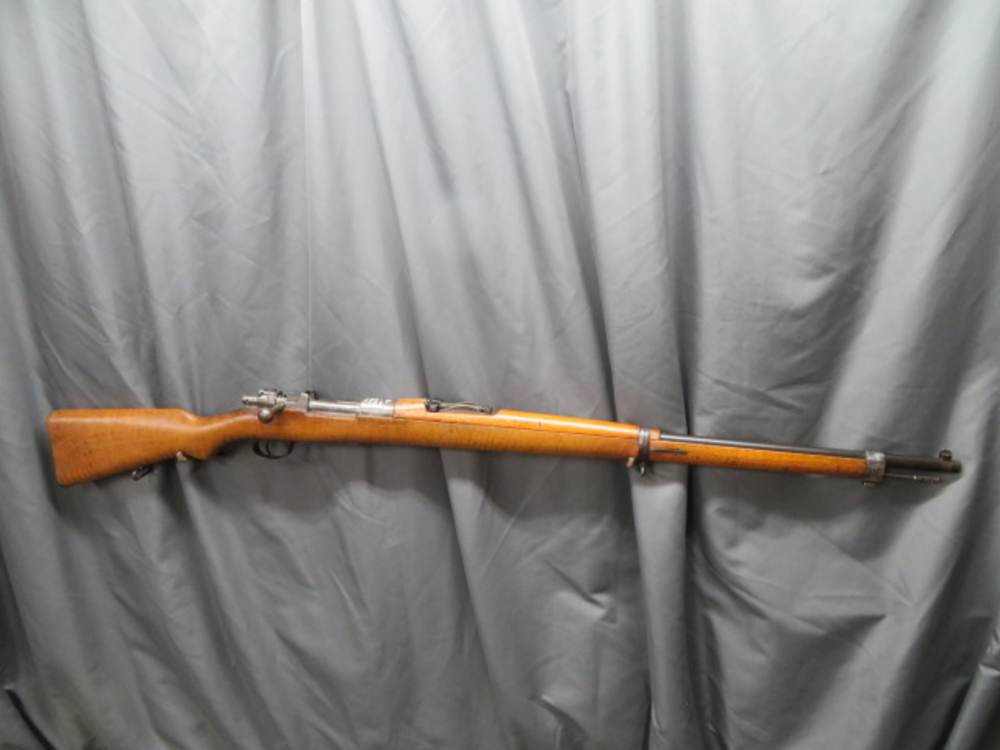
WWI Ottoman Model 1903 Mauser Rifle: A Rifle of an Empire

image 62
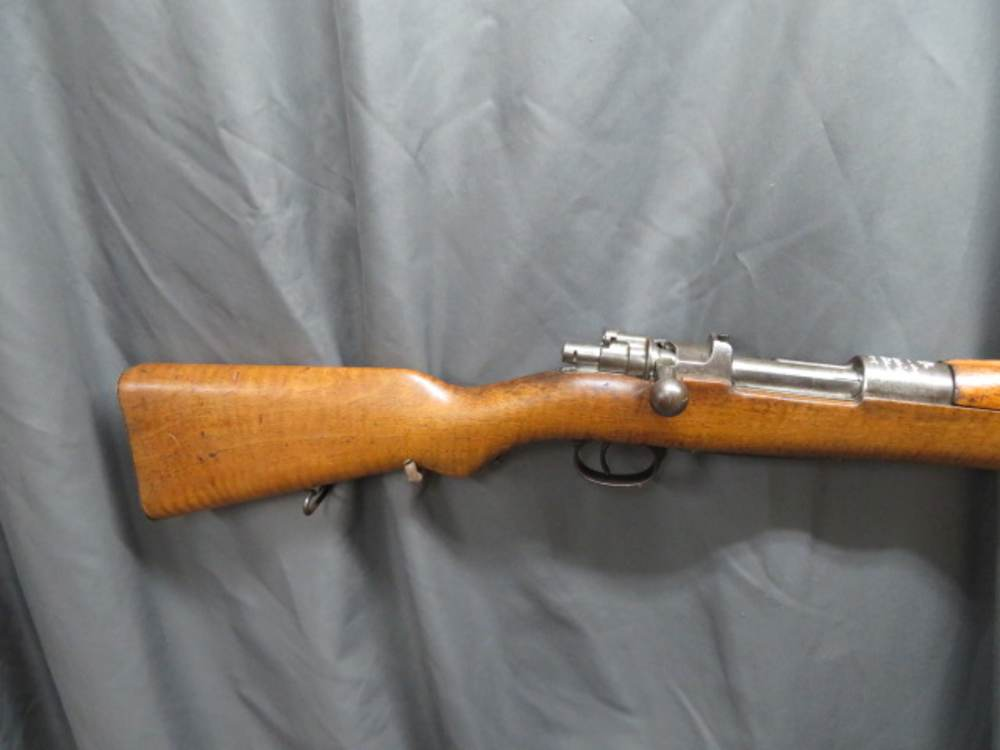
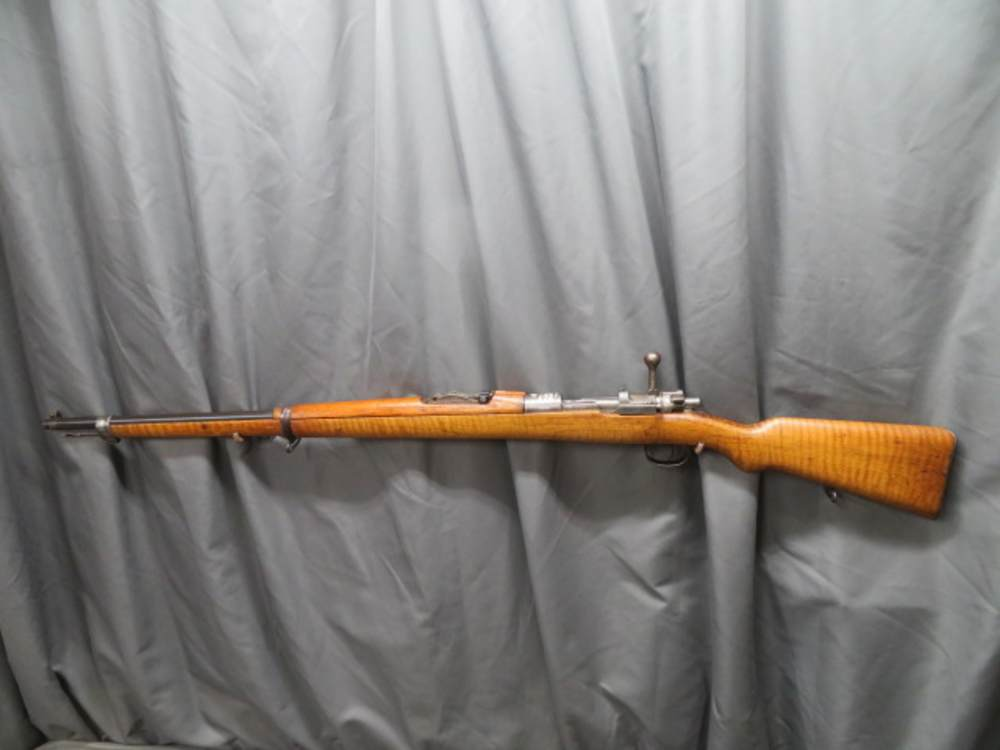
WWI Ottoman (Turkish) Model 1903 Mauser Rifle displaying original receiver markings and classic Mauser military craftsmanship.

The Ottoman Model 1903 Mauser Rifle was one of the primary military rifles used by the Ottoman Empire during the early 20th century. Manufactured using the renowned Mauser bolt-action design, these rifles were valued for their reliability, accuracy, and rugged construction. Original examples displaying clear Ottoman receiver markings are especially desirable to collectors today, as they provide a direct connection to the final decades of the Ottoman Empire and its participation in World War I. This example retains attractive markings that help preserve its historical identity and collector appeal.

One fascinating fact about the Ottoman Model 1903 is that many rifles served through multiple conflicts and were later updated, refurbished, or reissued by successor governments after the fall of the Ottoman Empire. The distinctive Arabic-script receiver markings found on original rifles offer a glimpse into a military force that bridged centuries of history, from traditional imperial rule to the modern era of industrial warfare. Surviving rifles with legible markings are tangible artifacts from one of history’s most significant transitional periods.

Ottoman Empire Markings: The Signature of a Soldier's Rifle

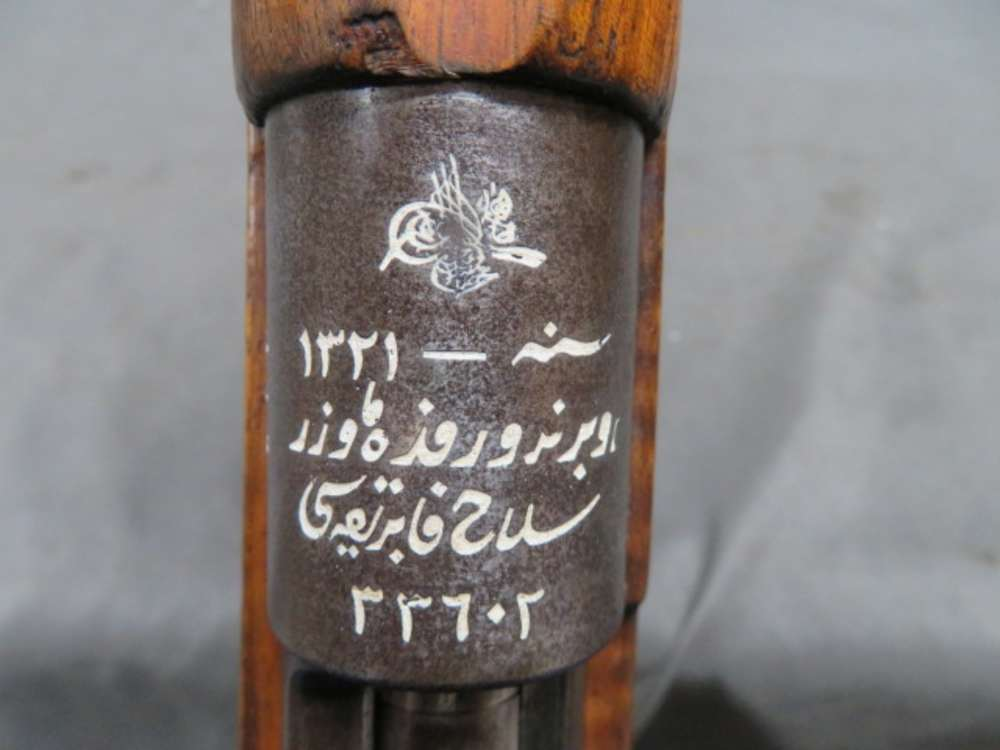
he close-up image showcases the beautifully preserved receiver markings of a WWI Ottoman Model 1903 Mauser Rifle. Prominently displayed is the Ottoman Sultan’s Tughra, the imperial calligraphic seal used on military equipment and official government property. Beneath it are Arabic-script arsenal markings and production information that identify the rifle’s origins within the Ottoman military system. Clear, legible markings such as these are highly sought after by collectors because they help authenticate the rifle and preserve its historical connection to the Ottoman Empire’s final years.

A fascinating fact is that the Ottoman Empire adopted Mauser rifles from Germany and became one of Mauser’s largest foreign customers. During World War I, Ottoman troops carried these rifles across campaigns stretching from Gallipoli and Mesopotamia to the Caucasus. The ornate Tughra seen on this receiver represents more than a factory stamp—it symbolizes a centuries-old empire that spanned three continents and stood at the crossroads of Europe, Asia, and Africa.


image 75
Close-up of the original Ottoman Tughra and Arabic receiver markings on a WWI Turkish Model 1903 Mauser Rifle.

Hidden Marks, Big History: Ottoman Inspection Stamps

image 78
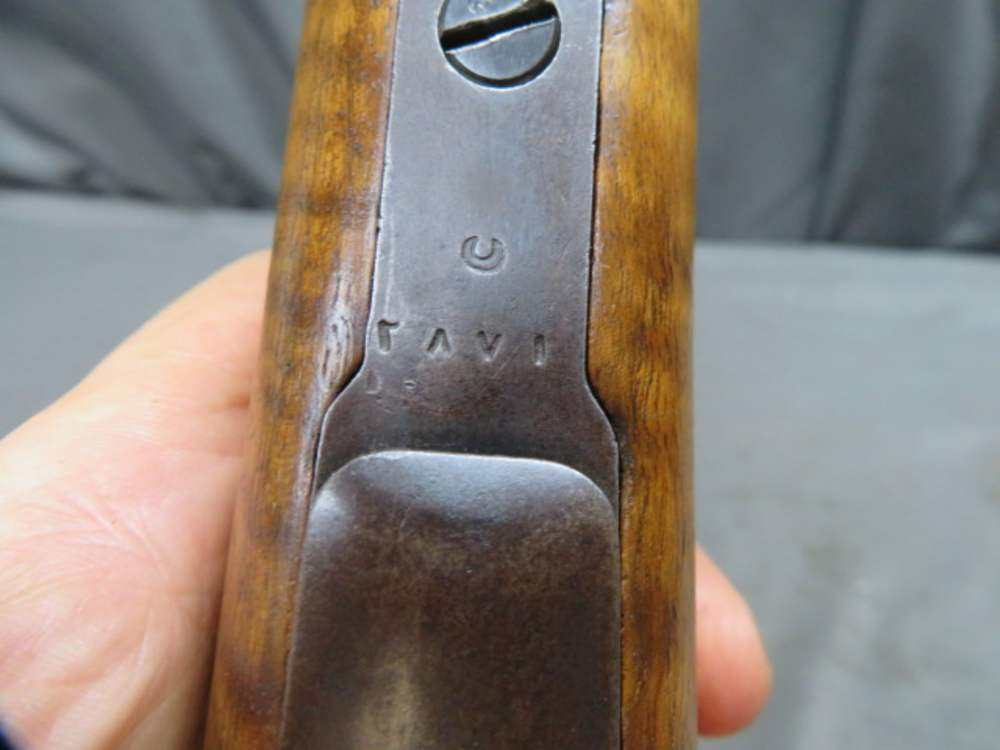
Close-up of original Ottoman inspection and acceptance marks on a WWI Turkish Model 1903 Mauser Rifle receiver.

This close-up reveals a series of small inspection and acceptance marks stamped into the metal of a WWI Ottoman Model 1903 Mauser Rifle. While easy to overlook, these tiny symbols played an important role in military quality control, indicating that parts had passed inspection during manufacture or refurbishment. Such markings help collectors trace the rifle’s service history and provide evidence of the rigorous standards applied to military arms destined for Ottoman troops.

A fun fact is that military rifles of the era often passed through multiple inspectors before being accepted for service. Each inspector used a unique stamp, creating a hidden record of the rifle’s journey through the arsenal. Today, collectors and historians study these small marks much like archaeologists examine artifacts, uncovering clues about production methods, military logistics, and the international partnership between the Ottoman Empire and German arms manufacturers.


Ottoman Numerals on the Battlefield: Reading a Century-Old Sight

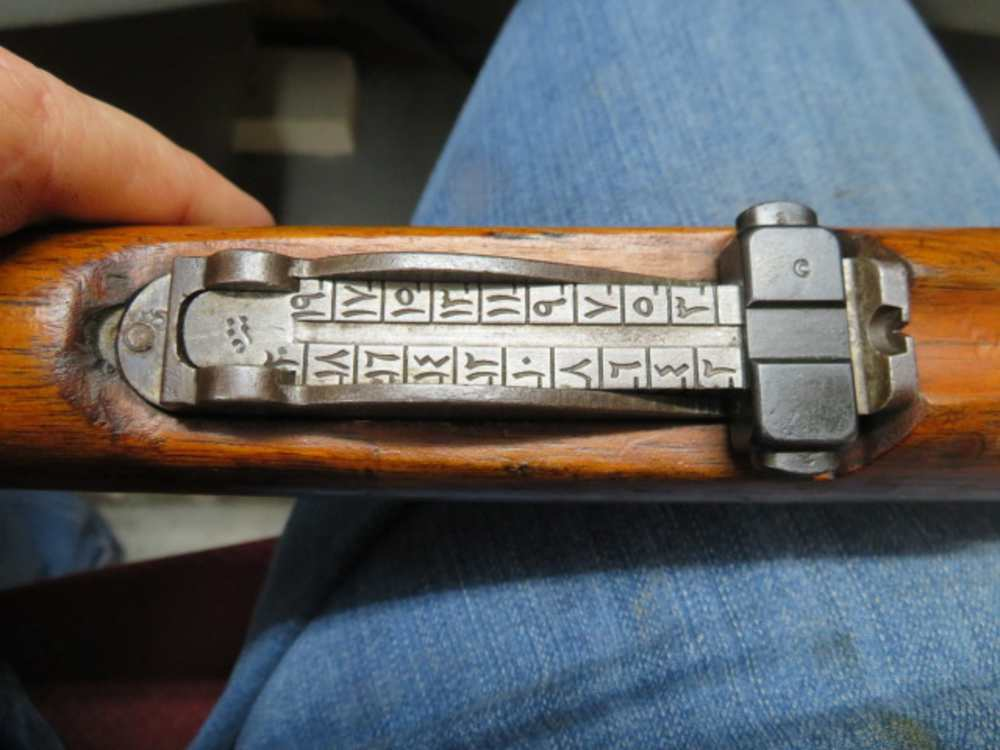
This detailed image shows the rear sight of a WWI Ottoman Model 1903 Mauser Rifle, complete with its original Ottoman Turkish numerals and markings. Unlike many military rifles that used Western numbering systems, Ottoman rifles often featured Arabic-script graduations, reflecting the empire’s unique military traditions. These sights allowed soldiers to adjust their aim for different distances, making the rifle effective across a variety of battlefield conditions. Original sights with clear markings like these are especially prized because they remain an authentic link to the rifle’s service history.

A fascinating fact is that Ottoman soldiers trained to read range settings written in Ottoman Turkish, a language that used Arabic script until Turkey adopted the Latin alphabet in 1928. As a result, rifles like this preserve not only military history but also a written language that disappeared from everyday use nearly a century ago. Collectors often spend years learning to identify these markings, turning each rifle into a lesson in both history and linguistics.

image 80
Original Ottoman Turkish-marked rear sight on a WWI Model 1903 Mauser Rifle, showing period range graduations used by Ottoman soldiers.

The Little Details That Matter: Ottoman Mauser Hardware

image 83
Original front sling swivel and stock hardware on a WWI Ottoman Model 1903 Mauser Rifle, showcasing an often-overlooked detail of military service.

This close-up highlights the front sling swivel on a WWI Ottoman Model 1903 Mauser Rifle. While often overlooked, this simple piece of hardware was essential for soldiers who carried their rifles over long marches across deserts, mountains, and battlefields. Original sling swivels and stock hardware are important to collectors because they help demonstrate a rifle’s authenticity and degree of preservation. Small components like this often suffered damage or replacement during decades of military service, making surviving originals especially desirable.

A fun fact is that Ottoman soldiers frequently carried their rifles on foot across some of the most challenging terrain of World War I, including the rugged Gallipoli Peninsula and the harsh mountains of the Caucasus. The sling system allowed troops to keep their hands free while traveling long distances, turning what appears to be a simple metal loop into a vital piece of military equipment. Today, these original fittings provide a tangible connection to the everyday experiences of the soldiers who once carried the rifle.


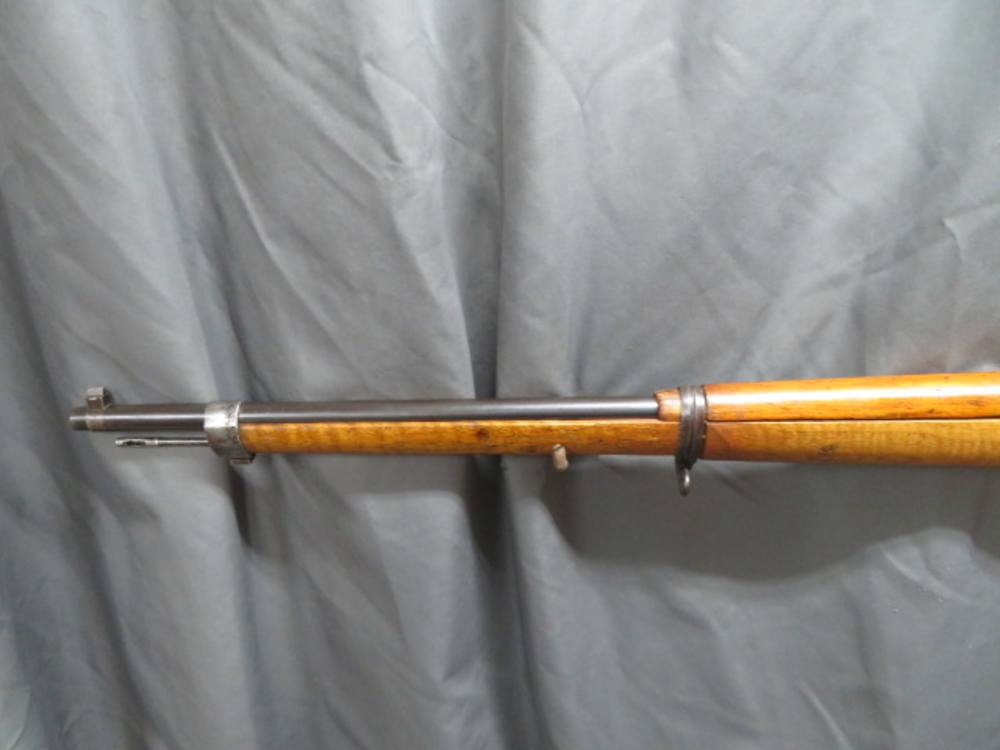
At the Muzzle: The Business End of an Ottoman Mauser

This detailed view highlights the muzzle, front sight assembly, and cleaning rod of a WWI Ottoman Model 1903 Mauser Rifle. The front sight was a soldier’s primary aiming reference, while the cleaning rod stored beneath the barrel allowed troops to maintain their rifles in the field. Regular maintenance was critical in harsh environments, as dirt, mud, and sand could quickly affect a rifle’s performance. Surviving examples that retain their original cleaning rods are especially appreciated by collectors because these accessories were often lost during decades of service.

A fun fact is that Mauser rifles earned a worldwide reputation for reliability, leading many nations to adopt or copy their designs. Ottoman troops carried these rifles through some of World War I’s most challenging campaigns, where proper cleaning and maintenance could mean the difference between a functioning rifle and one disabled by battlefield conditions. The simple cleaning rod seen here was an essential tool for soldiers operating far from supply depots and armorers.

image 81
Front sight, muzzle, and original cleaning rod of a WWI Ottoman Model 1903 Mauser Rifle, showcasing the practical design that helped keep these rifles battle-ready.

The View Downrange: An Ottoman Soldier's Perspective

image 82
Muzzle-end view of a WWI Ottoman Model 1903 Mauser Rifle, highlighting the front sight and original field-maintenance cleaning rod.

This striking muzzle-end view of the WWI Ottoman Model 1903 Mauser Rifle provides a soldier’s-eye perspective of the rifle’s front sight, barrel, and cleaning rod. The robust Mauser design was engineered for reliability and accuracy, helping make it one of the most respected military rifle systems of the early 20th century. Details such as the original front sight assembly and cleaning rod add to the rifle’s historical authenticity and offer collectors a glimpse into the equipment carried by Ottoman troops during the First World War.

A fascinating fact is that the Mauser action became so successful that it influenced military rifle designs around the world for decades. Many later rifles borrowed features pioneered by Mauser engineers, and some modern sporting rifles still utilize similar bolt-action principles today. Looking down the muzzle of this Ottoman Model 1903 is like looking into a piece of military history that helped shape firearms development across the globe.