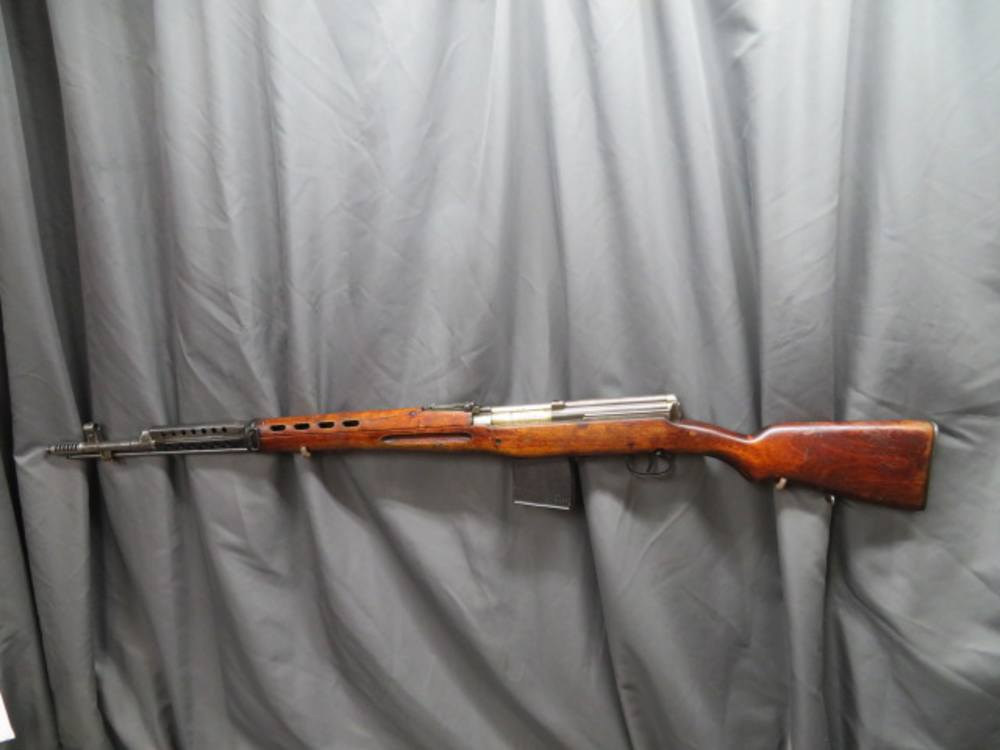
A Wartime Sprint Toward Semi-Automatic Firepower
The SVT-40 (Samozaryadnaya Vintovka Tokareva — “Tokarev self-loading rifle, model 1940”) was adopted by the Soviet Union in 1940 as its intended principal self-loading service rifle, chambered in the same 7.62x54R cartridge used in the Mosin-Nagant. Fed from a detachable 10-round magazine, it gave Red Army riflemen a faster rate of fire than the bolt-action rifles most of the world’s armies still carried into World War II. The Mosin-Nagant remained the mass-issue infantry rifle; the SVT was the design the Red Army meant to put self-loading fire into wider service.
Production expanded rapidly through 1940–41 and peaked around 1941, with the rifle already seeing heavy early-war use when Germany invaded in June 1941. The invasion disrupted SVT manufacture — factory evacuations and a shift back toward the simpler Mosin-Nagant and submachine guns — and that is when frontline priorities moved away from the more complex self-loader.
From the Tokarev Line to a Simplified Wartime Rifle
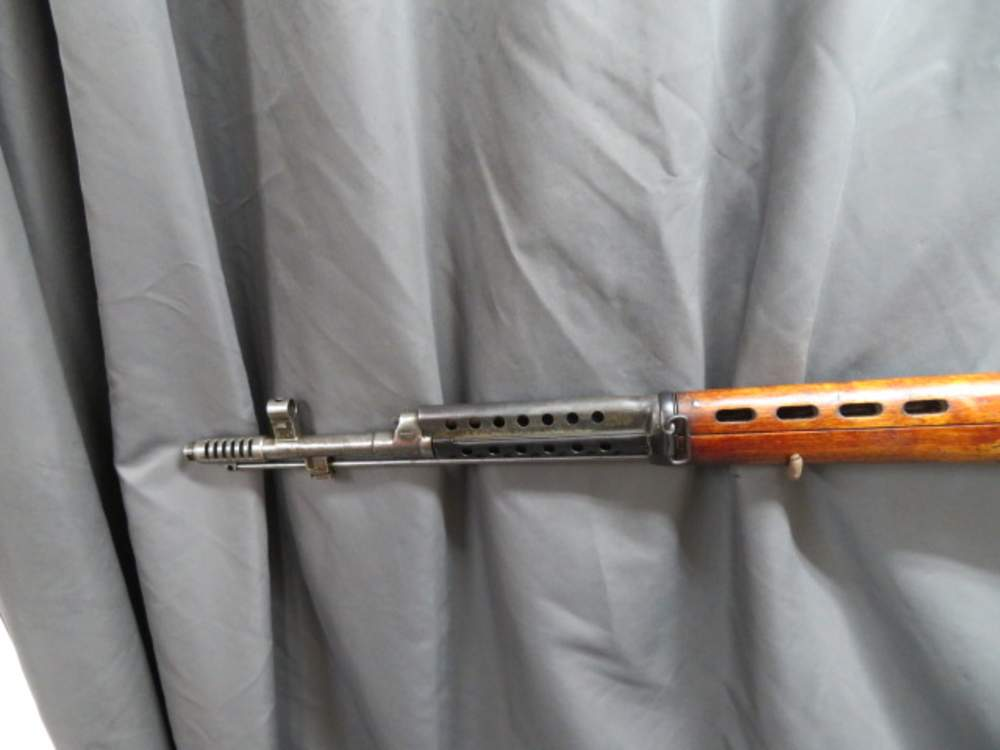
The SVT-40 was designed by Fedor Tokarev, a veteran Soviet firearms engineer, as a refinement of his earlier SVT-38. That first model had entered limited service in 1938 but proved fragile and overly complex for mass production and front-line conditions. Tokarev reworked the design for 1940, simplifying the stock, muzzle brake, and disassembly procedure while keeping the same short-stroke gas-piston operating system.
An automatic variant, the AVT-40, was also fielded in smaller numbers but never replaced the semi-automatic original as the Red Army’s primary self-loading rifle.
Arsenals at Wartime Capacity
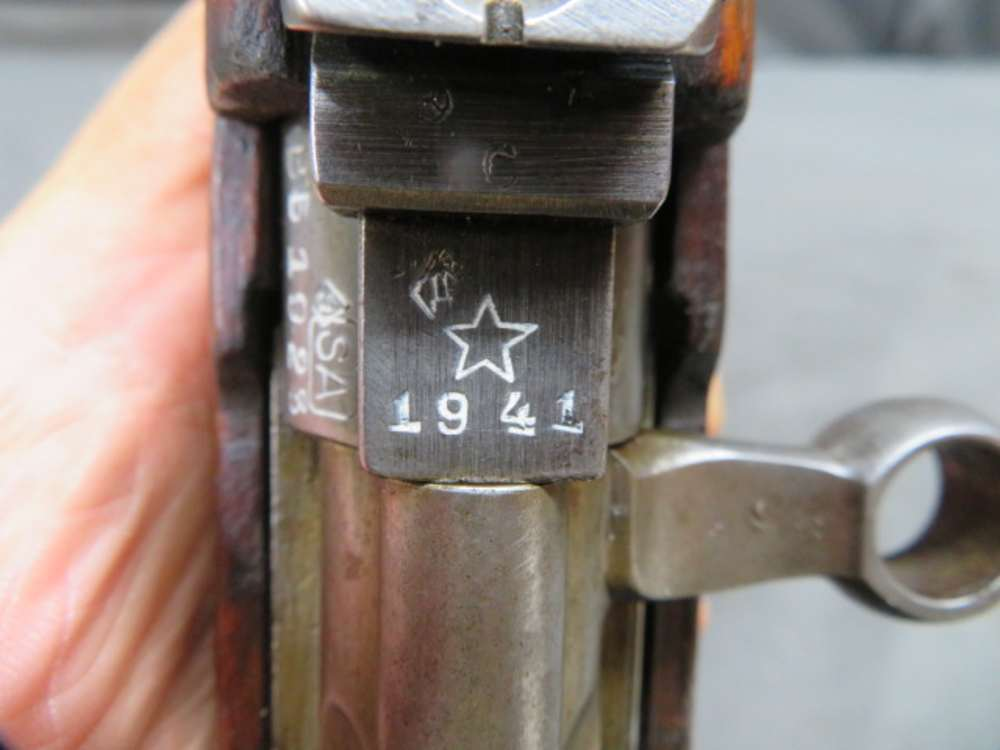
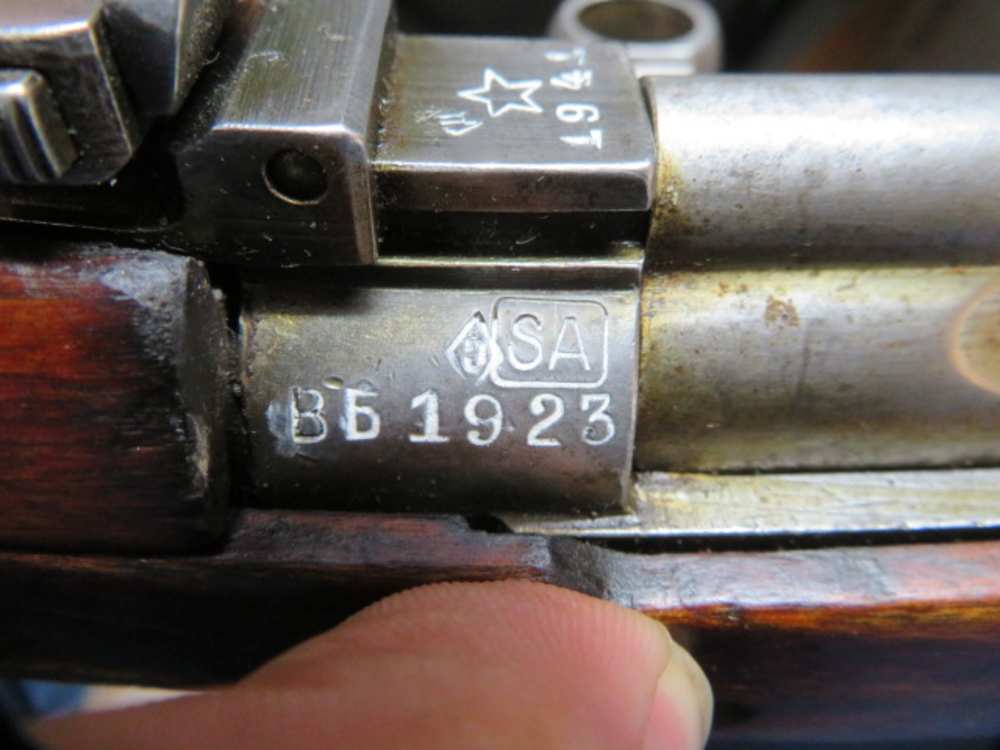
SVT-40 production ran mainly at the Tula Arsenal and the Izhevsk Arsenal, with additional work at Podolsk. After Tula’s evacuation early in the German invasion, Mednogorsk (Factory 314’s successor plant) became a major late-war home for remaining SVT and AVT output. This example carries a Tula star mark alongside a 1941 date stamp, placing its manufacture in the rifle’s peak production year.
Estimates for total wartime SVT-38/SVT-40 production vary, with commonly cited figures running from roughly 1 million to over 1.6 million rifles built before manufacturing wound down in favor of simpler designs — wartime Soviet records from the period are incomplete, so any specific total should be treated as an approximation rather than a fixed figure.
From the Eastern Front to Finnish Service
The SVT-40 was primarily a Red Army weapon, issued heavily in the fighting around Moscow, Stalingrad, and across the broader Eastern Front. Its added complexity relative to the Mosin-Nagant made it more demanding to maintain in field conditions, and by the mid-war years many units had reverted to bolt-action rifles as the simpler, more reliable choice.
Finnish forces captured a substantial number of SVT-38s during the Winter War (1939–40) — before the SVT-40 had entered production — and then substantial numbers of SVT-40s (plus remaining SVT-38s and some AVT-40s) during the Continuation War. Accepted examples were stamped with a boxed “SA” property mark, short for Suomen Armeija (Finnish Army). German troops on the Eastern Front likewise picked up captured examples and used them opportunistically, though never as a formally issued Wehrmacht rifle.
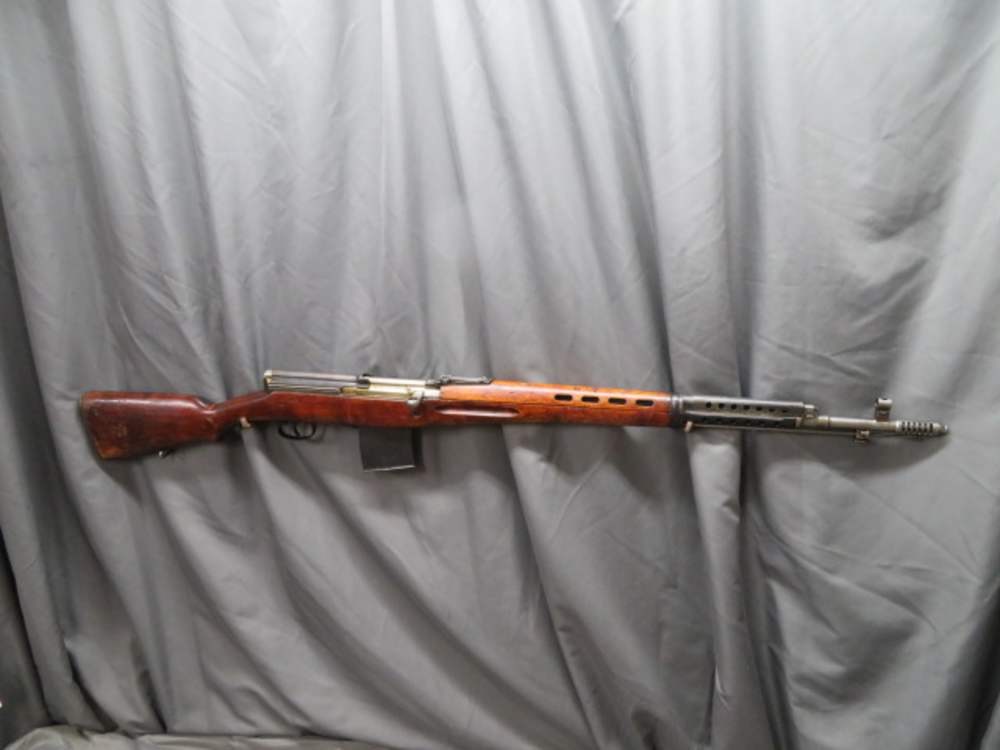
Telling the SVT-40 from Its Relatives
Collectors sometimes confuse the SVT-40 with its immediate predecessor, the SVT-38, which is longer, heavier, and fitted with a different multi-slot muzzle brake and adjustable-length gas system. The fully automatic AVT-40 looks nearly identical externally but was marked and issued for select-fire use, and is scarcer than the semi-automatic SVT-40.
Postwar Soviet-aligned nations occasionally reissued or refurbished captured and surplus SVT-40s, though this practice varied by country and shouldn’t be assumed uniform across every surviving rifle.
Why the SVT-40 Still Draws Collectors
No dedicated Collector’s Library identification guide exists yet for the SVT-40, but the rifle remains one of the most sought-after Soviet small arms among World War II collectors. It represents a genuine attempt — years ahead of most of the world’s armies — to put a semi-automatic infantry rifle into mass production.
Its combat history on both sides of the Eastern Front, especially in Finnish "SA"-marked examples like this one, gives each surviving rifle a documented second chapter beyond its original Soviet issue, which is exactly what keeps collectors chasing them today.