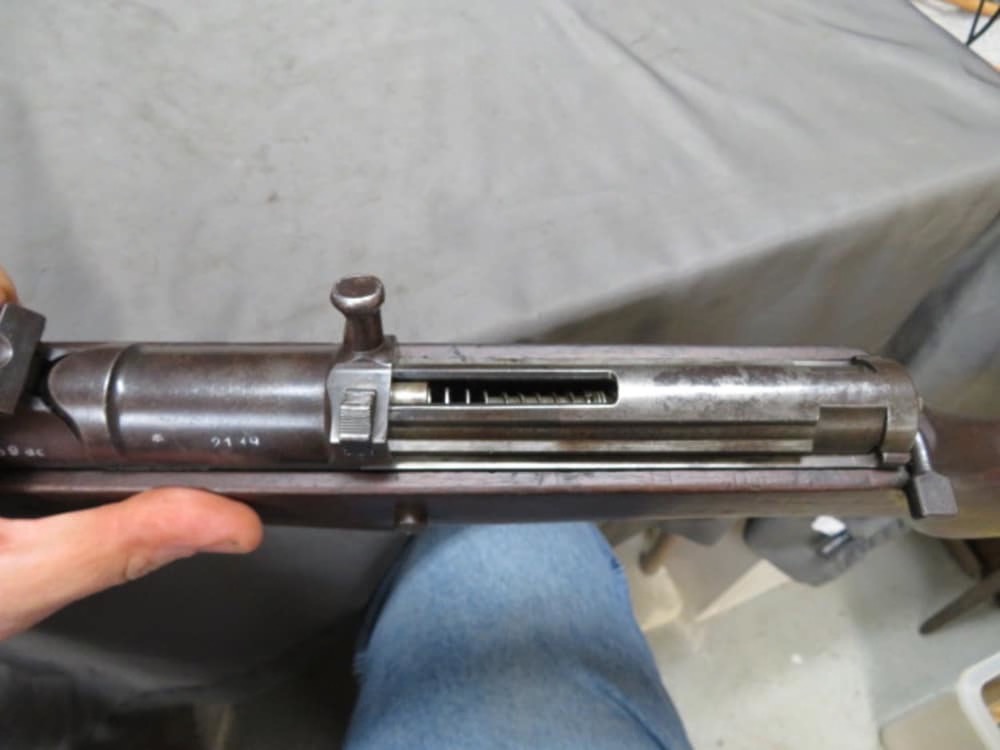
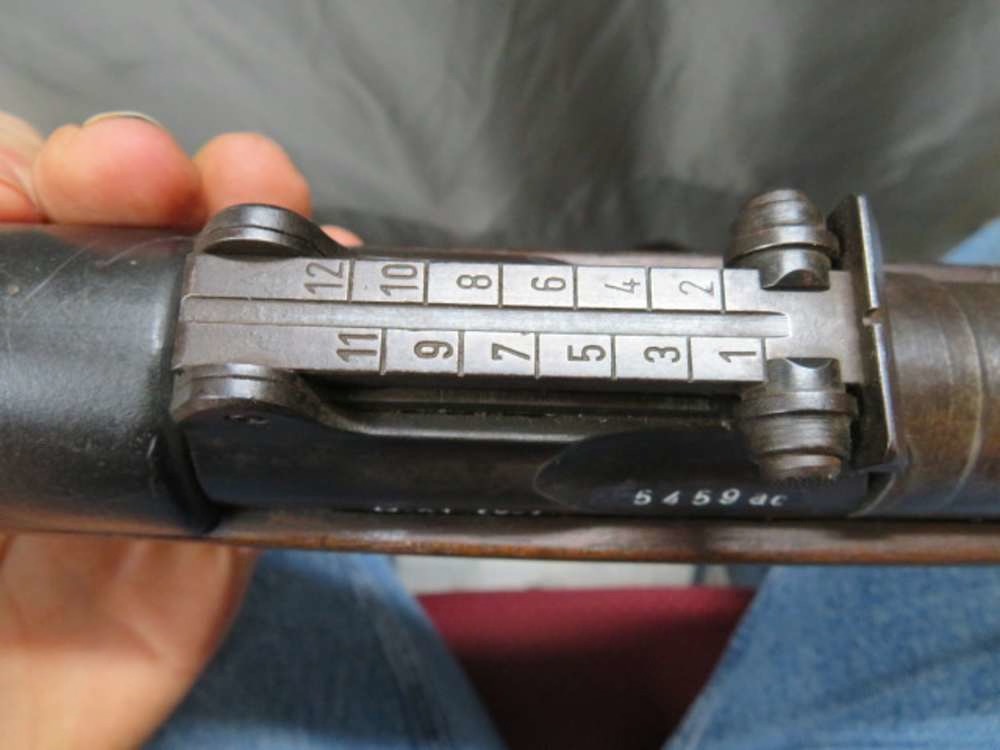
Fielded by Germany from 1941 and formally adopted as the Walther design late in 1942, the Gewehr 41 was the Wehrmacht’s first widely issued semi-automatic infantry rifle, chambered in the same 7.92×57mm Mauser round already used in the Karabiner 98k. Ordnance officials wanted more firepower without giving up a proven cartridge, but insisted the new rifle avoid both a drilled gas port and a magazine well cut into the stock — both seen as weakening a combat rifle. Mauser and Walther each built a competing design to meet those constraints; Walther’s version, marked G.41(W), proved more reliable and saw the wider production run, serving mainly on the Eastern Front.
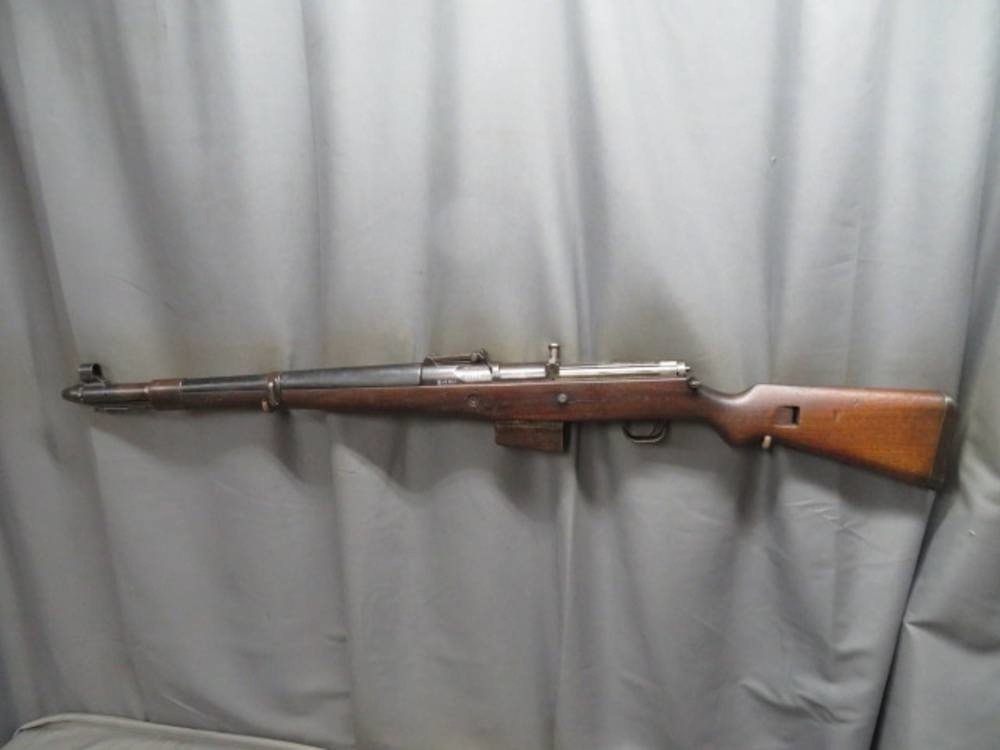
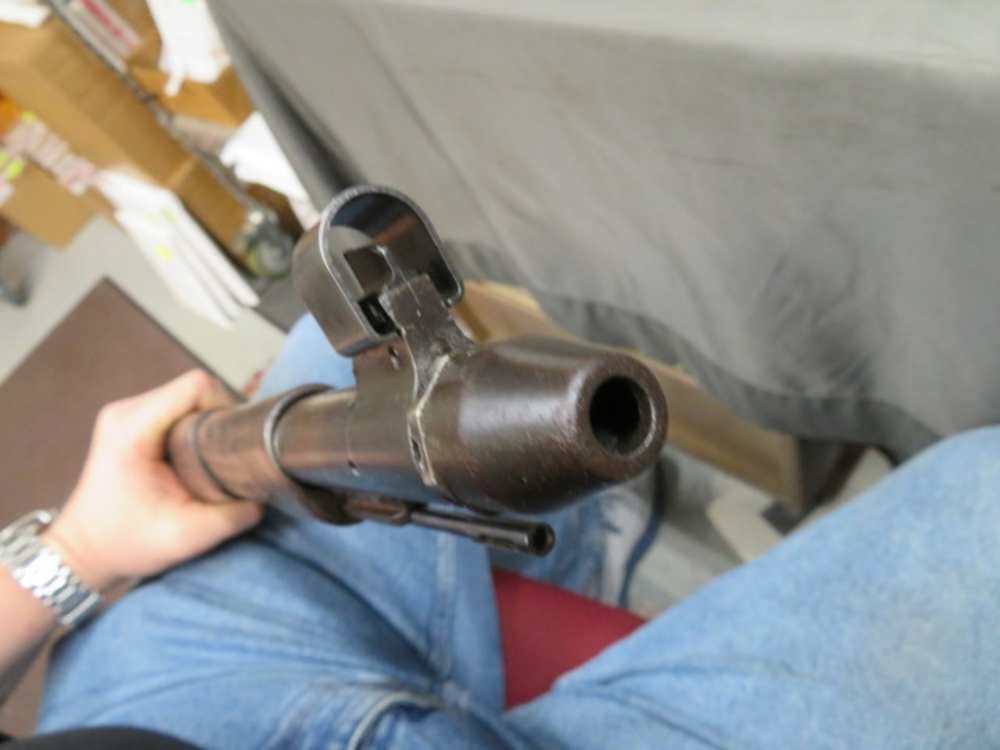
Both designs solved the no-gas-port requirement the same way: a gas-trap system fitted around the muzzle that captured propellant gas as it left the barrel rather than tapping a port further back. Walther’s version was simpler and lighter than Mauser’s G.41(M) and proved far less prone to jamming, which is why it won out despite sharing the same basic operating principle. The system worked, but it was heavy, hard to clean, and fouled quickly in the field — lessons German engineers carried straight into the redesigned G43 two years later, which dropped the muzzle trap for a conventional gas port and a short-stroke piston inspired by captured Soviet SVT-40 rifles.
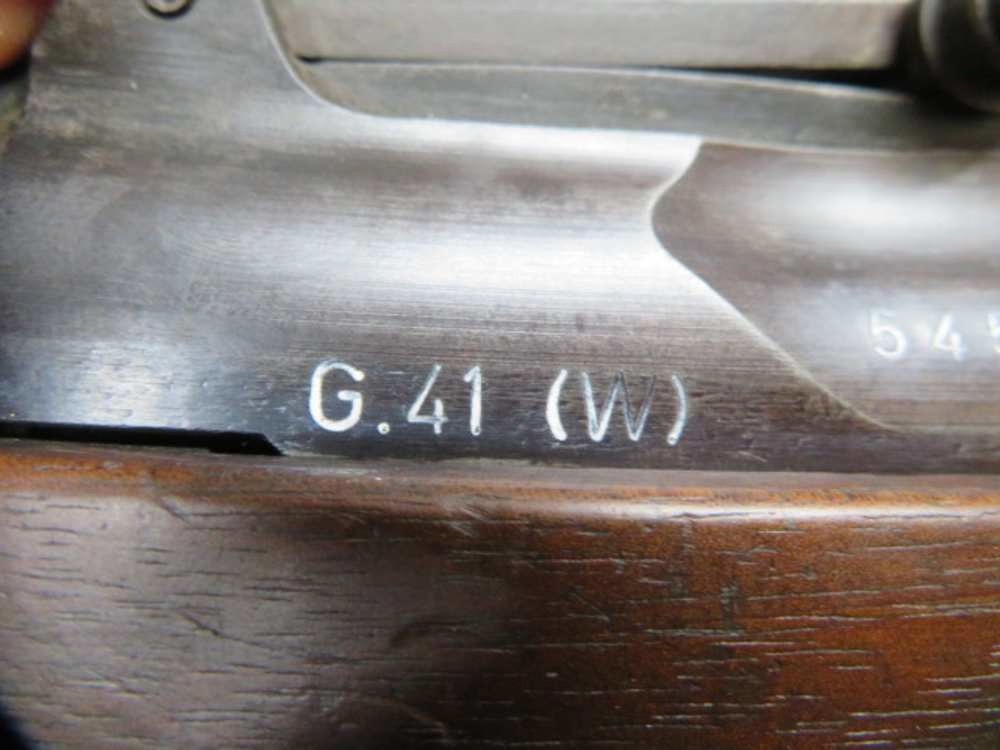
The G.41(W) was built by Carl Walther Waffenfabrik of Zella-Mehlis, marked with Walther’s wartime code "ac" alongside the G.41(W) designation stamped into the receiver. Production estimates vary — commonly cited figures run in the tens of thousands rather than the hundreds of thousands seen on the K98k — and surviving records from the period are incomplete, so any total should be read as an estimate, not a documented fact. Early "push button" rifles, named for a distinct bolt-release button, are generally considered scarcer than later production, though a firm breakdown by variant isn’t well documented.
The G.41(W) was fielded exclusively by the German Wehrmacht, issued mainly to infantry on the Eastern Front, where the pressure to match Soviet semi-automatic firepower was greatest. It saw limited use elsewhere — production numbers were modest, and the rifle was already being phased out in favor of the G43 before other fronts became a priority. There’s no well-documented history of large-scale capture and reissue the way some other German small arms saw; surviving examples today trace back almost entirely to that original wartime issue.
The G.41(W) is easy to confuse with two relatives. Mauser’s G.41(M) shares the same gas-trap muzzle and general silhouette but uses a heavier, less reliable mechanism and was built in far smaller numbers, making genuine examples considerably rarer. More commonly confused is the later G43 (also sold as the K43), which looks similar at a glance but replaced the bulky muzzle-mounted gas trap with a slimmer gas port and a detachable ten-round magazine. The clearest way to tell them apart is the muzzle: the G.41(W) carries the large gas-trap housing pictured here, where the G43 does not.
No Collector’s Library guide exists yet for the G.41(W). Even without one, the rifle’s importance is easy to state: it was Germany’s first fielded semi-automatic service rifle, the direct ancestor of the G43, and a design that saw only a few years and a modest production run before being replaced — which is exactly why well-preserved, matching examples are scarce and sought after by collectors today.