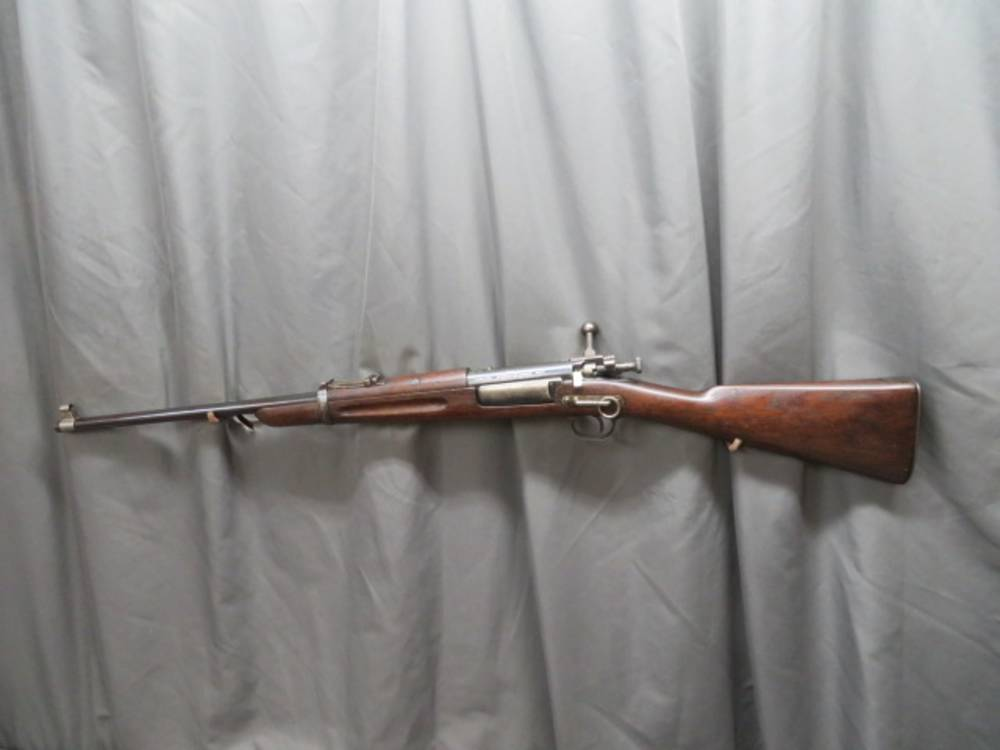
Scarce Model 1896 Krag Carbine: Spanish-American War Era
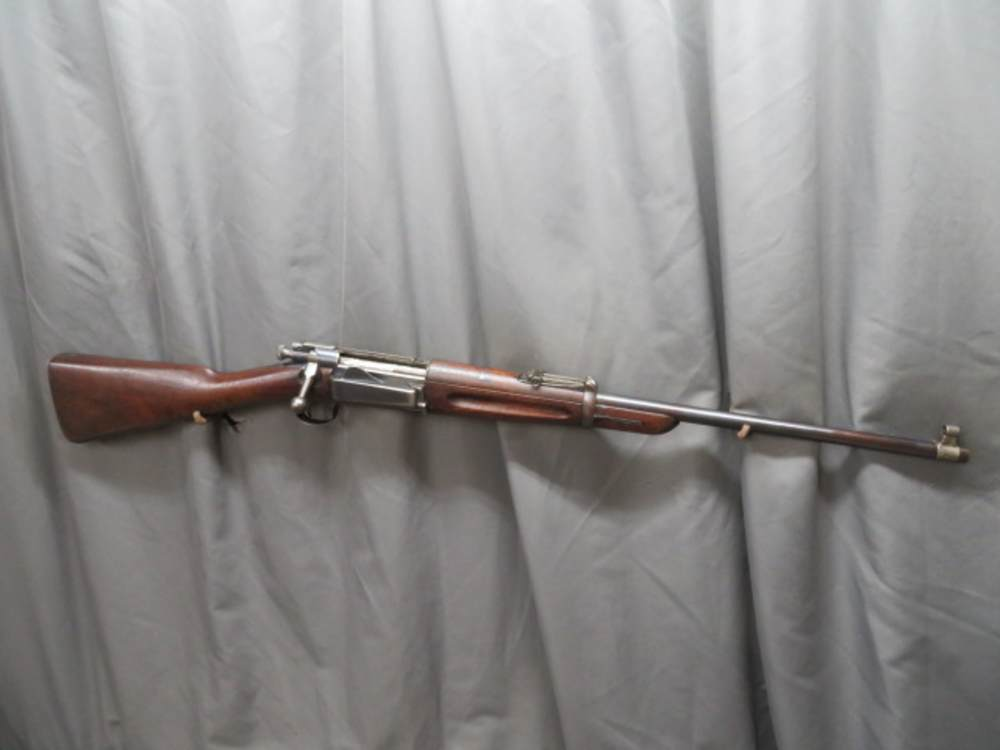
This U.S. Model 1896 Krag Carbine is a scarce surviving example of America’s early smokeless-powder military era. Compact and handy compared with the full-length Krag rifle, these carbines were designed primarily for mounted troops and are highly sought after today—especially examples retaining their original military configuration.
The Krag-Jørgensen became the U.S. Army’s standard service arm during the Spanish-American War era, famously associated with American troops fighting in Cuba in 1898. The Model 1896 carbine represents an important transitional period between the old single-shot Springfield “Trapdoor” and the later Model 1903 Springfield, making it a fascinating piece of late-19th-century U.S. military history.
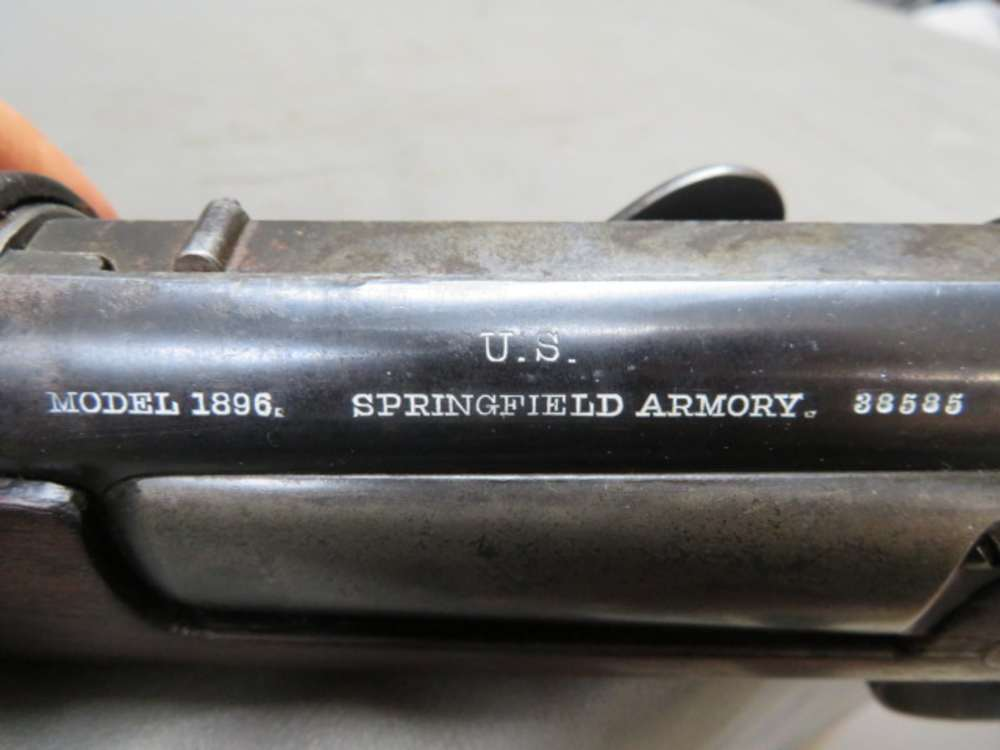
Springfield Marked: An Original Model 1896 Krag
The receiver tells the story: U.S. Model 1896, Springfield Armory, with serial number 38585 clearly visible. These markings are a defining feature of an authentic U.S. military Krag and give collectors a direct connection to its period of manufacture.
Springfield Armory manufactured the Krag for the U.S. military during the 1890s, when the Army was transitioning to modern smokeless-powder repeating arms. The Model 1896 became closely associated with the American military during the Spanish-American War era.
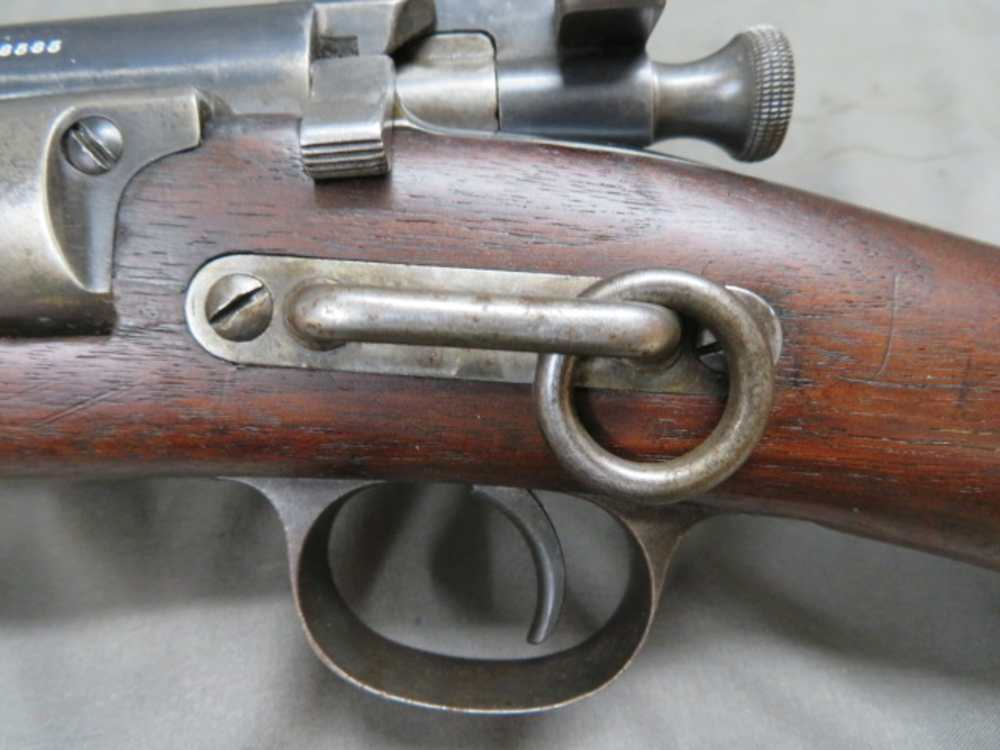
Built for the Saddle: The Krag Carbine’s Cavalry Hardware
This close-up highlights the saddle ring and bar mounted along the stock of the Model 1896 Krag Carbine. This distinctive hardware reflects the carbine’s intended use as a compact military arm for mounted troops.
Cavalry carbines needed to remain secure yet readily accessible while soldiers were on horseback. The ring-and-bar arrangement allowed the carbine to be attached to a sling or carbine strap, helping distinguish original cavalry-style Krags from standard infantry rifles.
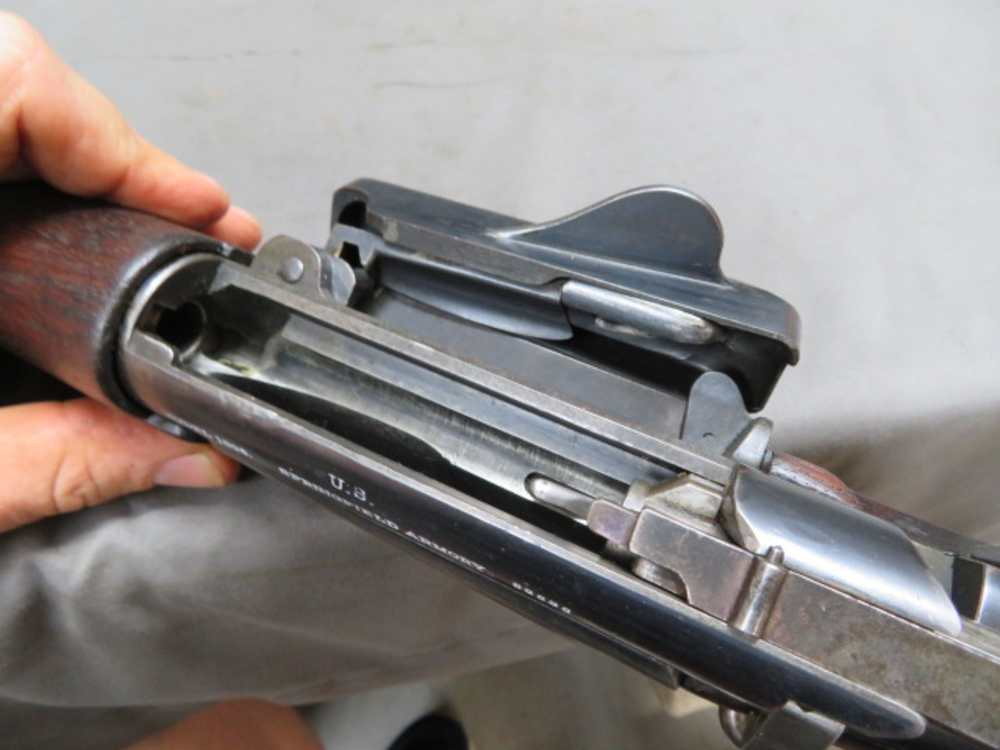
Inside the Krag: America’s Unique Side-Loading Design
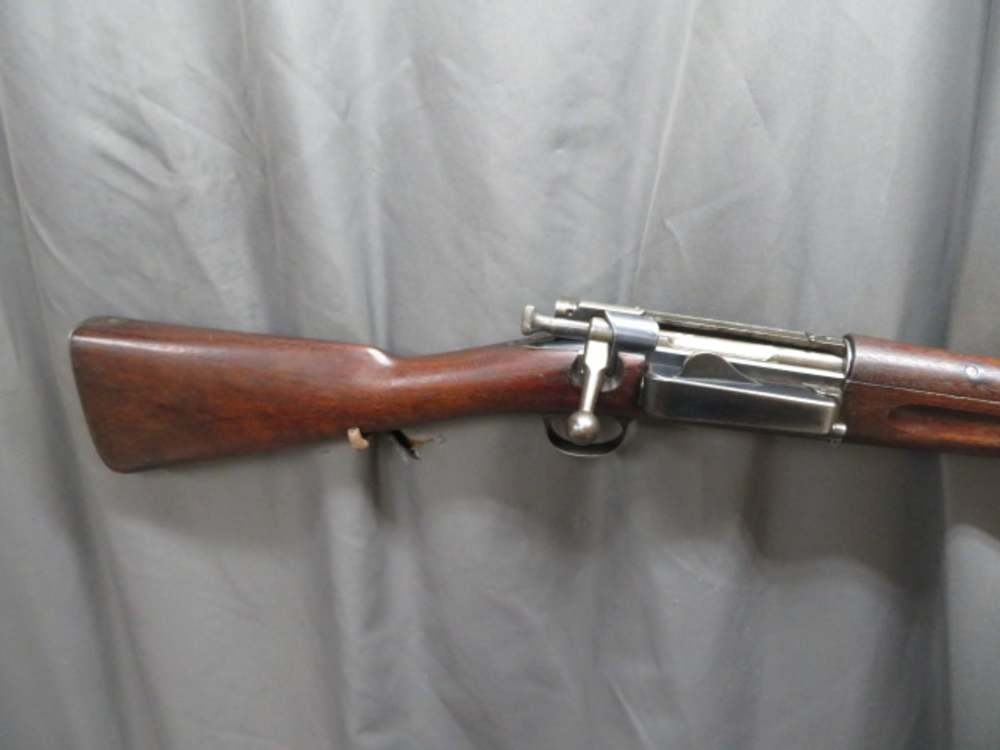
This close-up shows the open action and distinctive side-mounted magazine of the Model 1896 Krag. Its unusual loading system is one of the most recognizable features of the Krag-Jørgensen design.
Adopted by the U.S. Army in the 1890s, the Krag represented a major leap from the single-shot Trapdoor Springfield to a repeating, smokeless-powder military rifle. Its smooth bolt action earned an enduring reputation among soldiers and collectors.
A Mark of History: The Krag’s Stock Stamp
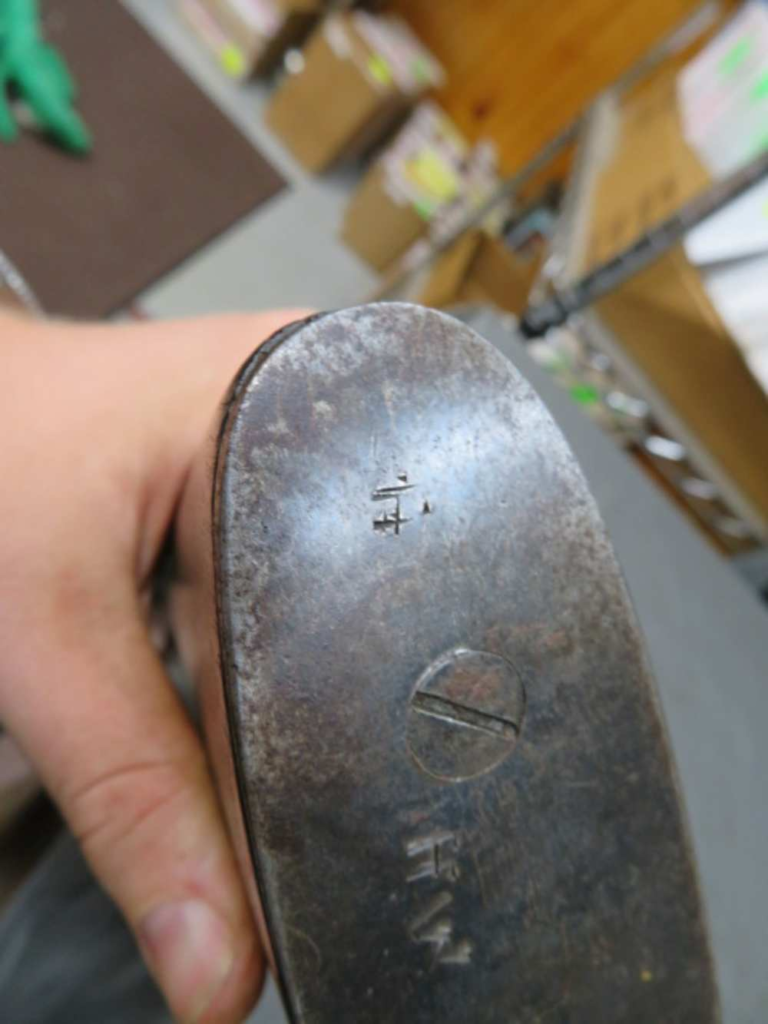
This close-up reveals a distinctive circled “P” proof mark stamped into the walnut stock of the Model 1896 Krag Carbine. Surviving inspection and proof markings add important historical character to an original military arm.
\U.S. military arms produced at Springfield Armory underwent inspection and proof testing before acceptance. Stock markings like this provide visible evidence of the government inspection process used during the Krag era.
The Sight That Set the Krag Carbine Apart
This close-up highlights the rear sight and handguard area of the Model 1896 Krag Carbine. The compact carbine used military sighting equipment suited to its role with mounted troops.
Krag sights evolved as the U.S. Army gained experience with its new smokeless-powder cartridge during the 1890s. Correct carbine sights are especially important to collectors because many surviving Krags were modified during their long service lives.
The Business End of a Scarce 1896 Krag Carbine
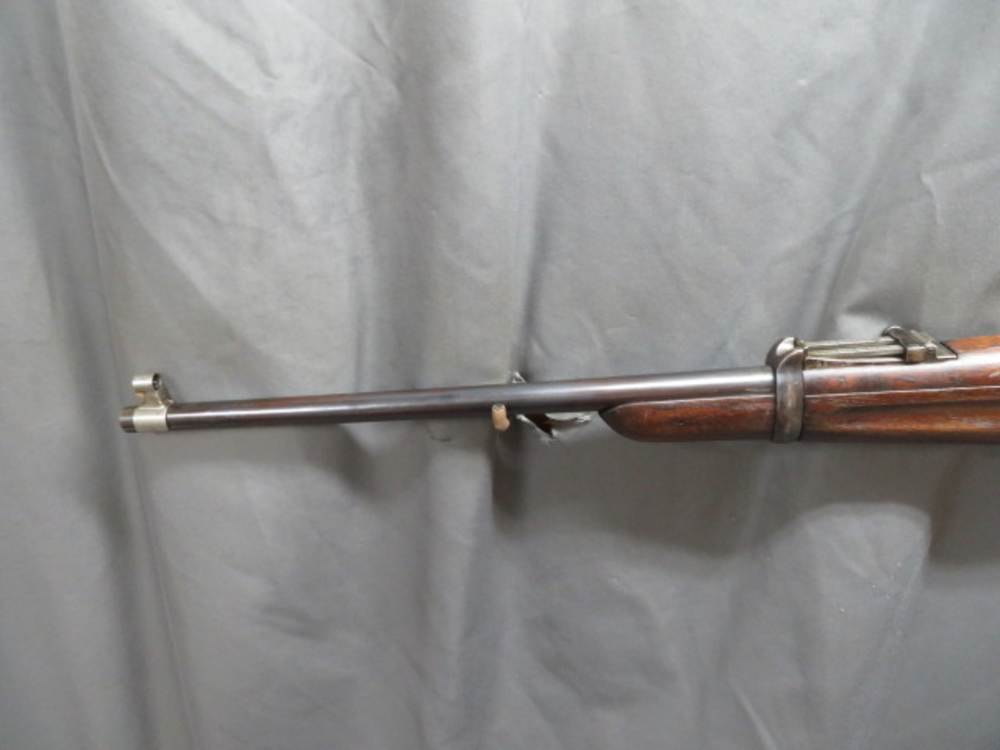
This close-up highlights the muzzle and front sight assembly of the Model 1896 Krag Carbine, showing the compact military configuration that helped distinguish the cavalry carbine from its full-length rifle counterpart.
Krag carbines were designed for mounted troops who needed something shorter and easier to carry than an infantry rifle. Original muzzle and sight details are therefore important when evaluating surviving Spanish-American War-era carbines.
A Soldier’s View of the 1896 Krag
Looking directly at the muzzle reveals the front sight assembly and compact barrel of this original Model 1896 Krag Carbine—features central to its distinctive cavalry configuration.
The shorter Krag carbine was developed for U.S. mounted troops, offering greater portability than the standard infantry rifle. Carbines of this era became closely associated with America’s cavalry forces during the Spanish-American War period.