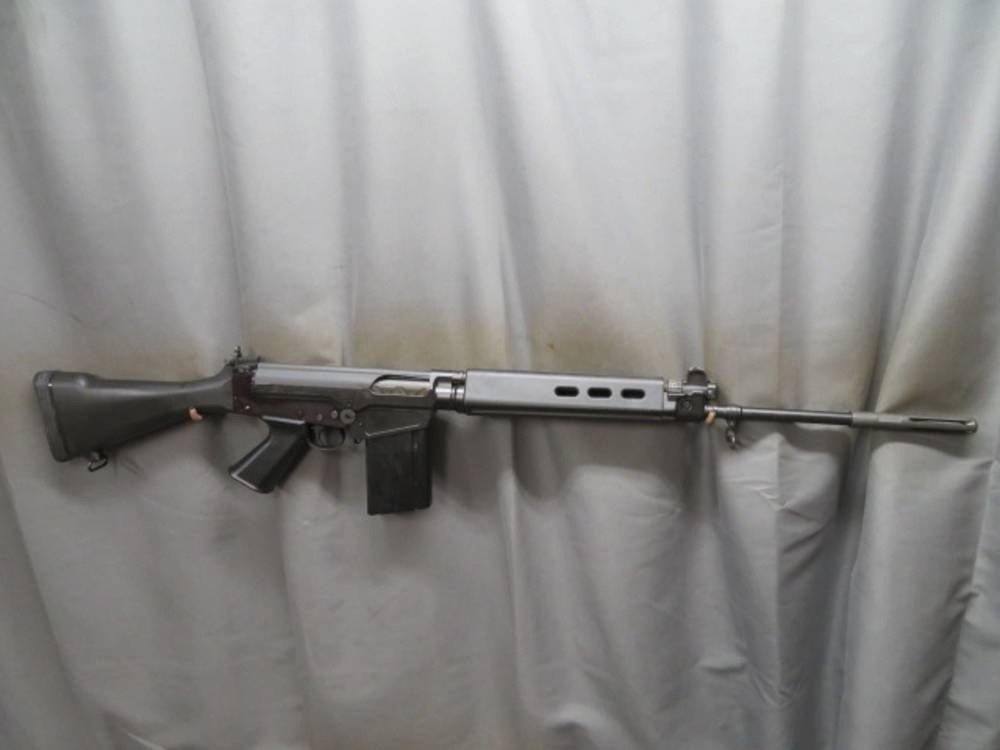
DSA SA58 metric-pattern FAL rifle, full right-side view with black synthetic stock, pistol grip, and slotted metal handguard. Photo property of Eisel Armory.
DSA SA58 metric-pattern FAL rifle, full right-side view. Photo property of Eisel Armory.

The FN FAL (Fusil Automatique Léger) was adopted by Belgium and a wave of NATO and allied nations beginning in the early-to-mid 1950s, chambered in the newly standardized 7.62x51mm NATO cartridge. It went on to become one of the most widely issued rifles of the Cold War, fielded by dozens of countries across nearly every continent and nicknamed "the right arm of the free world." The rifle pictured here is a DSA SA58, a modern American-made semi-automatic rifle built to FN’s original Belgian "metric pattern" dimensions rather than a wartime surplus example.

From FN Herstal to DSA: Who Built It

The FAL was manufactured under license by Fabrique Nationale in Herstal, Belgium, and by government arsenals and licensees in dozens of countries, including Austria, Argentina, Brazil, Canada, and Israel, each building to FN’s metric-pattern dimensions. Worldwide production figures are hard to pin down given how many countries built their own versions, though estimates commonly run into the millions of rifles. DSA Inc., based in Illinois, later acquired much of FN’s original Austrian-sourced metric FAL tooling and has since built semi-automatic SA58 rifles domestically, continuing that metric-pattern lineage for the American market rather than assembling rifles from imported surplus parts.
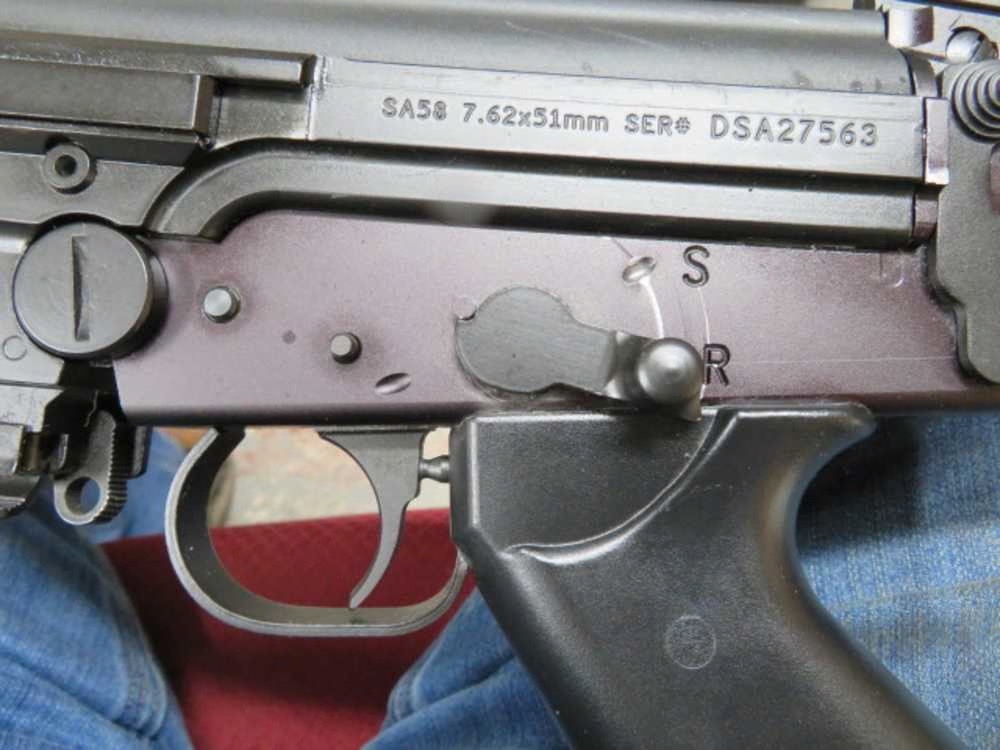
Close-up of the SA58 receiver rollmark reading SA58 7.62x51mm with serial number, and the safety selector marked S and R. Photo property of Eisel Armory.
Close-up of the SA58 receiver markings and safety selector switch. Photo property of Eisel Armory.

Origins and Design Lineage

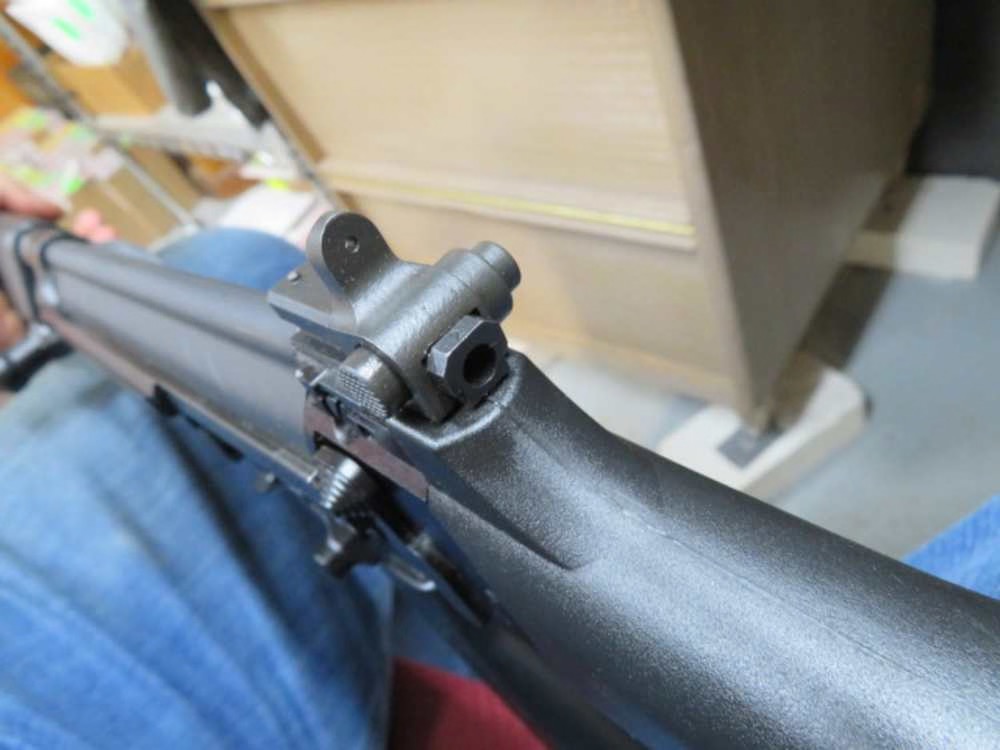
Close-up of the FAL-pattern adjustable rear sight and top of the receiver. Photo property of Eisel Armory.
Close-up of the FAL-pattern adjustable rear sight. Photo property of Eisel Armory.

The FAL was designed by Belgian engineer Dieudonné Saive, a longtime collaborator of John Browning at FN, building on his earlier SAFN Model 1949 self-loading rifle. Development drew on wartime prototype work and postwar trials aimed at finding a standard NATO rifle chambered in a full-power cartridge. FN’s design competed directly against the U.S. M14 rifle in NATO trials of the early 1950s; the U.S. ultimately adopted its own rifle, while most other NATO and Commonwealth nations chose the FAL instead.

Countries and Conflicts

Beyond Belgium, the FAL saw service with the British Commonwealth (as the inch-pattern L1A1 Self-Loading Rifle), Canada, Australia, Israel, and numerous nations across Africa, South America, and the Middle East, generally as each country’s standard infantry rifle through the 1960s-80s. It saw combat in conflicts ranging from colonial-era counterinsurgencies to the 1982 Falklands War, where, notably, both British and Argentine forces carried FAL-pattern rifles on opposing sides. Captured or reissued examples turning up in later conflicts were fairly common given how widely the design was licensed, though specifics vary by country and are often poorly documented.

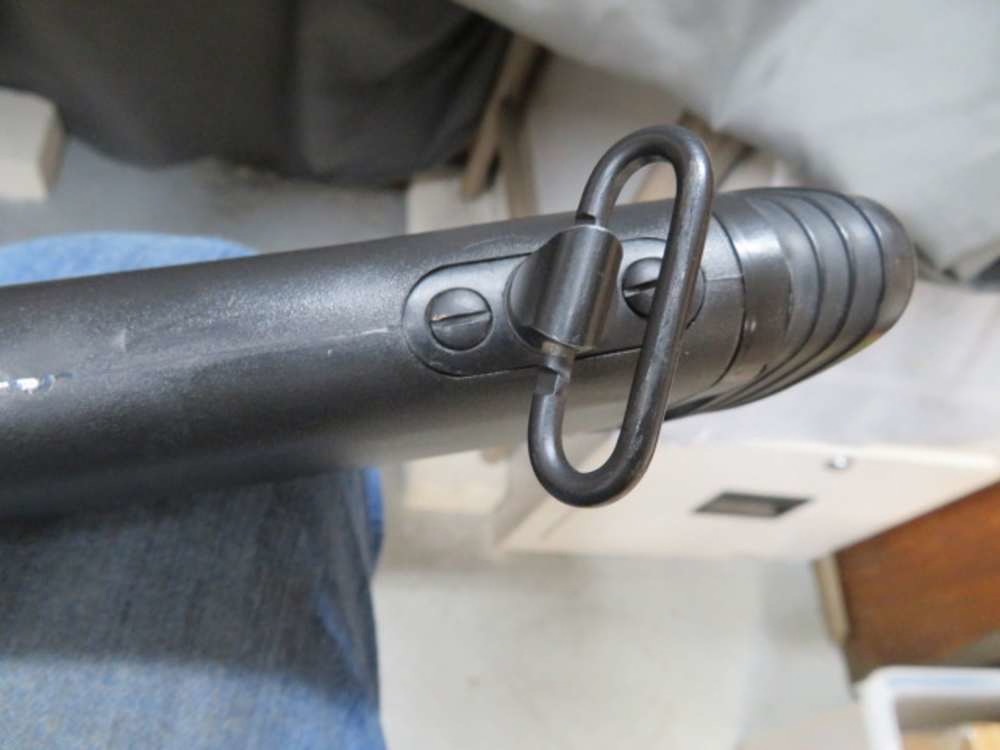
Close-up of the sling swivel mounted near the muzzle end of the handguard. Photo property of Eisel Armory.
Close-up of the front sling swivel mounted near the muzzle end of the handguard. Photo property of Eisel Armory.

Coming to the US

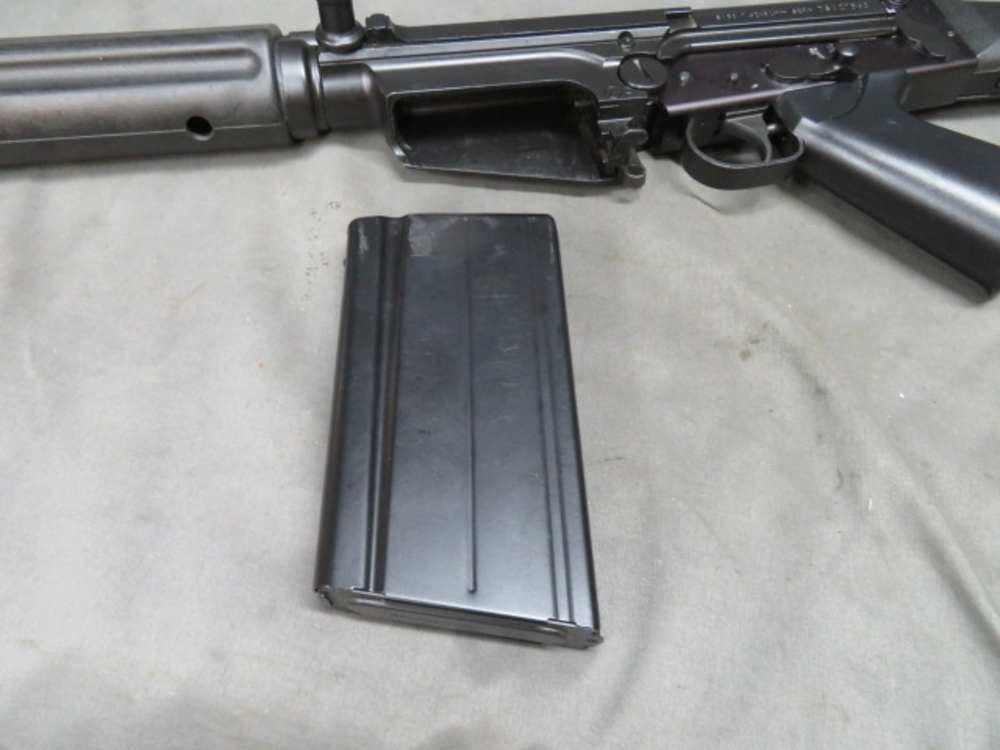
Detached 20-round FAL box magazine beside the open magazine well and trigger guard. Photo property of Eisel Armory.
Detached 20-round FAL box magazine beside the open magazine well. Photo property of Eisel Armory.

The FAL was never adopted by the U.S. military, so it has no American war-trophy bring-back history the way many WWII-era rifles do. Its American presence instead grew out of the commercial surplus market: as countries retired FAL-pattern rifles through the 1980s and 1990s, large quantities of demilitarized parts kits entered the U.S. under import rules like the 1968 Gun Control Act. Companies including DSA used these kits, paired with a U.S.-made receiver and enough domestic parts to satisfy federal compliance rules, to build complete semi-automatic FAL-pattern rifles like the SA58 for American collectors and shooters.

Lookalikes, Cousins, and Why It Still Matters

The most common FAL relative encountered by American collectors is the British/Commonwealth L1A1, an inch-pattern, semi-auto-only variant with different furniture and dimensions that isn’t parts-interchangeable with metric-pattern rifles like the SA58. Austria’s StG 58 and various South American-built FALs form their own closely related family, while the FAL’s old NATO-trials rival, the U.S. M14, remains a frequent point of comparison despite being a distinct design. For collectors, the FAL’s decades of service across dozens of armies and its wide variety of national variants make it one of the richest Cold War battle rifles to study.

Want to identify a specific FAL yourself? Our FN FAL Identification Guide covers Belgian proof marks, DSA’s own rollmarks, and how to tell metric pattern from inch pattern at a glance.

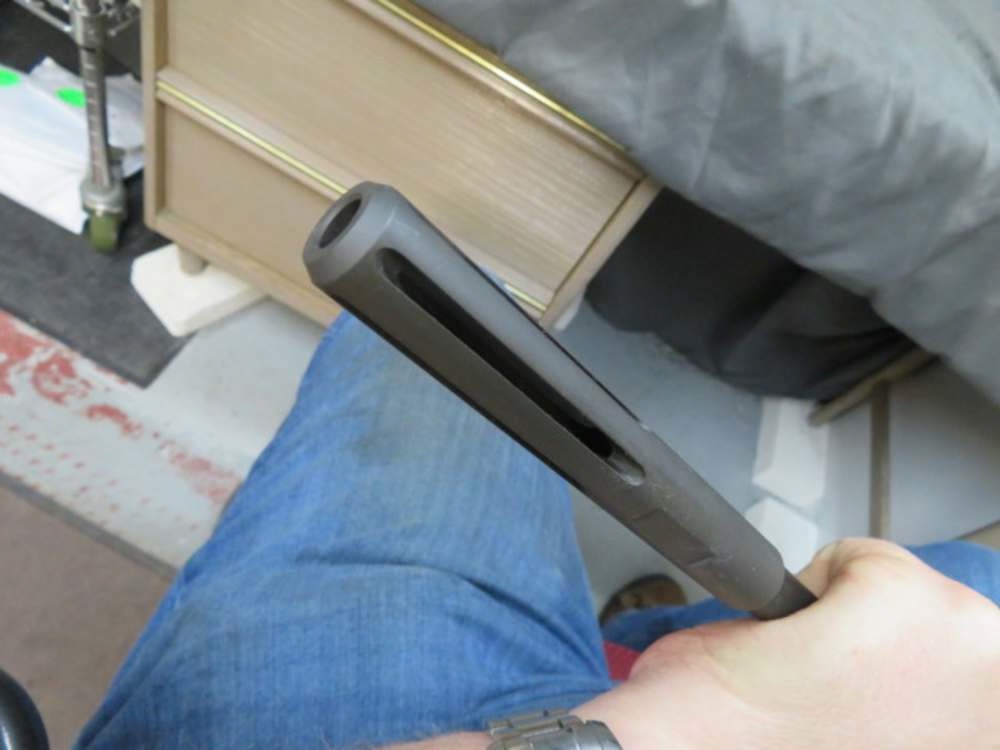
Close-up of the muzzle and flash hider. Photo property of Eisel Armory.
×