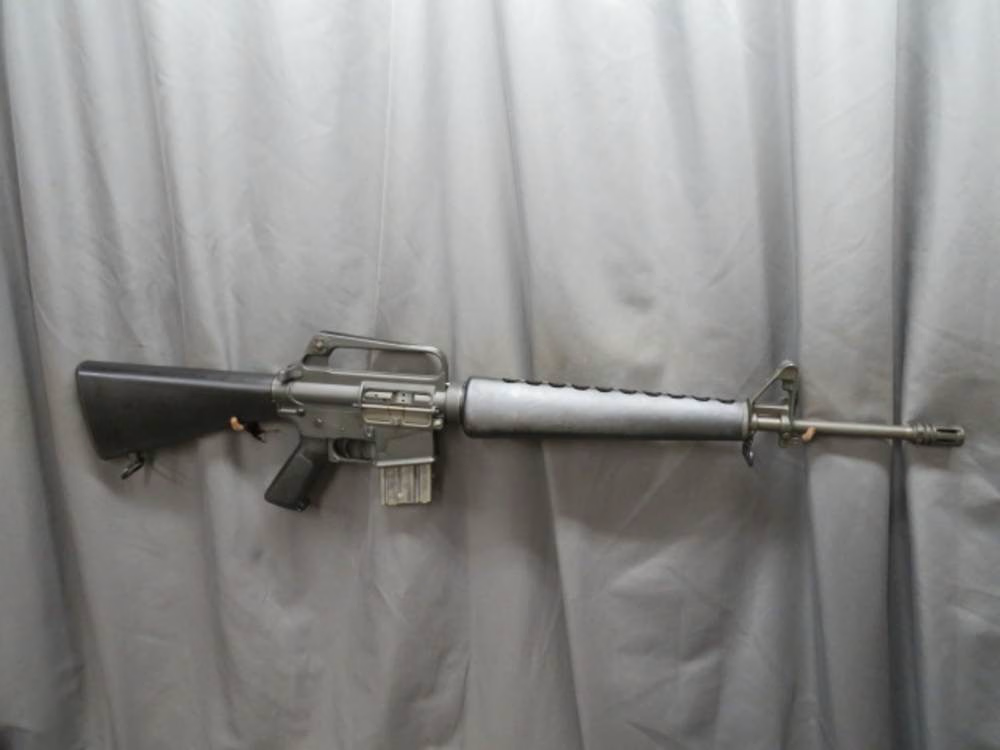
1971 Colt SP1 AR-15 rifle, full left-side profile showing triangular handguard, fixed carry handle and fixed stock
1971 Colt SP1 AR-15, full left-side profile. Photo property of Eisel Armory.

The Colt SP1 was the AR-15 that brought Eugene Stoner’s rifle design to American civilian gun owners. Colt introduced the commercial SP1 in spring 1964 (Model R6000 / AR-15 Sporter), chambered in .223 Remington, as the semi-automatic commercial counterpart to the M16 the U.S. military was then adopting for Vietnam-era service. Limited 1963 pre-production and presentation serials existed, but spring 1964 is when the rifle reached the civilian market in meaningful numbers. Lightweight, magazine-fed and built around a rotating bolt and direct-impingement gas system, the SP1 carried the same slim profile, fixed carry handle and triangular handguards that would come to define the entire AR-15 family. It remained in production from about 1964 into late 1982 — roughly eighteen years — and is generally regarded as the rifle that started the American commercial “black rifle” market.

Origins and Design Lineage

The AR-15 traces back to Eugene Stoner, a designer at ArmaLite who scaled down his earlier AR-10 battle rifle into a lighter .223-caliber platform in the late 1950s. ArmaLite, unable to fund large-scale manufacturing, sold the design and the AR-15 name to Colt’s Patent Firearms Manufacturing Company in 1959. Colt refined the rifle for military trials, and after the U.S. Air Force and later the Army adopted select-fire versions as the M16, Colt began selling a semi-automatic-only civilian variant under its own SP1 model designation, keeping the same basic mechanism, sights and furniture as its military sibling.

Close-up of the Colt SP1's fixed carry handle with integrated rear sight and forward assist
Close-up of the SP1's fixed carry handle and integrated rear sight. Photo property of Eisel Armory.

Who Built It: Colt's Hartford Production

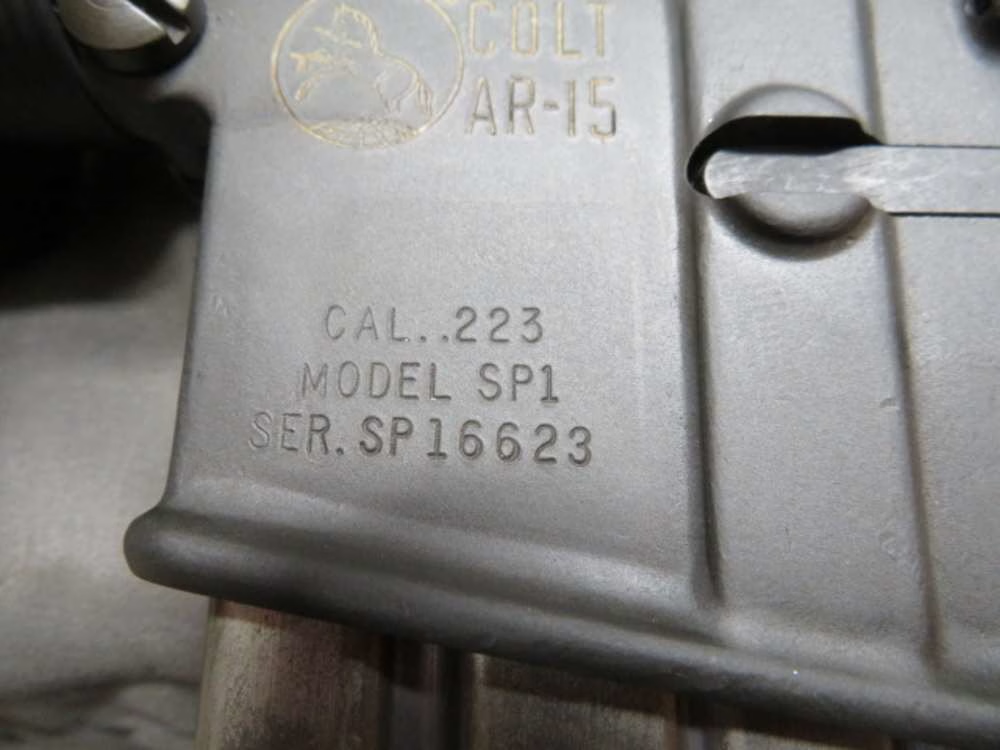
Every SP1 was manufactured by Colt at its factory in Hartford, Connecticut, the company’s home since the nineteenth century. Colt held the original AR-15 patents and trademark through the 1960s and 70s, making it the sole source for the rifle on the civilian market during that stretch. Receivers from this era typically carry Colt’s prancing-horse rampant-colt logo, a Hartford address roll mark, and a serial number with an “SP1” prefix. Exact SP1 production totals aren’t published in detail, but collectors generally describe it as produced in substantial numbers across roughly two decades of manufacture.

Close-up of Colt SP1 receiver markings including the SP16623 serial number and Colt prancing-horse logo
Colt receiver markings and serial number stamped on the SP1. Photo property of Eisel Armory.

Countries and Service

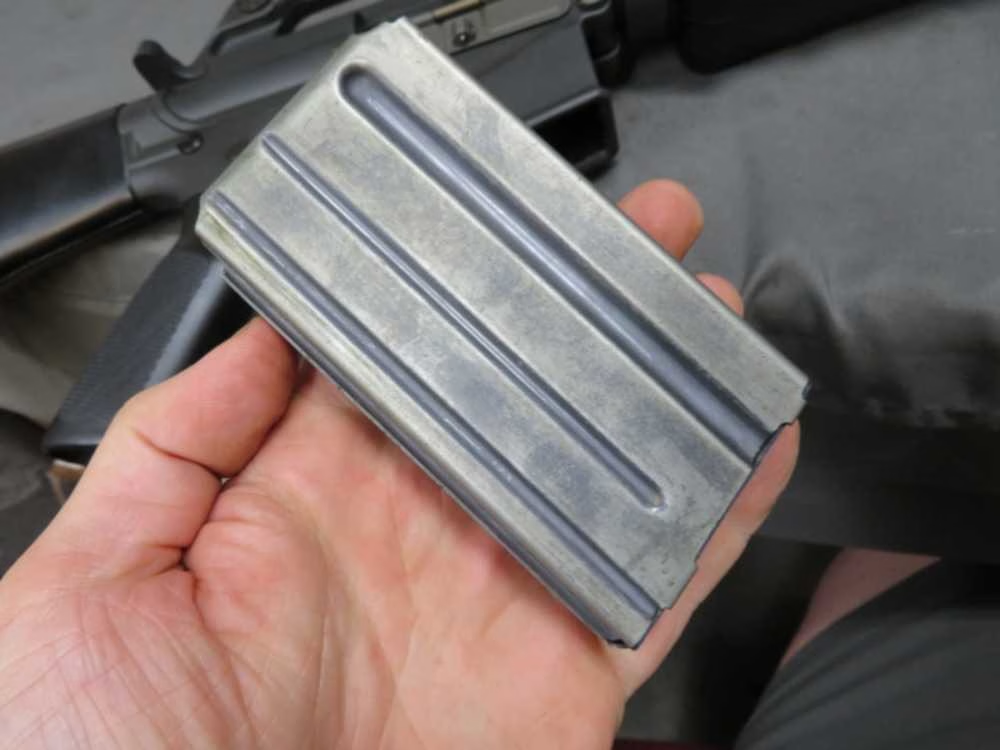
Vintage straight-body aluminum 20-round magazine paired with the Colt SP1 rifle
Vintage straight-body aluminum 20-round magazine used with the SP1. Photo property of Eisel Armory.

Unlike the M16, which armed U.S. and allied forces overseas, the SP1 was built almost entirely for the American domestic market. It saw some use with civilian law enforcement agencies in the 1960s and 70s, but it was never issued as standard military-pattern hardware the way its select-fire counterpart was. Its story belongs mainly to American sportsmen, shooters and early collectors who wanted a semi-automatic version of the rifle then making headlines in military service overseas, particularly during the Vietnam War.

Lookalikes and Cousins

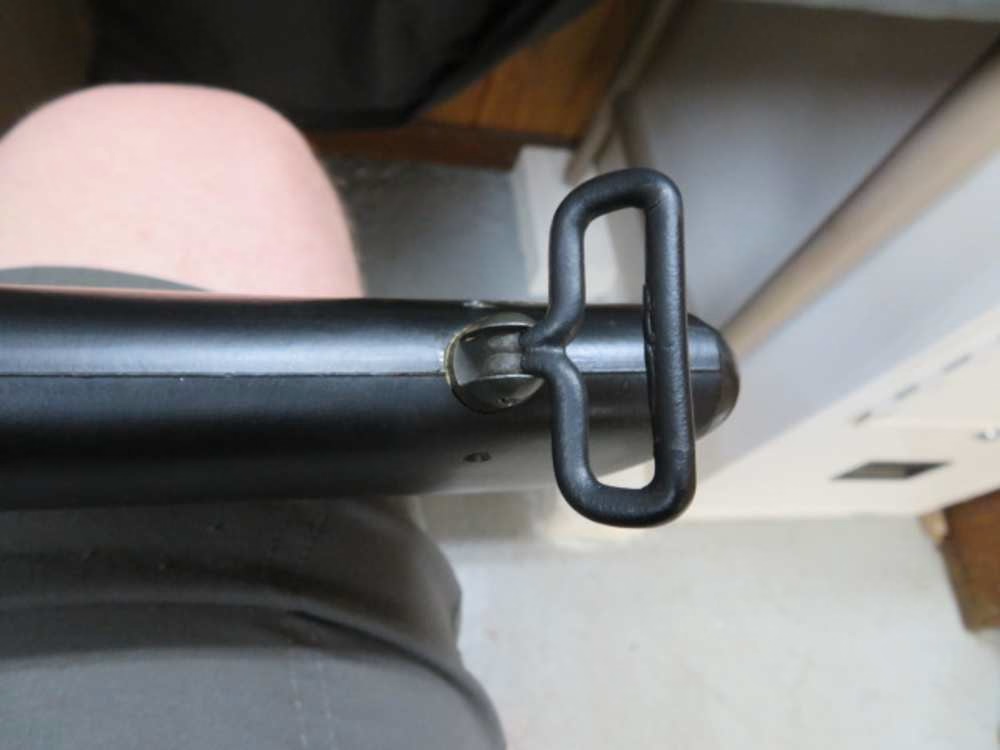
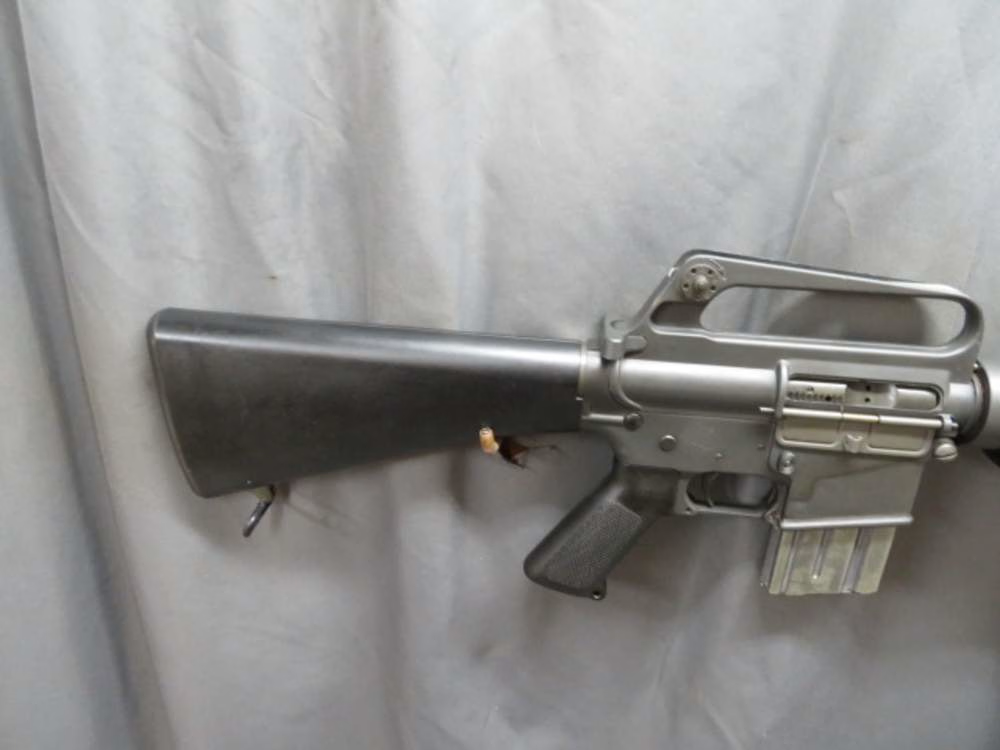
Underside of the Colt SP1's fixed black stock showing the metal rear sling swivel
Underside of the SP1's fixed stock and rear sling swivel. Photo property of Eisel Armory.

The SP1 is easy to confuse with its military relative, the M16, which retains a select-fire capability the SP1 never had. Within Colt’s own civilian lineup, the SP1 itself was the R6000-series AR-15 Sporter. That name was eventually dropped in the mid-1980s in favor of the Colt AR-15A2 / Sporter II lines (commonly the R6400 / R6500 family and related catalog numbers), which added features like a heavier barrel profile, A2-style sights, and round handguards. After Colt’s original patents expired in 1977, other manufacturers began producing their own AR-15-pattern rifles, launching the vast modern aftermarket of ARs built to the same basic layout the SP1 helped popularize.
Why This Rifle Still Matters to Collectors

There’s no dedicated Collector’s Library guide for the SP1 yet, but it remains one of the more historically significant civilian rifles on the market. As the first widely sold semi-automatic AR-15, it represents the starting point for an entire category of American firearms, and early, unmodified examples in original configuration are increasingly sought after by collectors who want a genuine piece of that history rather than a later reproduction.

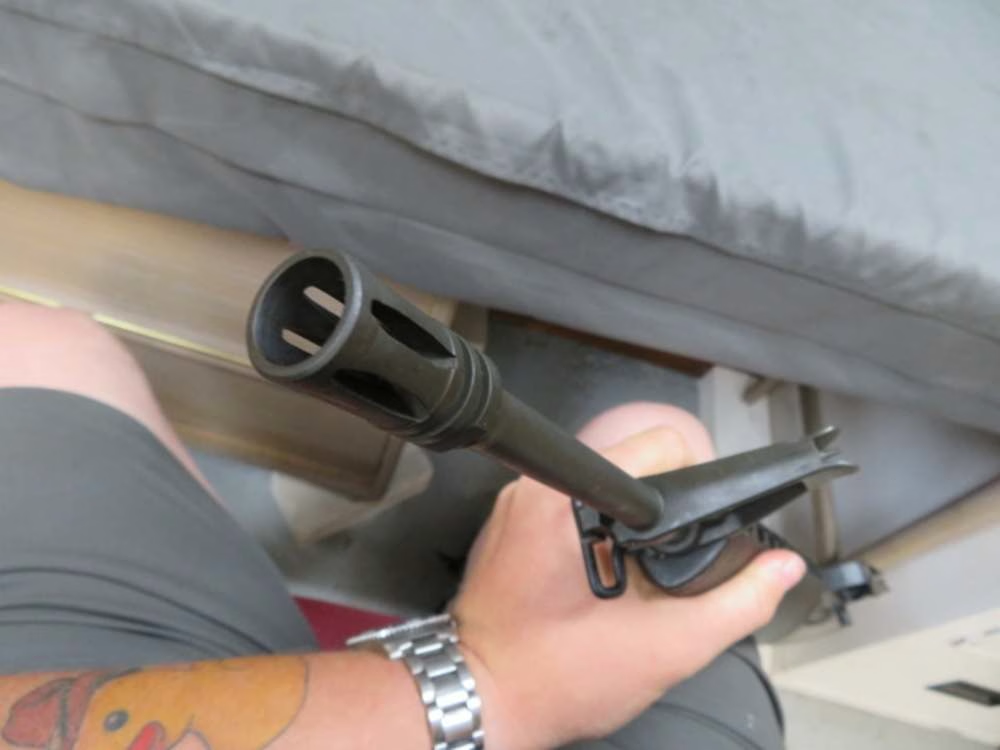
Muzzle end of the Colt SP1 showing the slotted birdcage-style flash suppressor and front sight assembly
Muzzle end of the SP1 with its slotted birdcage flash suppressor. Photo property of Eisel Armory.
×