Before the Civil War: The Revolutionary Springfield Model 1855 Pistol Carbine That Was Ahead of Its Time!
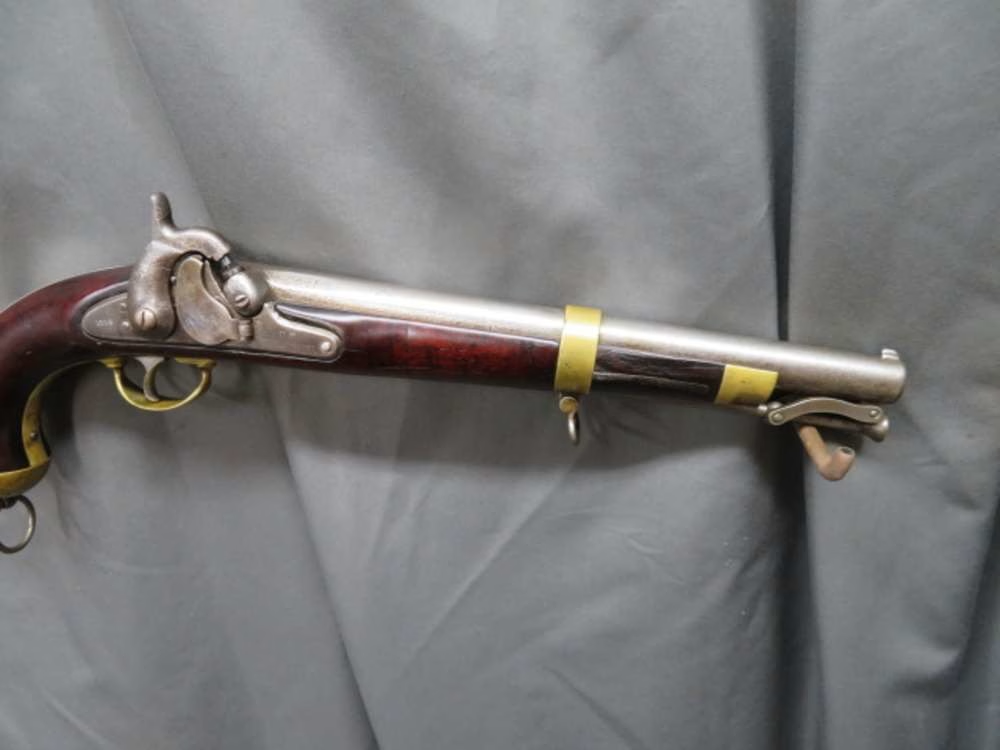
Adopted in 1855, the U.S. Model 1855 Pistol Carbine was one of America’s most innovative military firearms before the Civil War. Manufactured at the Springfield Armory, it featured the revolutionary Maynard tape primer system, designed to speed up ignition by automatically feeding primers into place. Intended primarily for mounted troops, artillerymen, and specialized units, relatively few were produced, making surviving examples highly sought after today.
This 1856-dated Springfield example is especially desirable because it retains its matching numbered detachable shoulder stock, a feature often separated from the pistol over time. With its brass furniture, walnut stock, and unique convertible design, it represents an important step in the evolution of U.S. military small arms just before percussion firearms gave way to metallic cartridge technology.
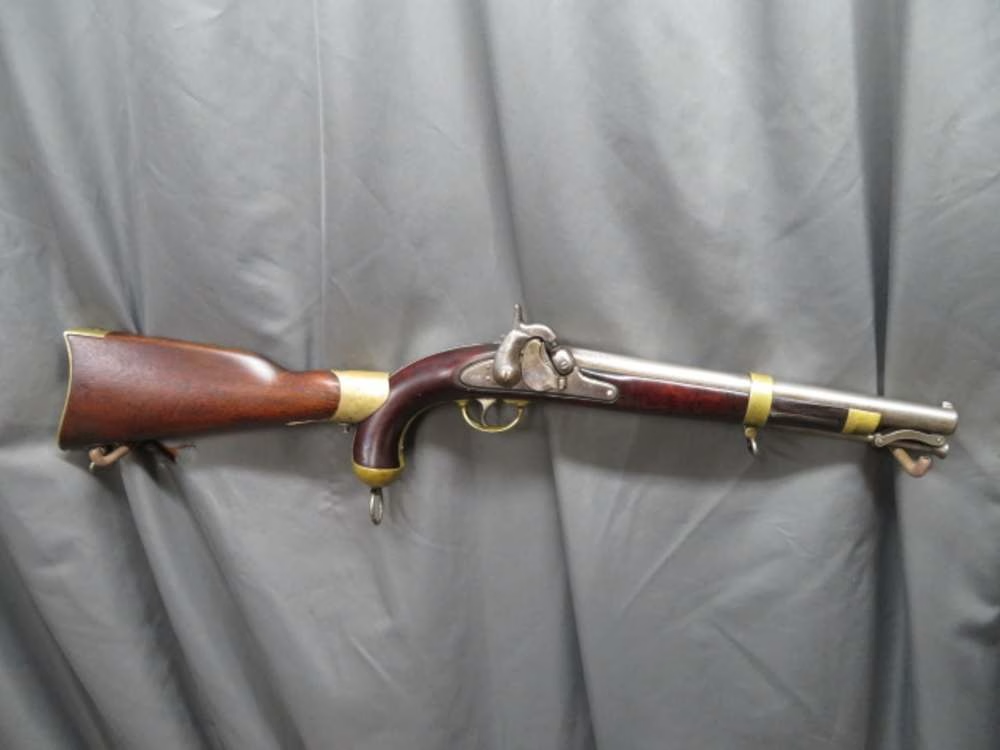
The Pistol That Became a Carbine
This close-up highlights the business end of the U.S. Model 1855 Pistol Carbine, manufactured at Springfield Armory in 1856. Built during a period of rapid military innovation, the Model 1855 incorporated the advanced Maynard tape primer system, allowing faster ignition than earlier percussion arms. Although produced in limited numbers, it played an important role in the evolution of U.S. military firearms before the outbreak of the Civil War.
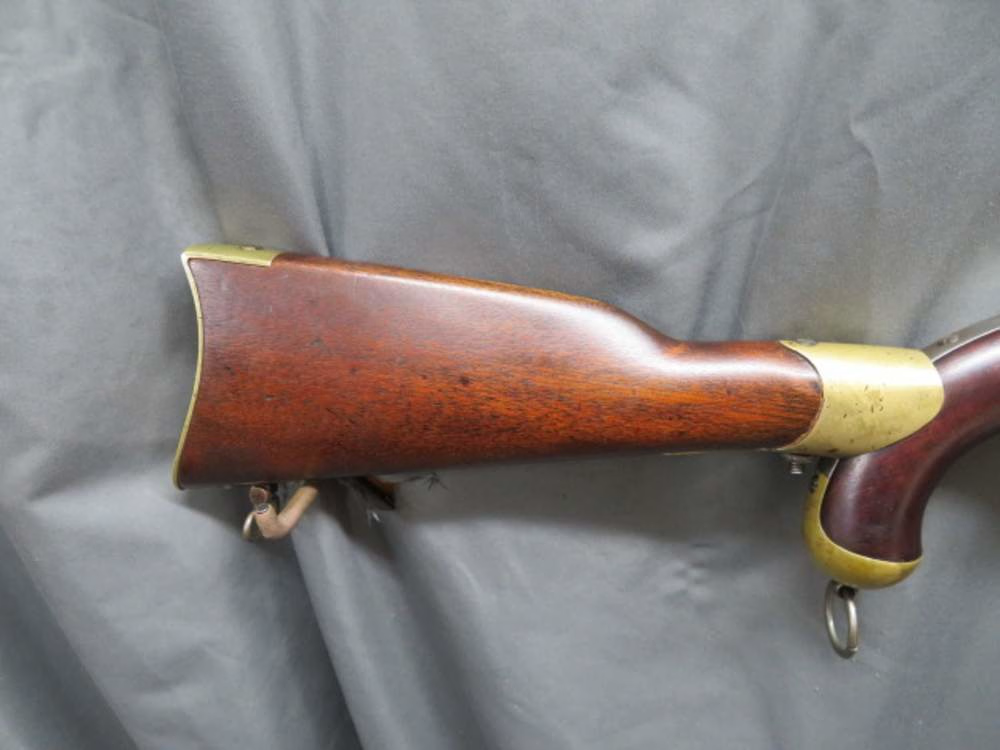
One of its most distinctive features was its detachable, matching-numbered shoulder stock, allowing troops to quickly convert the pistol into a compact shoulder-fired weapon. Surviving examples with their original matching stocks are increasingly difficult to find, making them especially desirable to collectors of early American military arms.
The Matching Shoulder Stock
The detachable shoulder stock was one of the defining features of the U.S. Model 1855 Pistol Carbine, allowing soldiers to quickly convert the pistol into a compact shoulder-fired firearm. Manufactured at Springfield Armory in 1856, this innovative design provided mounted troops with greater accuracy and versatility at a time when military firearms were rapidly evolving.
Complete examples with their original matching-numbered shoulder stocks are significantly rarer than the pistols alone. Over the past 170 years, many stocks became separated from their pistols during military service or later civilian ownership, making matching sets especially desirable among collectors of early American military arms.
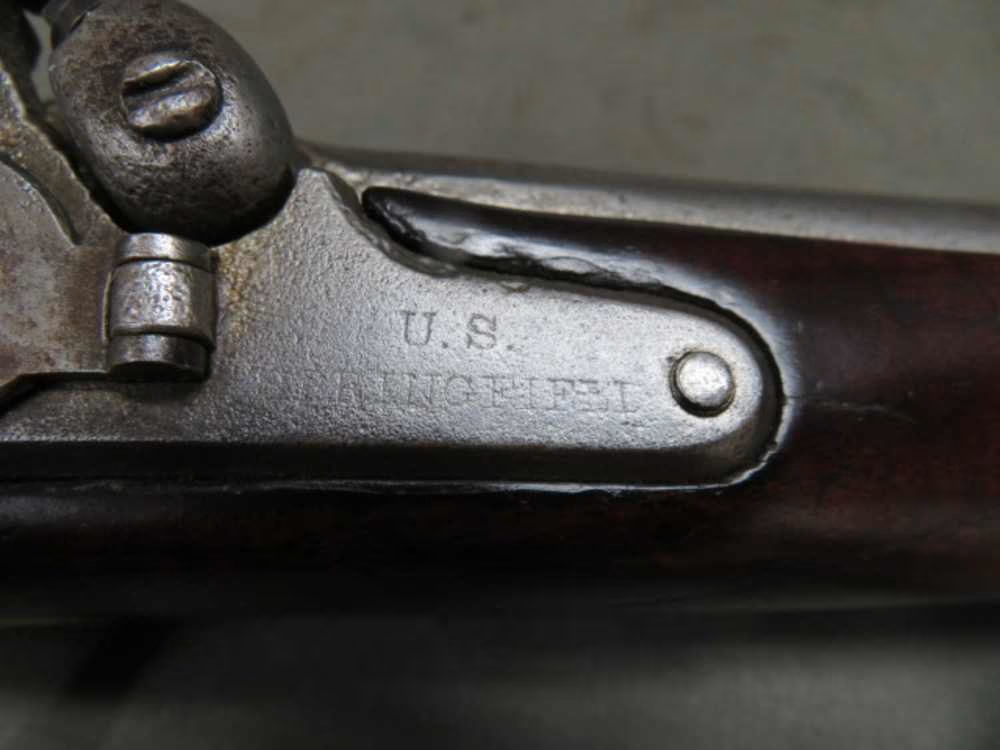
U.S. Springfield Marking
The “U.S. Springfield” marking identifies this firearm as having been produced at the renowned Springfield Armory, America’s primary federal arms manufacturer during the 19th century. Established in 1777, the armory supplied generations of U.S. soldiers with military firearms and became a center of innovation in American weapon design.
This 1856-produced Model 1855 Pistol Carbine represents one of Springfield Armory’s most advanced percussion firearms. Featuring the innovative Maynard tape primer system and interchangeable parts, it helped pave the way for the next generation of U.S. military arms on the eve of the Civil War.
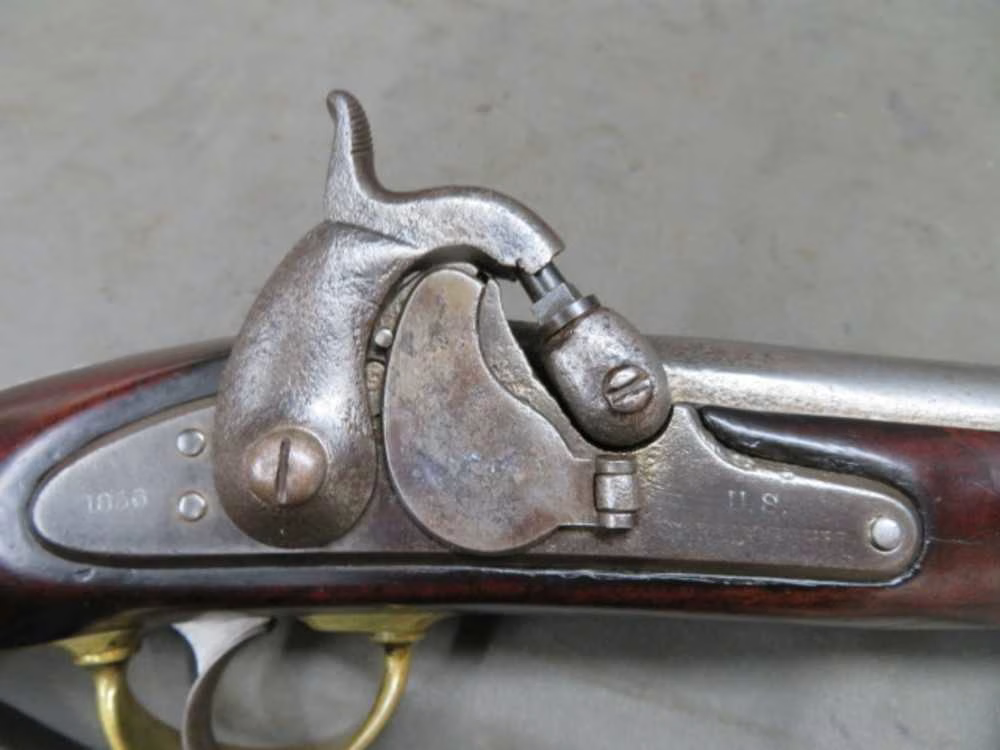
The Revolutionary Maynard Primer
This close-up showcases the lock mechanism of the U.S. Model 1855 Pistol Carbine, one of the most technologically advanced American military firearms of the 1850s. Produced at Springfield Armory in 1856, it featured the innovative Maynard tape primer system, designed to automatically feed percussion primers into place and speed up firing.
Although the Maynard system was a remarkable innovation, it proved less reliable in wet or harsh field conditions than expected. Even so, the Model 1855 marked an important milestone in U.S. firearms development and helped bridge the gap between traditional percussion arms and the more advanced military firearms that followed.
Precision in Every Pull
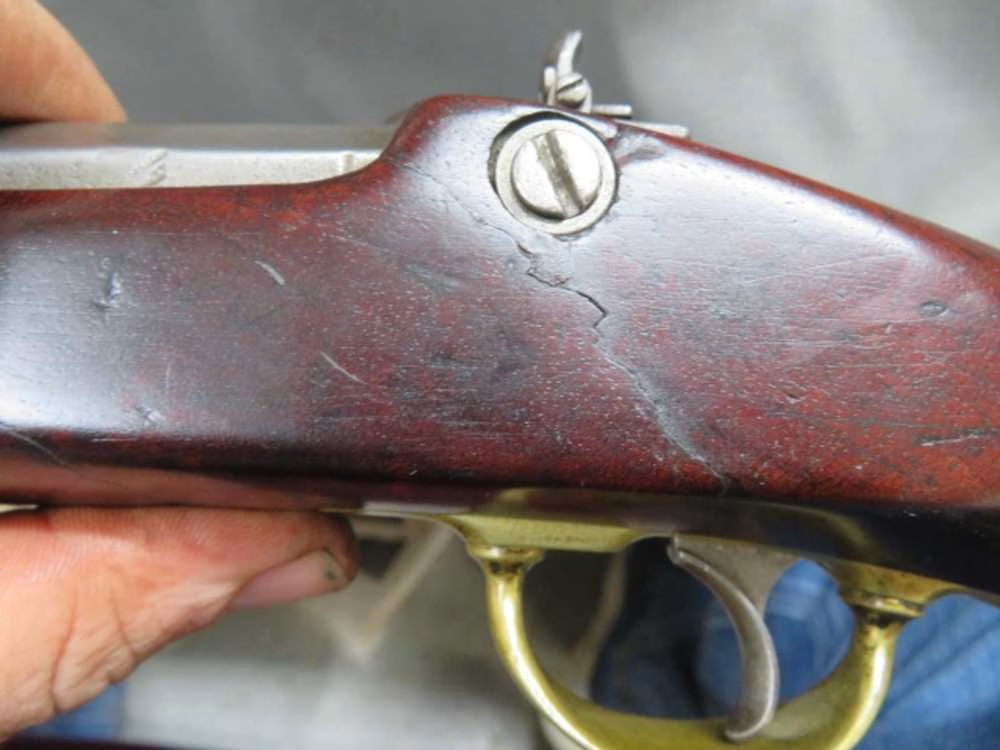
This close-up highlights the trigger and brass trigger guard of the U.S. Model 1855 Pistol Carbine, manufactured at Springfield Armory in 1856. Designed for mounted troops and artillerymen, the trigger mechanism provided a crisp, dependable release for the percussion lock. Combined with the innovative Maynard tape primer system, the Model 1855 represented one of the most advanced U.S. military firearms of the decade.
The heavy brass trigger guard not only protected the trigger from accidental discharge but also reflected the durability expected of military arms carried on horseback and in the field. More than 165 years later, original examples retaining their factory components remain prized pieces of early American firearms history.
The Stock Locking Ring
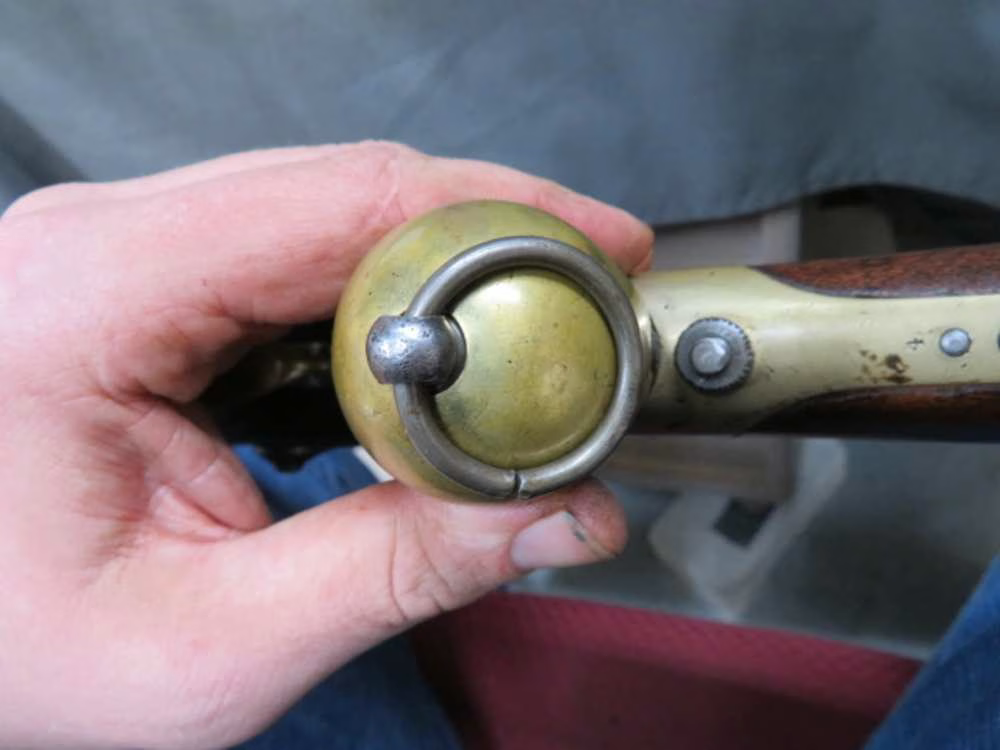
This close-up shows the buttcap and locking ring of the detachable shoulder stock used on the U.S. Model 1855 Pistol Carbine. Engineered at Springfield Armory, the locking system securely attached the stock to the pistol, allowing soldiers to quickly convert it into a compact shoulder-fired weapon for improved stability and accuracy.
The sturdy brass buttcap and iron locking ring reflect the high level of craftsmanship found on Springfield-made military arms. Original stocks retaining all of their locking hardware are increasingly scarce, making complete examples highly desirable among collectors of early U.S. martial firearms.
The Cavalry Sling Swivel
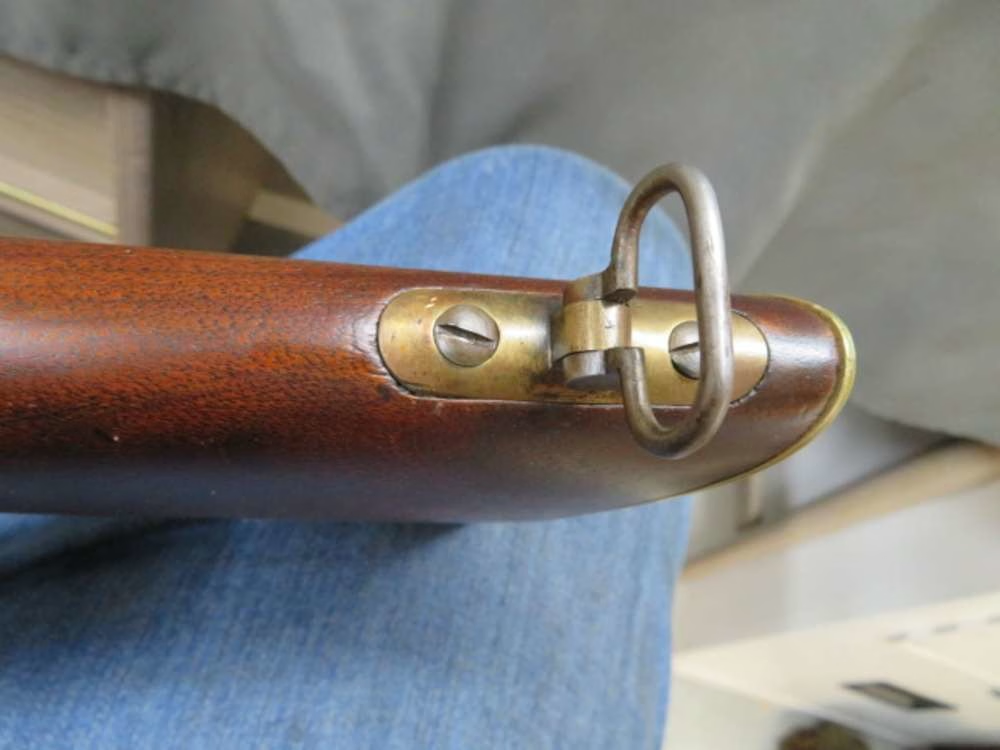
his close-up features the rear sling swivel mounted on the detachable shoulder stock of the U.S. Model 1855 Pistol Carbine, manufactured at Springfield Armory in 1856. The swivel allowed the firearm to be carried on a shoulder sling, making it easier for mounted troops, dragoons, and artillerymen to keep both hands free while riding or performing other duties.
Built with durable brass and iron fittings, the sling swivel was a small but essential component of the Model 1855’s practical military design. Original swivels and hardware are often missing or replaced on surviving examples, making complete, original stocks with intact fittings especially desirable to collectors of early U.S. martial firearms.
The Muzzle & Ramrod
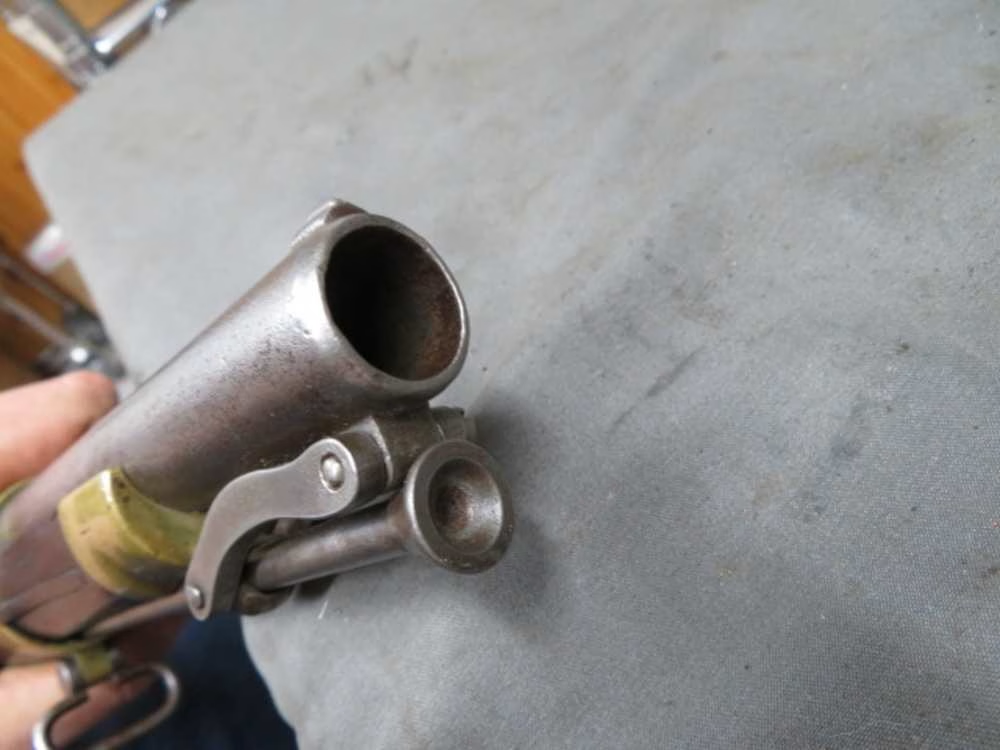
This close-up showcases the muzzle and captive ramrod of the U.S. Model 1855 Pistol Carbine, manufactured at Springfield Armory in 1856. As a muzzle-loading percussion firearm, soldiers loaded black powder and a .58-caliber Minié ball through the barrel before using the ramrod to seat the projectile firmly against the powder charge. This process reflected the standard military loading method just before the Civil War.
The under-barrel swivel ramrod was designed to remain attached to the firearm, reducing the chance of losing it in combat or while mounted on horseback. Combined with the Model 1855’s innovative Maynard tape primer system, this pistol carbine represented one of the most advanced U.S. military firearms of its era.
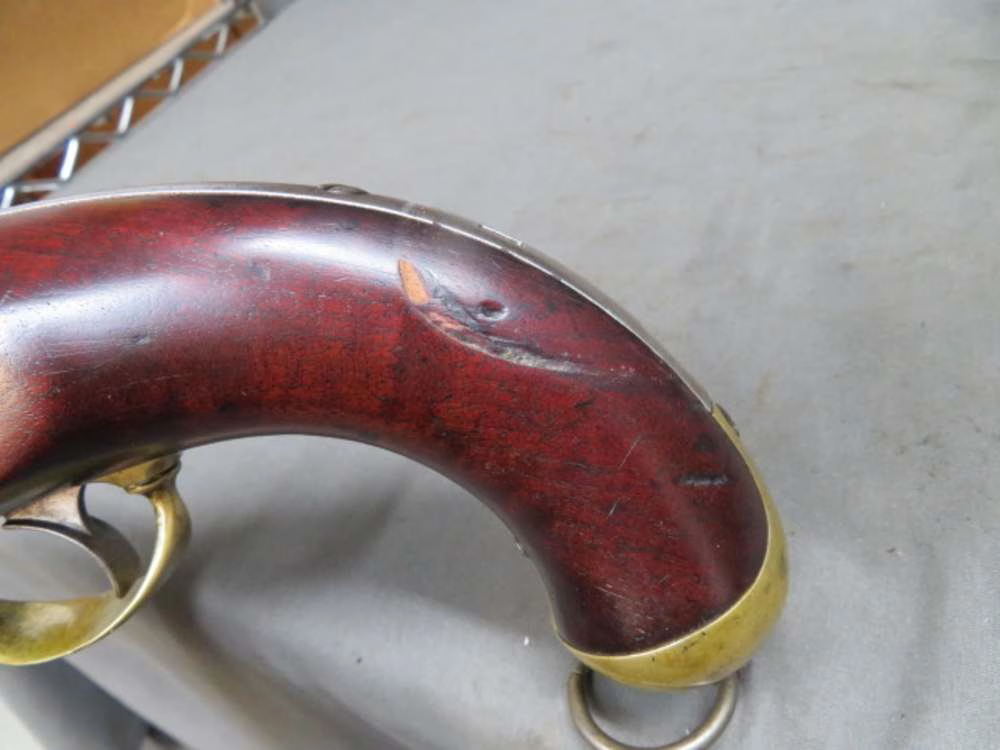
The Grip That Served a Nation
This close-up highlights the walnut grip and brass buttcap of the U.S. Model 1855 Pistol Carbine, manufactured at Springfield Armory in 1856. The pistol’s distinctive curved grip was designed to provide a secure hold while firing on foot or horseback, while the sturdy brass buttcap protected the stock from hard military use. Built for durability, these pistols accompanied mounted troops during a period of rapid change in American military technology just before the Civil War.
The natural wear and handling marks visible on surviving examples tell part of each firearm’s story. Rather than diminishing their historical significance, honest service wear offers a tangible connection to the soldiers who carried these arms more than 165 years ago.