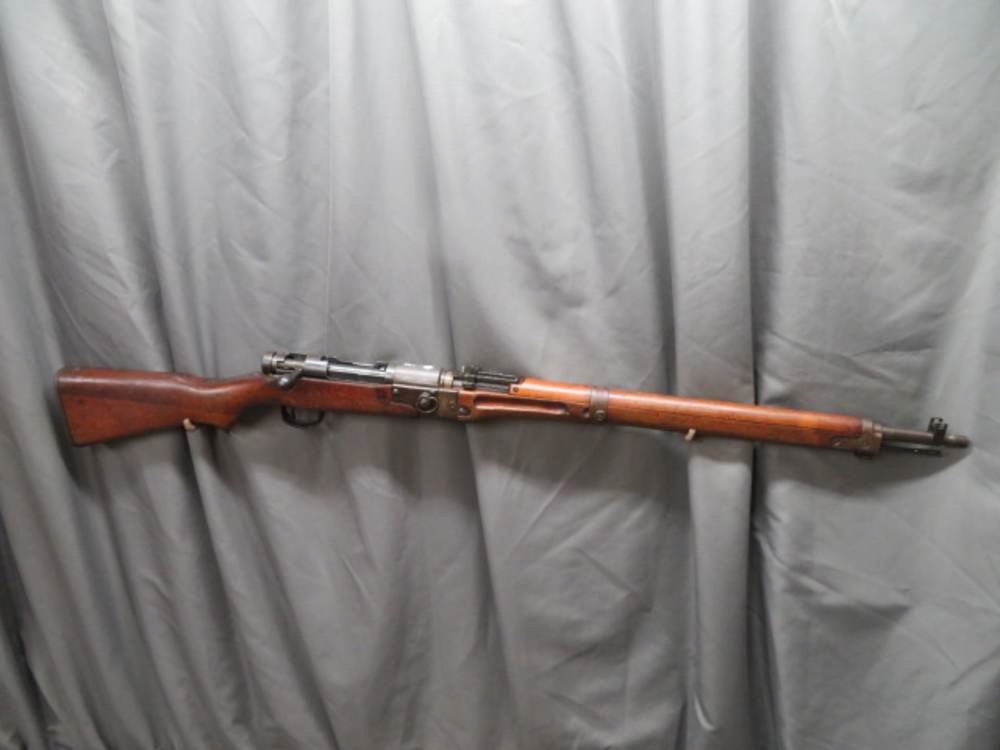
Developed for Imperial Japanese airborne troops, the Type 2 Arisaka was a specialized takedown version of the Type 99 rifle. Its barrel and fore-end could be separated from the receiver and stock, making the rifle compact enough to carry during parachute operations. Once on the ground, the two sections could be quickly reassembled and secured using a distinctive locking wedge.
Chambered in 7.7×58mm Japanese, the Type 2 saw limited wartime production and is considerably scarcer than the standard Type 99. Its unusual construction, airborne connection, and recognizable takedown mechanism make this nice-looking example an especially fascinating piece of Japanese military history.
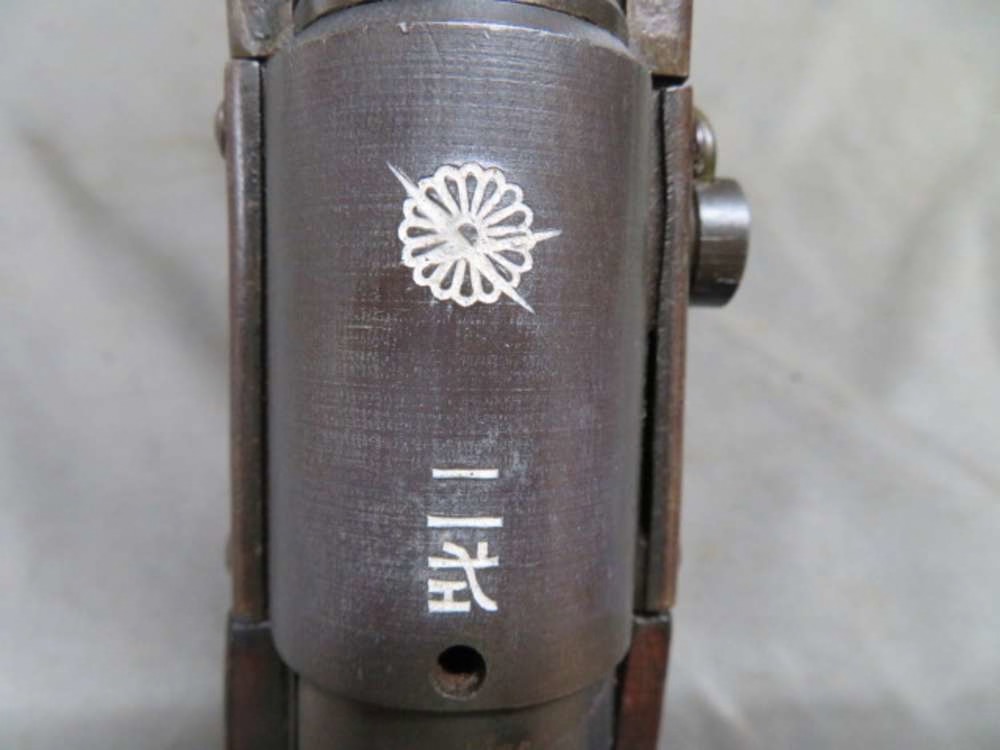
Imperial Markings Revealed: The Type 2 Arisaka
This close-up displays the rifle’s Imperial chrysanthemum, or “mum,” above the Japanese characters 二式, meaning Type 2. The chrysanthemum identified the rifle as property of the Japanese Emperor and is an important feature examined by collectors today.
Many Japanese rifles had their Imperial mum ground or struck before being surrendered. This example appears to retain the flower with cancellation marks across it, offering visible evidence of its wartime and surrender-era history.
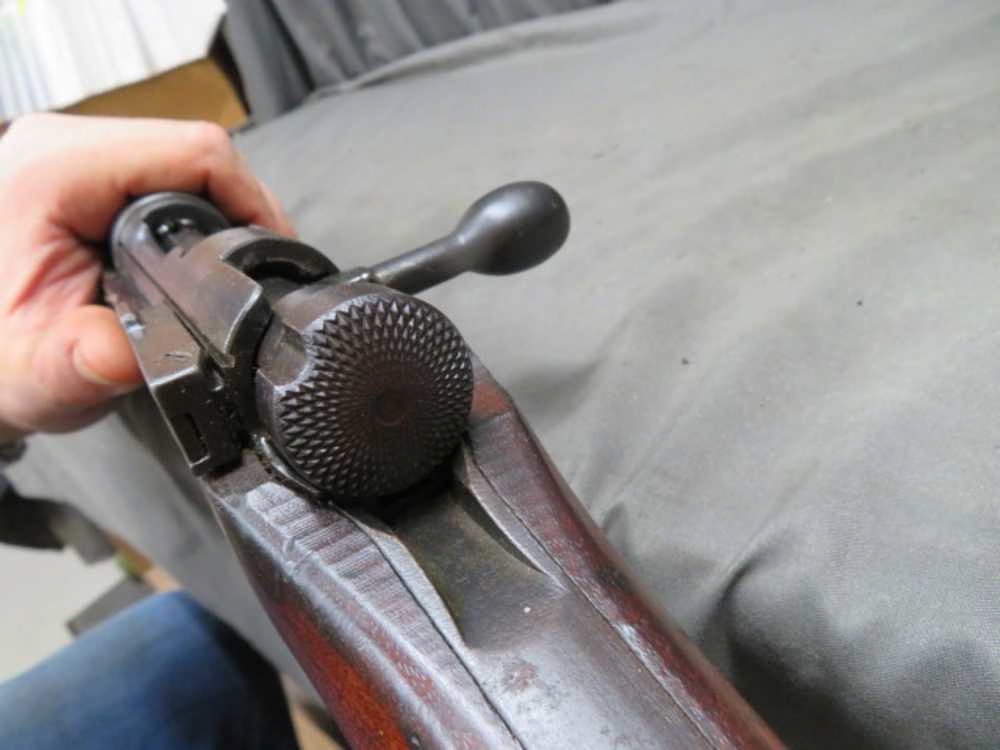
The Mechanism That Made the Type 2 Airborne-Ready
This close-up highlights the Type 2 Arisaka’s distinctive takedown mechanism. The large, checkered locking piece secured the rifle’s two main sections together, allowing Japanese paratroopers to transport it in a more compact form during airborne operations.
Unlike the standard Type 99, the Type 2 was engineered specifically for quick disassembly and reassembly in the field. This specialized hardware is one of the easiest ways to identify an authentic Type 2 paratrooper rifle.
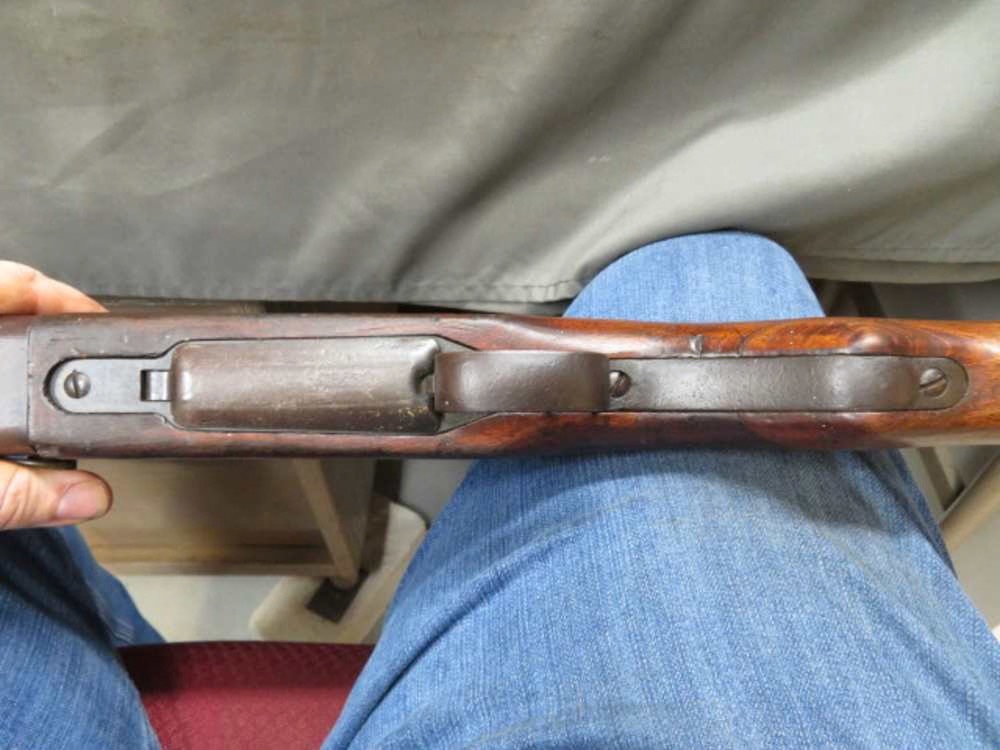
Built to Withstand the Drop
This underside view shows the Type 2 Arisaka’s magazine floorplate and the heavy metal reinforcement surrounding its takedown joint. Because the rifle separated near the receiver, additional hardware was needed to keep both sections firmly aligned when assembled.
The extended metal plate helped strengthen the stock around this critical connection point. Details like this distinguish the scarce Type 2 from the conventional Type 99 and reveal the practical engineering required for airborne service.
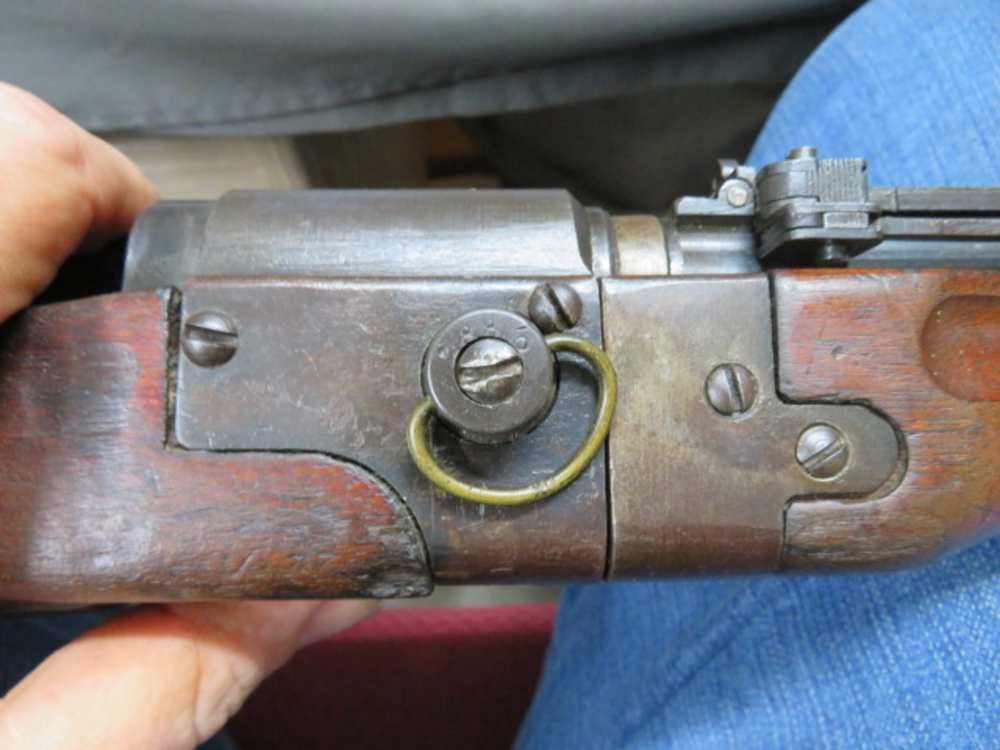
The Heart of the Type 2 Takedown System
This close-up reveals the Type 2 Arisaka’s distinctive takedown joint and transverse locking key. Positioned directly behind the rear sight, the mechanism secured the removable barrel and fore-end assembly firmly to the receiver section.
The attached ring allowed the locking key to be handled in the field without requiring a separate tool. This specialized system made the rifle compact for airborne transport while allowing it to be reassembled after landing.
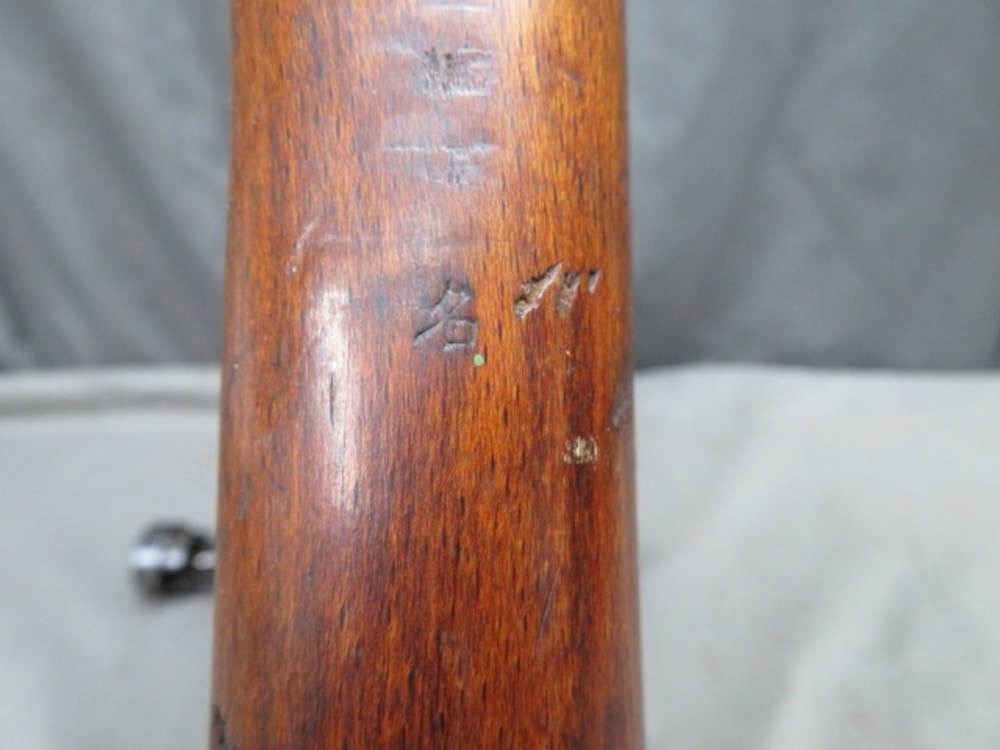
Hidden History in the Type 2’s Stock
This close-up shows original Japanese characters and inspection marks stamped into the wooden stock. Such markings were commonly applied during manufacture to document inspection, assembly, acceptance, or arsenal-related information.
Although small and easily overlooked, surviving stock stamps add valuable character to a military rifle. They also help collectors study how individual Type 2 rifles were produced and processed during wartime.
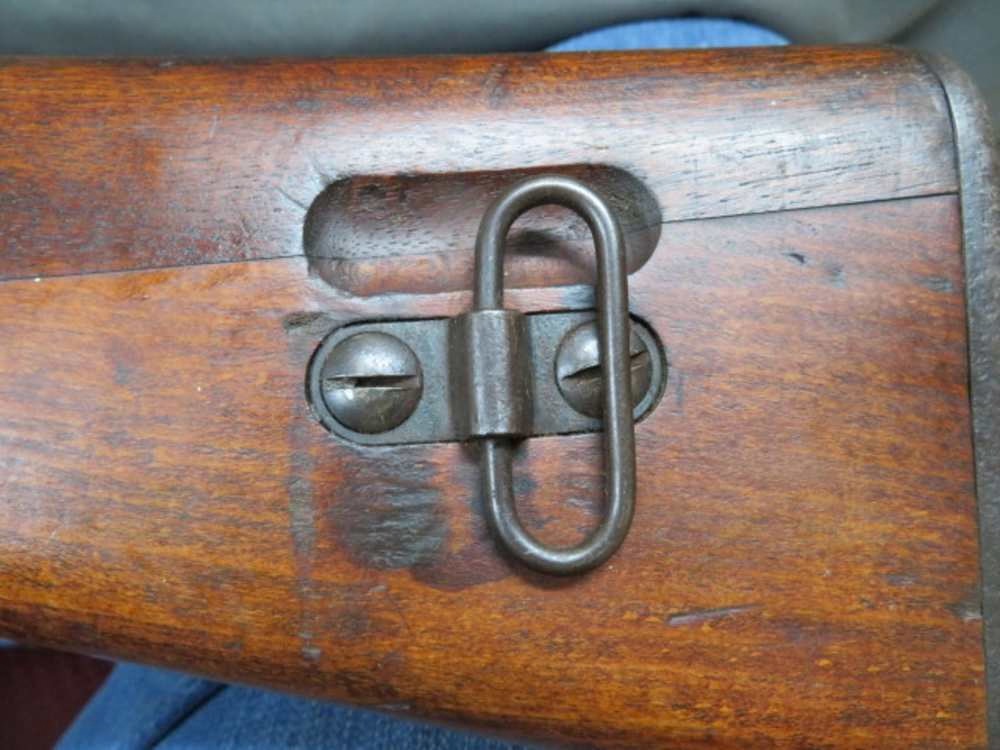
Airborne Hardware: The Type 2’s Side Sling Swivel
This close-up highlights the Type 2 Arisaka’s side-mounted sling swivel near the buttstock. Its placement allowed the rifle to lie flatter against a Japanese paratrooper’s body while jumping, landing, and moving with airborne equipment.
Unlike the underside sling arrangement found on many standard infantry rifles, the Type 2’s side-mounted hardware reflected its specialized airborne role. The surrounding wear also adds authentic character to this scarce WWII configuration.
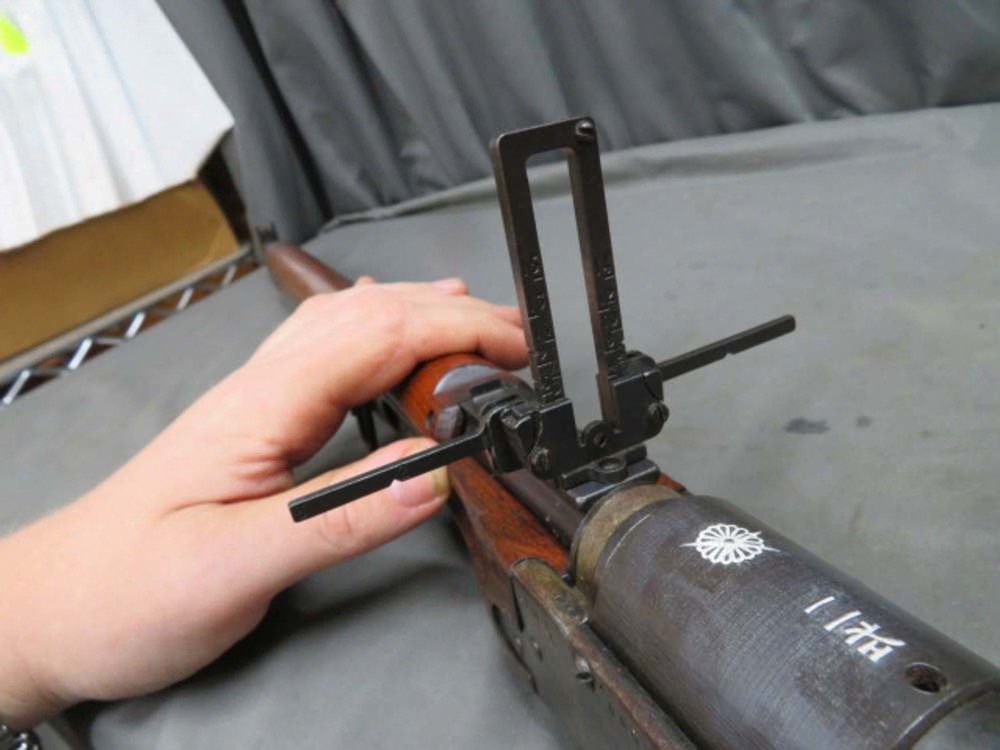
Eyes on the Sky: The Type 2’s Anti-Aircraft Sights
This close-up shows the rifle’s raised rear sight with folding anti-aircraft lead arms. Originally developed for the Type 99, the sight system was intended to help soldiers estimate the lead needed when aiming at low-flying aircraft.
The graduated rear aperture also allowed elevation adjustments for longer distances. These complex sights became one of the most recognizable features found on early and midwar Japanese Arisaka rifles.
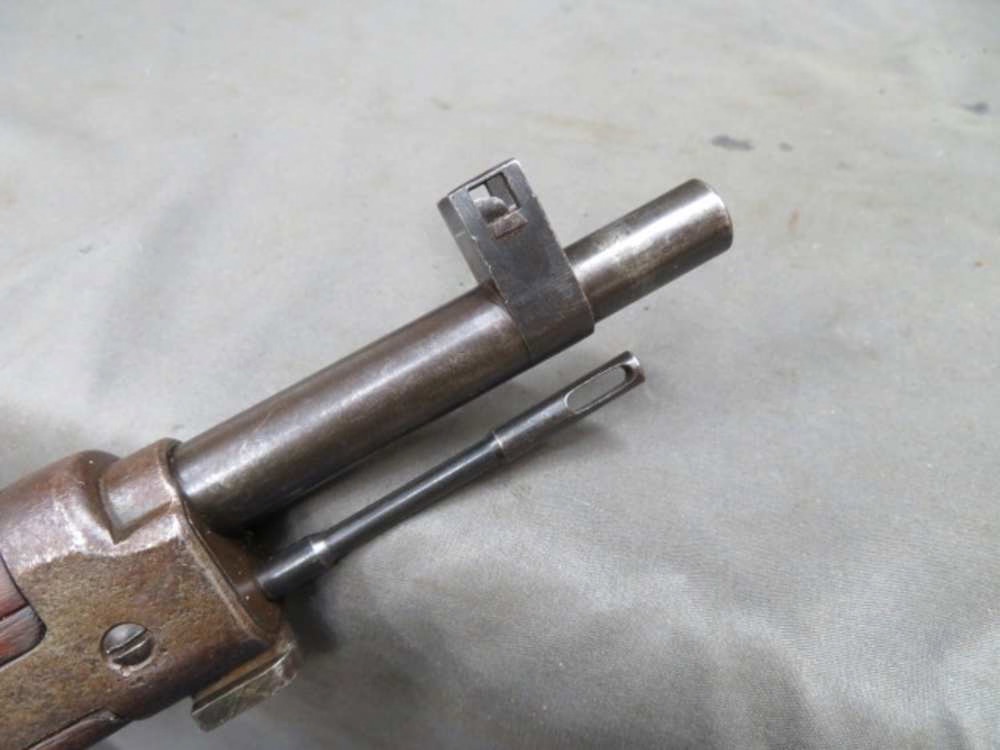
Frontline Details: Type 2 Sight and Cleaning Rod
This close-up highlights the Type 2 Arisaka’s protected front sight and under-barrel cleaning rod. The sight’s sturdy metal guard helped shield the blade from damage during transport and demanding field use.
Stored beneath the barrel, the cleaning rod gave soldiers a convenient way to maintain the rifle’s bore. The survival of these small, frequently missing components adds to the completeness and collector appeal of this scarce paratrooper rifle.
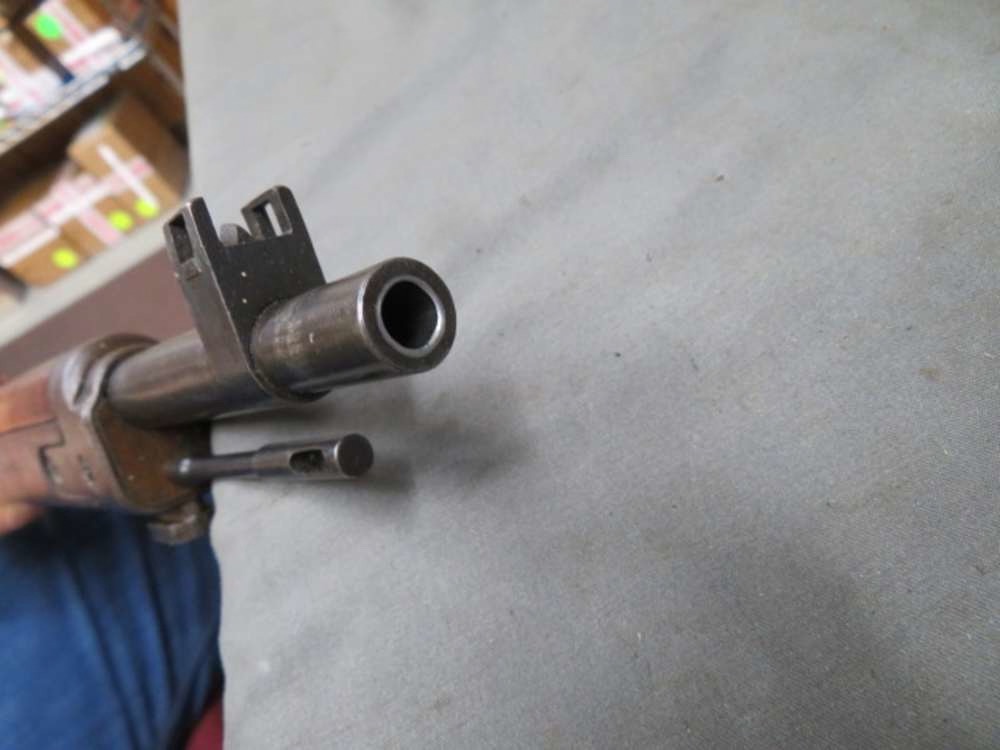
Muzzle-End View of a Scarce Type 2 Arisaka
This angle provides a clear look at the Type 2 Arisaka’s muzzle, protected front-sight assembly, and cleaning rod. The sturdy sight guards were designed to protect the front blade during transport and demanding military service.
The rifle was chambered for Japan’s 7.7×58mm cartridge, sharing its basic action and caliber with the Type 99. Its detachable barrel assembly, however, made the Type 2 uniquely suited for paratrooper use.
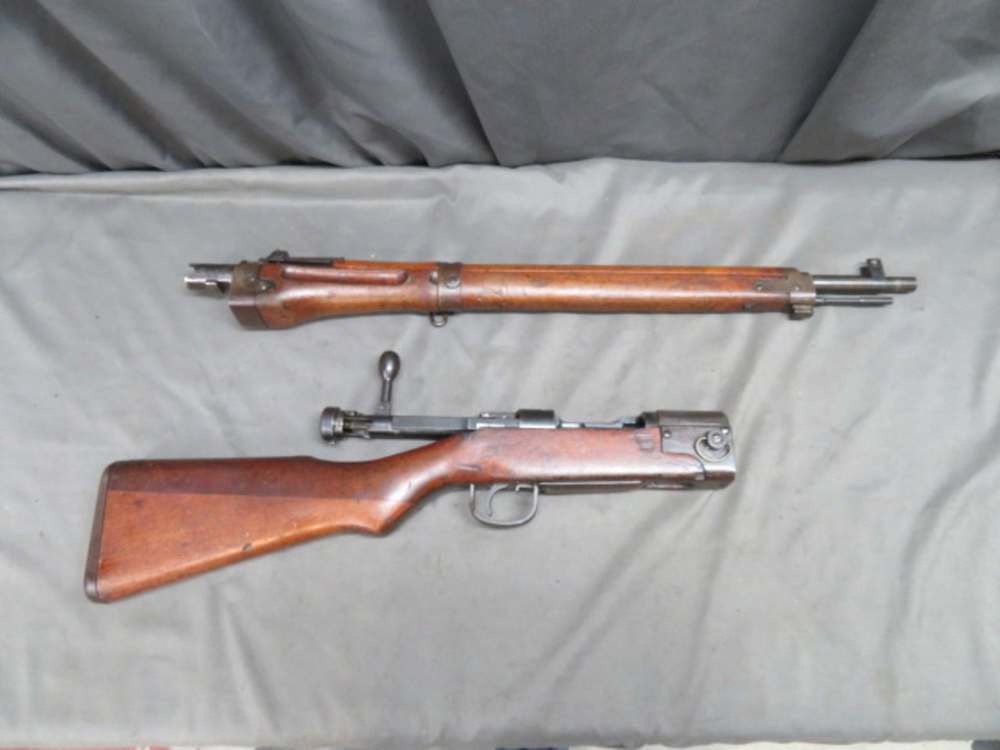
Made for the Jump: The Type 2 Arisaka Taken Apart
This image clearly demonstrates the Type 2 Arisaka’s defining feature: its ability to separate into two compact sections. The barrel, sights, and fore-end detach from the receiver and buttstock, making the rifle easier for Japanese paratroopers to carry during airborne operations.
After landing, the two assemblies were rejoined and secured using the rifle’s ringed locking key. This specialized design required additional reinforcement around the joint and makes the Type 2 one of Japan’s most distinctive and sought-after WWII rifles.