A Navy Contract Born from Fleet Trials
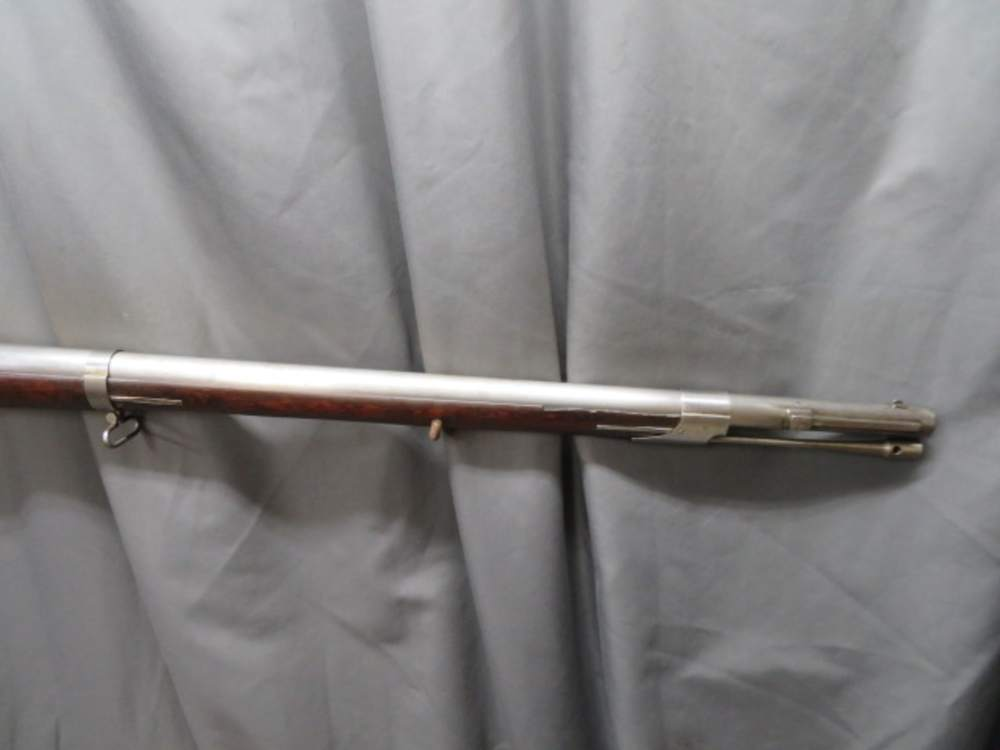
The Whitney Plymouth rifle takes its name from trials aboard the sloop-of-war USS Plymouth in the late 1850s, conducted under the direction of Captain (later Admiral) John A. Dahlgren, where the U.S. Navy tested a new percussion rifle intended for shipboard landing parties and Marine detachments. Adopted in 1861 as the Navy’s Model 1861 Naval Rifle (often called a rifle-musket in collector usage), chambered for a .69 caliber round ball or Minié-style projectile, the Plymouth rifle armed sailors and Marines during the opening years of the Civil War, at a time when the Navy still favored massed volley fire and boarding actions distinct from Army infantry tactics.
Origins: A Navy-Specific Departure from Army Patterns
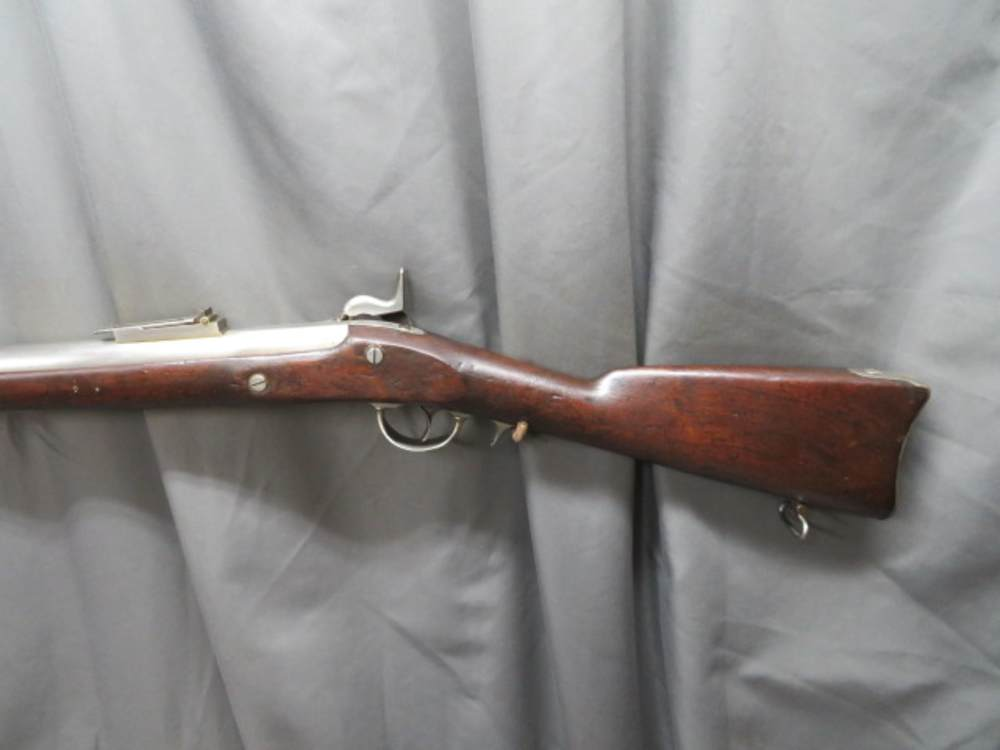
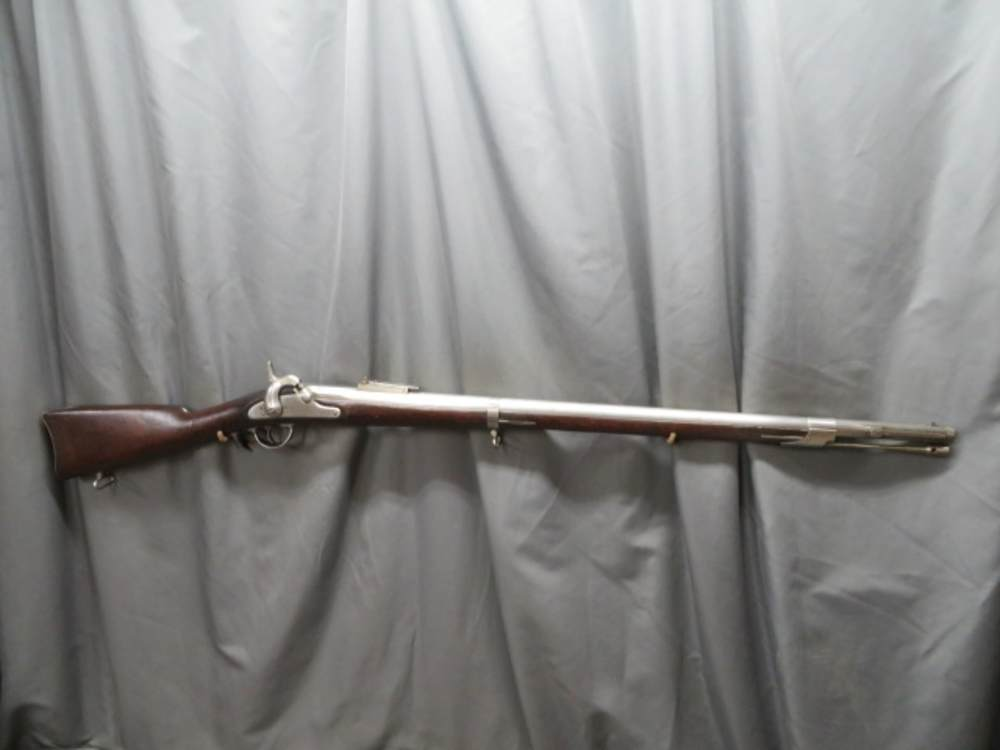
Unlike the Army’s Springfield-pattern rifle-muskets of the same era, the Plymouth rifle was built to Navy specifications, retaining the larger .69 caliber bore the Navy preferred for shipboard use even as the Army transitioned to .58 caliber arms. Its two-band configuration and heavy iron mountings reflected a design meant to double as a boarding weapon, fitted with a long saber bayonet rather than a standard socket bayonet, giving Navy landing parties and Marines a weapon that could function as both firearm and edged weapon at close quarters.
Built at the Whitneyville Armory
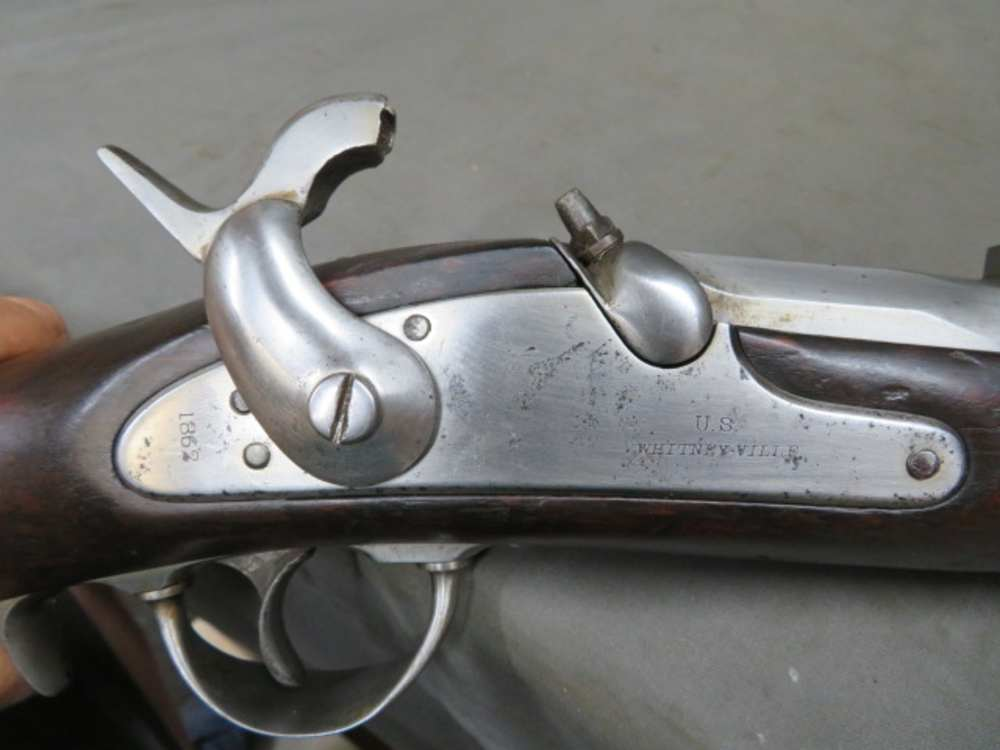
Production was contracted to Eli Whitney Jr.’s Whitneyville Armory in Connecticut, the same works long associated with contract arms production for both state militias and the federal government. In July 1861 the Navy awarded Whitney a contract for 10,000 Plymouth rifles at $25 each, including the saber bayonet. Deliveries ran into 1863–1864 after an early sample lot, and Whitney filled the full 10,000-stand contract. Even at that figure the rifles remain far less common today than the Army’s mass-produced Springfield pattern.
Service with Union Sailors and Marines
The Plymouth rifle armed Navy boarding parties, shore parties, and Marine detachments aboard Union warships during the Civil War, seeing use in coastal operations and riverine actions where sailors were called ashore to fight as infantry. Documentation of specific engagements is thin, and the rifle likely saw more routine shipboard and garrison service than dramatic frontline combat, but it remained part of Navy small-arms inventories into the later years of the conflict.
A Rifle That Stayed in Naval Hands
Because the Plymouth was a Navy-specific contract rather than a general Army-issue arm, it never flooded the postwar civilian market in the same volume as the Army’s Springfield rifle-muskets — but it did see postwar surplus disposal. In the 1870s the Navy sold off most of its remaining Plymouth rifles through surplus dealers, including large lots associated with Schuyler, Hartley & Graham (and related Hartley channels), which then moved guns into commercial and foreign markets. A much later footnote — documented OSS repurchase of a few hundred examples during World War II — underlines how widely those surplus guns had already traveled. Today’s scarcity reflects that dispersal and the Navy’s smaller original total, not a rifle that "never left naval hands."
A Cousin to the Army's Rifle-Muskets, Not a Twin
Collectors sometimes confuse the Plymouth rifle with contemporary Army long arms such as the Springfield Model 1861 or various contract rifle-muskets of the period, but the Navy pattern’s .69 caliber bore, two-band furniture, and heavy saber bayonet lug set it apart at a glance from the slimmer, three-band .58 caliber Springfield. For collectors of Civil War naval arms, the Whitney Plymouth remains one of the more distinctive and sought-after pieces precisely because it represents a branch of service — the Navy — that is far less represented in the surplus-driven Civil War arms market than the Army’s own rifles.