America's Emergency Rifle of the First World War
When the United States entered World War I in April 1917, its arsenals could not produce Springfield M1903 rifles fast enough to arm the rapidly expanding Army. The solution was to adapt tooling already running for the British Pattern 1914 Enfield rifle, rechambering the design from the British .303 to the US Army’s standard .30-06 cartridge. The result, officially adopted as the US Model of 1917 rifle, went on to arm more American soldiers in World War I than the Springfield itself. Sergeant Alvin York’s 82nd Division was often issued the M1917, and many accounts place an Enfield-pattern rifle in his hands — though whether he fought the 8 October 1918 Medal of Honor action with an M1917 or an M1903 remains contested among researchers, so it is best treated as a hedged association rather than a settled fact.
Origins: A British Design Reworked for American Cartridges
The M1917’s lineage runs back to the British Pattern 1913 experimental rifle, developed before the war around a new .276 caliber cartridge that was abandoned once war broke out. The design was hastily rechambered to the existing .303 British round and issued in limited numbers as the Pattern 1914. When American factories already tooled up for P14 production needed a new mission as British orders slowed, the US Ordnance Department adapted the same rifle to .30-06, creating the Model of 1917 with only modest changes to sights and other details.
Built by Winchester, Remington, and Eddystone
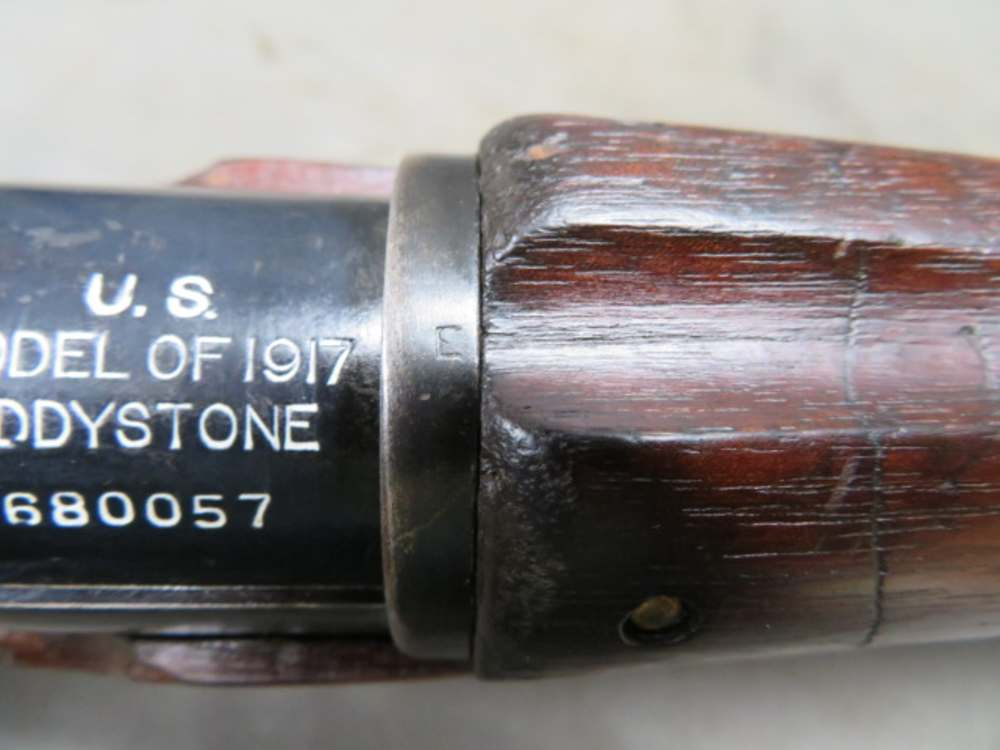
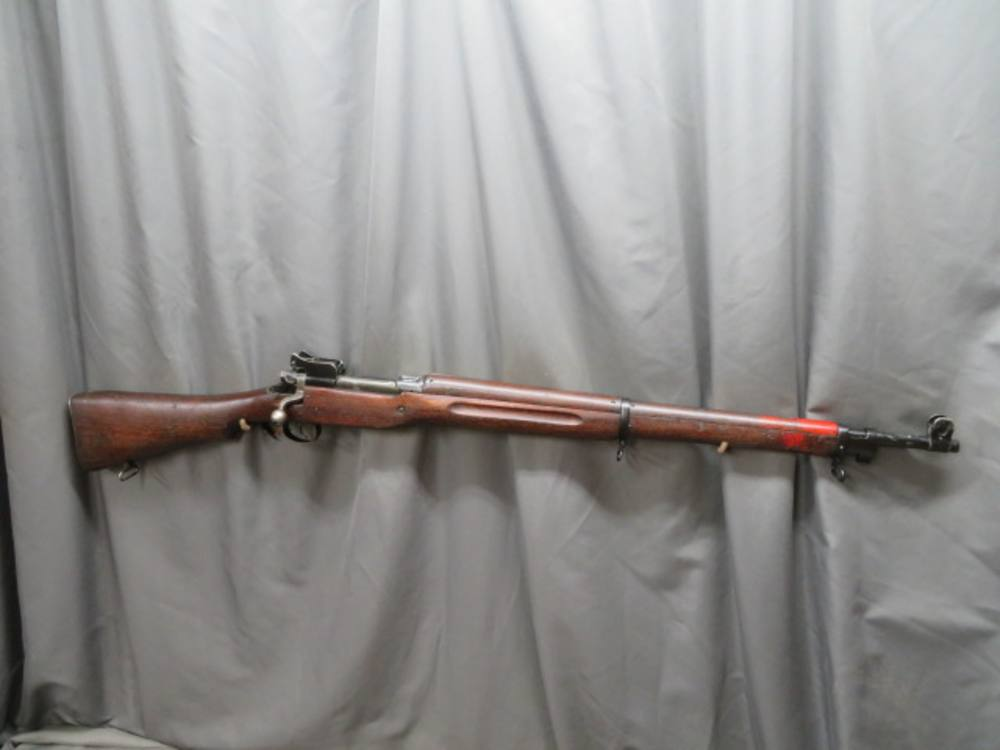
Three American manufacturers produced the M1917: Winchester, Remington, and Remington’s Eddystone, Pennsylvania plant, built specifically for wartime P14 and M1917 production. Eddystone-marked rifles, like this one, made up a substantial share of total production, with combined output across all three makers reaching well over two million rifles by the war’s end — far outpacing Springfield Armory’s own M1903 numbers during the same period.
From the Trenches to the Home Guard
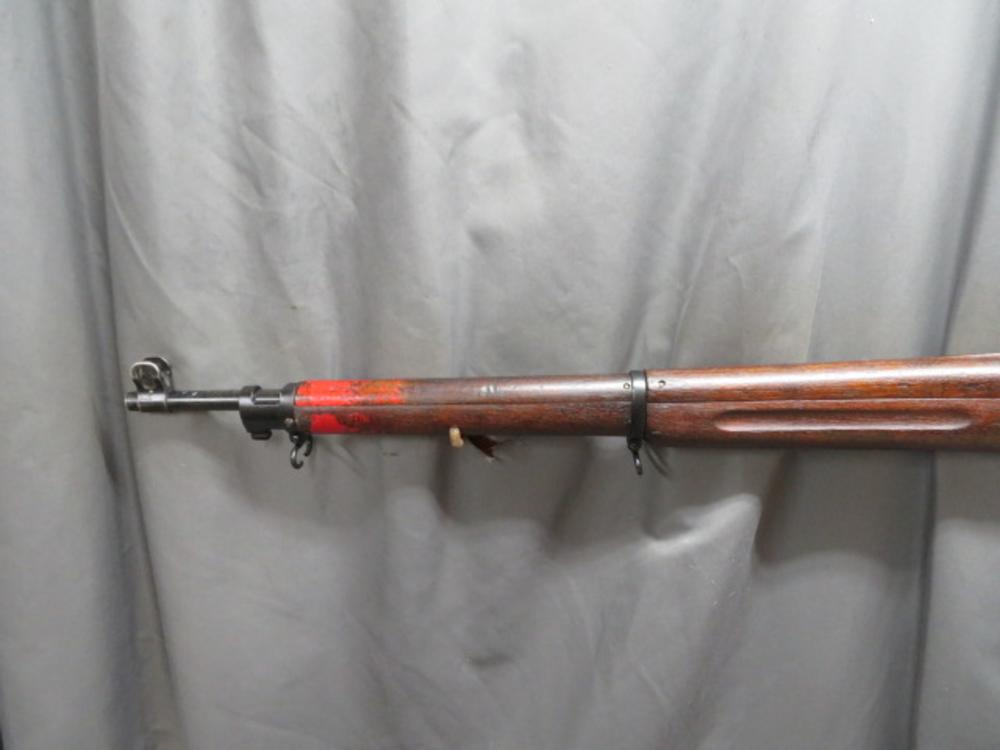
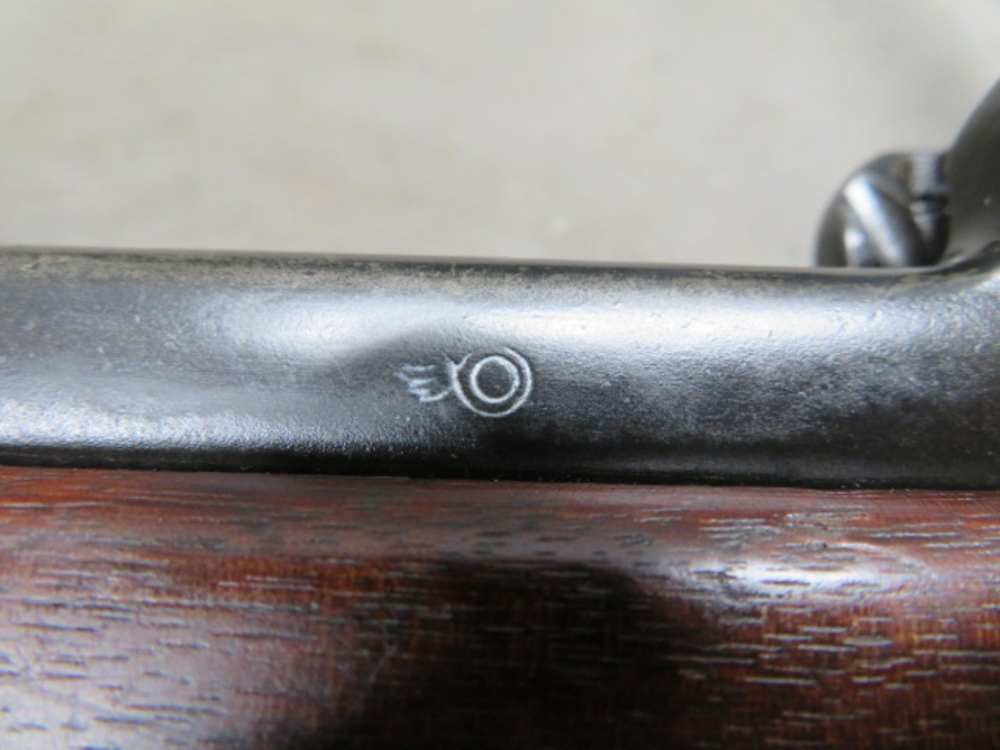
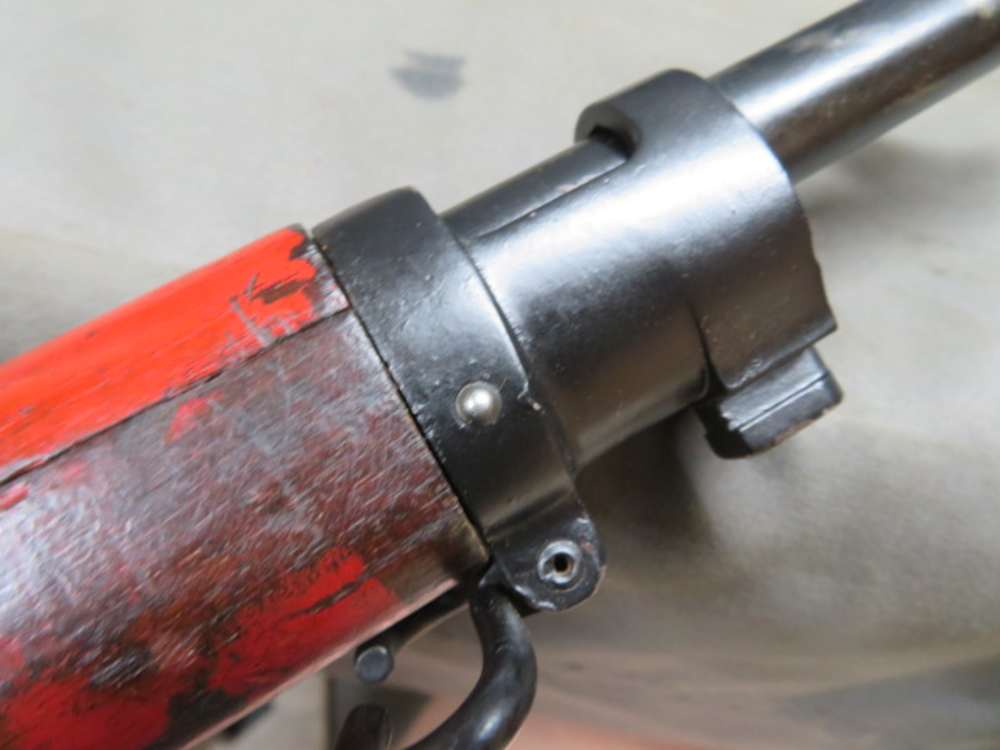
The M1917 armed a majority of American Expeditionary Force infantry in France, valued for its strong action, aperture sight, and six-round internal magazine for rimless .30-06 — usually filled from five-round stripper clips (often topped to six). After the war, large numbers were placed in storage, then reissued in World War II to second-line US units, foreign allies, and training programs. Because the M1917’s outward appearance was nearly identical to the British-issue, .303 caliber Pattern 1914, rifles pressed into British Home Guard service were often painted with a red band around the forend to warn troops not to load .303 into a .30-06 chamber. Canada also used M1917s (including Veterans Guard issue), typically identified by Canadian property marks such as a C-broad arrow rather than by the red band alone.
A Rifle Steve's Customers Know Well
Surplus M1917s reached American civilian hands steadily through the 20th century, sold off by the government and later through the collector market as a comparatively affordable, mechanically excellent Great War-era battle rifle. Because so many were built and stored rather than lost in combat, well-preserved, correctly marked examples — particularly those retaining their original military markings and finish, like this Eddystone-made, Canadian-marked example — remain more attainable for collectors than many other World War I service rifles.
Cousin to the Pattern 1914, Not a Twin
Collectors sometimes mix up the M1917 with its British parent, the Pattern 1914 Enfield, since the two rifles share nearly identical stocks, sights, and actions. The giveaway is the chambering and markings: a P14 is stamped for .303 British and was built for British and Commonwealth service, while the M1917 is marked for .30-06 and carries American manufacturer markings from Winchester, Remington, or Eddystone. The M1917 is also not a Springfield M1903 under another name — it is an Enfield P13/P14-family action adapted to US cartridge and makers. For collectors, the M1917 stands as the unsung workhorse of the American Expeditionary Force — a rifle that armed more doughboys than the Springfield it’s often overshadowed by today.