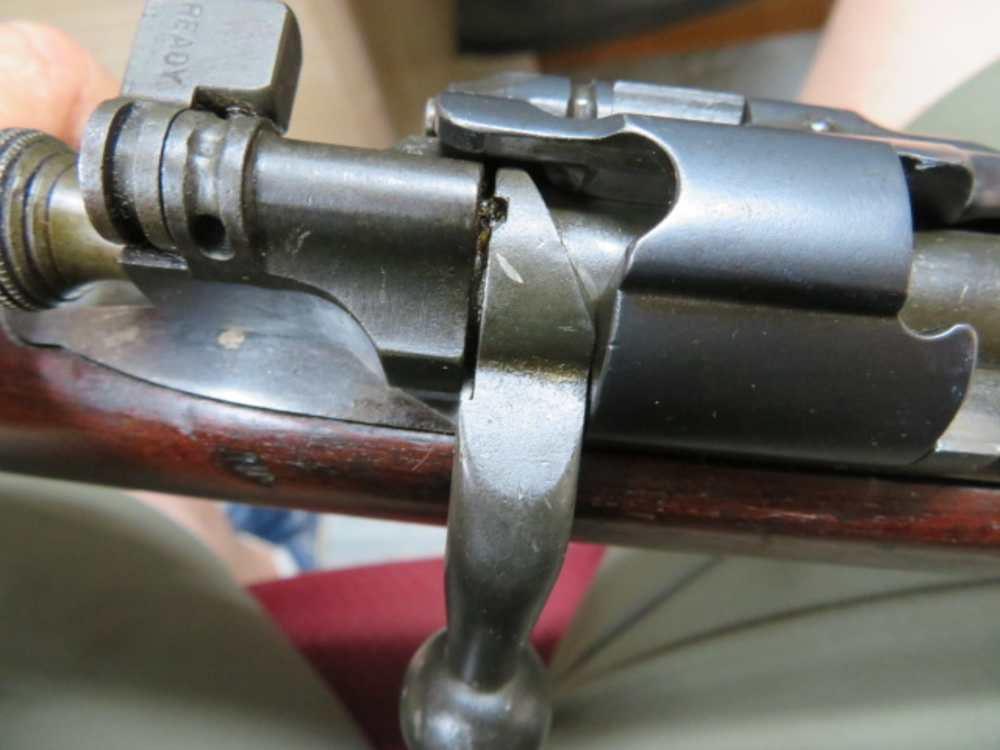
America's Standard Rifle from the Trenches to WWII
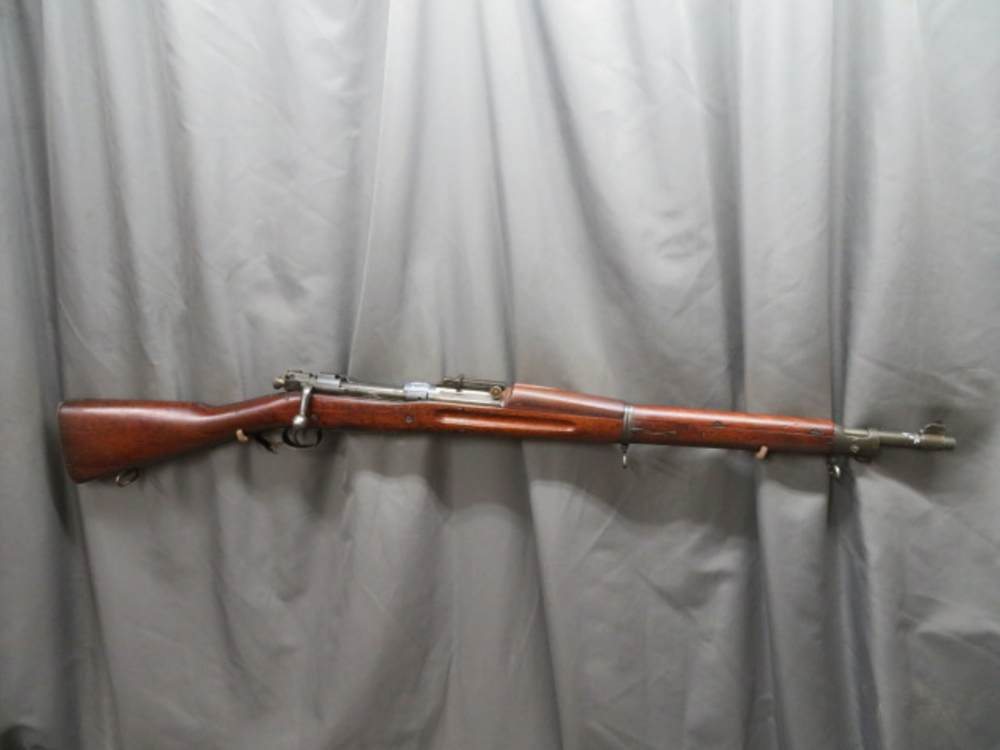
Adopted by the US Army in 1903 to replace the Krag-Jørgensen rifle, the M1903 Springfield began life chambered in .30-03 before being redesigned just three years later for the now-famous .30-06 Springfield cartridge. Built around a Mauser-pattern bolt action — a similarity close enough that the US government later paid royalties to Mauser to settle patent claims — the 1903 became the US military’s standard-issue rifle through World War I and remained in frontline and specialized use well into World War II.
Who Built It
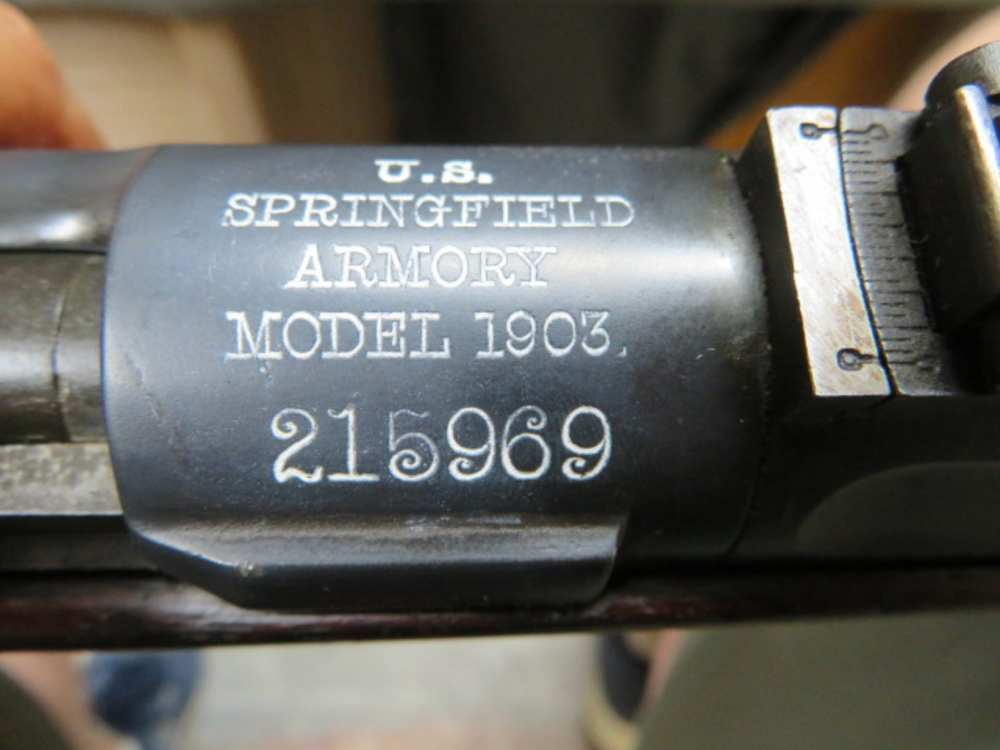
The M1903 was produced primarily at Springfield Armory and Rock Island Arsenal, the US government’s own arms-making facilities, with combined production commonly cited around 1.5 million rifles across the long run — though exact totals vary by source and by which later variants (such as the National Match, 1903A3, and 1903A4) are counted alongside the original pattern. When WWI demand briefly outpaced Springfield and Rock Island’s capacity, the US contracted Remington, Winchester, and Eddystone to build the US Rifle Model 1917 as a stopgap — a contemporaneous .30-06 rifle built on the British Pattern 1914 Enfield action, not a design cousin of the 1903, despite sharing a war and a cartridge. A much larger, often-overlooked chapter came in World War II: Remington built new-production M1903, M1903 Modified, M1903A3, and M1903A4 rifles, and Smith-Corona built the M1903A3, together adding roughly 1.3 to 1.4 million more 1903-family rifles — so a wartime A3 or A4 in a collection is just as likely to be a Remington or Smith-Corona product as a Springfield or Rock Island one.
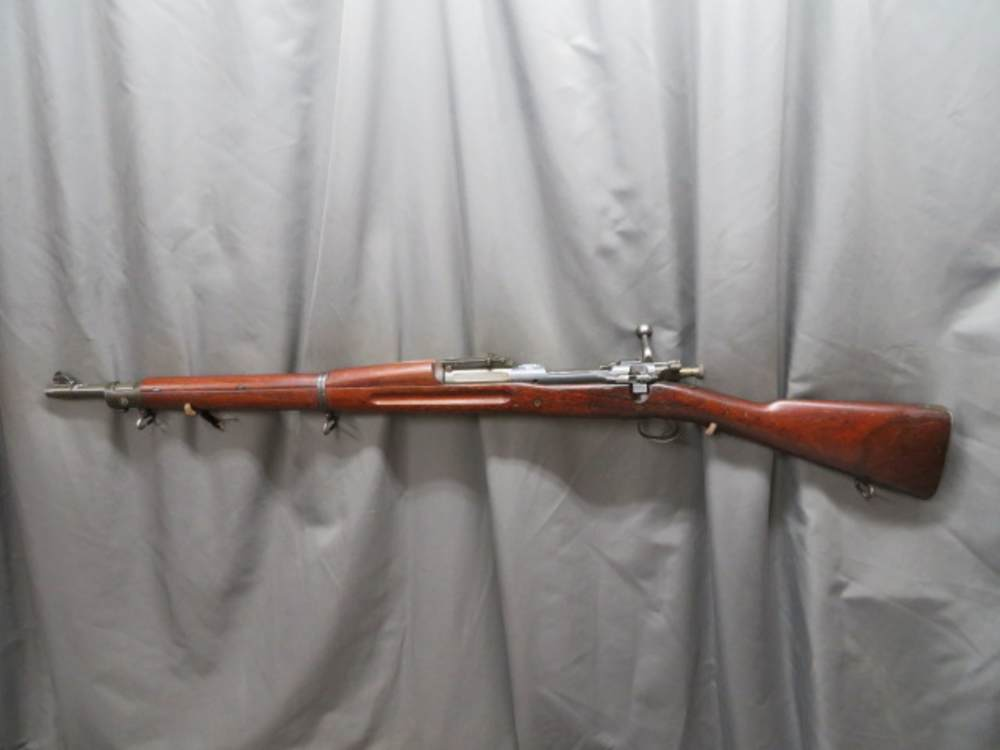
Countries and Sides
The M1903 was overwhelmingly a US service rifle, carried by American troops throughout World War I and by US Army and Marine Corps units in the early years of World War II before the semi-automatic M1 Garand became standard. It also saw continued use as a sniper and secondary arm well after the Garand’s adoption, and small numbers reached Allied forces through wartime aid programs, though the specifics of those transfers vary and are not always well documented.
A Second Life in World War II
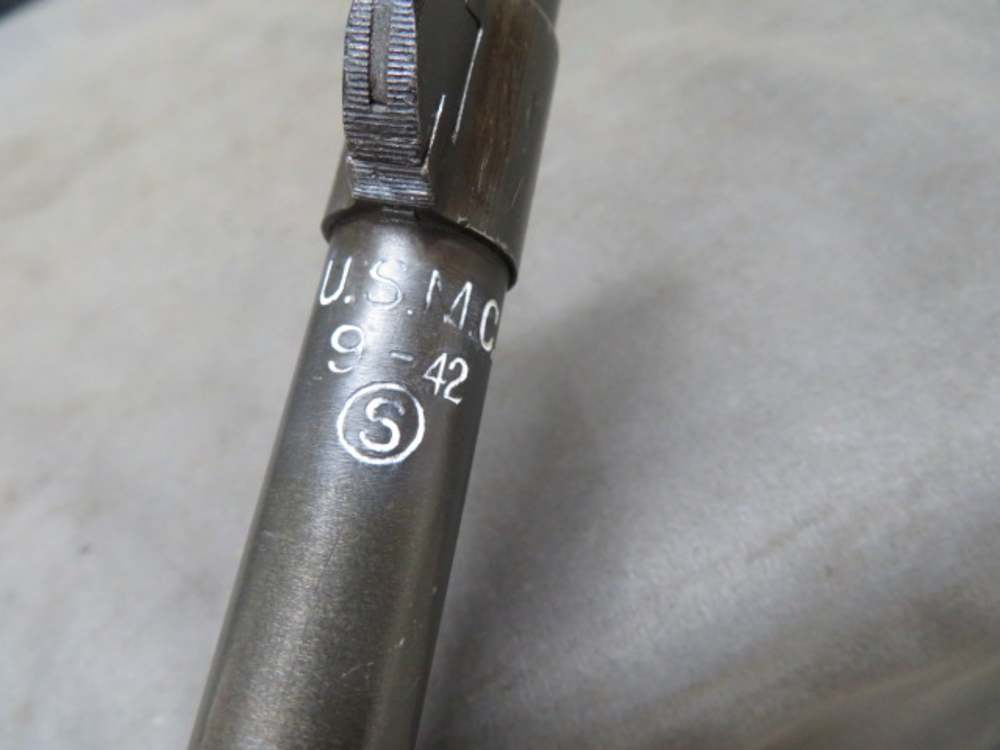
Even as the Garand took over as the Army’s primary rifle, the Marine Corps continued issuing M1903s into the early Pacific campaigns, and many existing rifles were refurbished rather than replaced outright. Philadelphia-based contractor R.F. Sedgley, Inc. held USMC contracts (roughly 1941–44) to supply replacement barrels for rebuilding worn M1903s, and a number of surviving examples carry Sedgley-marked barrels alongside their original Springfield or Rock Island receivers — a detail collectors look for. On its own, though, a Sedgley barrel mark proves the barrel’s origin, not a documented wartime USMC rebuild of that specific rifle; collectors typically weigh it alongside other rebuild tells like date ranges and vise marks before calling a gun a confirmed Marine rebuild.
Lookalikes and Cousins
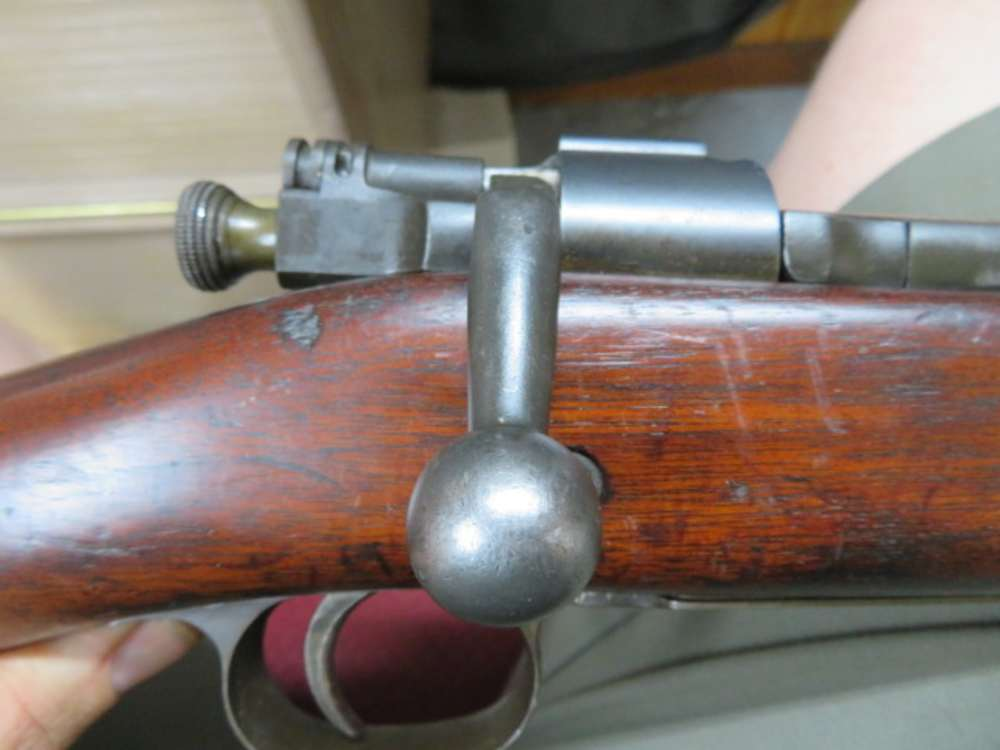
The M1903 is often compared to the German Mauser rifles that influenced its action, though the two are readily told apart by markings, stock profile, and the 1903’s distinctive rod bayonet on its earliest examples (later replaced by a knife bayonet). The wartime Model 1917 “American Enfield” shares the 1903’s war and cartridge but not its design — it’s built on the British Pattern 1914 Enfield action, a genuinely different rifle family, not a 1903 variant. Within the true 1903 family, the National Match target variant and the wartime 1903A3 (a simplified production pattern) and 1903A4 (sniper rifle) are differentiated mainly by sight arrangement, stock furniture, and manufacturing shortcuts adopted for wartime speed.
Why It Still Matters to Collectors
The M1903 Springfield bridges two world wars as one of the most iconic American service rifles ever issued, and its long production run across multiple arsenals and contractors means individual examples can carry a wide range of dates, markings, and rebuild histories — like a Sedgley-rebarreled USMC example — that tell a more specific story than the base pattern alone. That combination of historical significance and traceable variation is a big part of what keeps the 1903 a cornerstone of US military rifle collecting.