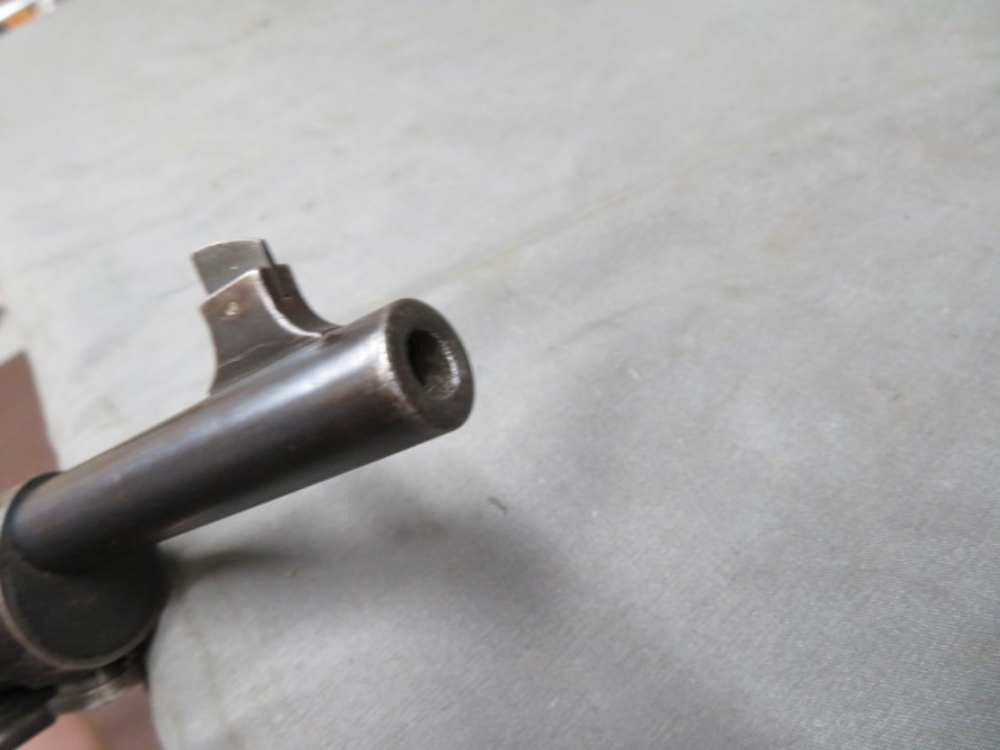
A Norwegian-designed bolt-action repeater with a side-loading magazine, meant to replace the Trapdoor Springfield and carried to war in Cuba, the Philippines and China
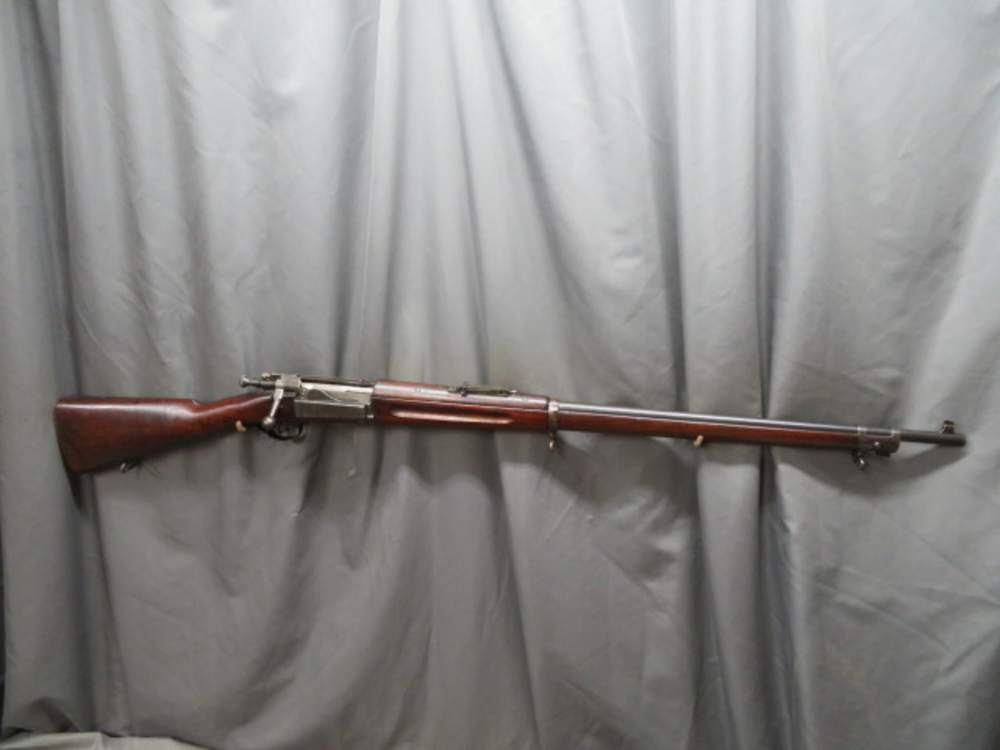
A Scandinavian Design
The Krag-Jorgensen takes its name from two men: Ole Hermann Johannes Krag, a Norwegian Royal Artillery officer, and Erik Jorgensen, a civilian. The design was invented in Norway, but the NRA National Firearms Museum says the American version was patterned after the Model 1889 rifle, then the standard infantry arm of Denmark. Norway itself did not adopt the design for its own forces until 1894, and some Norwegian Krags stayed in service through the Second World War.
Springfield Armory National Historic Site describes the Krag as a European-licensed design. According to the NRA Museum, the US government purchased manufacturing rights and then set about improving the original Danish model.
Trials and Politics
According to American Rifleman, the Army’s Ordnance Board appointed a “Magazine Gun Board” on November 24, 1890. A total of 53 rifles were submitted, including the standard service arms of 10 foreign countries, and the board’s report and recommendations were finalized on August 20, 1892.
Looking back, a Pritzker Military Museum & Library article argues that “the winning design was already antiquated” by the time of the trials.
A foreign design also drew objections at home. Congress ordered further development of the Krag suspended and called for a “Board for Testing Magazine Rifles of American Invention,” which convened on March 1, 1893. That board reported that no American invention had been recommended.
Adoption and the .30 Army Cartridge
The rifle was selected in 1892 and designated the “United States Magazine Rifle, Caliber .30, Model of 1892.” It was meant to replace the single-shot, blackpowder .45-70 Trapdoor Springfield. Springfield Armory completed the first Model 1892 rifles on January 1, 1894.
The rifle fired a .30-caliber smokeless-powder cartridge developed by Frankford Arsenal. It was designated the “.30-40,” for its .30 caliber and 40 grains of smokeless propellant, and is also known as the .30 Army. American Rifleman calls it the first small-caliber smokeless-powder cartridge in US military service. The NRA Museum says the rifle marked the beginning of the military change from large-caliber, low-velocity ammunition to smaller-caliber, higher-energy rounds. According to American Rifleman, the original load fired a 220-grain round-nose bullet at 2,000 feet per second, raised to 2,200 feet per second in 1899.
A Side Gate and a Cutoff
Springfield Armory National Historic Site calls the magazine door on the side the Krag’s distinguishing feature. Five loose cartridges went in through a hinged loading gate on the right side of the receiver, a layout American Rifleman calls “rather unusual.”
A magazine cutoff let the rifle work as a single-loader. With the cutoff in use, working the bolt did not pull rounds from the magazine, so those cartridges were held in reserve. A new knife bayonet, also designated Model 1892, was adopted with the rifle; American Rifleman notes it was a departure from the triangular socket bayonets used before.
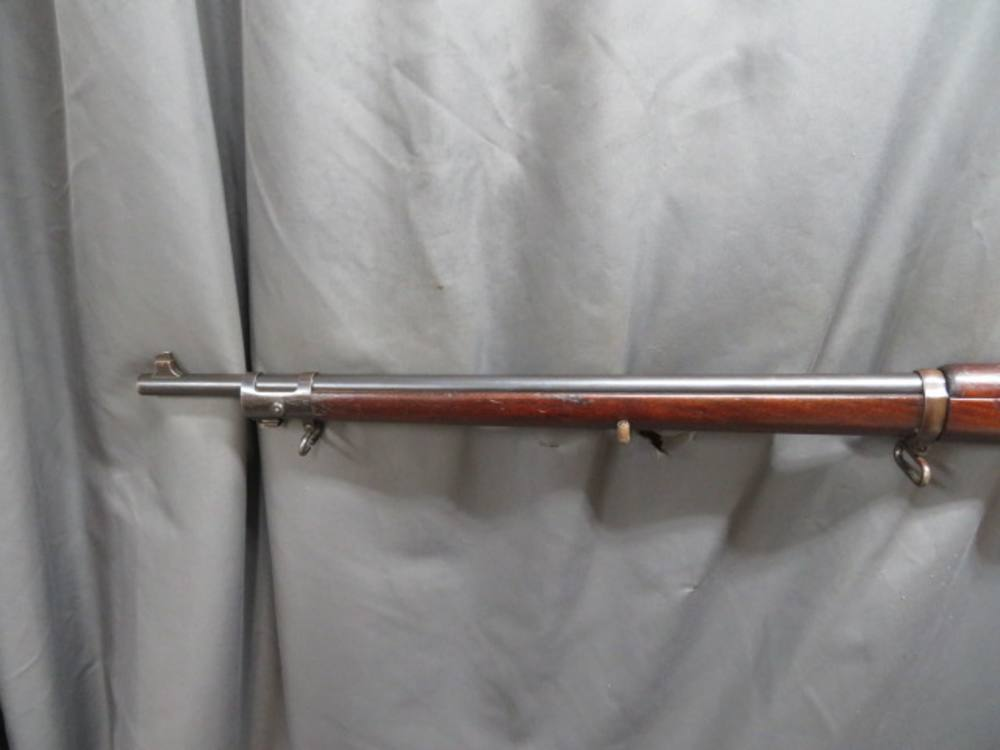
Model 1892, 1896 and 1898
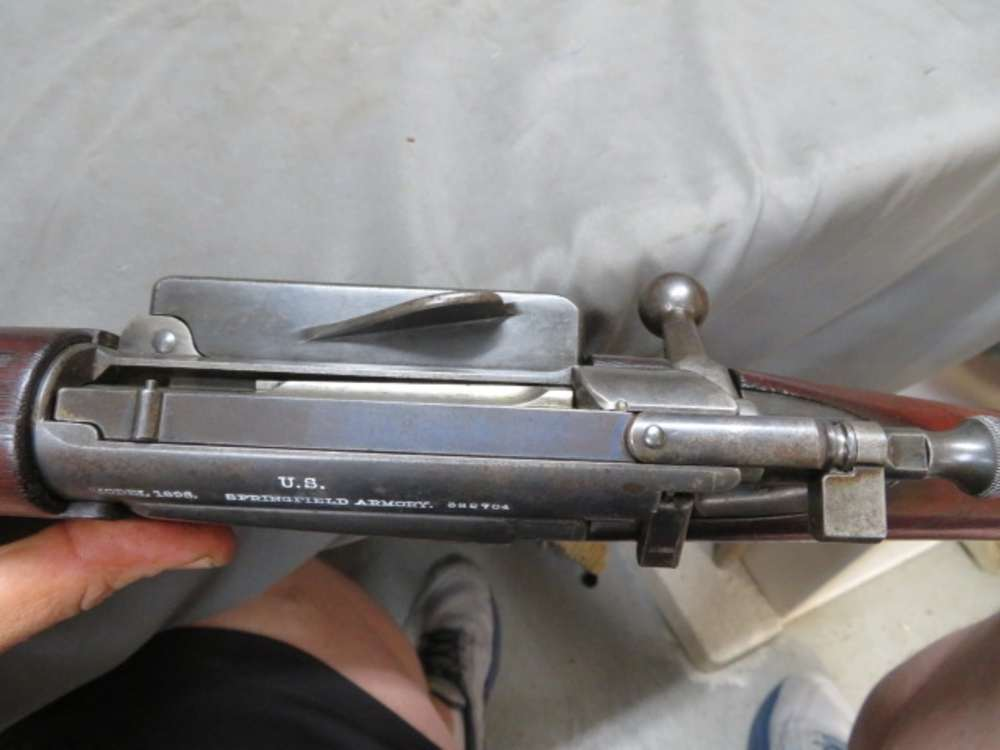
There were eventually three rifle models (1892, 1896 and 1898) and three carbine models (1896, 1898 and 1899). Rifles went to the infantry and carbines to the cavalry, and issue Krag carbines began with the Model 1896.
Springfield Armory National Historic Site gives 24,962 Model 1892 rifles made between 1894 and 1896, about 82,000 Model 1896 rifles, and about 336,000 Model 1898 rifles.
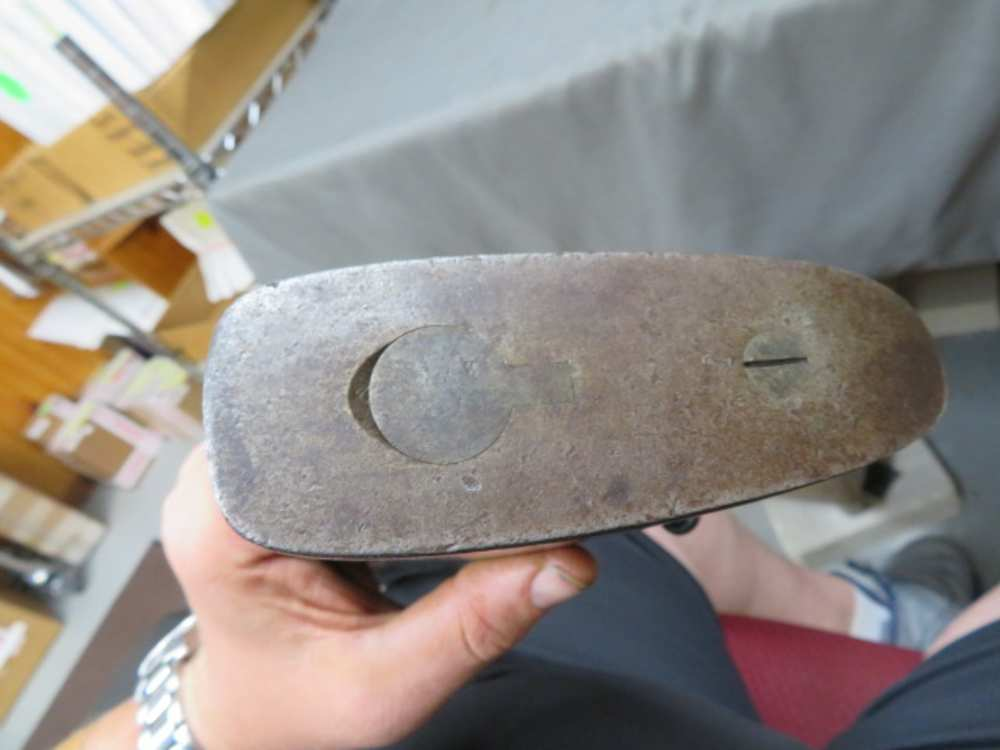
The Model 1896 dropped the Model 1892’s cleaning rod under the barrel in favor of a jointed three-piece rod carried in a recess in the buttstock. It also strengthened the stock and improved the rear sight. The Model 1898 changed how the cutoff lever operated, improved the rear sight again, and did away with the bolt-handle locking recess at the right rear of the action that the earlier receivers had.
From fiscal year 1897 through fiscal year 1902, Model 1892 rifles were sent back to Springfield Armory for conversion to Model 1896 specifications. American Rifleman says virtually all of them were eventually altered.
In Service
When the Spanish-American War broke out in 1898, the Krag was the standard US service rifle, but American Rifleman says only some 30,000 were available, and most of those with regular infantry units were Model 1892s. Regular Army troops carried the Krag. As National Guard units were rushed into service there often were not enough Krags, and many units went to war with the Trapdoor Springfield and its .45-70 blackpowder cartridges. The volunteer cavalry known as the Rough Riders carried the Krag carbine.
Spanish troops carried the 7×57 mm Model 1893 Mauser, which was charger-fed and fired smokeless ammunition. According to American Rifleman, the Mauser could be loaded quickly with a five-round charger, or stripper clip, and its bolt with two locking lugs allowed a more powerful cartridge than the .30-40.
American Rifleman lists fighting at Las Guasimas, El Caney, San Juan Hill and Fort Canosa in Cuba. In an article for the Varnum Continentals that discusses the July 1, 1898, charge up San Juan Hill, Brian Wallin notes that American troops faced Spanish forces equipped with the Model 1893 Mauser, and that a number of Regular Army units were equipped with the Springfield Model 1892, commonly known as the Krag-Jorgensen.
Krags also saw combat in the Philippine-American War. American Rifleman describes extensive use in the Philippine Islands, and notes that after the turn of the century some Krag carbines were altered with cut-down rifle stocks for Constabulary use. In 1900, the US Army’s 9th and 14th Infantry Regiments and a contingent of Marines, all armed with Krag rifles, joined the international relief column that lifted the siege of the International Legation in Peking during the Boxer Rebellion.
Replacement and Later Life
The Krag remained the standard US service rifle until the adoption of the Model 1903 Springfield, which American Rifleman places five years after the end of the Spanish-American War. The Pritzker article calls the Model 1903 essentially a copy of the Mauser design. Krag production at Springfield ended after the Model 1903 was adopted, and according to American Rifleman the Army had almost completely switched to the Model 1903 by 1910, with Krags placed in reserve.
American Rifleman says many Model 1898 Krags were later used for training during World War I. Surplus Krag rifles and carbines were sold to civilians through the Director of Civilian Marksmanship, and many were cut down or modified by their new owners for hunting.
Markings
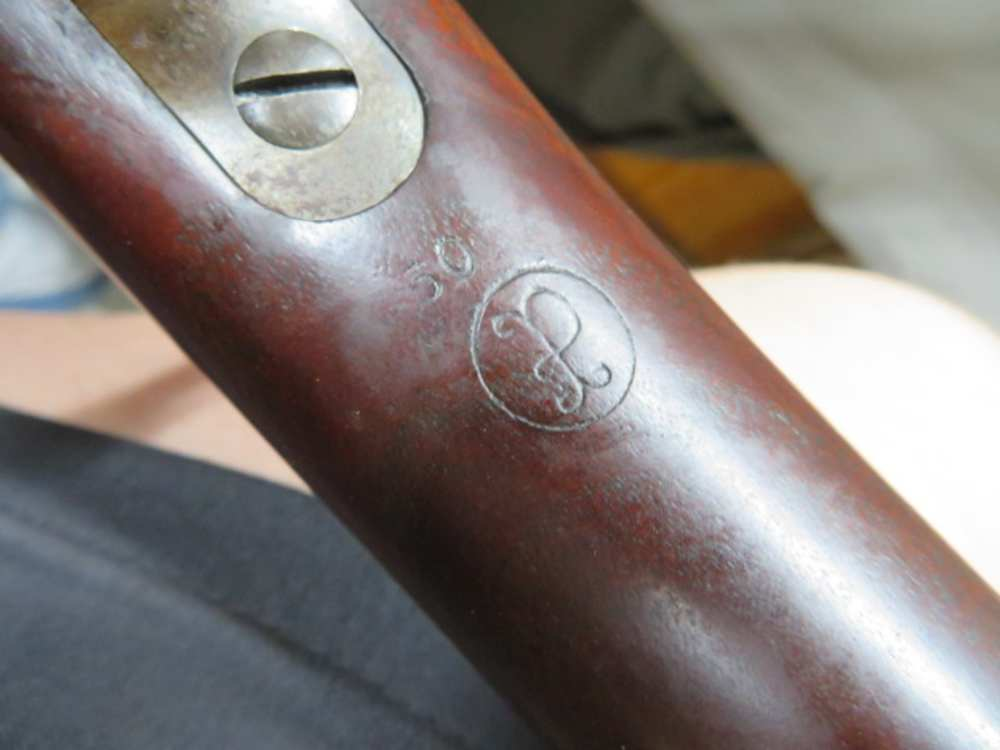
According to Krag collector references, a script “JSA” cartouche with a date appears on accepted Krags from 1894 to 1904, and collectors associate it with J. Sumner Adams of Springfield Armory.
Why It Still Matters to Collectors
The Krag was the smokeless-powder repeater the US Army adopted to replace its single-shot, blackpowder Trapdoor Springfield. It paired a right-side loading gate with a magazine cutoff, and it served in Cuba, the Philippines and China. For the Model 1892 in particular, that history includes the fiscal 1897-1902 program that, according to American Rifleman, altered virtually all of these rifles to Model 1896 specifications.
Further Reading
- National Park Service, Springfield Armory National Historic Site: “U.S. Springfield Krag-Jorgensen Rifle Production”
- National Park Service, Springfield Armory National Historic Site: “Magazine Loaded Weapons”
- NRA National Firearms Museum: “U.S. Springfield Model 1898 Krag Bolt Action Rifle”
- NRA National Firearms Museum: “U.S. Springfield Model 1896 Krag Bolt Action Rifle”
- Pritzker Military Museum & Library: “The American Krag: Obsolete at Birth”
- American Rifleman: “U.S. Krag-Jorgensen: The Foreign Rifle”
- American Rifleman: “I Have This Old Gun: U.S. Model 1898 Krag–Jørgensen”
- American Rifleman: “Guns Of The Spanish-American War 1898”
- American Rifleman: “The Krag Is Still Relevant”
- Varnum Continentals: “Infantry Weapons in the Spanish-American War: Forging New Directions”
- Krag Collectors Association forum: “Stock Markings”