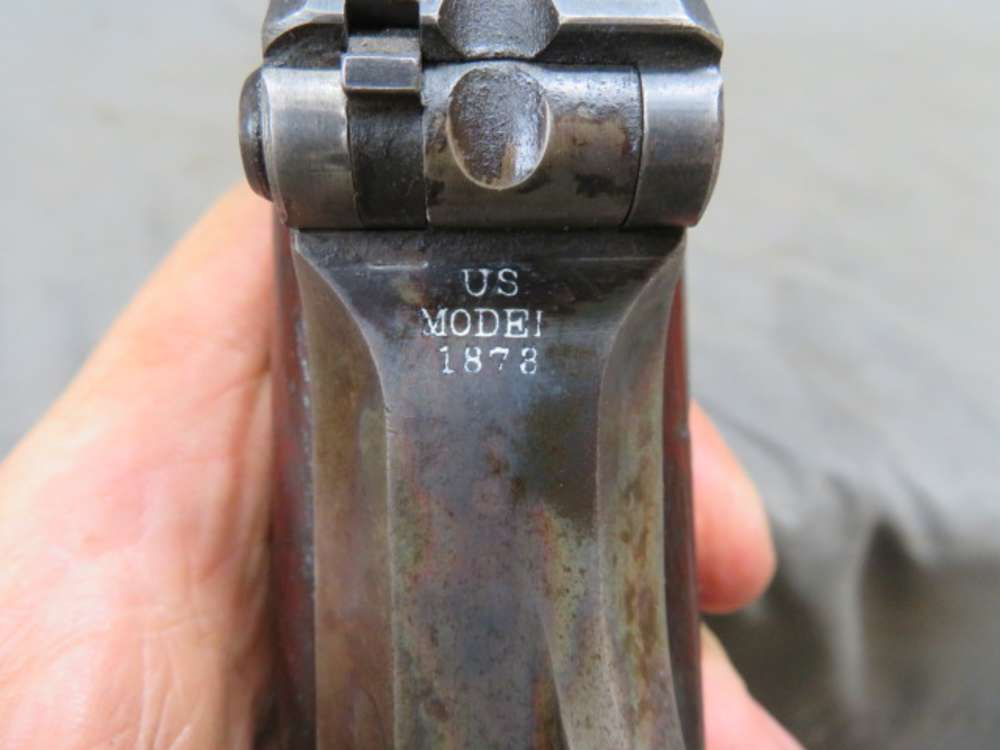
Springfield Armory’s .45-70 trapdoor, the Buffington rear sight, and the troops who carried it
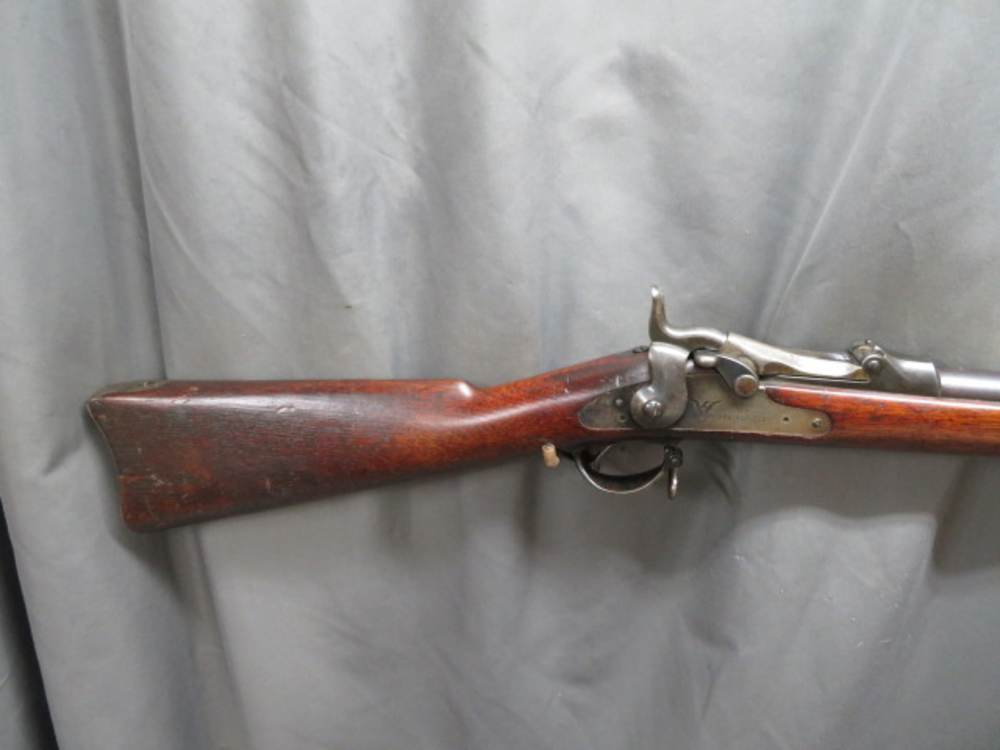
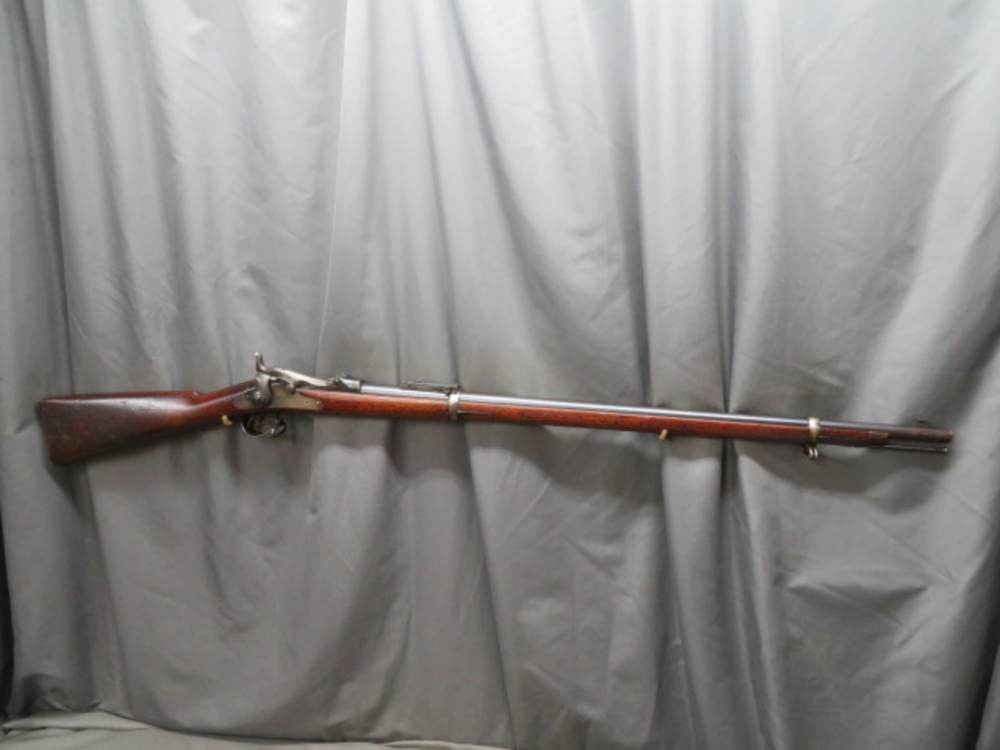
The Model 1884 belongs to a line of breechloading firearms made at Springfield Armory and “collectively known as ‘Trapdoor Springfields.’” American Rifleman describes that line as one that “armed American troops from the 1860s until the turn of the 20th century.” The magazine’s staff call the Model 1884 “one of the most refined and popular” of the designs.
From Musket Conversion to .45-70
According to the National Park Service, the trapdoor system came from “Erskine S. Allin, the Master Armorer of Springfield Armory.” The “Allin conversion,” the Park Service explains, “consisted primarily of removing the top portion of the rear of the barrel and replacing it with a hinged breech block, which soon was nicknamed the ‘trap door.’” Bruce Canfield, writing in American Rifleman, notes that Allin received U.S. Patent Number 49,959 on September 19, 1865, for his design.
Canfield traces the models that followed. By his account, five thousand Model 1861 rifle muskets were converted using Allin’s design, and some 25,000 Model 1863 muzzleloading rifle muskets were converted to the Model 1866 configuration. He counts 52,145 Model 1868 rifles and 11,531 Model 1870 rifles.
In 1873, Canfield writes, “slightly modified versions of the Model 1870 rifle and carbine,” chambered for the newly developed .45-70 Government cartridge, were approved for adoption. “Continuing gradual improvements in the basic trapdoor design,” the National Park Service adds, “led to new model designations in 1879 and 1884.”
What Made It a “Model 1884”
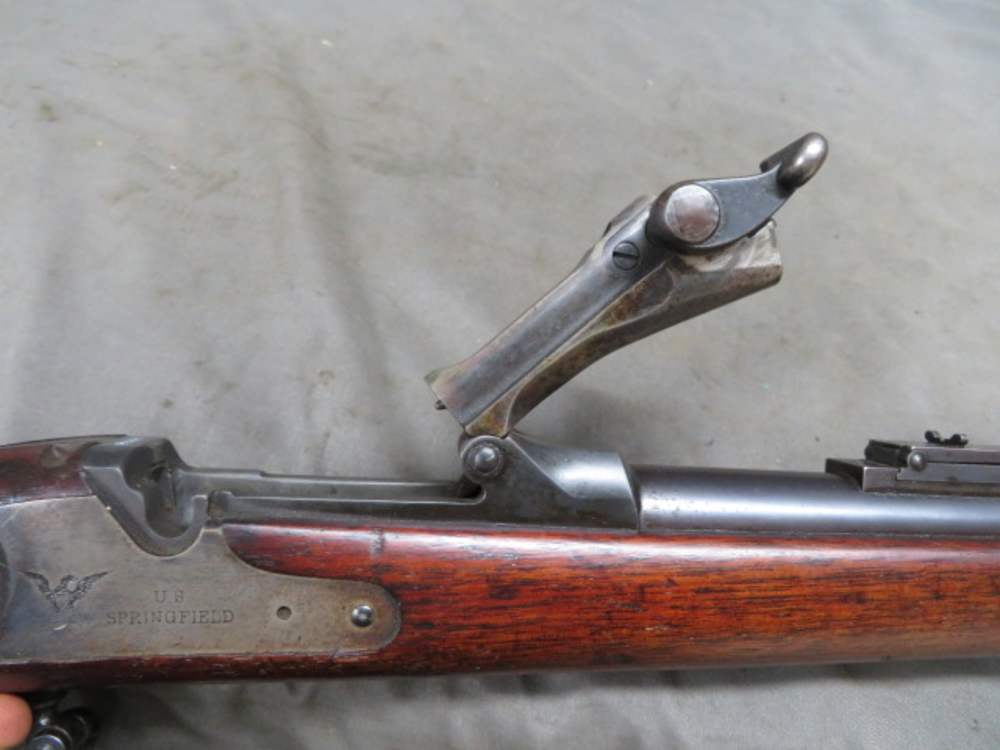
American Rifleman names “the biggest reason for the redesignation” as “the addition of an entirely new, fully adjustable rear sight.” Developed by Lt. Col. Adalbert Buffington, it “would henceforth become known to collectors and shooters alike as the Buffington rear sight.” Canfield writes that the sight was developed in 1884 “for use with the Trapdoor Springfield rifle, carbine and Cadet Rifle,” and that “unlike the earlier rear sights, which were only adjustable for elevation, the new sight was fully adjustable for windage as well.”
The armscollectors.com site calls the designation “somewhat nebulous,” because “the changes that are associated with the model all occurred before or after 1884.” By that site’s account, the serrated trigger associated with the model came in 1883, the Buffington sight “was not perfected for the gun until 1885,” and the breech block dated “1884” “did not appear on guns until 1887.” The National Park Service notes that the Model 1884 was designed to handle the newer .45-70-500 cartridge.
How the Trapdoor Works
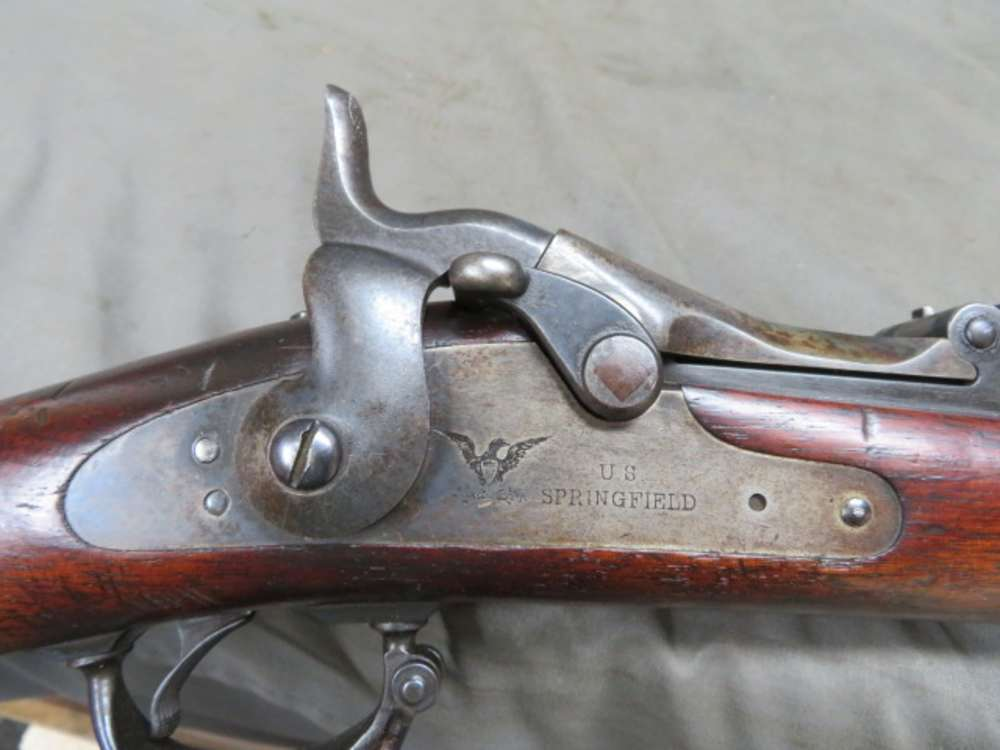
American Rifleman describes Allin’s “forward-hinged breechblock that swung open like a trapdoor, earning its everlasting nickname.” Of the Allin conversions, Canfield writes that “a thumb-operated cam latch opened and closed the breechblock” and “a ratchet-operated extractor removed the fired cartridge case.” The National Park Service cautions that “it is difficult to find two trapdoors exactly alike, although the operating mechanism remained essentially the same.”
Roger Pinckney gives the loading sequence: “hammer to half cock, muzzle down as the breech was opened so the block wouldn’t flop closed again on the fingers, cartridge inserted, breech closed and hammer hauled back to full cock.”
Canfield writes that the .45-70 Government cartridge “was loaded with 70 grains of blackpowder and a 405-grain lead bullet,” while a carbine cartridge used the same bullet but “only 55 grains of powder to reduce recoil.” American Rifleman adds that the reduced loads were issued “due to the carbine’s lighter weight and shorter barrel.”
Rifle, Carbine, Cadet Rifle and Rod-Bayonet Trials
Canfield puts Model 1884 production at 148,796 rifles, 20,003 carbines and 13,500 Cadet Rifles.
Canfield writes that “several types of rifles fitted with sliding ‘rod bayonets’ were produced including the Models 1880, 1884 and 1888.” The armscollectors.com site calls the Model 1884 round rod bayonet rifle, nicknamed the “flatlatch,” “Springfield’s third attempt at a rod bayonet system on a trapdoor rifle,” and says “many of these arms were issued to Michigan troops for trial.”
In Service
American Rifleman writes that production of the Model 1884 “ended by 1893, but the guns continued to serve through the 1890s and would see use in the closing stages of the Indian Wars, as well as the Spanish-American War.”
When war with Spain came in 1898, Canfield writes, the Krag “was the standard United States service rifle but was in critically short supply,” and “most of the U.S. Army volunteer units were armed with Trapdoors.” The armscollectors.com site says “the regular army was issued the new Krag rifles and the guard units received the trapdoor,” adding that “there are a number of stereopticon pictures that show guard units armed with a mix of 1884 and 1888 rifles.”
Writing in American Rifleman about the trapdoors of 1898 in general, Tom Laemlein says troops using them, “slowly firing blackpowder cartridges and emitting massive clouds of smoke,” were “at a distinct disadvantage” against opponents carrying Model 1893 Spanish Mauser rifles “firing smokeless-powder ammunition.”
Canfield writes that “some National Guard troops were reportedly armed with Trapdoor rifles during some of the labor unrest of the 1920s.” Of trapdoor carbines, American Rifleman notes that “refurbished arms were issued to National Guard units as late as the 1920s.”
The End of the Trapdoor Line
The National Park Service identifies the Model 1888 as the final model of the .45-70 trapdoor series, distinguished by a combination cleaning rod and bayonet. The armscollectors.com site says over 60,000 Model 1888 rifles were produced between 1890 and 1893, “when trapdoor production came to an end.” According to the National Park Service, the government adopted the Krag-Jorgensen in 1892. Canfield writes that the trapdoor was superseded by the repeating bolt-action Model 1892 Krag-Jørgensen, “which went into production at Springfield Armory in 1894.”
Markings
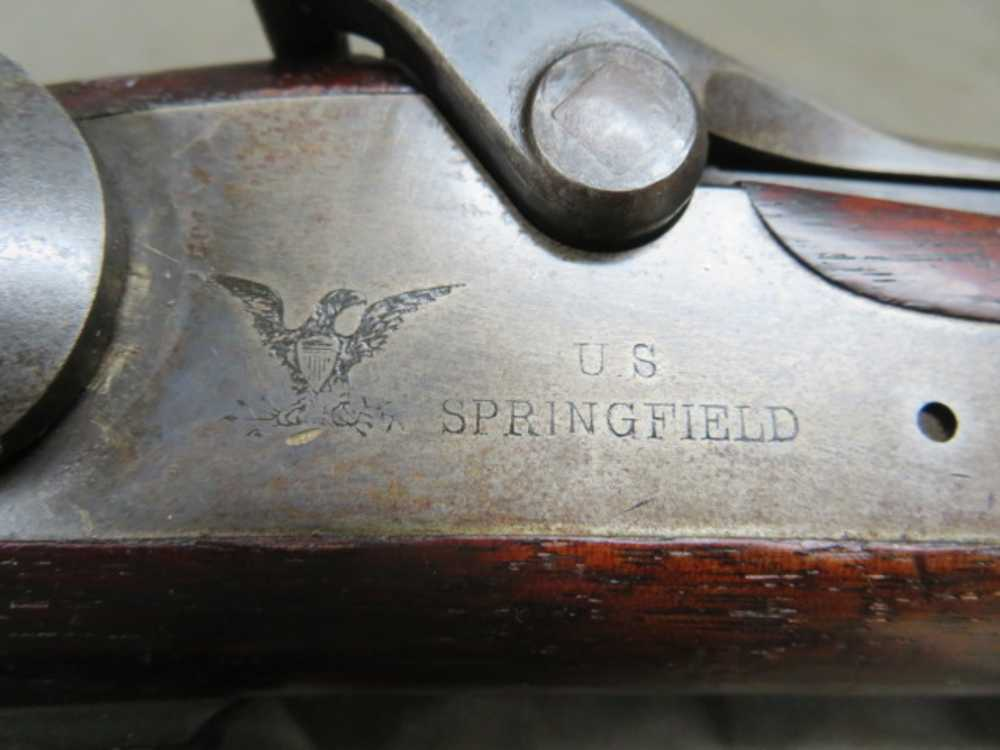
The armscollectors.com site says a trapdoor’s serial number “SHOULD agree with the date (1877 and later, only) on the Master Armorer’s cartouche.” Its Model 1884 page describes the breech block as “dated ‘1884.’”
Legacy
Canfield writes that although the trapdoor “was eventually rendered obsolete by smokeless powder and smaller-caliber, repeating bolt-action rifles, the venerable Trapdoor Springfield served as a standard U.S. military arm for almost three decades.” The National Park Service counts more than 500,000 produced in .45 caliber alone, “serving the army well during a colorful period of American history.” For the Model 1884, the armscollectors.com site notes that “the Buffington rear sight is the one item that collectors associate with the model,” and that “marksmen found the sight to be excellent, but troops found it to be an obstruction.”
Further Reading
- Trapdoor rifle – Springfield Armory National Historic Site (U.S. National Park Service), National Park Service, Springfield Armory National Historic Site
- 150 Years Of The “Trapdoor Springfield”, Bruce N. Canfield, American Rifleman
- Origins Of The ‘Trapdoor’ Springfield: The Allin Conversions, Bruce N. Canfield, American Rifleman
- I Have This Old Gun: Model 1884 Trapdoor Springfield, American Rifleman
- U.S. Springfield .45-70 Gov’t Trapdoor Carbine, American Rifleman
- Guns Of The Spanish-American War 1898, Tom Laemlein, American Rifleman
- Weaponry: The Springfield Trapdoor rifle, Roger Pinckney, HistoryNet
- Model 1884 Rifle, armscollectors.com
- Model 1884 Round Rod Bayonet Rifle, armscollectors.com
- Model 1888 Round Rod Bayonet Rifles, armscollectors.com
- FAQs ABOUT TRAPDOOR ARMS, armscollectors.com