From Trials to Adoption

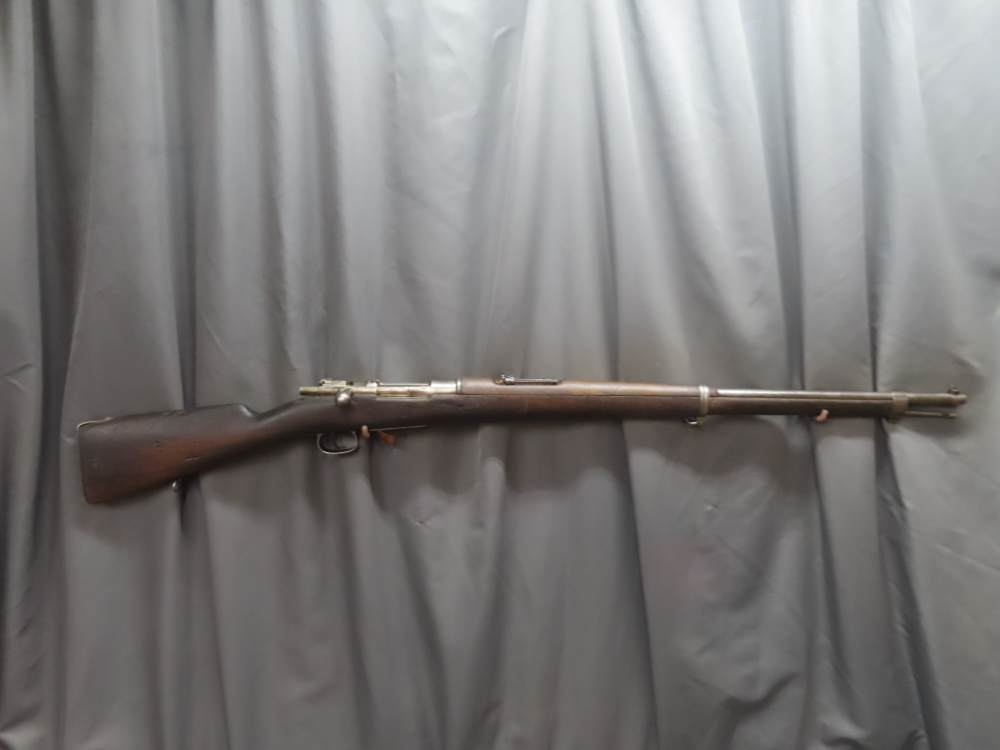
Spanish Model 1893 Mauser rifle, right side profile view showing full stock and barrel
Spanish Model 1893 Mauser rifle, right side profile. Photo property of Eisel Armory.

In 1887 the Spanish Army began trials of Turkish Model 1887 Mauser rifles, which used black-powder cartridges. According to Sporting Shooter, Spain’s original plan was to adopt the Mauser Model 1891, but by the time the trials and tests were finished, Mauser had developed the Model 1893.

Earlier Mauser designs, such as the Models 1889, 1890 and 1891, had an external magazine. Mauser’s Model 1892 was meant to fix their faults, which included an unreliable extractor and a detachable box magazine that extended below the bottom of the stock and was often lost. The Model 1892 added a large non-rotating claw extractor on the bolt.

Spain first declared the rifle its service weapon on 30 November 1892, under the name Fusil Mauser Español Modelo 1892. The following year, with modifications proposed by the maker, the rifle was adopted as the Fusil Mauser Español Modelo 1893 on 7 December 1893, the date given by American Rifleman and most other references.
A Magazine Inside the Stock

The Model 1893 had a staggered-column, five-round box magazine that sat flush with the bottom of the stock. American Rifleman’s Garry James calls it “the first of its breed to have a box magazine entirely enclosed within the stock.” Ludwig Olson, writing in the same magazine in 1971, called it “the first Mauser with a staggered-column box magazine.”

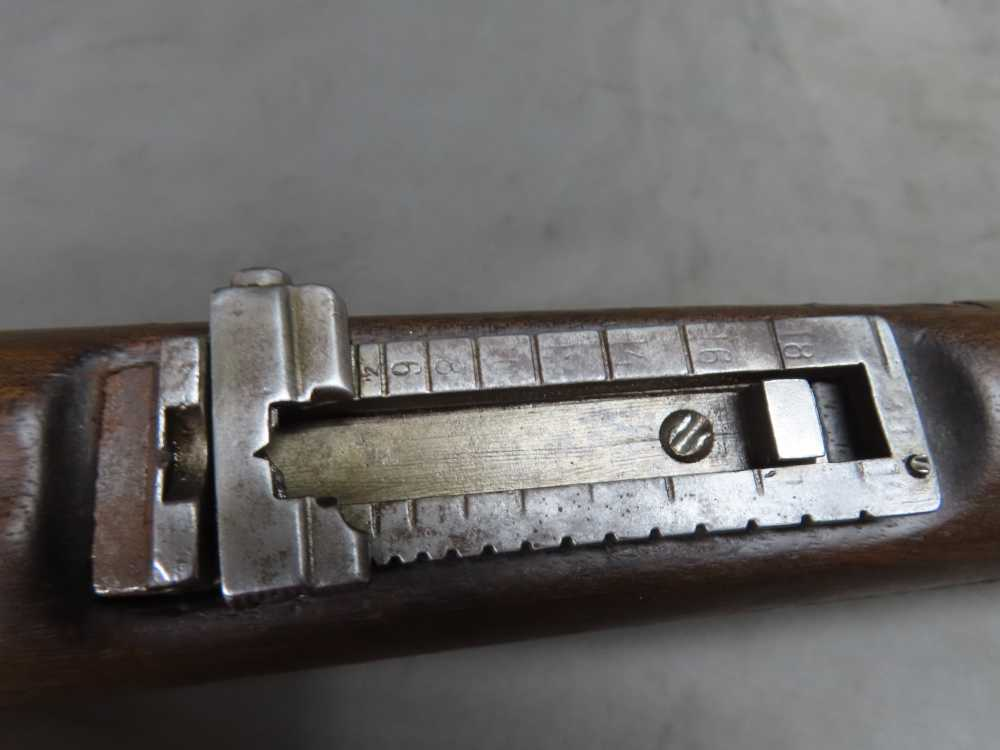
To load it, the soldier inserted a loaded steel stripper clip, also called a charger, into a slot milled into the receiver bridge and stripped five rounds down into the magazine. The bolt had dual forward locking lugs and a non-rotating extractor. The Spanish rifle had no magazine cut-off (see the Ottoman rifle below). American Rifleman notes that the ladder-style rear sight was graduated to 2,000 meters.

Mauser developed the 7x57mm cartridge for Spain in the early 1890s, and it became the Model 1893’s service cartridge. As described by American Rifleman and Sporting Shooter, the original load used a 173-grain bullet at a muzzle velocity of about 2,296 feet per second.

Spanish Model 1893 Mauser rifle receiver and bolt, showing the staggered-column box magazine area
Spanish Model 1893 Mauser rifle receiver and bolt. Photo property of Eisel Armory.

Who Built It

Spanish Model 1893 Mauser rifle markings on the receiver ring
Spanish Model 1893 Mauser rifle receiver markings. Photo property of Eisel Armory.

The Model 1893 was built in Germany by Mauser, Ludwig Loewe & Co. of Berlin and Loewe’s successor, Deutsche Waffen- und Munitionsfabriken (DWM), and in Spain at the Fábrica de Armas in Oviedo from 1896. American Rifleman also lists Fabrique Nationale of Belgium and Industrias de Guerra de Cataluña among the makers of the pattern. German manufacture began in 1893 and ended in 1899. Sporting Shooter reports that Spain’s initial order with Loewe was for 70,000 infantry rifles and 5,000 carbines. Spanish production continued for decades after it began at Oviedo, with the family made into the 1940s.

Cuba, 1898

During the Spanish-American War of 1898, Spanish troops were, in the words of American Rifleman’s Tom Laemlein, “equipped with modern 7×57 mm Model 1893 Spanish Mauser rifles, charger-fed and firing smokeless-powder ammunition.” Bruce N. Canfield, also writing in American Rifleman, compared it with the American Krag-Jorgensen rifle: “Unlike the Krag, the Mauser could be rapidly loaded by means of a five-round charger (stripper clip) and its double locking lug bolt enabled the use of a cartridge with greater power than the .30-40.”

Spanish troops in Cuba carried the Model 1893 against US forces at San Juan Hill, Kettle Hill and El Caney. Laemlein adds that the Spanish “nullified some of” their rifle-firepower advantage “with a strange tendency to volley fire.” Brian Wallin, writing for the Varnum Continentals, states that the “Spanish defenders of San Juan Hill retreated only when they ran out of ammunition.” Olson wrote that the “great rapidity with which this rifle could be clip loaded caused U.S. officers to take note.”

Canfield writes that problems with the Krag “resulted in the search for a new service rifle that incorporated many of the desirable features of the Mauser,” a search that ended with the adoption of the Model of 1903 Springfield “just five years after the conclusion of the Spanish-American War.” American Rifleman also reports: “It was determined that the ‘03 design violated five Mauser rifle patents and two clip patents.”

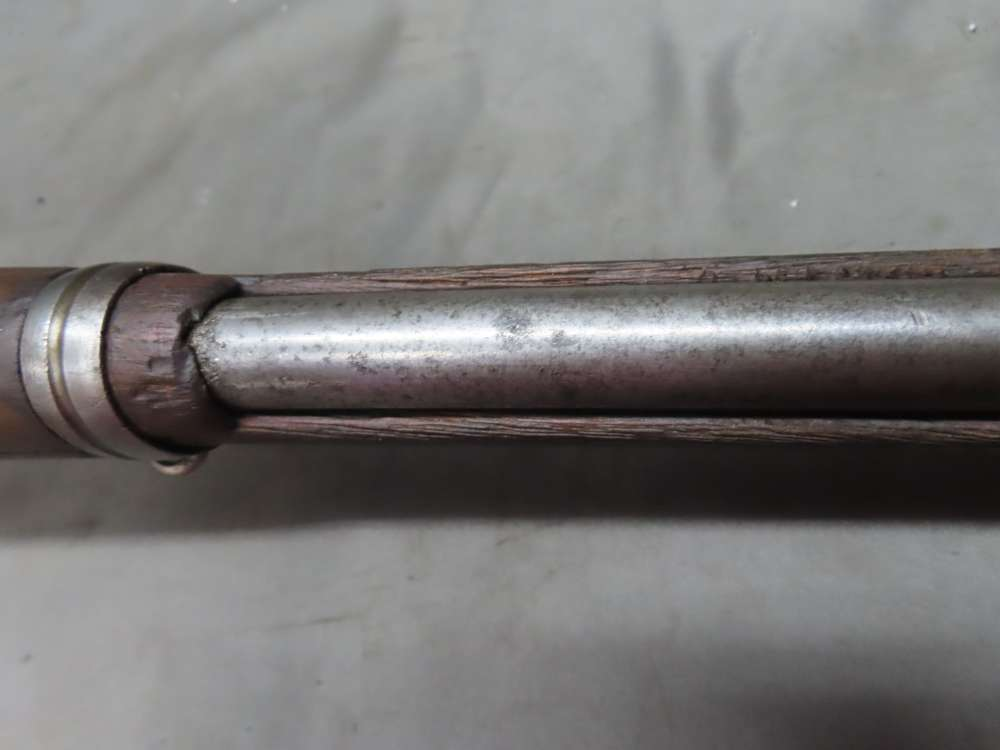
Spanish Model 1893 Mauser rifle muzzle and front sight detail
Spanish Model 1893 Mauser rifle muzzle and front sight. Photo property of Eisel Armory.

Later Service and Related Models

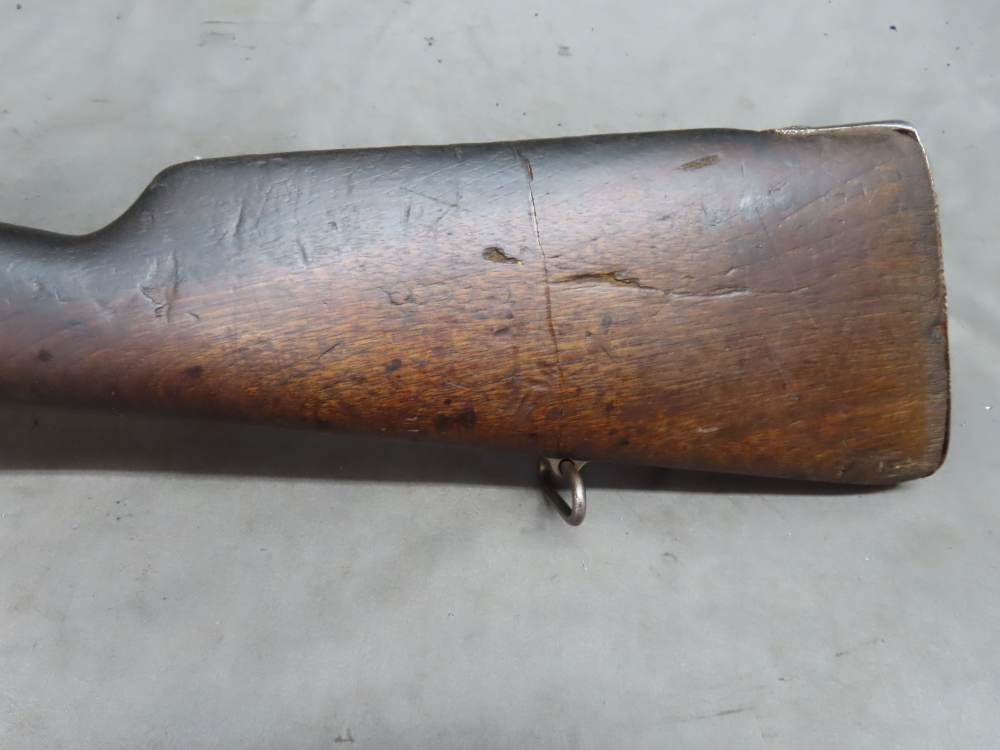
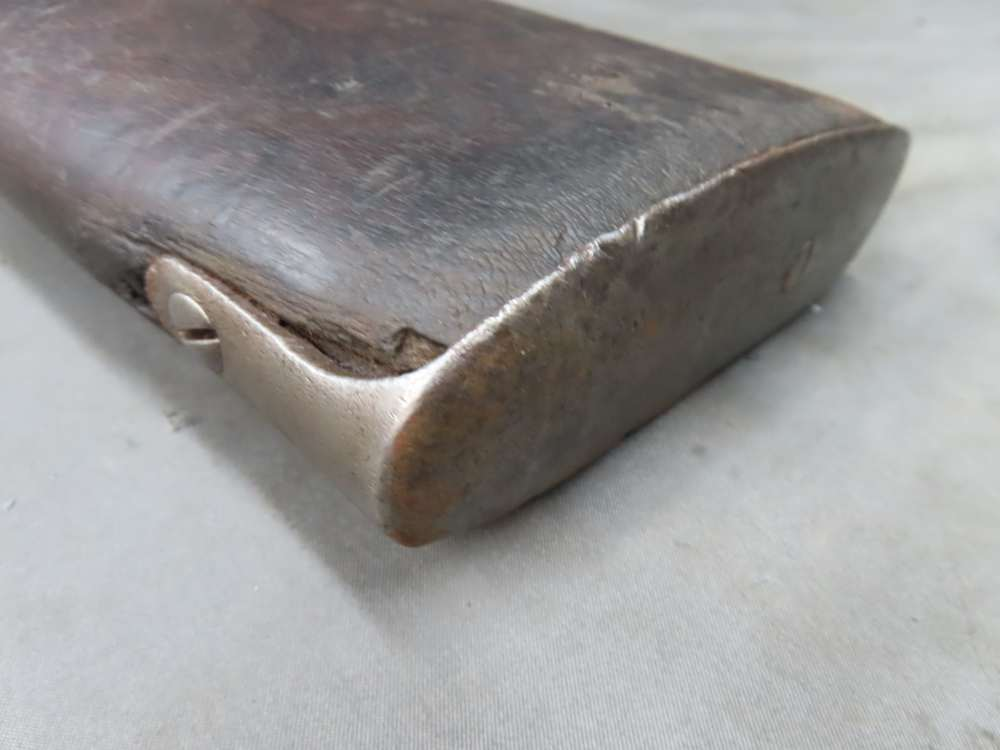
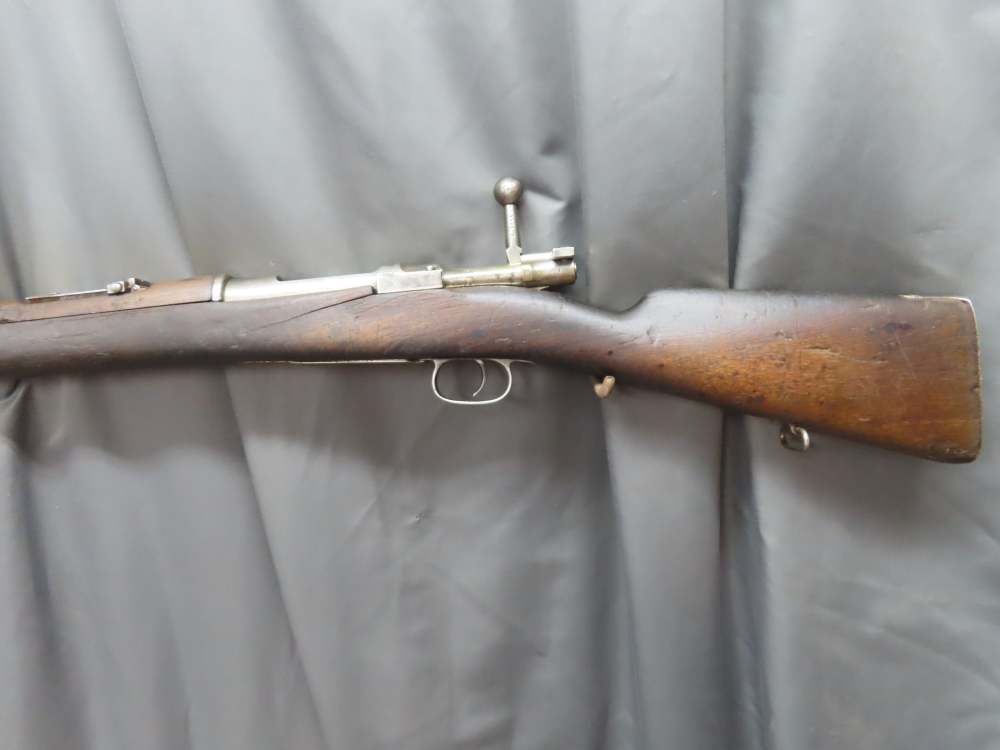
Spanish Model 1893 Mauser rifle buttstock and wood furniture detail
Spanish Model 1893 Mauser rifle buttstock and wood furniture. Photo property of Eisel Armory.

The Model 1893 served with regular troops and the Spanish Legion during the Rif War in Spanish Morocco in the 1920s. It was still in service during the Spanish Civil War of 1936 to 1939, on both sides of the conflict.

Spain adopted the Model 1895 carbine on 7 May 1895. It was essentially a shortened Model 1893, with a full-length stock that ran to the muzzle. The Model 1916 was adopted on 14 November 1916 to replace the Model 1895 carbine. Sporting Shooter notes that “many Model 1893s were converted to the new pattern, but plenty weren’t.”

The Ottoman Empire’s Model 1893, made by Mauser, is a related but separate rifle. Olson wrote that “Turkey was impressed by improvements in the Spanish Model 93 and decided to adopt a similar rifle, but in cal. 7.65 mm.” The Ottoman rifles were chambered for the 7.65x53mm Mauser cartridge. Unlike the Spanish rifle, they had a magazine cut-off, which when engaged let the rifle feed and extract single cartridges while keeping the rounds in the magazine in reserve.

Why It Still Matters to Collectors

Ludwig Olson called the Spanish Model 93 “one of the most important Mauser rifles” and said it “represented a major step in Mauser development.” He pointed to the 7 mm Model 95 Mauser rifle, which he called “very similar to the Spanish Model 93,” and to its adoption by countries including Mexico, Chile and Uruguay as evidence of “the prominent part the Spanish Model 93 played in making the Mauser rifle universally popular.” The Model 1893 is also the rifle Spanish troops carried against US forces in Cuba in 1898.

Spanish Model 1893 Mauser rifle left side profile view
Spanish Model 1893 Mauser rifle, left side profile. Photo property of Eisel Armory.
×