A Union Cavalry Staple of the Civil War

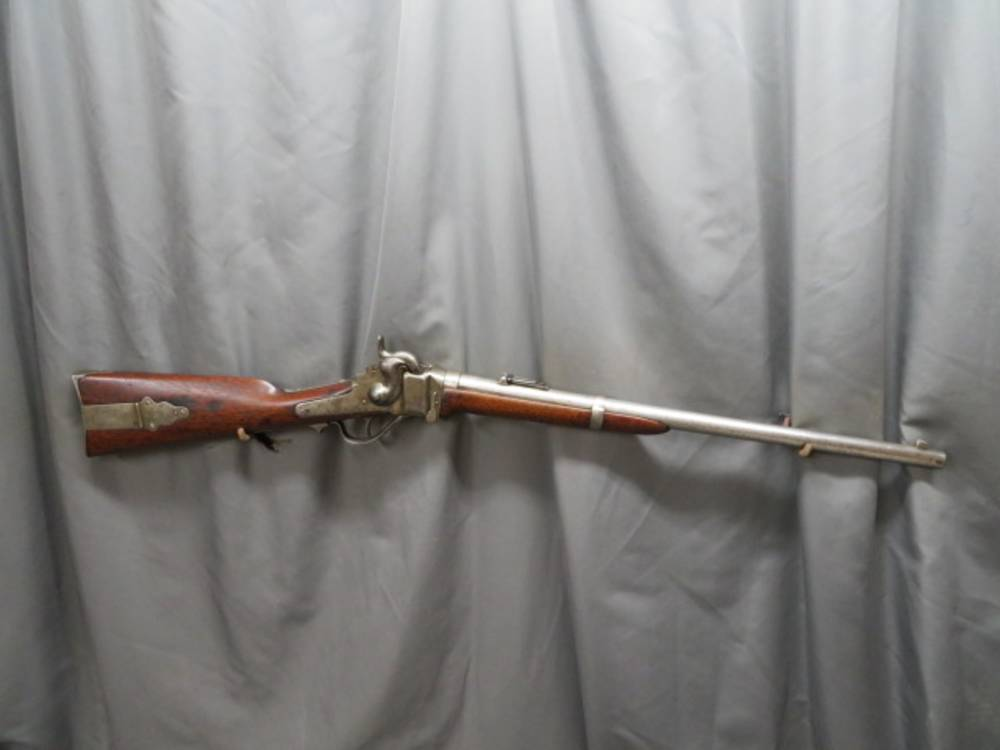
Sharps New Model 1859 Cavalry Carbine, right-side profile
Sharps New Model 1859 Cavalry Carbine, right-side profile. Photo property of Eisel Armory.

The New Model 1859 was one of Christian Sharps’ refined single-shot breechloading carbines, adopted by the US Army during the Civil War and issued heavily to Union cavalry regiments. Chambered for a .52-caliber combustible cartridge fired by an external percussion cap, its dropping-block breech — opened by lowering the trigger guard/lever — let a cavalryman reload from horseback far faster than any muzzleloading carbine. Union quartermasters purchased tens of thousands of these carbines across the war years, and they became one of the most recognizable cavalry arms of the conflict.

Who Built It

Design credit traces to Christian Sharps, whose falling-block breech action first appeared in the late 1840s and was steadily refined through the 1850s. The New Model 1859 was manufactured by the Sharps Rifle Manufacturing Company of Hartford, Connecticut, whose factory superintendent Richard S. Lawrence contributed the pellet-priming mechanism seen stamped on many surviving examples’ tang sights ("S. Lawrence, Patented"). Exact wartime production figures vary by source, but Sharps delivered its New Model 1859 carbines to the Army in substantial numbers — commonly cited estimates run into the tens of thousands, though records from the period are incomplete.

Sharps Rifle Manufacturing Co. markings and S. Lawrence patent tang sight
Sharps Rifle Mfg. Co. markings and the S. Lawrence patent tang sight. Photo property of Eisel Armory.

Countries and Sides

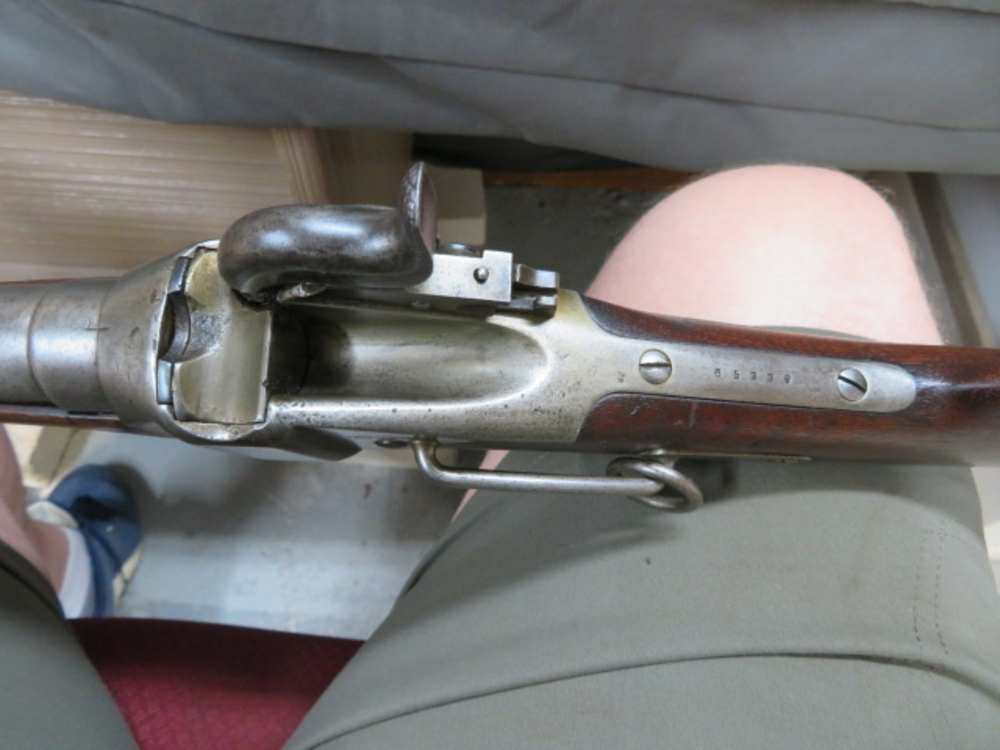
Close-up of the receiver serial number
Close-up of the receiver serial number. Photo property of Eisel Armory.

The New Model 1859 was overwhelmingly a Union arm, issued to US cavalry regiments throughout the Civil War. Confederate forces captured and used a smaller number of these carbines opportunistically, as they did with most Union ordnance, though this was never a significant source of supply for Southern cavalry. After the war, many surplus and re-arsenaled examples continued in government and commercial hands well into the frontier era.

Coming to the US

As a US-made and US-issued military arm from the outset, the New Model 1859 has no foreign import story — its path into wider circulation ran through Army surplus sales after the Civil War rather than overseas battlefields. Large numbers were sold off to the civilian market in the postwar decades, and many carbines were altered by the Sharps company or the Army itself to fire metallic centerfire cartridges, extending their service life well past 1865.

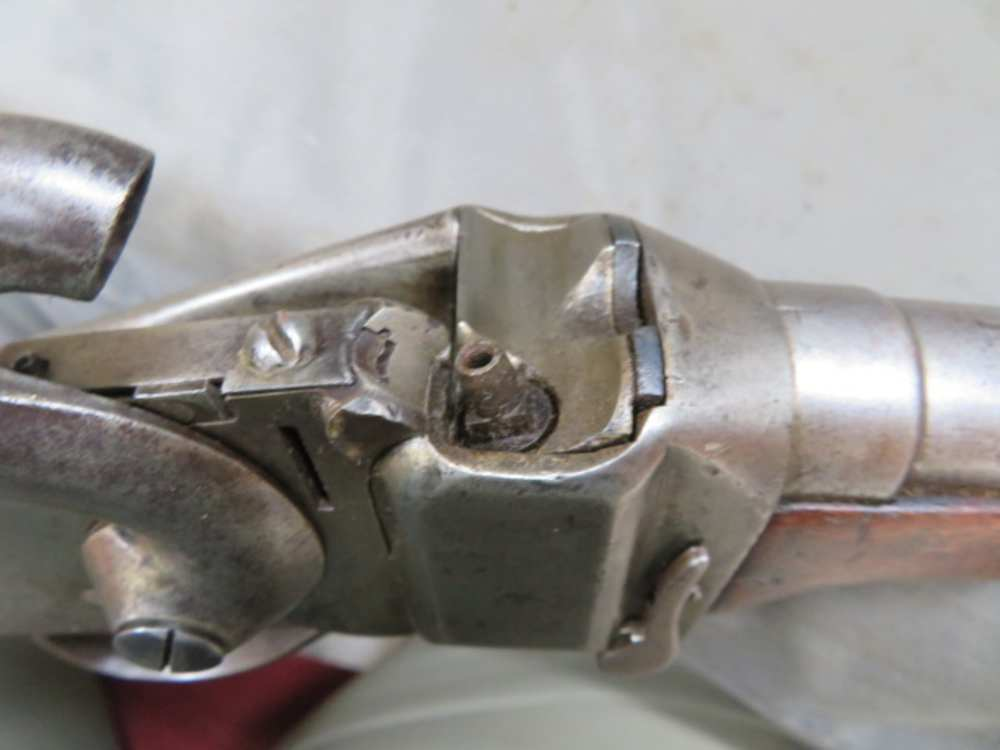
Close-up of the falling-block breech mechanism
Close-up of the falling-block breech mechanism. Photo property of Eisel Armory.

Lookalikes and Cousins

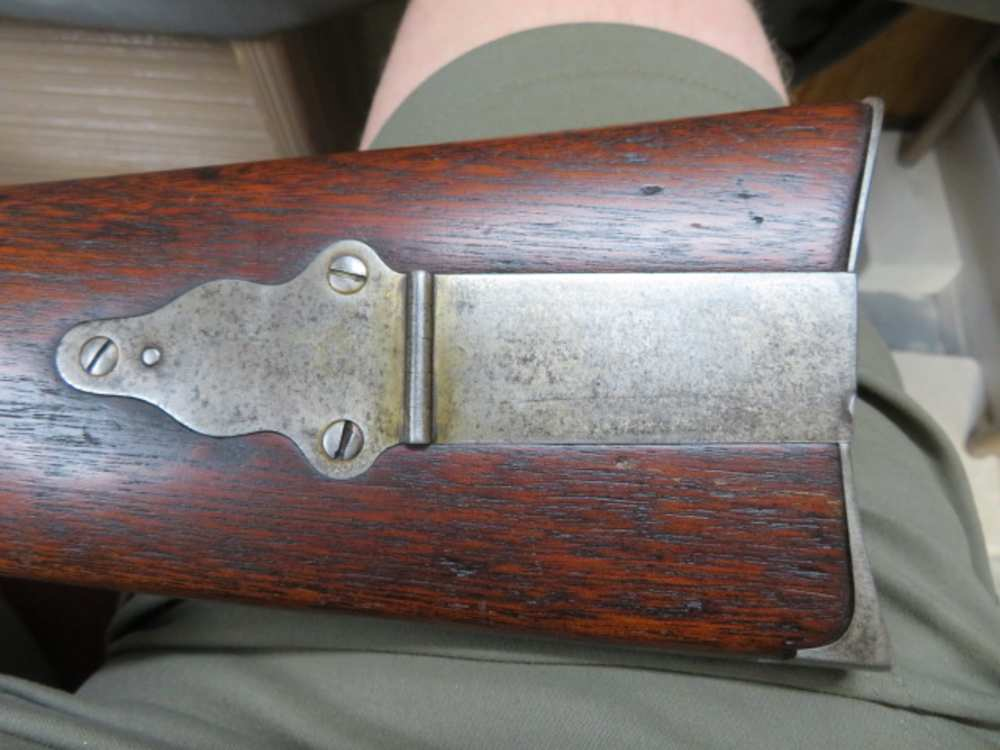
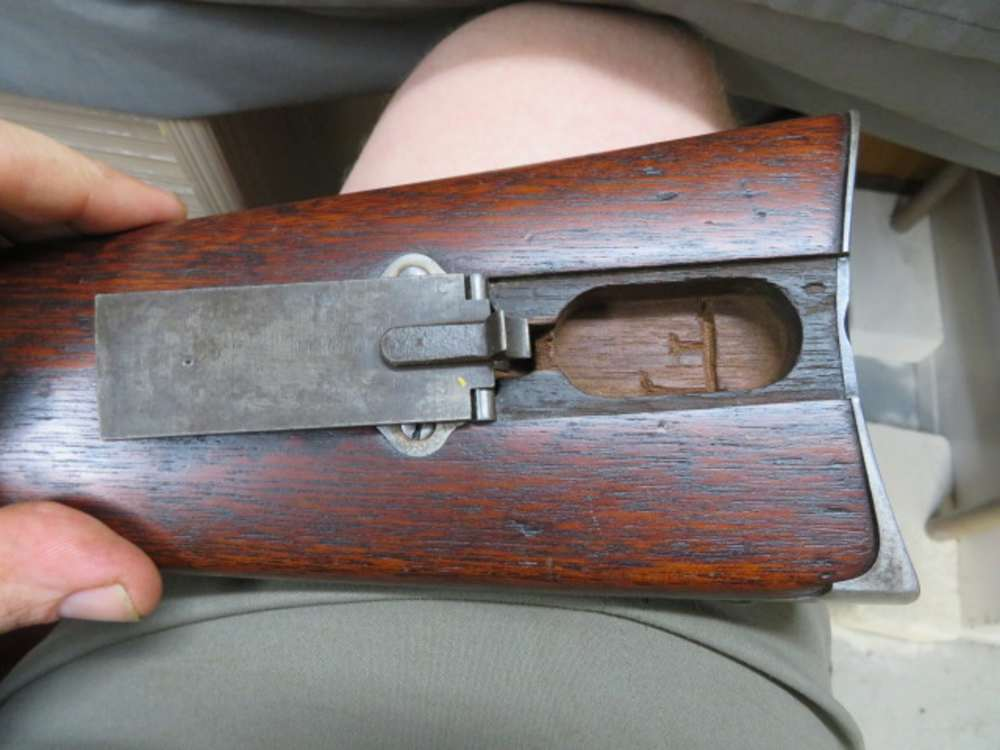
Close-up of the buttstock patchbox and buttplate
Close-up of the buttstock patchbox and buttplate. Photo property of Eisel Armory.

The New Model 1859 sits within a long family of Sharps dropping-block arms that includes the earlier Model 1853 and Model 1855 carbines and rifles, along with the later New Model 1863 that followed a similar pattern with minor refinements. It’s often compared to the Spencer carbine, its main wartime rival, but the two work on entirely different principles — the Spencer is a lever-action repeater fed from a tube magazine, while the Sharps is a single-shot loaded one cartridge at a time through its falling breechblock.

Why It Still Matters to Collectors

There’s no dedicated Collector’s Library identification guide for the Sharps New Model 1859 yet, but it remains one of the most historically significant carbines a collector can own. As one of the most widely issued Union cavalry breechloaders of the Civil War, later converted and carried into the frontier years that followed, a well-preserved example carries a direct line through two distinct chapters of American military history.

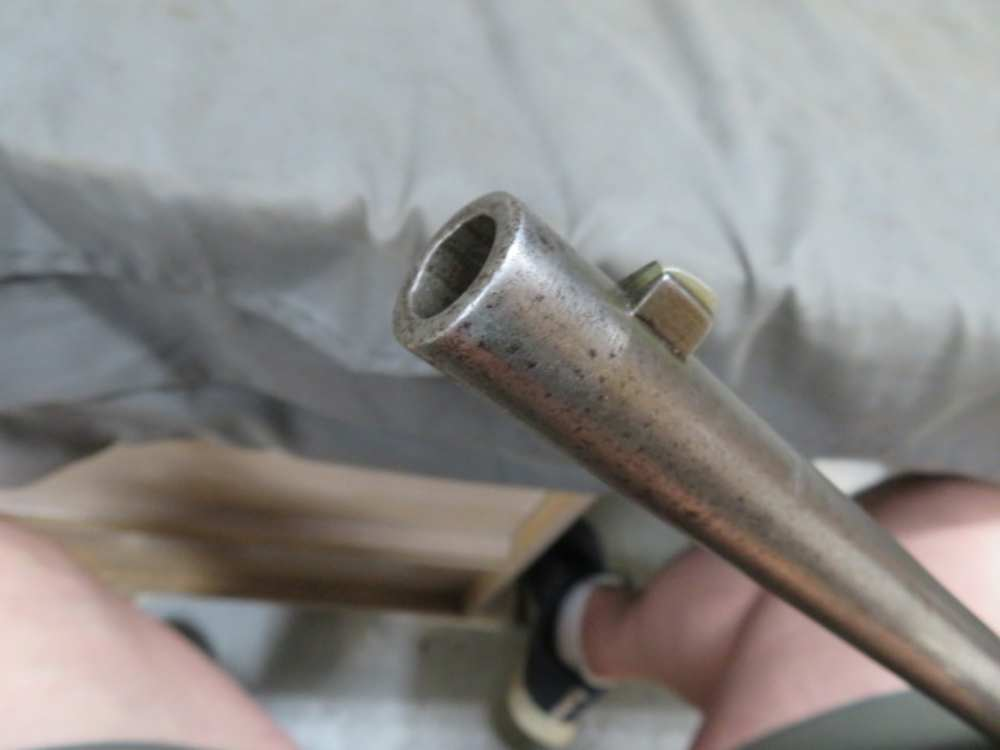
Close-up of the muzzle and front sight
Close-up of the muzzle and front sight. Photo property of Eisel Armory.
×