A Crimean War-Era Imperial Russian Musket

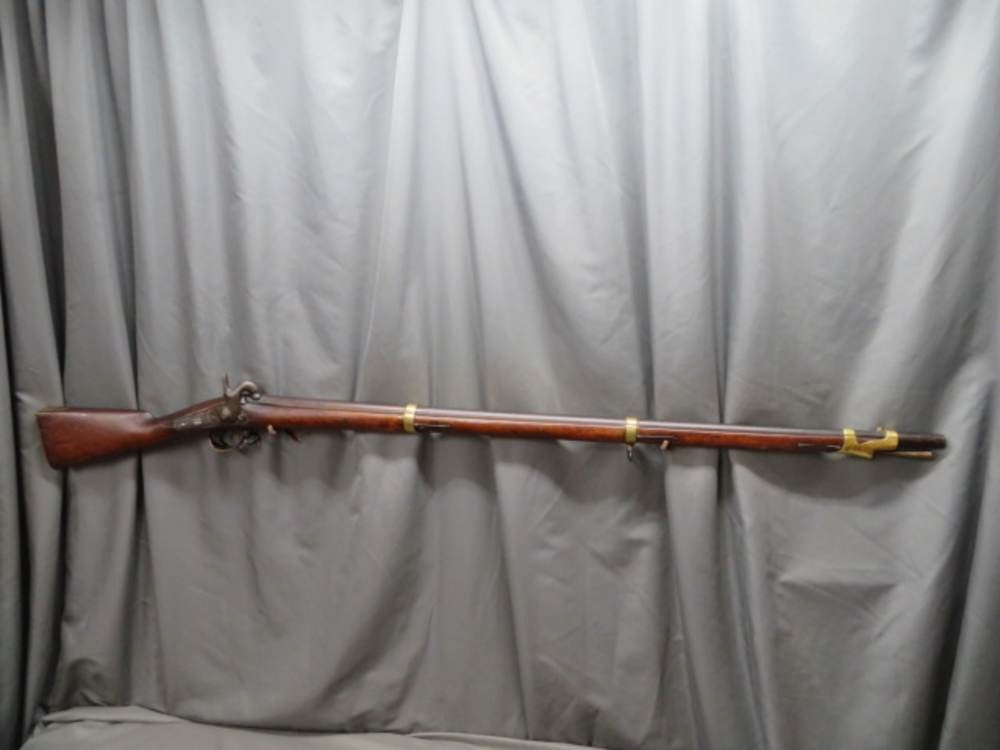
Russian Model 1845 percussion musket, right-side profile
Russian Model 1845 percussion musket, right-side profile. Photo property of Eisel Armory.

The Model 1845 was a smoothbore percussion musket fielded by the Imperial Russian Army as part of a broader mid-nineteenth-century shift away from flintlock ignition. Chambered for a large-bore round-ball load typical of the period — roughly .70 caliber — it served as standard infantry issue through the Crimean War of the 1850s, arming Russian line regiments against the British, French, and Ottoman coalition. Its percussion-cap ignition made it faster and more weather-reliable to fire than the flintlock muskets it replaced.
Who Built It

The Model 1845 followed a pattern common across mid-1800s Europe: aging flintlock musket patterns were reworked for percussion ignition rather than designed entirely from scratch, extending the service life of existing arsenal stocks while modernizing how they fired. Russian muskets of this era were produced at the empire’s major state arsenals — Tula, Izhevsk, and Sestroretsk chief among them — each stamping its own inspection and acceptance marks into the metal and furniture. Exact production totals for the Model 1845 specifically aren’t well documented in English-language sources, so any production figure should be treated as an estimate rather than a confirmed count.

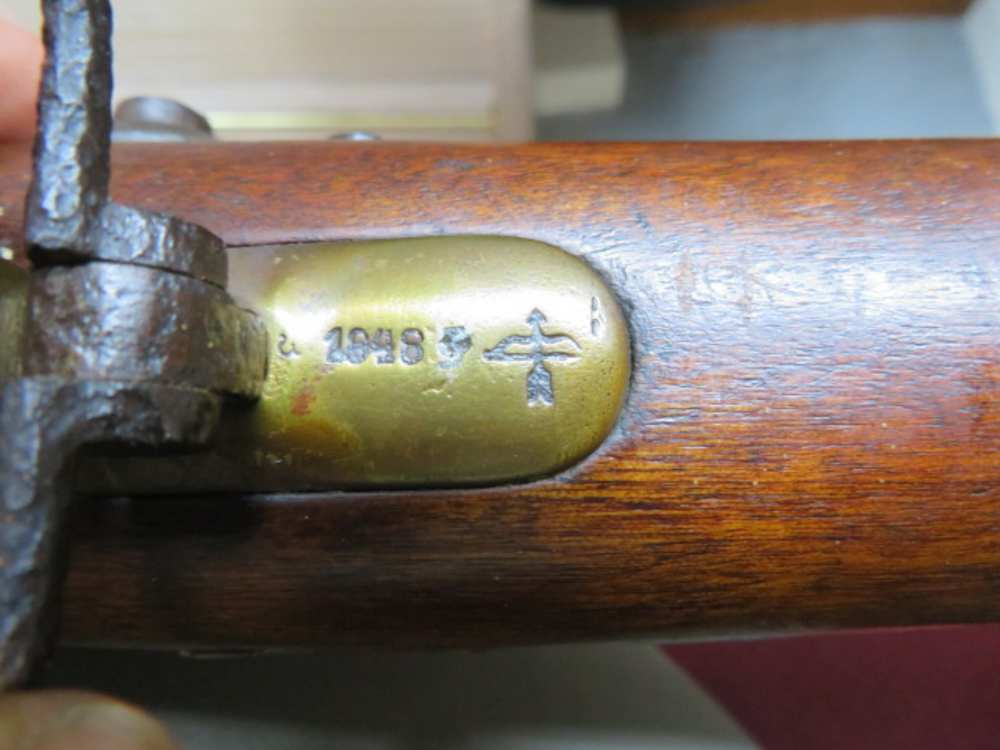
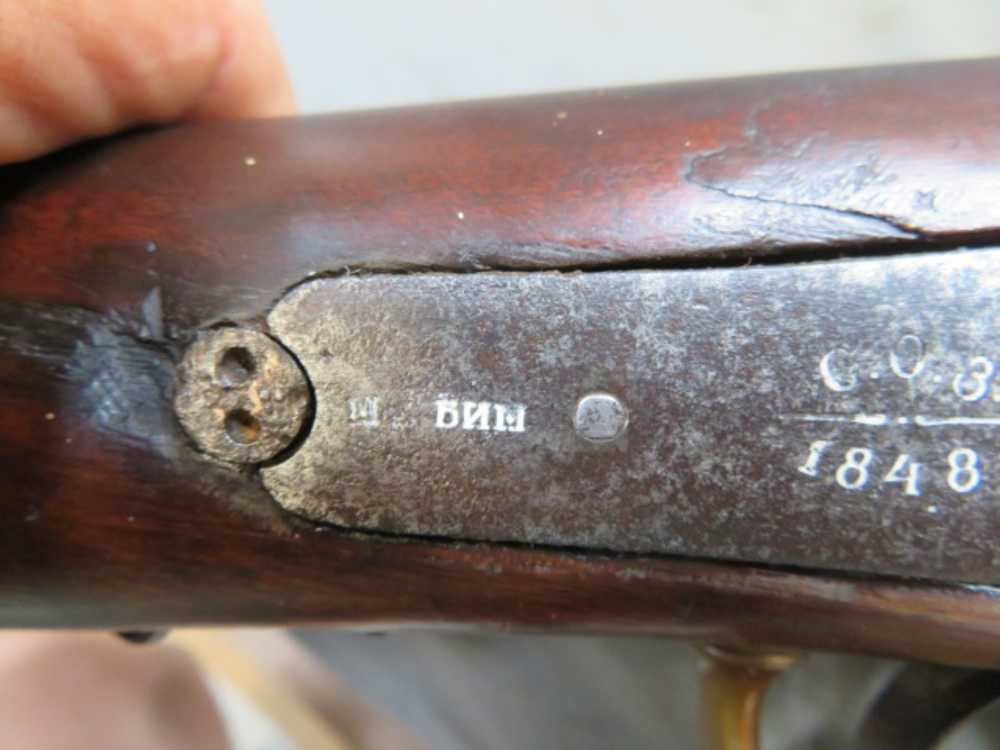
Cyrillic arsenal markings and date stamped near the lock
Cyrillic arsenal markings and date stamped near the lock. Photo property of Eisel Armory.

Countries and Sides

Brass barrel band with 1848 date and proof mark
Brass barrel band with an 1848 date and proof mark. Photo property of Eisel Armory.

As a standard Imperial Russian infantry arm, the Model 1845 saw its most significant combat service in the Crimean War (1853–1856), where Russian troops carrying smoothbore muskets like this one were outranged by the rifled muskets fielded by British and French forces — a mismatch that helped push European armies toward rifled-musket adoption in the years that followed. Beyond Crimea, muskets of this pattern likely remained in Russian arsenal and reserve stocks for years afterward, though later service specifics should be read as general context rather than a documented record for any individual example.

Coming to the US

Russian military muskets of this vintage have no organized US import history comparable to the twentieth-century surplus waves that brought so many European service arms stateside. Surviving examples in the United States generally arrived through European arms dealers, estate collections, or individual acquisitions rather than any bulk government sale, which makes a well-documented, clearly marked example like this one relatively uncommon on the US collector market.

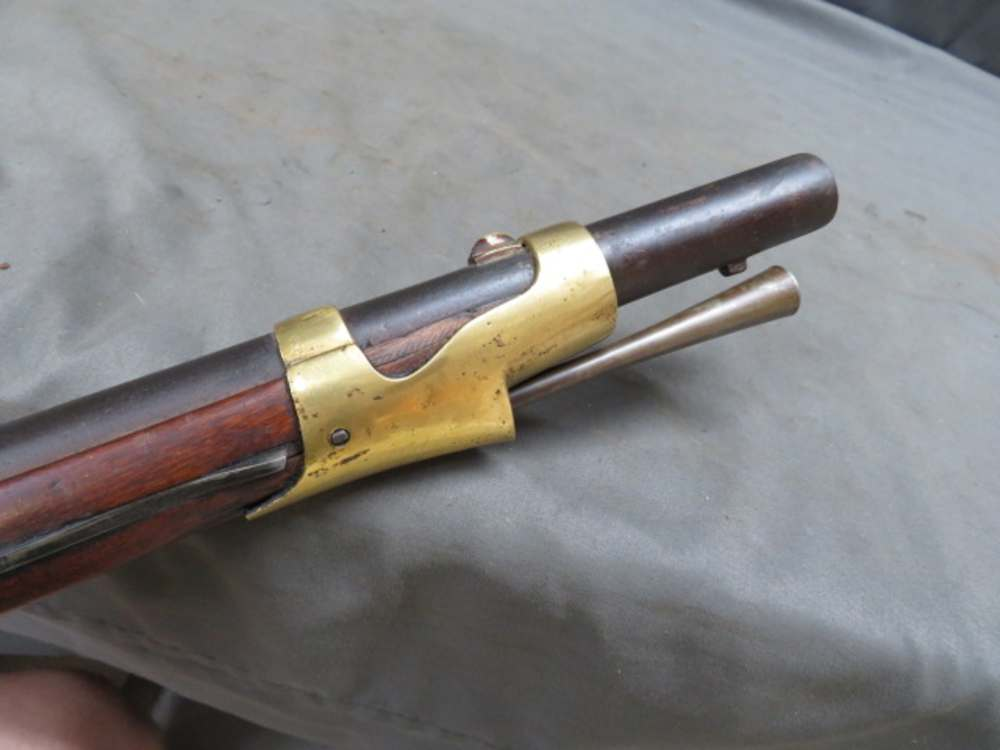
Close-up of a brass barrel band
Close-up of a brass barrel band. Photo property of Eisel Armory.

Lookalikes and Cousins

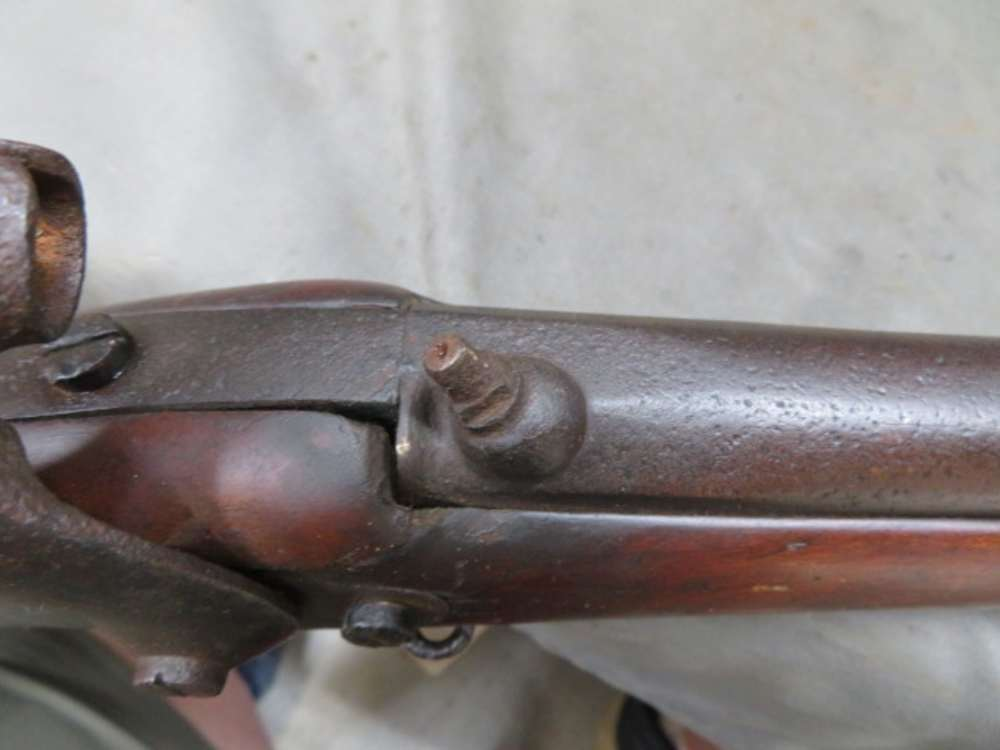
Close-up of the percussion lock mechanism
Close-up of the percussion lock mechanism. Photo property of Eisel Armory.

The Model 1845 belongs to a broad family of large-bore percussion muskets fielded across Europe in the 1840s and 1850s, including the French Modèle 1842 and the British Pattern 1842 — all built on the same basic idea of converting or redesigning flintlock-era muskets for percussion ignition ahead of the rifled-musket era. Distinguishing a Russian example from its European contemporaries comes down to the markings: Cyrillic arsenal stamps, Imperial Russian proof marks, and brass furniture patterns specific to Russian government contracts, rather than any dramatic difference in the musket’s basic mechanism.

Why It Still Matters to Collectors

There’s no dedicated Collector’s Library identification guide for Russian percussion muskets of this era yet, but that shouldn’t undersell the piece. Mid-nineteenth-century Imperial Russian long arms are far less common in US collections than their British, French, or German counterparts, and a dated, clearly marked example tied to the Crimean War era offers a genuine window into a chapter of military small-arms history that most American collections don’t otherwise touch.

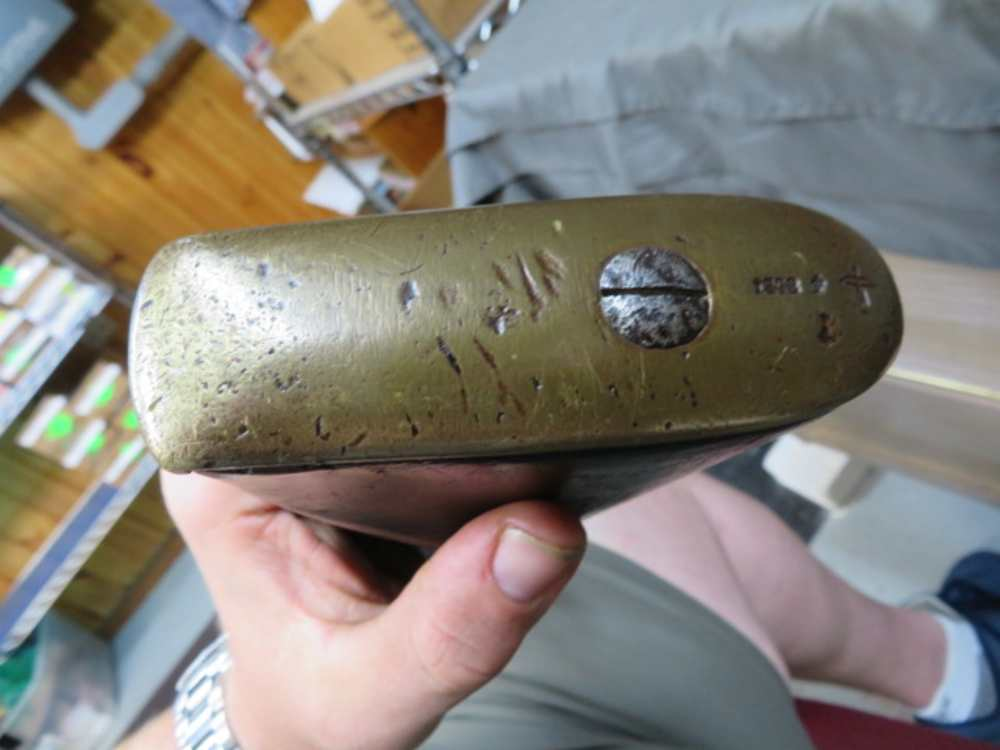
Close-up of the buttplate tang markings
Close-up of the buttplate tang markings. Photo property of Eisel Armory.
×