Browning’s Design, Remington’s Manufacture
A civilian autoloader adapted for wartime guard duty and moving-target training
The Remington Model 11 grew from John Moses Browning’s autoloading-shotgun design. Browning’s corporate chronology records a patent filing in February 1900, manufacture by FN beginning in 1903, and Remington manufacture beginning in 1905. In 1904, FN transferred American manufacturing and sales rights to Remington in response to restrictive tariffs.
Remington built the shotgun in Ilion, New York. Mark A. Keefe dates the Model 11 name to 1911 and identifies commercial riot and police configurations. Its American story therefore begins with licensed domestic manufacture, rather than a documented military-surplus import program.
An Autoloader in Different Configurations
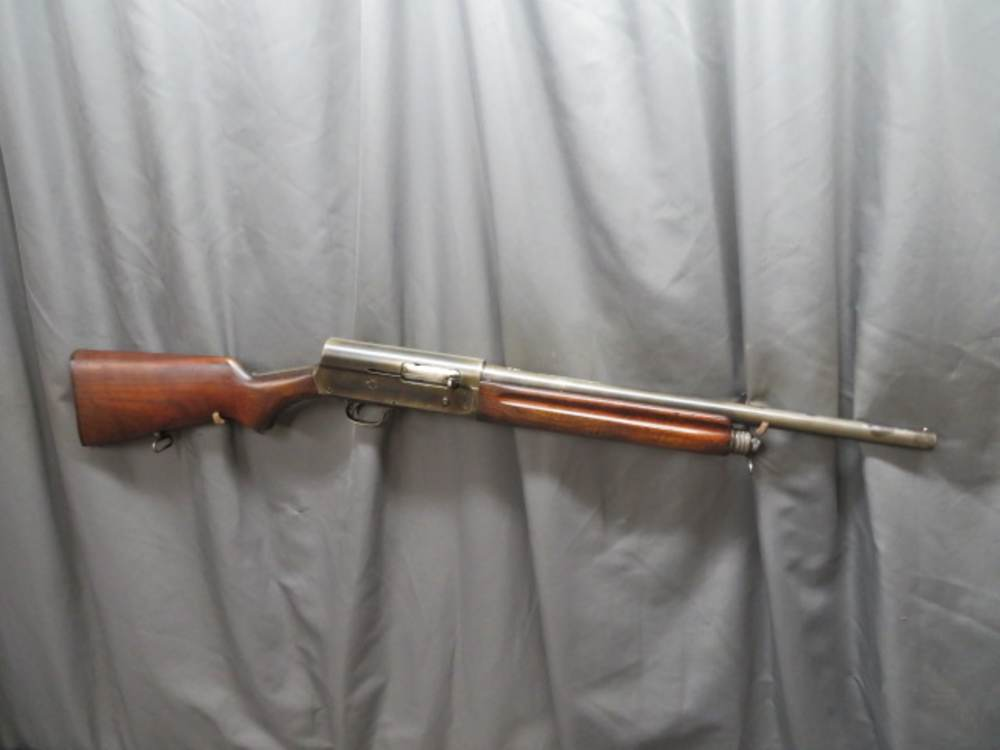
The Model 11 uses long-recoil operation, in which the barrel recoils as part of the operating cycle. The standard Model 11 holds four cartridges in its magazine and one in the chamber. The closely related Sportsman holds two in the magazine and one chambered, with different fore-end dimensions and a different cap.
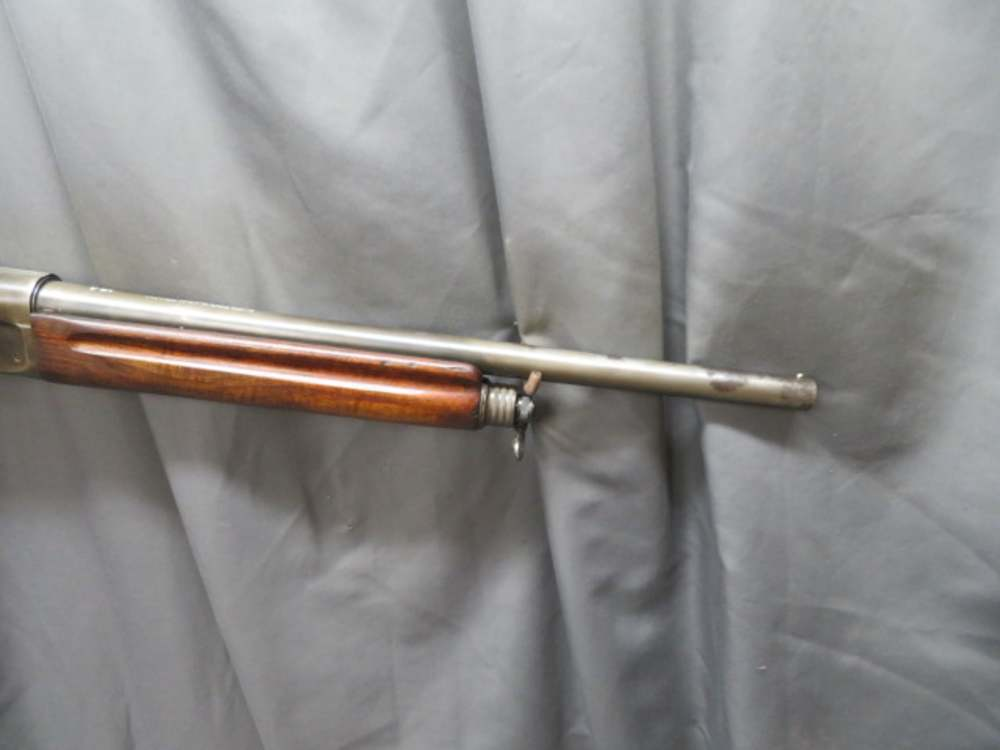
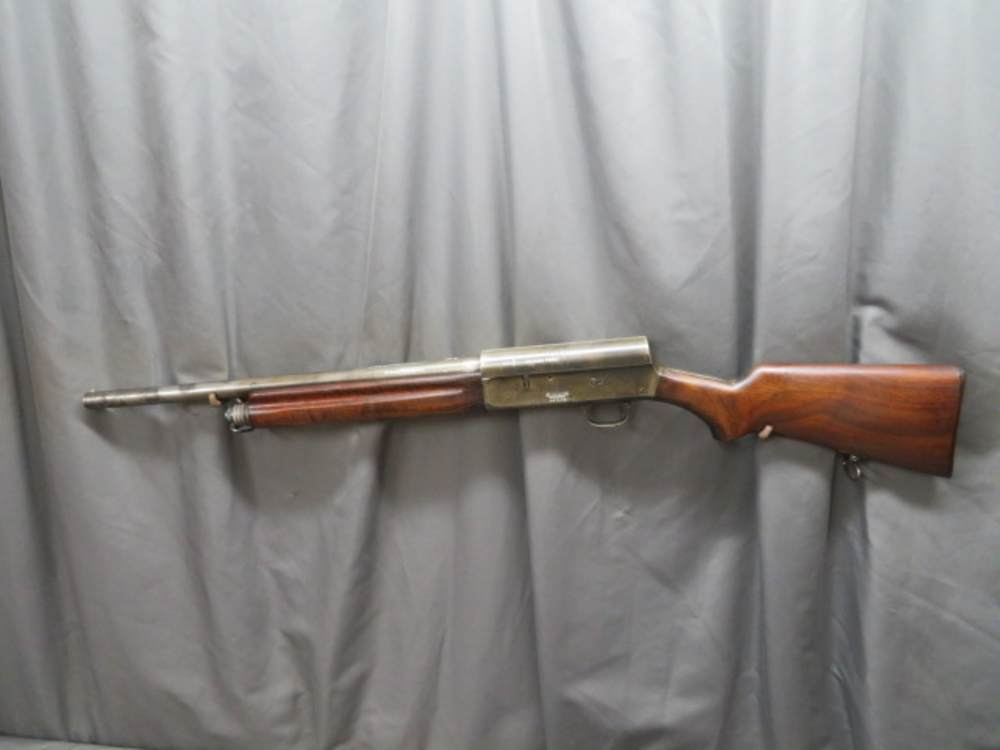
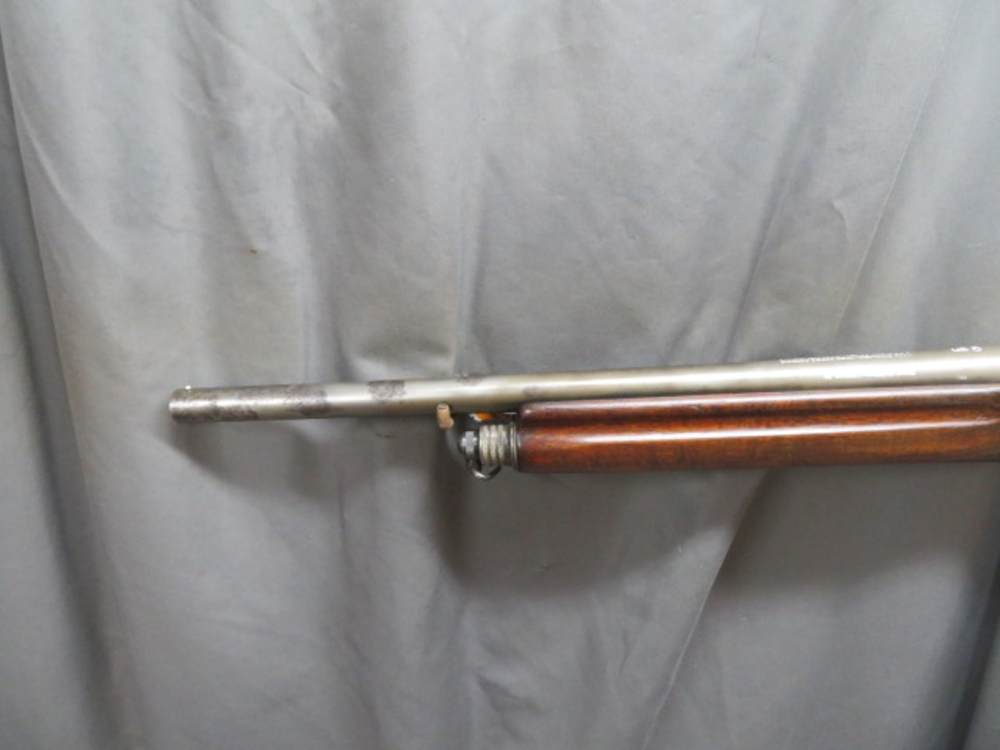
Vincent L. Rausch describes the usual Second World War riot configuration as a 12-gauge shotgun with a plain, 20-inch cylinder-bore barrel and no sling swivels. That short-barrel configuration must be distinguished from the long-barrel shotguns acquired for training.
Procurement and Wartime Work
The United States military used Model 11 and Sportsman shotguns on the Allied side during the Second World War. Rausch records deliveries beginning in 1940–1941 and continuing during 1942–1944, with most being long-barrel training guns. His combined delivery figure covers both models and both riot and training configurations.
Long-barrel variants helped aerial gunners and anti-aircraft personnel practice tracking moving targets, including through simulated aircraft gun mounts. Short-barrel riot versions principally performed guard duties, including prisoner security. These roles explain why the military acquired both long-barrel training shotguns and short-barrel riot configurations within the same family.
Military Appearance and Markings
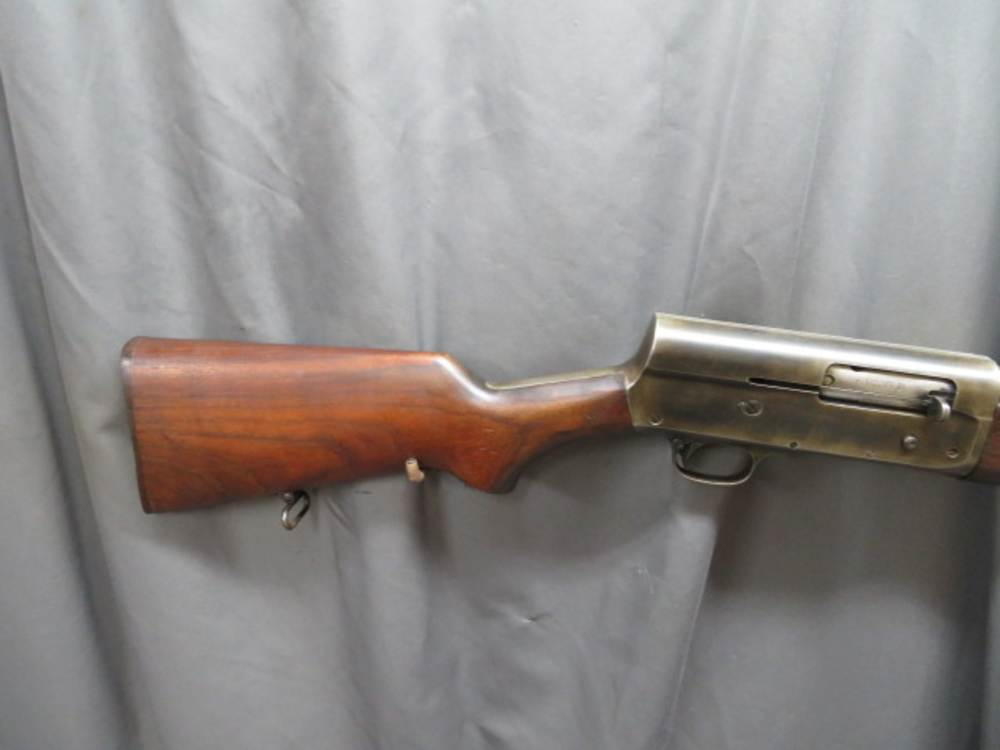
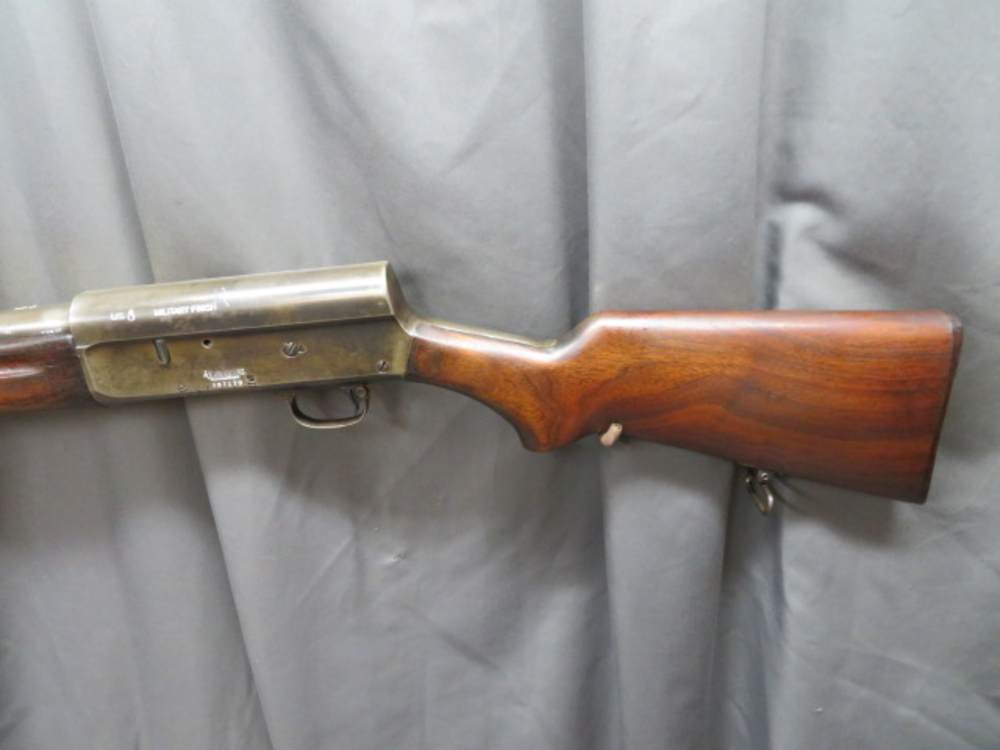
Early military Model 11 shotguns retained commercial checkering and decorative game scenes on their receivers. Later examples had plain wood and receivers, a duller brushed blue finish, and commonly a MILITARY FINISH stamp. These changes make the family’s transition from civilian manufacture to wartime supply visible.
Rausch identifies U.S. and flaming-bomb marks on receivers and barrels, with crossed-cannon and FJA inspection marks on stocks. Such features belong in a broader assessment of configuration and condition. The NRA museum records a military-marked training example with a modern replacement buttpad, demonstrating that surviving examples can include later alterations.
Relatives and Lookalikes
The Browning Auto-5 is the principal design relative. Remington also manufactured the American Browning during periods in the 1940s, but that shotgun incorporated a magazine cutoff absent from the Model 11. A Remington manufacturing origin alone therefore does not establish that a shotgun is a standard Model 11.
The Sportsman is a closer variant, distinguishable through its reduced capacity, fore-end and cap differences, and recorded SPORTSMAN bolt markings. Those distinctions help separate two closely related Remington shotguns that both appear in accounts of American wartime procurement and training.
Reading the Civilian-to-Military Transition
For collectors, the Model 11 connects Browning’s civilian autoloading design with American wartime security and training requirements. Its decorative early military examples, simplified later finishes, and differing barrel configurations provide distinct ways to examine that transition. Understanding those differences gives the family historical meaning while keeping the authentication of any individual shotgun a separate task.