A New Rifle for Peru
An Oberndorf export design for Peru’s changing military arsenal
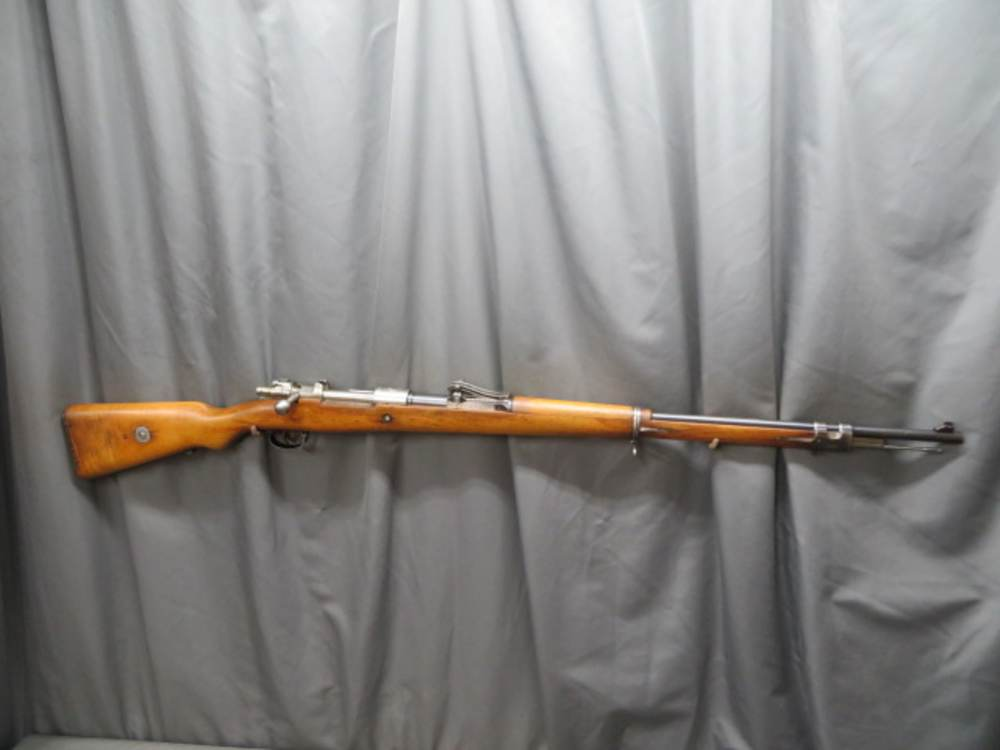
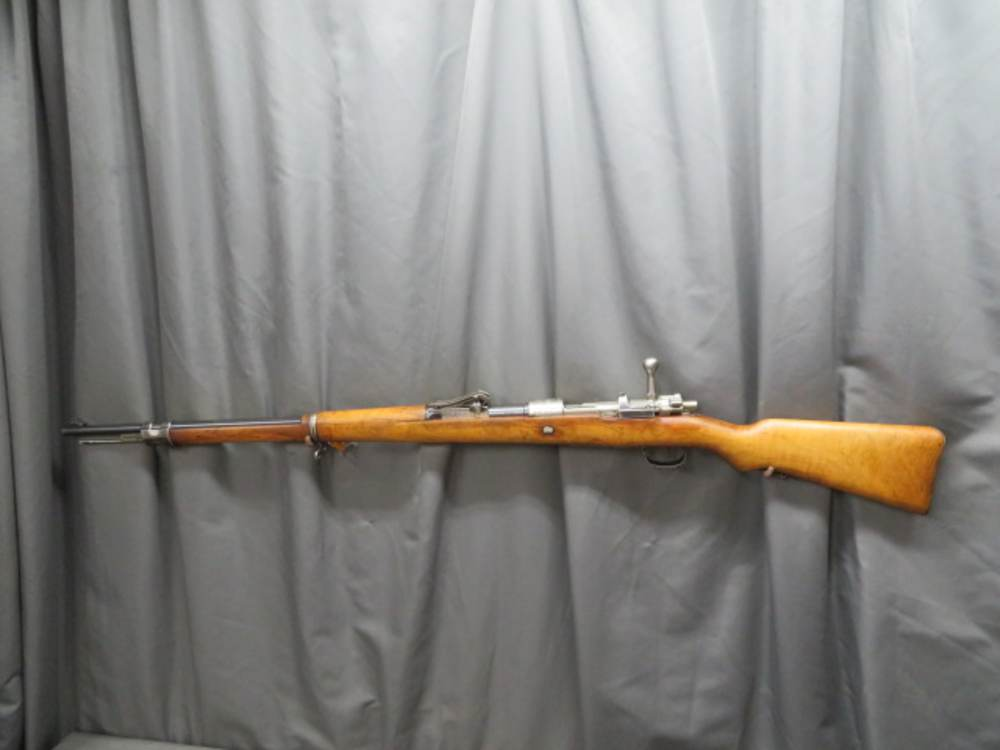
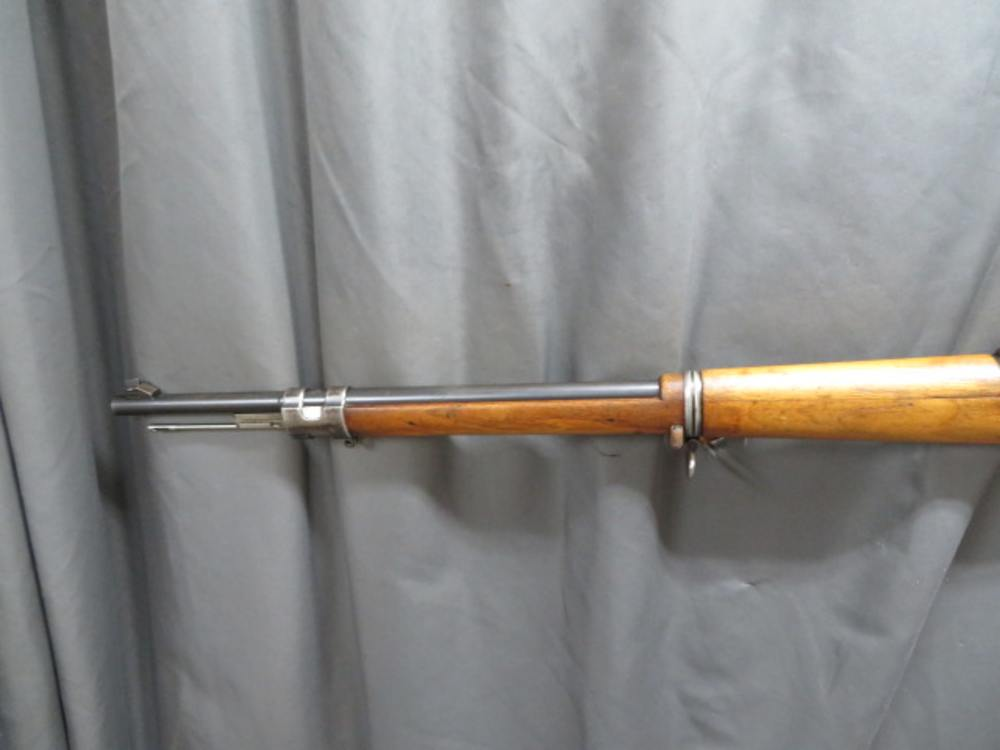
Peru’s Model 1909 belonged to the export branch of the German Gewehr 98 system. Peru obtained approximately 50,000 rifles from Germany during 1910–1914, a substantial addition to its military arsenal. That figure describes approximate procurement, not an exact production total. Dan Reynolds dates adoption to 1909 and entry into service to 1910, describing the new rifle as a supplement to Peru’s Model 1891. Those adoption and service dates rest on his account rather than an original decree.
Made at Oberndorf
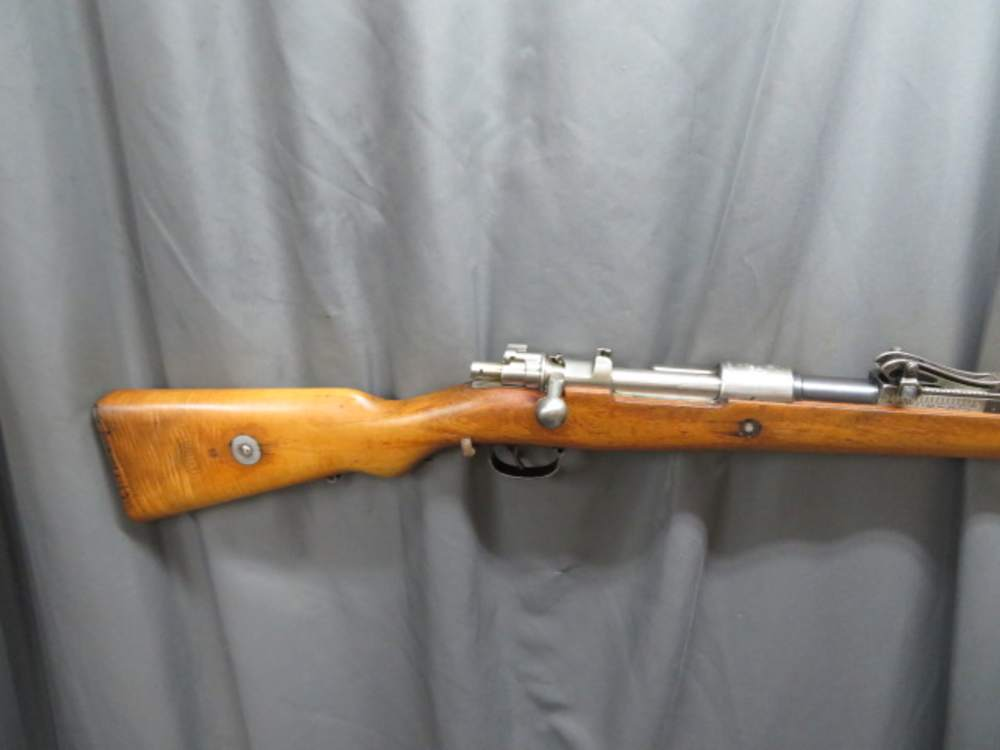
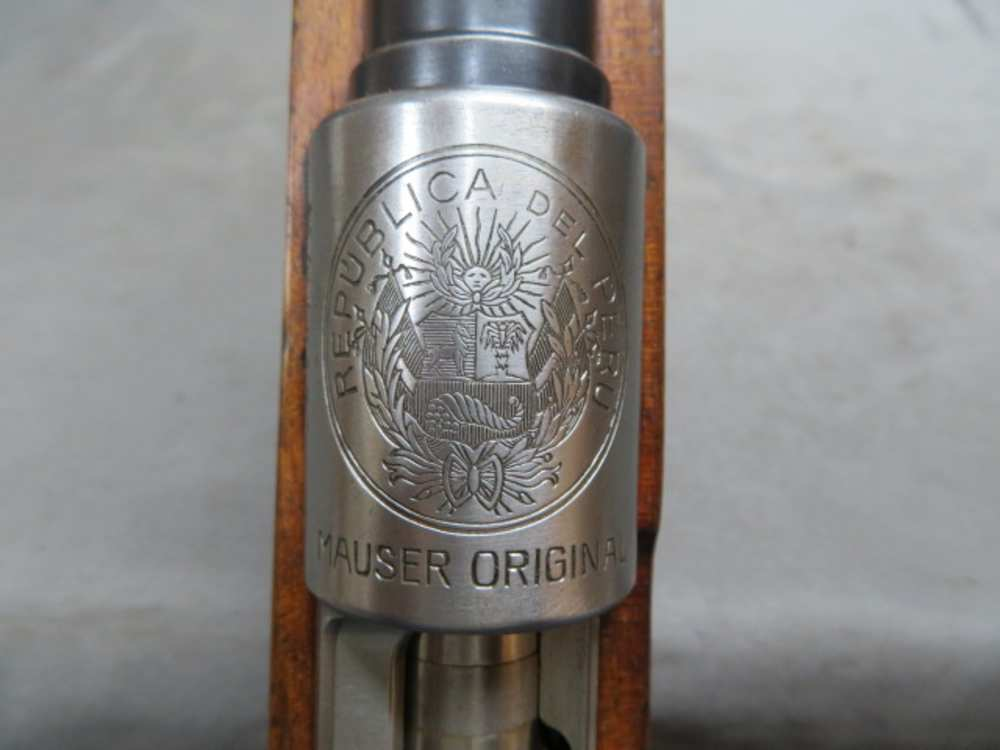
Waffenfabrik Mauser at Oberndorf am Neckar, Germany, manufactured the Peruvian Model 1909. A documented specimen carries a side marking identifying Mauser’s Oberndorf factory and the Model 1909, together with a Peruvian crest above “Mauser Original.” These observed markings connect the German maker with the purchasing country and offer useful reference points for recognizing the family. They do not establish what appears on every surviving example, or authenticate the markings, condition or history of any particular rifle.
Its Recognizable Features
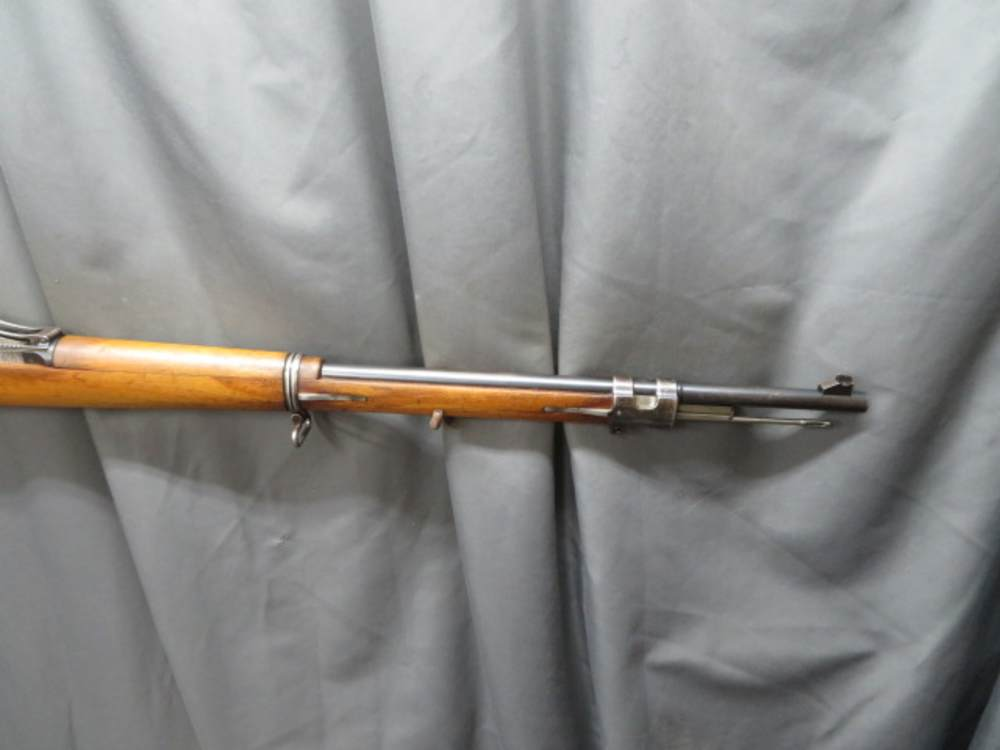
The standard rifle was chambered for 7.65×53mm ammunition and held five rounds in an internal magazine. A straight bolt handle and the distinctive Lange rear sight are prominent features. Gerhard Ortmeier lists an overall length of approximately 125 centimeters, a 74-centimeter barrel and an unloaded weight of about 4.2 kilograms. Together, those dimensions describe a long military rifle. Its resemblance to the Gewehr 98 is strong, but appearance alone should not be taken as evidence that the two designs share identical dimensions.
Peruvian Service and Later Changes
Peru was the purchasing military user, and Reynolds also documents later ceremonial use at the presidential palace. His account reports that some Model 1909 rifles were converted to .30-06 after Peru received American rifles in the early 1950s. This provides a qualified picture of the family’s later service: some rifles underwent a change in chambering, while ceremonial use is also documented. The available account does not establish conversion totals or a detailed program, and ceremonial history cannot be assigned to an individual example without supporting evidence.
Similar Rifles, Important Differences
The German Gewehr 98 is the principal visual and mechanical comparison, but Ortmeier reports different action dimensions and stocks that are not interchangeable. Reynolds additionally describes an elongated cocking piece and a smaller barrel shank intended to accommodate Model 1891-pattern barrels; that stated purpose remains dependent on his account. Modified Peruvian Model 1891 rifles also carried Lange sights, making the sight alone insufficient for identification. Argentina’s Model 1909 is a separate national model despite its shared designation and cartridge family, with documented makers including DWM and Argentina’s military factory.
Why Collectors Study It
The Peruvian crest, Oberndorf manufacture and Lange sight give this rifle family a distinctive place in the study of German export arms. Its adaptation of the Gewehr 98 system also offers a concrete example of Peru’s military modernization. Comparing those features with the preceding Model 1891 and the German design helps explain both continuity and change. For collectors, the interest lies in those identifiable national and mechanical details, while conclusions about a particular rifle’s originality, manufacture year or ceremonial provenance require evidence beyond its model name.