How Japan’s 7.7mm service rifle went into production at full length before a shorter version took its place
From 6.5mm to 7.7mm
According to American Rifleman, the Type 99 came out of an evolution that began with the adoption of the Type 30 rifle in 1897 and continued with the adoption of the Type 38 in 1906. Both of those rifles fired the 6.5x50mm Japanese cartridge, which, the magazine says, “by the 1930s, was demonstrating some shortcomings in combat.” American Rifleman adds that “the 6.5 mm bullet could be deflected by dense vegetation and did not produce wounds nearly as dramatic as the 7.92×57 mm JS cartridge that the Chinese frequently used.” Small Arms Review describes “controversy within the Japanese Armed Forces” during the fighting in Manchuria and China in the 1930s over whether the standard 6.5mm cartridge was sufficient for their military needs.
American Rifleman says Japan therefore sought a rifle chambered for “the heavier cartridge of their Type 92 machine gun, the 7.7x58mm Japanese cartridge.” The National Museum of the Pacific War notes that matching the rifle to the machine-gun round streamlined supply logistics. Small Arms Review describes the rifle’s ammunition as a rimless 7.7x58mm round.
Adoption and the Name
American Rifleman gives 1939 as the year of adoption, and Small Arms Review says the rifle was accepted for service that year. The designation follows the Japanese imperial calendar. According to oldmilitarymarkings.com, rifles of Hirohito’s reign were named for the last one or two digits of the adoption year, and the Type 99 was adopted in calendar year 2599, which corresponds to 1939.
The Long Rifle and the Short Rifle
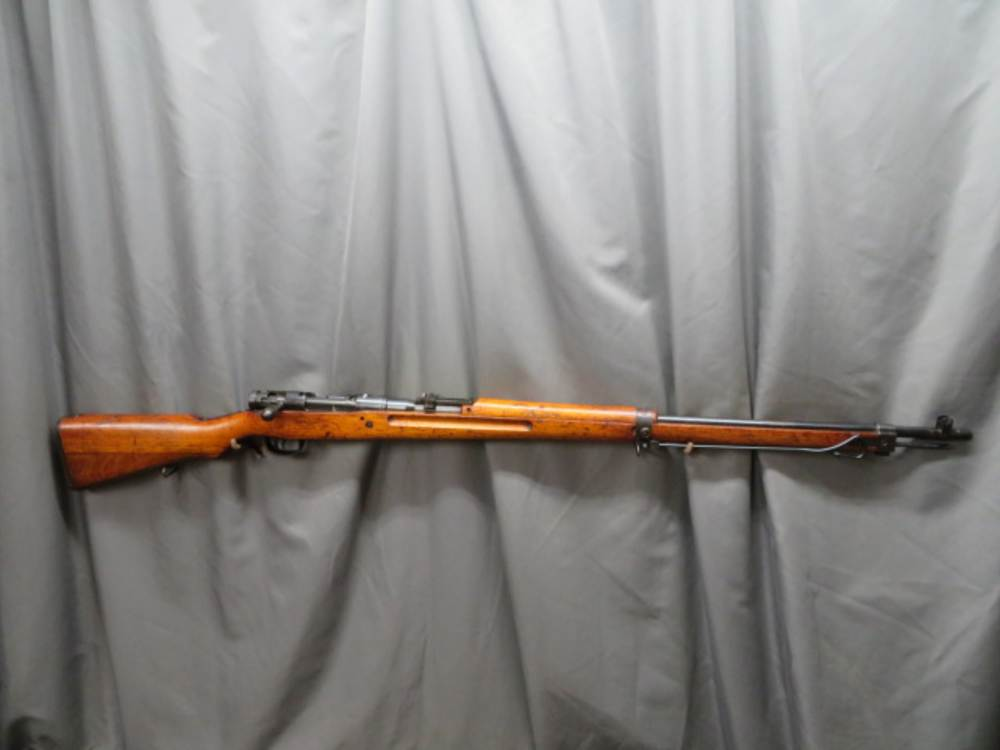
American Rifleman says the Type 99 “initially went into production in a ‘long rifle’ configuration with a 49.5” overall length.” After 38,000 of these had been delivered, the magazine says, production switched in the spring of 1941 to the 44.1-inch “short rifle.” Military Trader puts the long-rifle total at about 38,000, with 8,000 made at Nagoya Arsenal and 30,000 at Toyo Kogyo between the summer of 1940 and the spring of 1941, and says the two makers worked under Kokura Arsenal supervision. Small Arms Review likewise names Nagoya Arsenal and Toyo Kogyo as the two main manufacturers.
Sources give different reasons for building a long version at all. The National Museum of the Pacific War says a longer Type 99 “was produced for a brief period to match the size of the Type 38s.” Small Arms Review says, “Due to recoil problems in testing the weapons (Japanese Type 44 Carbines), a full length rifle was proposed.”
The Pacific War museum says the longer rifles “were quickly done away with in favor of the standard 44-inch rifle.” Ian McCollum of Forgotten Weapons adds a point about scoped rifles: “Testing through 1941 determined that there was almost no practical difference in accuracy between scoped examples of the Type 99 long and short rifles, and so the short rifle was chosen to be the basis for the Type 99 sniper.”
Makers and Series Numbers
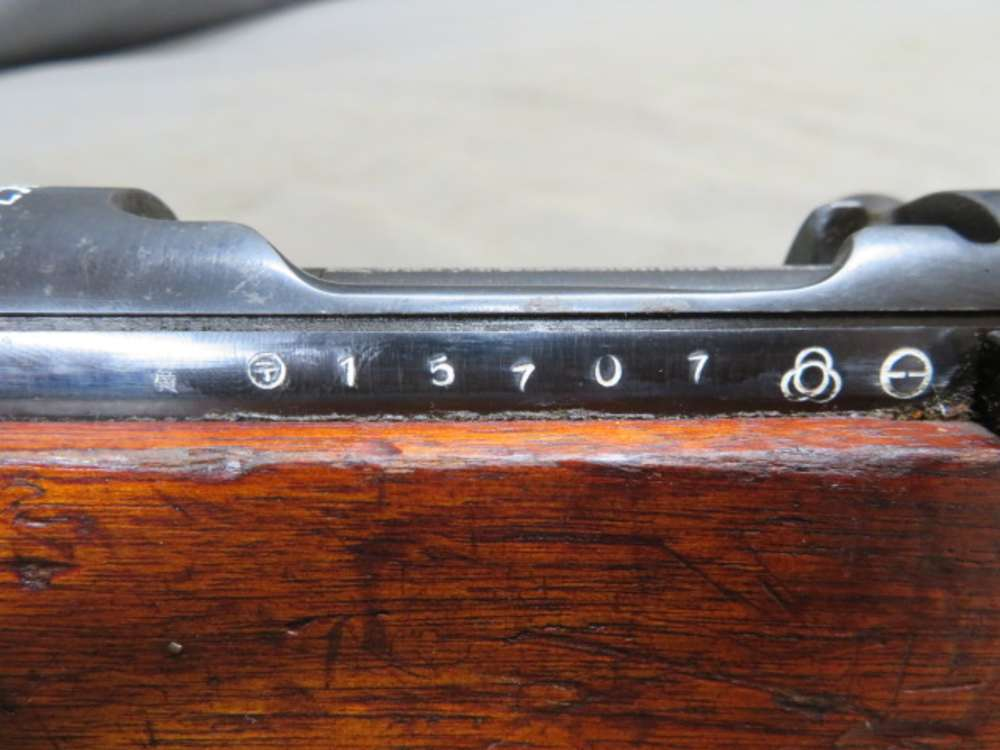
The Type 99 family as a whole was made at a number of arsenals and factories, most of them in Japan, with others at Mukden in Manchukuo and Jinsen in Korea. According to the National Museum of the Pacific War, every arsenal was given certain series numbers, with “99,999 rifles produced within each series,” and the series number was stamped next to the serial number and the arsenal’s own marks on the receiver. Oldmilitarymarkings.com says each series was identified by a small Japanese kana character inside a circle to the left of the serial number. The same site lists series 30 to 35 as the block allotted to Toyo Kogyo for the Type 99.
Design Features
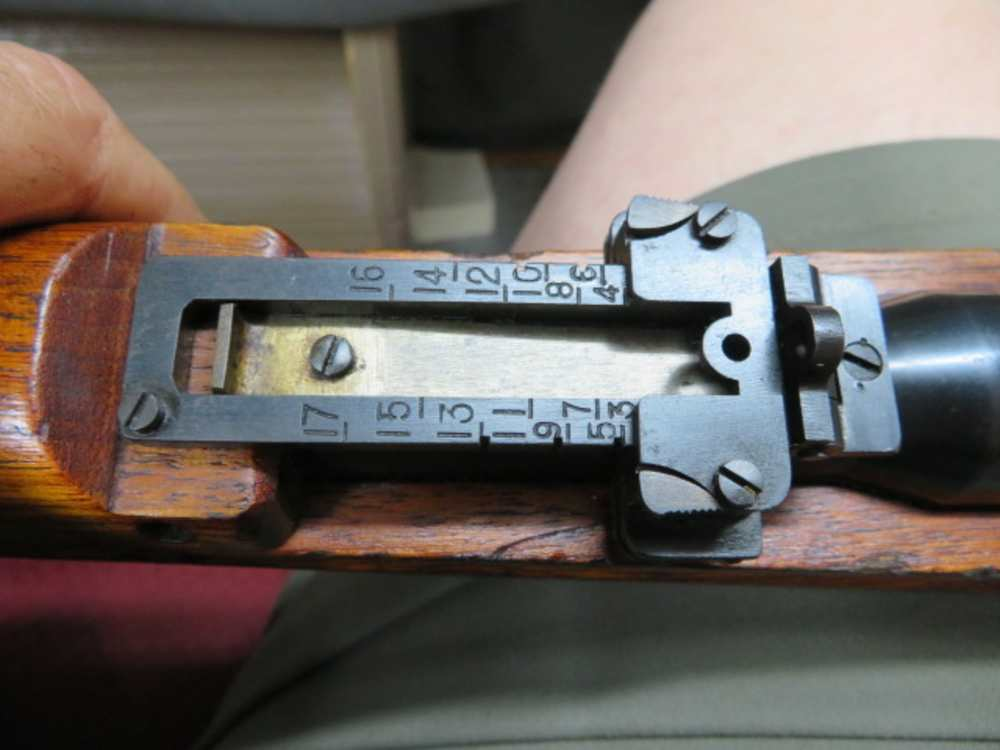
American Rifleman says the Type 99 carried over several elements of the Type 38, including its cock-on-close action, rotating manual safety, dust cover and five-round internal magazine. It also introduced a modified bolt, a chrome-lined bore and a monopod. The monopod was attached under the barrel to steady the rifle while firing, according to the Pacific War museum. The rear sight used a peep aperture with ladder adjustment and a pair of folding wings that, in American Rifleman’s words, “could be used to calculate lead for directing fire at low-flying aircraft.”
Small Arms Review, writing about the long version specifically, says its rear sight usually came with anti-aircraft wings that could be folded down. The same article says the long rifle used a two-piece monopod retaining spring, where the short rifle used a one-piece spring, and it gives the Type 30 as the standard bayonet.
Late-War Simplification
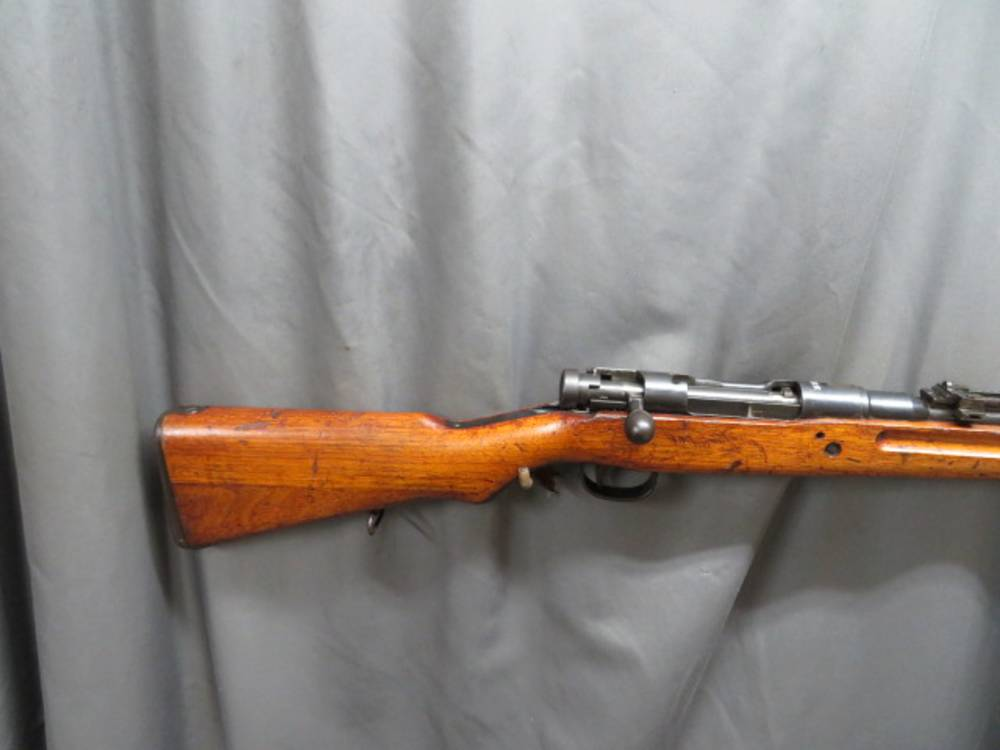
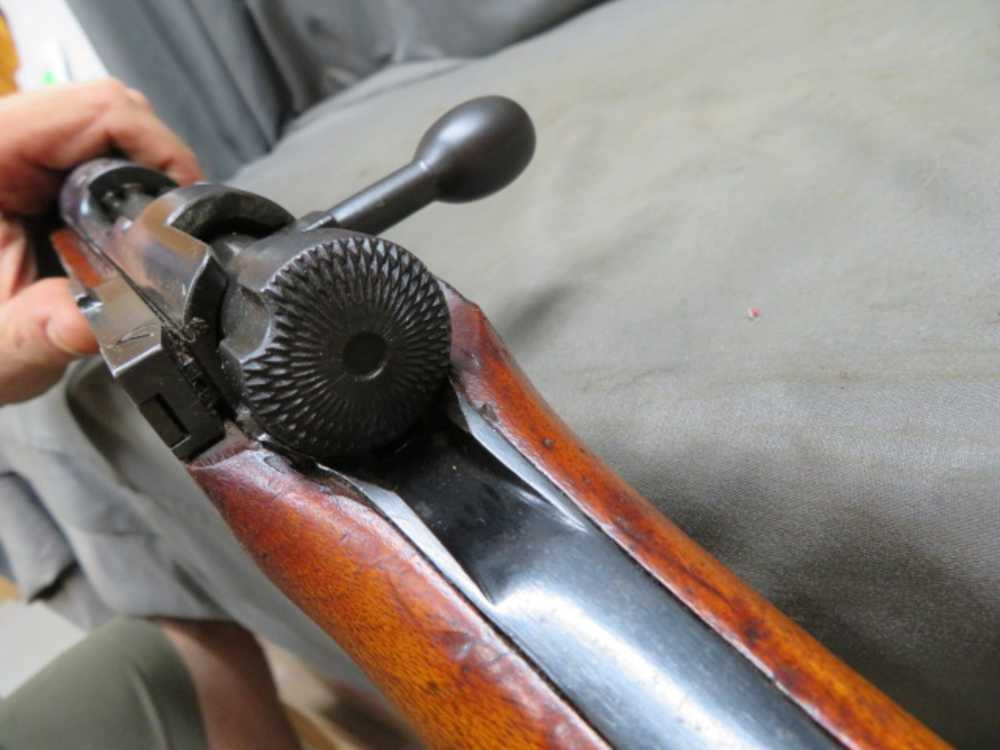
“After mid-1942,” American Rifleman says, the makers “began to delete features in the interests of increasing production speed, conserving precious raw materials and reducing cost.” The anti-aircraft wings were dropped, the sliding dust cover disappeared, and so did the fine knurling on the manual safety. Eventually the metal buttplate gave way to a plank of wood, and a rope hole in the stock replaced the rear sling swivel. The Pacific War museum likewise describes buttplates made of “a piece of wood nailed to the back.” By American Rifleman’s own dates, the switch from the long rifle to the short rifle in the spring of 1941 came before these changes began after mid-1942.
Markings and the Chrysanthemum
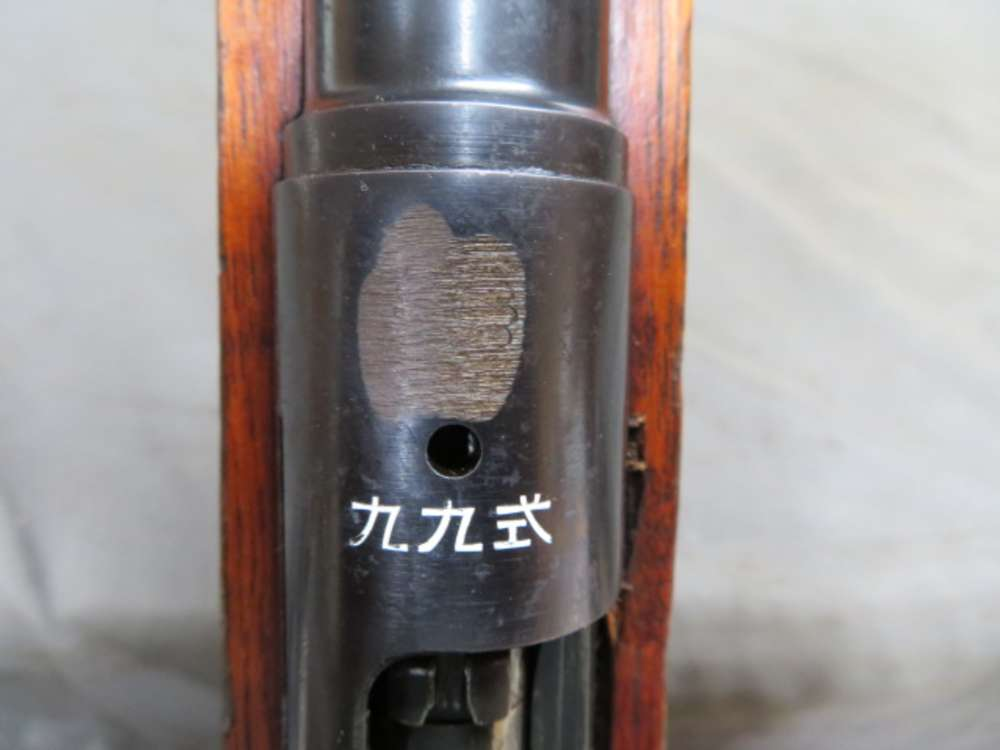
American Rifleman describes the imperial ownership seal, a 16-petal chrysanthemum sometimes called the “mum,” on the top front of the receiver. The Pacific War museum calls it the symbol of Emperor Hirohito and an indication that the rifle belonged to him.
Many surrendered rifles have the mum ground or defaced, and accounts differ on who ordered it and why. Military Trader says “soldiers would grind the ‘mum’ off so as not to disgrace the Emperor,” and oldmilitarymarkings.com says it was removed “apparently as a face-saving gesture.” American Rifleman says the seal “was removed off of many rifles by GIs and the Japanese after the war.” Small Arms Review says that in many cases the mums were ordered removed before the rifles were brought back to the States. The Pacific War museum and oldmilitarymarkings.com both say rifles captured in the field normally kept the chrysanthemum.
Service
American Rifleman says, “Along with the Type 99, the Japanese Type 38 ‘Arisaka’ rifle served as one of the principal bolt-action battle rifles for the Japanese army during World War II.” The magazine traces the Type 99 across battlefields from Bataan, Guadalcanal, the Gilberts, the Marshalls, the Marianas and the Ryukyus to Peleliu and Iwo Jima. American Rifleman also notes that Japanese rifles were brought back to the United States as war trophies.
Related Rifles
The Type 99 short rifle, at about 44 inches overall, became the standard version. The Type 38 was itself a long rifle, “almost as tall as the average Japanese soldier,” according to the Pacific War museum, and it fired the 6.5mm cartridge rather than the 7.7mm. Using the same calendar system, oldmilitarymarkings.com dates the Type 2 paratroop rifle to calendar year 2602, or 1942.
For Collectors
For chrysanthemum, arsenal and series markings on the closely related Type 38, see the Arisaka Type 38 Identification Guide in the Eisel Armory Collector’s Library.
Further Reading
- “At The Range: Type 99 Arisaka,” Martin K. A. Morgan, American Rifleman
- “I Have This Old Gun: Japanese Type 38 ‘Arisaka’,” American Rifleman Staff, American Rifleman
- “Arisaka Evolution: the Transformation of the Japanese Type 99 Rifle,” Margaret Dudley, National Museum of the Pacific War
- “The Japanese Type 99 Rifle (Long Version),” Stephen Stuart, Small Arms Review
- “Markings on Japanese Arisaka Rifles and Bayonets of World War II,” oldmilitarymarkings.com
- “Type 99 Arisaka Sniper Rifles (Video),” Ian McCollum, Forgotten Weapons