How Italy paired a shorter rifle with a new 7.35 mm cartridge, then went back to 6.5 mm, and where the guns went afterward
Why Italy Wanted a Change
According to Carcano Compendium, the Italian Royal Army drew several lessons from the First World War and from later colonial clashes in Libya and along the Ethiopian border. Long rifles, it says, were too cumbersome to carry, especially with motorized columns, and the 6.5 mm round-nose bullet lacked stopping power. The First World War had shown, the Compendium says, that most fighting took place within 400 to 500 metres.
The NRA National Firearms Museum says, “In 1938, Italy adopted a new, larger caliber 7.35mm Carcano cartridge, which was based on the 6.5mm Carcano case but with an expanded neck to accommodate the larger bullet.” The museum adds that the Carcano clip took either cartridge, and that without a clip the rifle could only be used as a single-shot arm.
The Mod. 38 Short Rifle
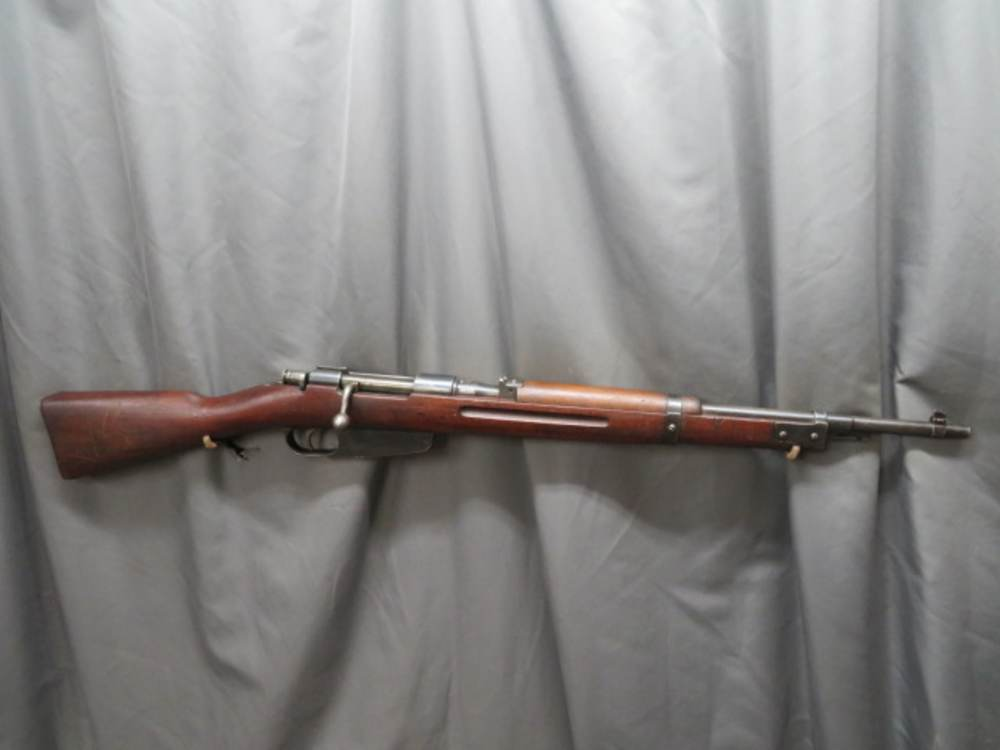
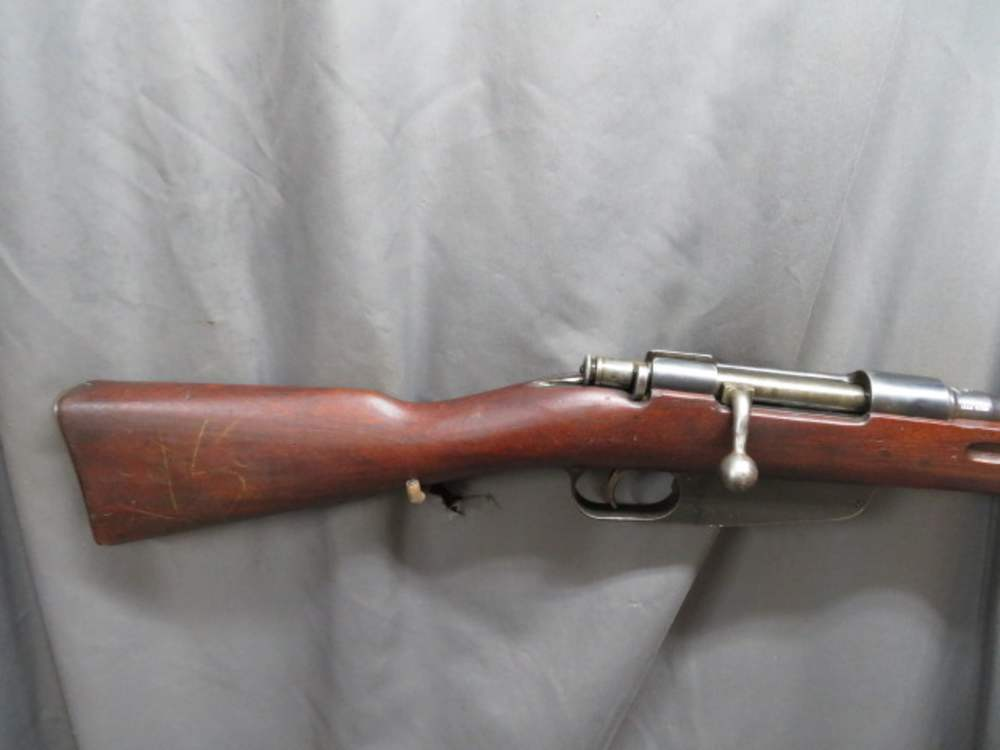
The rifle built for the new round was the Fucile corto (short rifle) Modello 1938, adopted in 1938. Carcano Compendium credits its definitive version to R. Boragine and F. Capaldo. The Compendium gives it a 536 mm barrel, against 780 mm on the old Mod. 91 long rifle and 445 mm on the Moschetto carbine. Other features it lists include constant twist rifling, side sling swivels, a buttplate trapdoor holding a three-piece cleaning rod, and a folding bayonet with a slot in the stock for the blade.
The old Mod. 91 rear sight, the Compendium says, had a 300 m combat setting; its longer settings were “only practical for volley fire operations.” The Mod. 38 instead got “new fixed sights, zeroed at 200m,” which the Compendium says left “the volley fire doctrine behind.” Ian McCollum of Forgotten Weapons says the design “did away entirely with the long-range adjustable sight, instead opting for a fixed 200m notch.”
Carcano Compendium notes that at the time the 7.35 mm rifle went by several names, among them “Fucile mod. 91/38.” This page follows the Compendium’s convention of “Mod. 38” for the 7.35 mm guns and “Mod. 91/38” for the 6.5 mm guns.
Makers and Terni Conversions
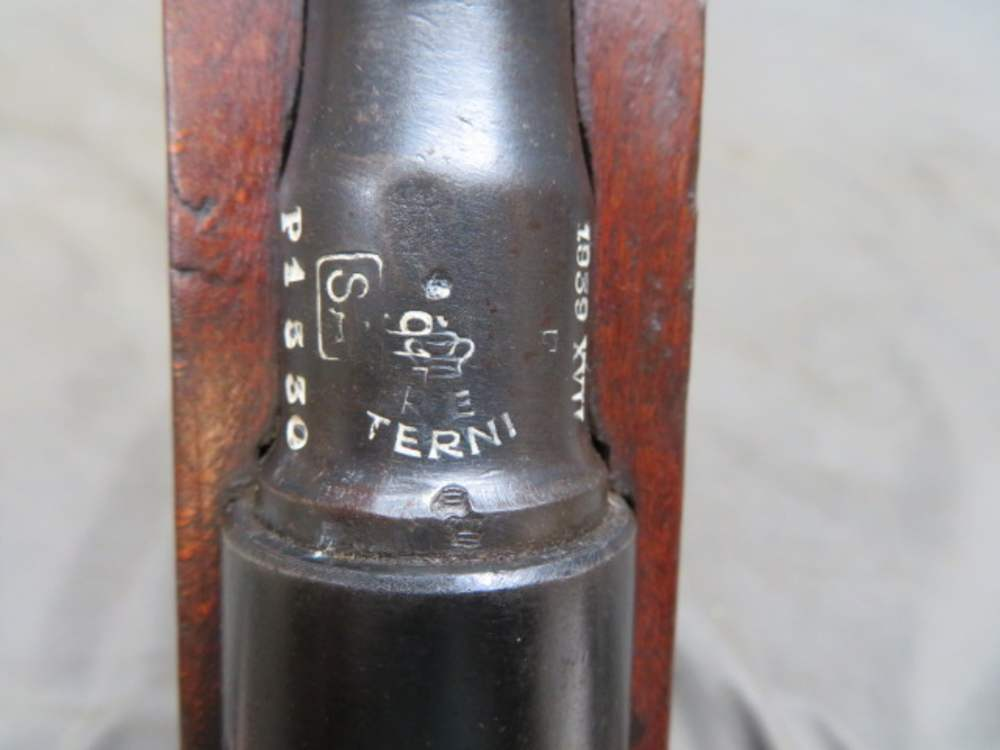
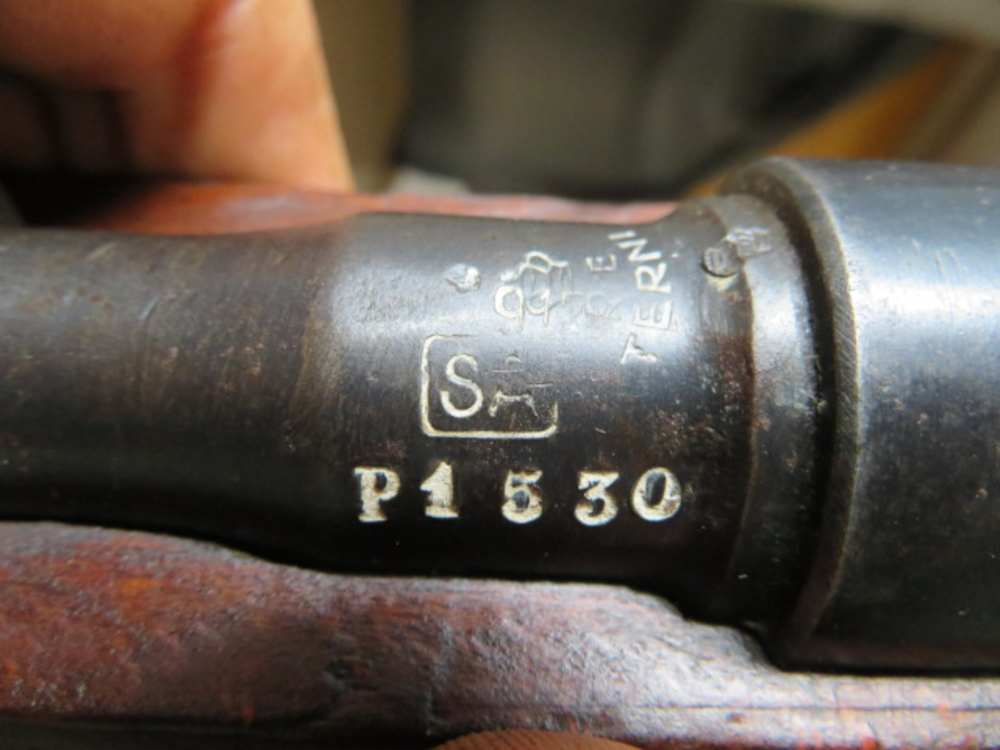
According to Carcano Compendium, Terni, Gardone V.T., Beretta and FNA made the Mod. 38 short rifle, and production between 1938 and 1940 reached around 300,000. The Compendium says Terni made its rifles almost entirely by converting old Mod. 91 long rifles, shortening and thinning the barrel, rounding its octagonal shank, drilling and rifling it for the new caliber and fitting the new fixed rear sight. Because the rounding did not always remove the old markings, it says, several Mod. 38 rifles still bear traces of the donor Mod. 91 barrel’s markings. It also says the first 30,000 Terni guns had a longer stock and handguard, soon replaced by the more familiar pattern with a shorter handguard.
Back to 6.5 mm
In December 1939, according to Carcano Compendium, the General Staff decided to halt 7.35 mm production and switch back to 6.5 mm. The Compendium explains that only 300,000 rifles had been made against a requirement of over one million, and that two calibers for the main issue rifles “would have been a logistical nightmare.” The NRA Museum says Italy’s involvement in the Second World War “precluded large-scale adoption of the new arms” and that “many M38 long arms were re-barreled in 6.5mm.” The Compendium says the 7.35 mm rifles left in Italy went mostly to rear-area use, many with coastal units, and were in general kept as far as possible from the front lines.
The Compendium calls the Mod. 91/38 short rifle “basically the same gun calibrated for 6.5×52,” with its fixed sights zeroed at 300 m. Terni, Gardone V.T., Beretta and FNA began production in late spring 1940, the Compendium says, and reached 820,000 rifles by mid-to-late 1941. According to the Compendium, the Army intended, “at least on paper,” for the 91/38 to be the standard infantry rifle, but the Mod. 91 stayed the most widespread from 1940 to 1943. The Compendium also notes a drawback: its barrel did not perform as well with the 6.5×52 cartridge as with the 7.35×51, particularly over long distances.
In German Hands
According to Carcano Compendium, thousands of 91/38 short rifles fell into German hands after the Italian armistice of 8 September 1943 and, in the war’s final months, were issued to Volkssturm detachments and other rear-echelon units. The Compendium says the firm Krieghoff was asked in December 1944 to convert Carcanos to 8×57, and that about 15,000 were converted before the project was dropped in February or March 1945.
Carbine Cousins
Carcano Compendium says the Moschetto Mod. 38 carbine was converted from old Moschettos and fitted with new fixed sights zeroed for 200 m, with production around 200,000. The Moschetto Mod. 38 per Truppe Speciali (TS), it says, was converted from old TS carbines with the same 200 m sights, around 160,000 in all. Both were also made in 6.5 mm as the Moschetto 91/38 and the TS 91/38.
Finland’s “Terni” Rifles
According to Carcano Compendium, Italy agreed to sell 100,000 Mod. 38 rifles to Finland, which needed arms for the Winter War against the Soviet Union. McCollum writes that the rifles did not arrive until the summer of 1940, after the Winter War had ended; Jaeger Platoon and Carcano Compendium both say 94,500 of the 100,000 arrived. Jaeger Platoon gives the Finnish designation as “7,35 mm Rifle M/38 ‘Terni’” and says the name Terni was “simply taken from the name of most common manufacturer.” McCollum says the rifles were called “Ternis” in Finland “after one of the manufacturers.”
McCollum says they went mainly to troops unlikely to need rifles, including artillery and the Air Force, though some reached front-line infantry, and that many were given to civilians along Finland’s eastern border for protection against Soviet partisan attacks on villages. He says the rifles “were indeed strongly disliked,” tracing this to inconsistent ammunition and the fixed rear sights. Jaeger Platoon says some of the rifles were given a taller front sight blade that brought the zero down to 100 or 150 metres, and that about 74,300 rifles remained in June 1944, not counting broken ones. In 1957, according to Jaeger Platoon, McCollum and Carcano Compendium, Finland traded its remaining rifles to Interarms for Sten submachine guns; McCollum says they were then sold in the United States.
To the United States
The NRA Museum says returning servicemen brought many former Italian Army Carcanos to the United States as “trophies of war,” and that thousands more became available as surplus military arms. Carcano Compendium says that in the late 1950s the Italian government, through its Defense Ministry, decided to sell 570,745 of its old Carcanos as military surplus. The Warren Commission identified the rifle used in the assassination of President Kennedy as “a 6.5-millimeter Mannlicher-Carcano Italian military rifle, Model 91/38.”
Markings
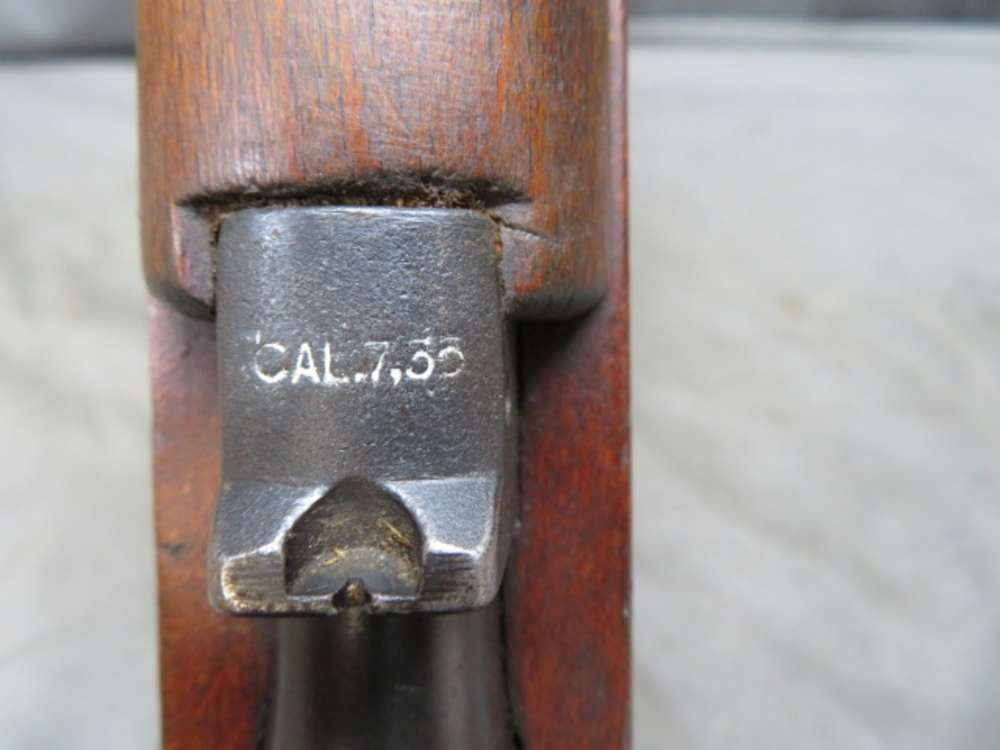
Carcano Compendium says the 7.35 mm guns carry a large “Cal. 7.35” marking on the left side of the buttstock, which it dates to 1940. The fixed rear sight is also marked “Cal. 6.5” or “Cal. 7.35”; the Compendium calls this, with the stock marking, the only way to tell the two calibers apart.
Further Reading
- “Fucile mod. 38 | Carcano Compendium,” Diego Bianco
- “Fucile mod. 91/38 | Carcano Compendium,” Diego Bianco
- “Moschetto mod. 38 | Carcano Compendium,” Diego Bianco
- “Mod. 38 T.S. | Carcano Compendium,” Diego Bianco
- “Moschetto mod. 91/38 | Carcano Compendium,” Diego Bianco
- “Mod. 91/38 T.S. | Carcano Compendium,” Diego Bianco
- “7,35×51 | Carcano Compendium,” Diego Bianco
- “8mm Carcanos | Carcano Compendium,” Diego Bianco
- “FINNISH ARMY 1918 – 1945: RIFLES PART 6,” Jaeger Platoon
- “R. E. Terni Mannlicher Carcano Model 38 Bolt Action Rifle,” NRA National Firearms Museum
- “Ask Ian: Did the Finns Hate the Carcano?,” Ian McCollum, Forgotten Weapons
- “M38 Carcano: Best Bolt Rifle of World War Two?,” Ian McCollum, Forgotten Weapons
- “Appendix 10,” Warren Commission Report, U.S. National Archives