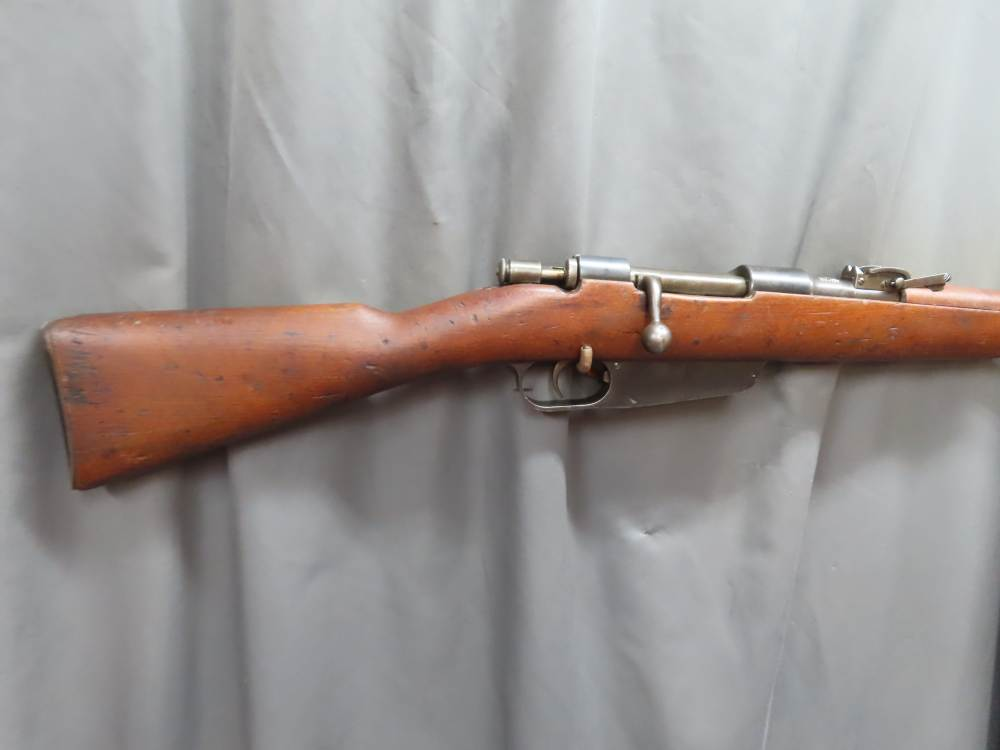
The folding-bayonet Moschetto Italy adopted in 1893 for cavalry, Bersaglieri and Carabinieri

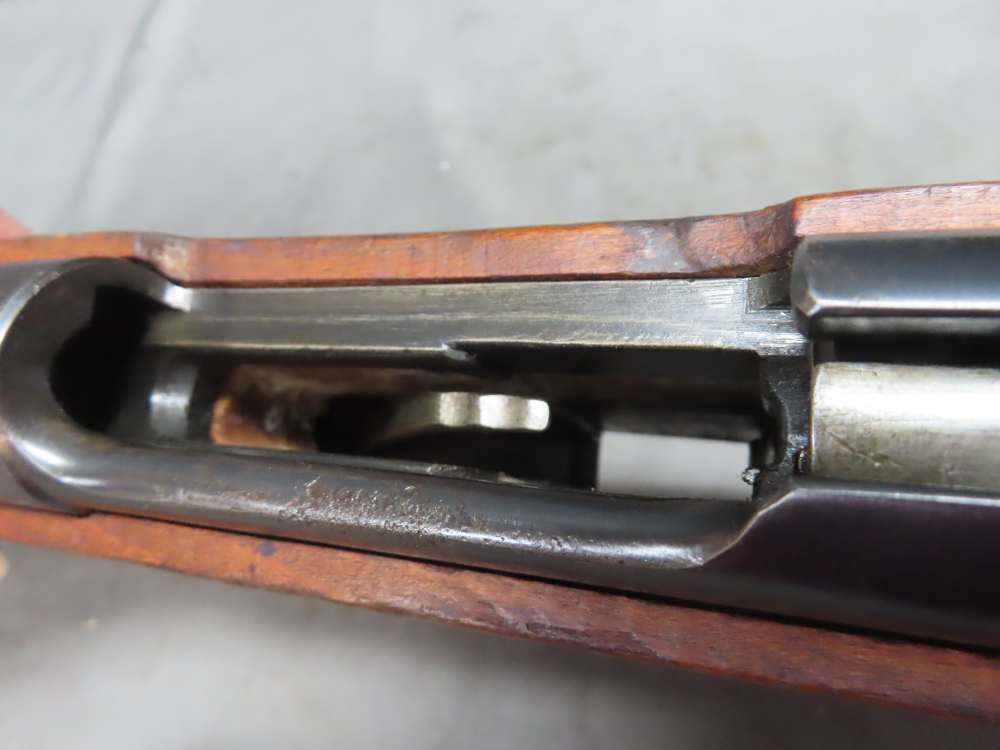
Italian M91 Carcano cavalry carbine from Eisel Armory inventory, photo 1
Italian M91 Carcano Cavalry Carbine, inventory photo. Photo property of Eisel Armory.

Origins and Adoption

Italy adopted the Moschetto Mod. 91 in 1893 as a carbine to equip a variety of forces. Ian McCollum of Forgotten Weapons writes that it was issued to cavalry, Bersaglieri, Carabinieri and others who needed a handier weapon with an attached bayonet. Diego Bianco’s Carcano Compendium dates the formal adoption to a deliberation of 15 July 1893, under the name Moschetto Modello 1891. The same source says the new carbine replaced the single-shot Vetterli cavalry carbine of 1870.

The Mod. 91 System

The carbine is a member of the Mod. 91 family, built around an action developed by Salvatore Carcano, whom the NRA National Firearms Museum places at the Turin (Torino) arms factory. Carcano Compendium says the new rifle commission was led by Gustavo Parravicino and that the Mod. 91 rifle was formally adopted in March 1892.

The NRA Museum describes the action as a turnbolt with dual locking lugs at the front of the bolt and a single-column magazine of Mannlicher design. It loads from a special six-round clip, and the museum notes that without a clip the action can only be used as a single-shot arm.

The carbine fires the 6.5x52mm cartridge. The carbine’s barrel measures about 45 cm (450 mm). The NRA Museum calls the 6.5mm Carcano round one of the first small-caliber smokeless military cartridges to be adopted by a major military power. McCollum’s Forgotten Weapons article describes the carbine as “remarkably light and handy” and says it is still not uncomfortable to shoot thanks to the “light-recoiling” cartridge.

The Folding Bayonet

Where the rifle mounted a standard knife bayonet, the carbine used what the NRA Museum calls a “permanently-attached folding bayonet.” Carcano Compendium describes it folding under the barrel, and Maxim Popenker of Modern Firearms describes the cavalry carbine’s integral folding bayonet as spike-shaped.

The bayonet catch was changed more than once over the carbine’s service life. Carcano Compendium links a new bayonet latch to a 1916 Ministry circular and says the mount was standardized around a push button only around 1936. A wooden handguard was introduced in 1916, a date given by both Carcano Compendium and the Catalogo generale dei Beni Culturali of Italy’s Ministry of Culture.

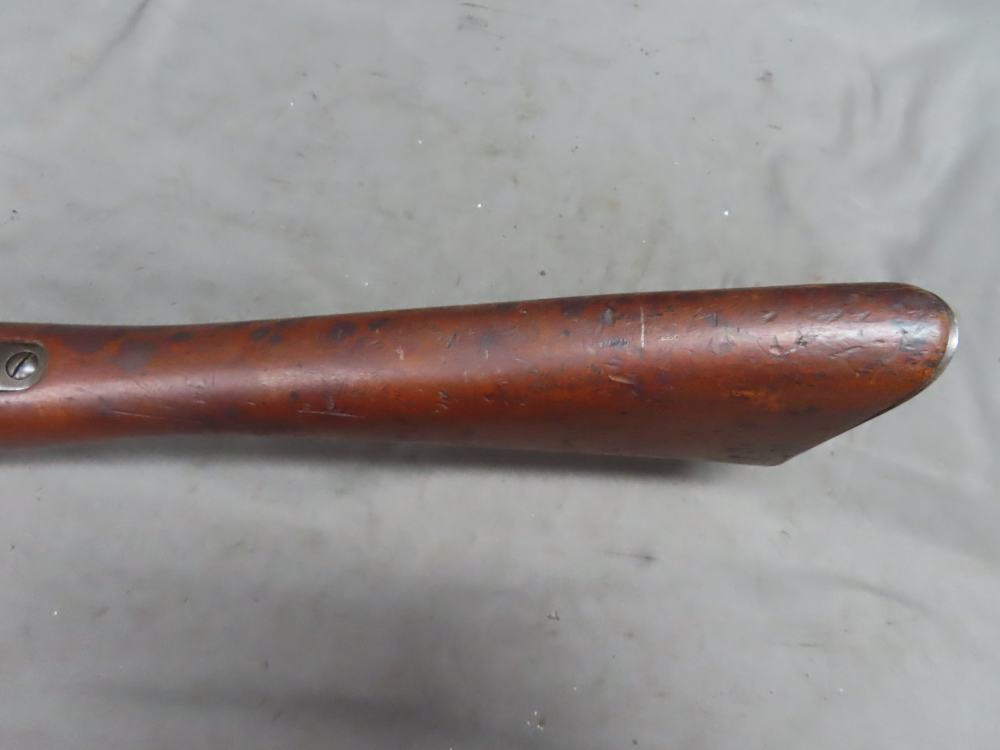
Italian M91 Carcano cavalry carbine from Eisel Armory inventory, photo 2
Italian M91 Carcano Cavalry Carbine, inventory photo. Photo property of Eisel Armory.

Who Made It

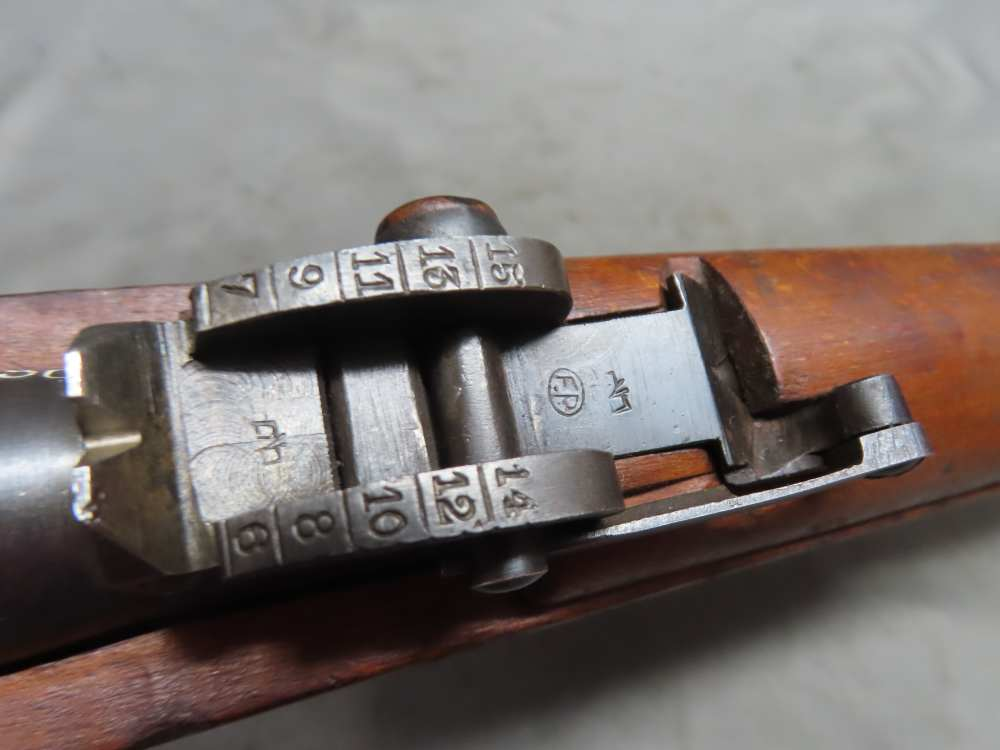
Italian M91 Carcano cavalry carbine from Eisel Armory inventory, photo 3
Italian M91 Carcano Cavalry Carbine, inventory photo. Photo property of Eisel Armory.

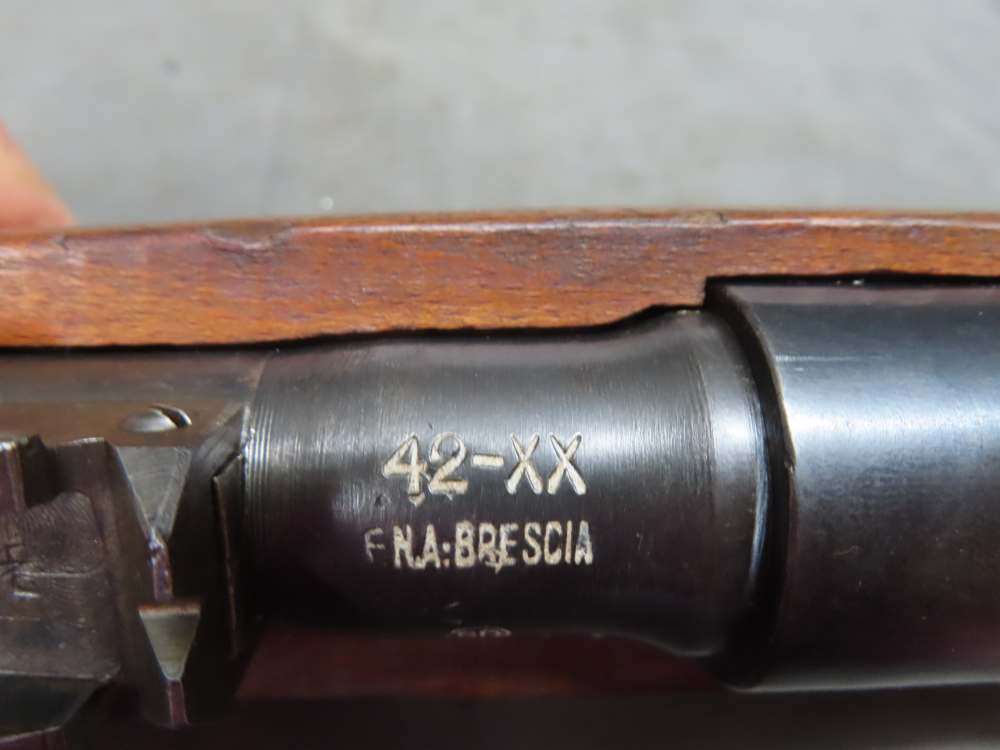
According to Carcano Compendium, production began at the Brescia Arsenal in 1893, and Brescia made the carbine exclusively until the arsenal closed in the early 1920s. Production started again in the late 1920s and early 1930s at the Terni and Gardone V.T. arsenals and at the private firms Beretta and FNA. FNA, the Fabbrica Nazionale d’Armi of Brescia, was formally established in November 1929 out of the financially distressed Lorenzotti firm.

McCollum writes that production continued until 1938, when an M38 pattern of the Moschetto appeared in 7.35mm, and that it reverted to 6.5mm in 1940. The article says production “really took off after 1940,” because this was “the most economical pattern of Carcano to produce.” Carcano Compendium adds that after the 7.35×51 project was dropped in 1940, Gardone V.T. and Beretta made the fixed-sight Moschetto mod. 91/38, and FNA was the only factory that resumed making Moschettos with adjustable sights. The NRA Museum notes that Model 1891 Carcano rifles and carbines remained in production through the end of the Second World War.

In Service

During the First World War, Carcano Compendium records the carbine in active use with cavalry units, cyclist units and the Carabinieri. When the Arditi, Italy’s shock troops and trench raiders, were formally codified in summer 1917, manuals indicated that their issued gun had to be the Moschetto. Carcano Compendium adds that between 1912 and 1915 Cyclist Bersaglieri had their Moschettos replaced by a Fucile mod. 91 modified with side sling swivels, which lasted only until the early stages of the war.

In the Second World War, the same source finds the Moschetto mod. 91 arming all kinds of troops, mostly Bersaglieri and Alpini, and McCollum’s article describes it as widely issued during that war. Carcano Compendium says it remained in service with the Italian Army and with the Police and Carabinieri for decades.

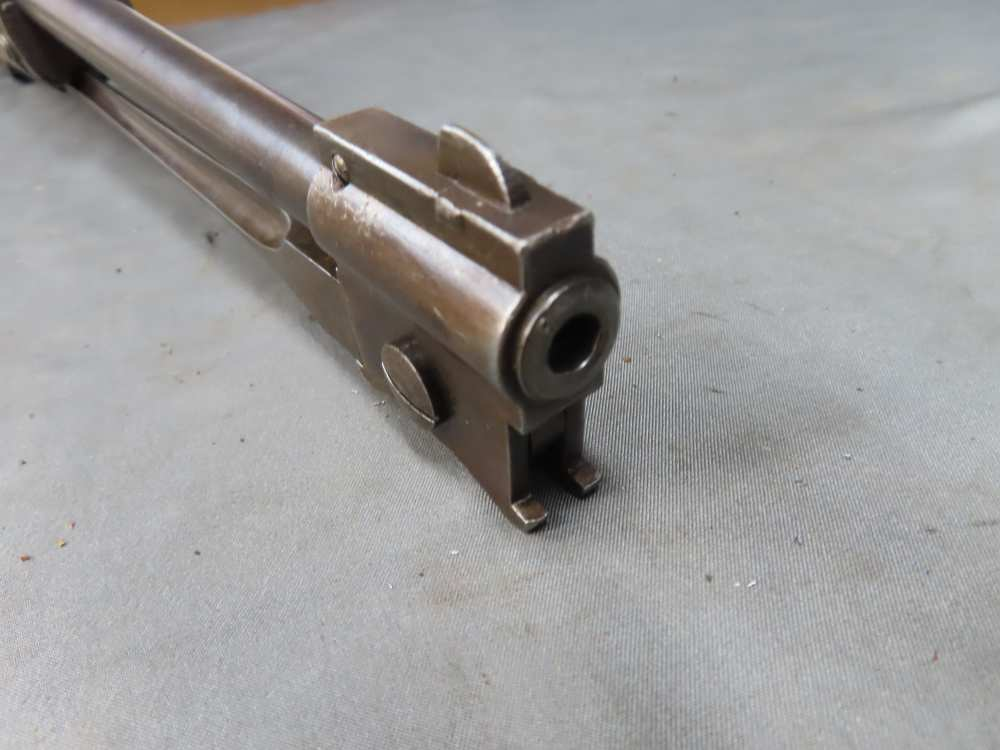
Italian M91 Carcano cavalry carbine from Eisel Armory inventory, photo 4
Italian M91 Carcano Cavalry Carbine, inventory photo. Photo property of Eisel Armory.

Related Models

Italian M91 Carcano cavalry carbine from Eisel Armory inventory, photo 5
Italian M91 Carcano Cavalry Carbine, inventory photo. Photo property of Eisel Armory.

The Moschetto mod. 38 was a 7.35×51 carbine. Carcano Compendium says old Moschettos were modified for it, with new fixed rear sights zeroed for 200 meters and new fin-like front sights. The NRA Museum says Italy adopted the 7.35mm cartridge in 1938, and that when it was dropped in favor of the original 6.5mm design, many M38 long arms were re-barreled in 6.5mm. Carcano Compendium says the factories then switched to the same guns in 6.5×52, leading to the Moschetto mod. 91/38, which used a fixed rear sight.

Another Carcano model is the Moschetto Mod. 91 per Truppe Speciali, or TS carbine, introduced in the late 1890s. Carcano Compendium describes its proprietary transverse bayonet lug and the proprietary bayonet that went with it, and Martin K. A. Morgan of American Rifleman writes that by the end of the 1911-1920 Brescia production block, the transverse lug had been replaced by a conventional bayonet lug. Morgan notes that it is the 1893 Moschetto Modello 1891, not the TS, that “is sometimes referred to as the ‘cavalry carbine,’ even though that is not its official designation.”

Markings

Carcano Compendium describes general marking patterns found across Carcanos. Inspector codes are usually two letters inside an oval or box. Production years can appear as a full year such as 1909, a two-digit year such as 17 for 1917, or a year followed by a Roman numeral counting the years of the Fascist era, such as 1932-XI. Arsenal abbreviations include FB for Brescia, FT for Torino and TNI for Terni. The same source says FNA stopped marking the date in April 1943, so guns with the YL to YQ prefixes carry no date, and guns with those prefixes were produced up to September 1943.
After the Wars

At the family level, the NRA Museum says that at the end of the Second World War many former Italian Army Carcanos found their way to the United States with returning servicemen as trophies of war, and thousands more became available as surplus military arms. In Italy, the Museo Storico Italiano della Guerra in Rovereto holds examples catalogued as the Mod. 1891 cavalry carbine.

Further Reading

  • Moschetto Mod. 91 | Carcano Compendium, Diego Bianco, Il Furiere Indulgente
  • Fucile Mod. 91 | Carcano Compendium, Diego Bianco, Il Furiere Indulgente
  • Moschetto mod. 38 | Carcano Compendium, Diego Bianco, Il Furiere Indulgente
  • Mod. 91 T.S. | Carcano Compendium, Diego Bianco, Il Furiere Indulgente
  • Arsenals and Factories | Carcano Compendium, Diego Bianco, Il Furiere Indulgente
  • CARCANO MARKINGS, Diego Bianco, Il Furiere Indulgente, Carcano Compendium
  • Carcano Moschetto 91 Carbine and its Folding Bayonet, Ian McCollum, Forgotten Weapons
  • I Have This Old Gun: Carcano TS Carbine, Martin K. A. Morgan, American Rifleman
  • Italian Model 1891 Carcano Bolt Action Rifle, NRA National Firearms Museum
  • Carcano M91 – Modern Firearms, Maxim Popenker, Modern Firearms
  • moschetto carcano mod 1891 cavalleria 1891 – 1942, catalogue nos. 0400618397 and 0400618399, Catalogo generale dei Beni Culturali, Italian Ministry of Culture
Italian M91 Carcano cavalry carbine from Eisel Armory inventory, photo 6
Italian M91 Carcano Cavalry Carbine, inventory photo. Photo property of Eisel Armory.
×