Origins and Background

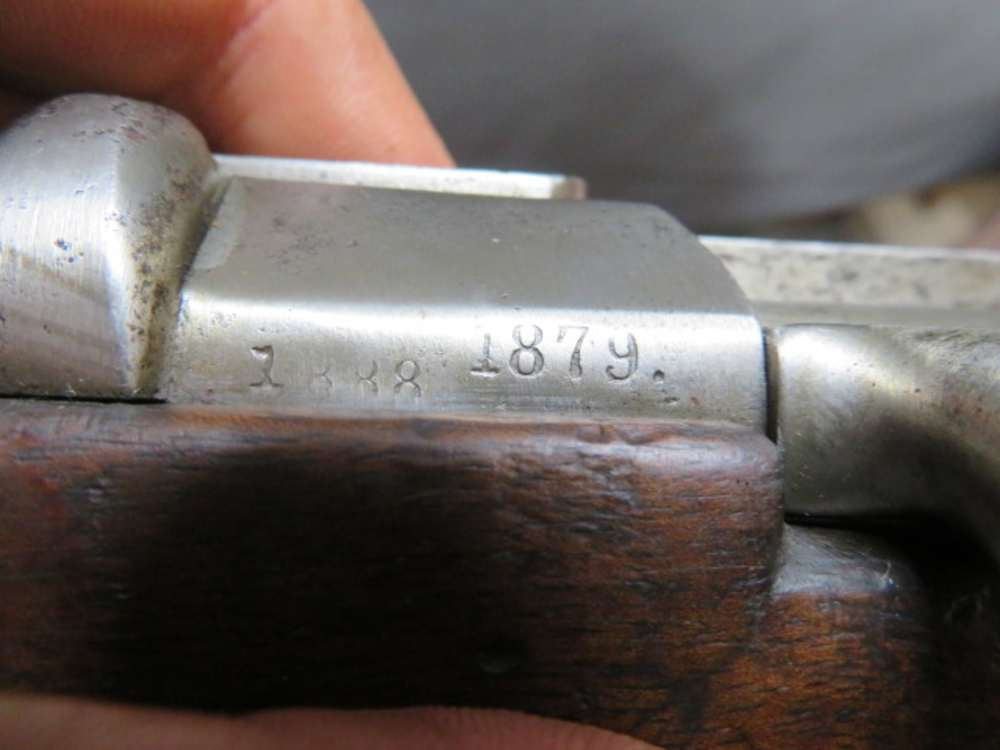
German Model 1871 Mauser Carbine, photograph 1
German Model 1871 Mauser Carbine, view 1. Photo property of Eisel Armory.

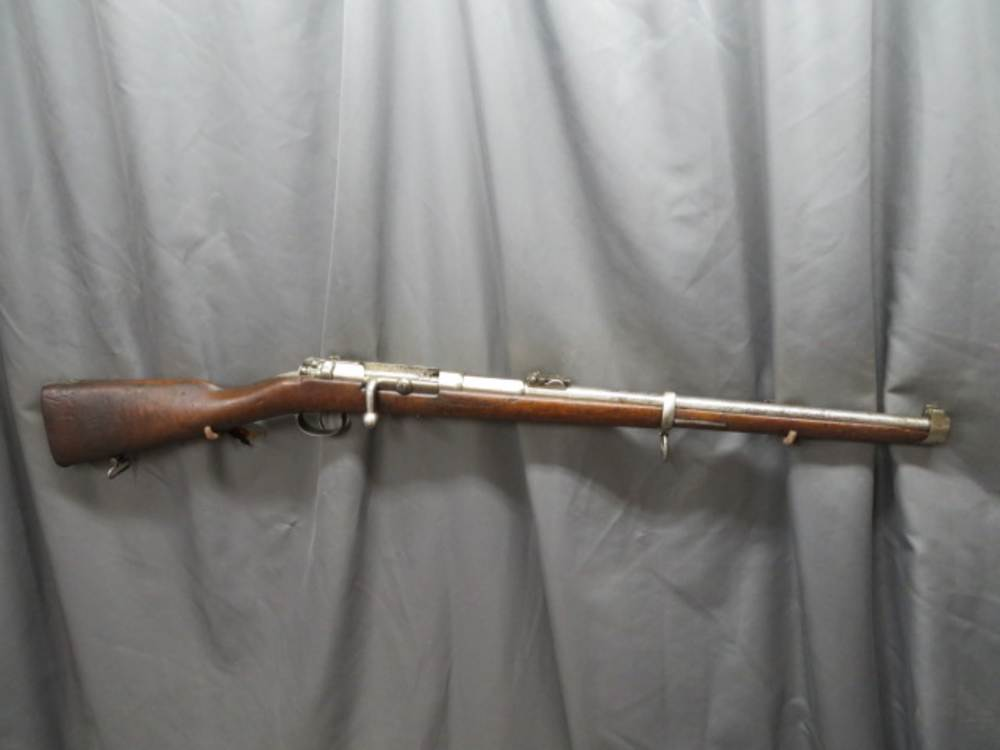
The cavalry member of the Mauser M71 family, the German Empire's black powder bolt-action system of the 1870s and 1880s

Where the Design Came From

The Karabiner 71, or Model 1871 carbine, was the cavalry member of the Mauser M71 family, and its story starts with the infantry rifle. Peter Paul (Paul) Mauser and his brother Wilhelm began work on the design in 1867. As early as that year, the brothers were working in association with Samuel Norris, the Remington importer for Europe, on the design of a bolt-action single-shot rifle. Development ran until 1871.

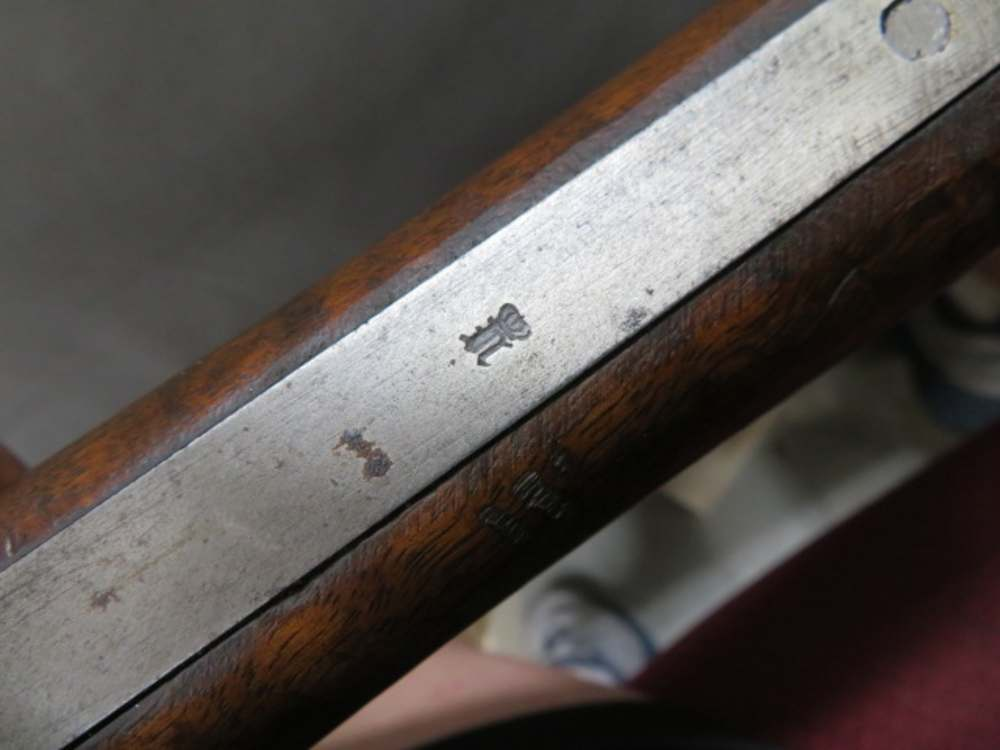
German Model 1871 Mauser Carbine, photograph 2
German Model 1871 Mauser Carbine, view 2. Photo property of Eisel Armory.

From Trials to Adoption

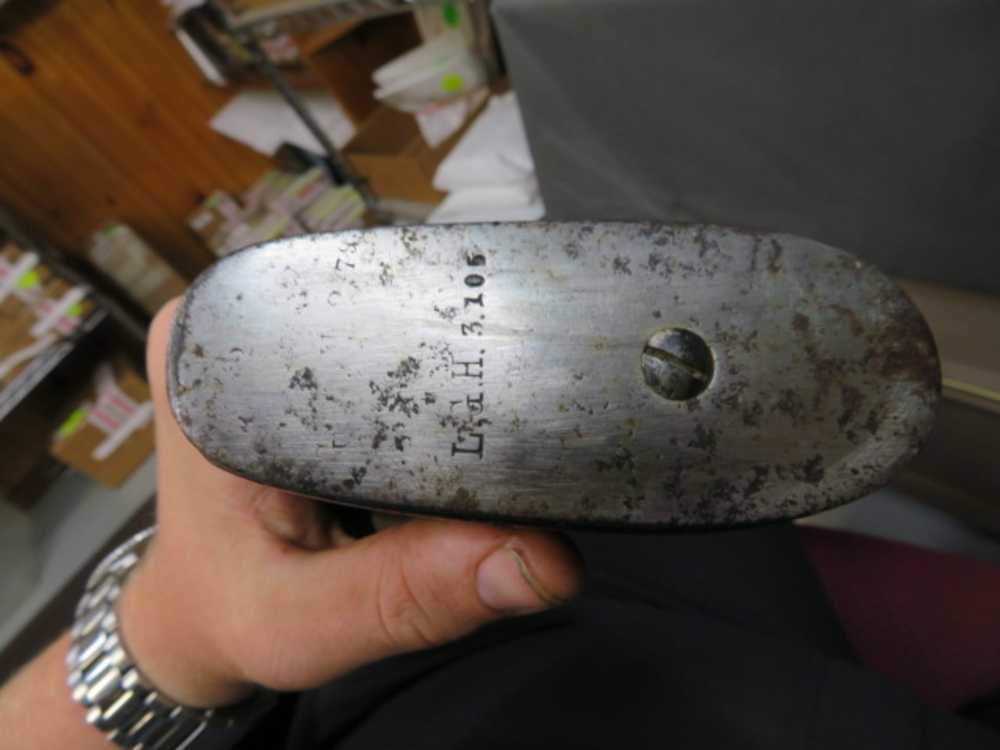
German Model 1871 Mauser Carbine, photograph 3
German Model 1871 Mauser Carbine, view 3. Photo property of Eisel Armory.

After trials with 2,500 test rifles, the Mauser was provisionally adopted at the end of 1871, pending the development of an appropriate safety. It was formally accepted in early 1872; sources give either 14 February or 22 March 1872. The German Empire took it as the Infantry Rifle Model 1871, except for Bavaria, which had adopted the Werder rifle. Rifles were issued to the German Army from late 1873 to 1875, and from 1877 Bavaria replaced its Werder rifles with the M71 as well.

The Mauser's action was not based on its predecessor, the Dreyse needle gun, which had seen service during the Franco-Prussian War of 1870–71.

A Carbine for the Cavalry

By one account, the preceding war had clearly shown the need for effective firearms for the cavalry, and in 1873 the decision was made to produce a cavalry carbine for the new standard cartridge. Sources date its introduction or production approval to 1875–1876. One reference gives August 1876 as the date it was approved for production, for issue to dragoons, hussars and lancers.

The carbine measured about 1 metre (roughly 39 inches) overall with a 513 mm barrel; one reference gives the overall length as 998 mm. No bayonets were produced for it, and it had no integral cleaning rod. Estimates put carbine production at 80,000 to 100,000. One count treats procurement of at least 80,050 as certain and total production as probably no higher than 100,000.

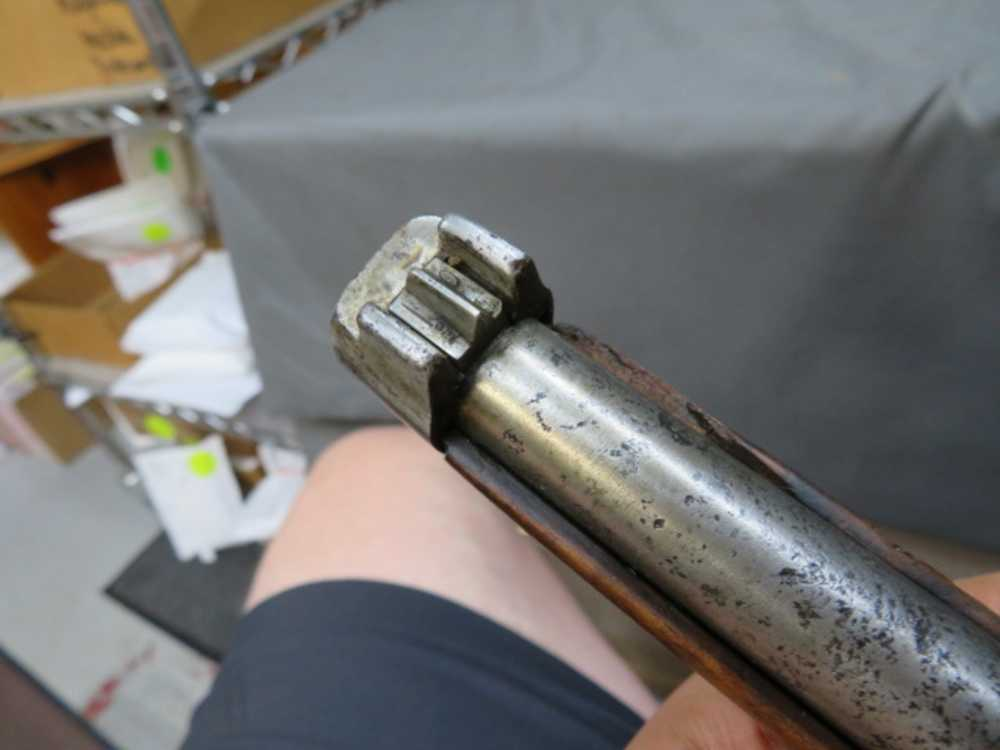
German Model 1871 Mauser Carbine, photograph 4
German Model 1871 Mauser Carbine, view 4. Photo property of Eisel Armory.

The Action and the Cartridge

German Model 1871 Mauser Carbine, photograph 5
German Model 1871 Mauser Carbine, view 5. Photo property of Eisel Armory.

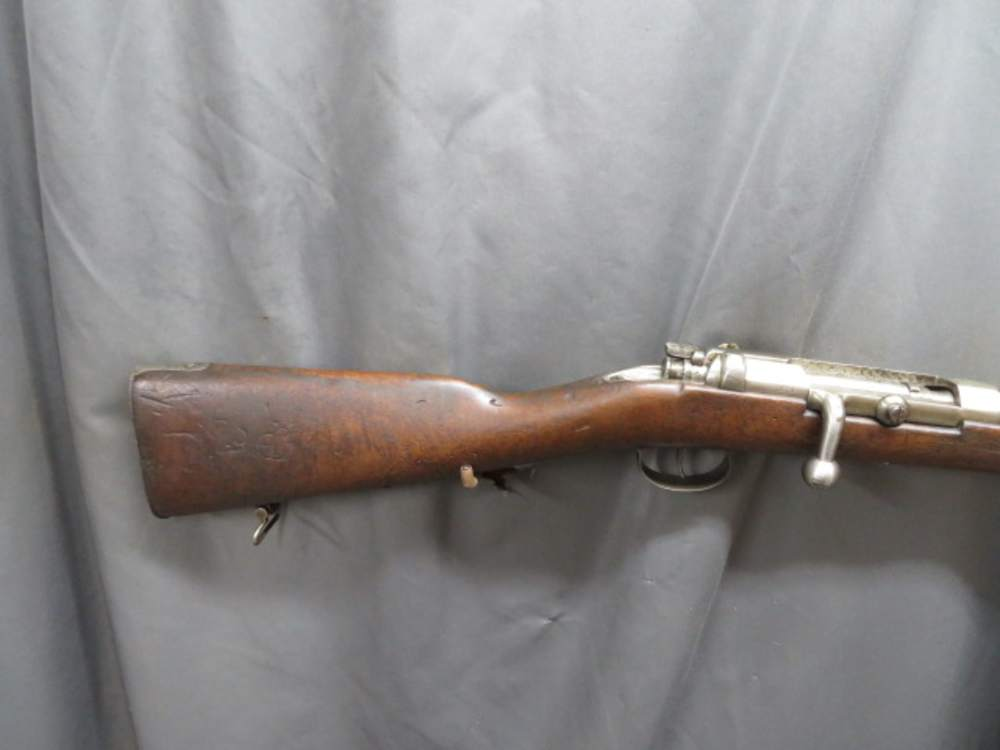
The original M71 design is a single-shot bolt action. Its only locking lug is the bolt guide rib, which locks forward of the receiver bridge. The Mauser wing-type safety lever, at the rear of the bolt, was developed for the Gewehr 71 rifle. The original M71 was chambered for the 11.15×60R black powder cartridge, also called the .43 Mauser, loaded with 5 grams (77 grains) of black powder and giving a muzzle velocity of roughly 1,400 feet per second.

Cousins in the M71 Family

The M71 name covers several related arms, and a fact about one does not automatically apply to another. The infantry rifle's standard bayonet was a brass-handled, steel-guard, straight-blade sword bayonet. The Jägerbüchse 71 was a short version developed for the Jäger, or light infantry, and it also served with engineers, fortress and navy units. One reference says it was adopted on 18 January 1876, had only a single barrel band and mounted the standard M1871 bayonet on a lug fitted to the right side of the nosecap. That bayonet sets it apart from the carbine, which took none. A shorter version of the Model 1871, the M1879 Grenzaufsehergewehr, was issued to border guards in 1880.

Further Reading

  • Mauser Model 1871 – Wikipedia
  • Mauser Modell 71 – Wikipedia
  • M1871 German Mauser
  • Mauser M71/84 – Wikipedia
  • Gewehr 1888 – Wikipedia

The Carbine in Brief

The Karabiner 71 shares the original M71's single-shot action and 11.15×60R cartridge, but it was built for mounted troops: about 1 metre long, with no bayonet and no integral cleaning rod. Rifle, Jägerbüchse, carbine and M71/84 histories are easily mixed up, so each fact needs to be matched to the right member of the family.

Later Service at Home and Abroad

Replacement did not end the family's working life. M71-family arms were still used by the Schutztruppen in the German colonies and during the First World War, and in that war's African theatre the M71 Jäger rifle was the standard rifle of the Schutztruppe. In March 1945, at the end of the Second World War, some members of the Volkssturm were armed with surviving M71 rifles.

Abroad, China's Qing dynasty bought M71 rifles and carbines from Mauser, Steyr and Spangenberg & Sauer from 1876. Later, over a million discarded Model 1871 and M71/84 arms were put into Chinese service. Serbia adopted a more up-to-date version of the rifle, the M1878/80, in 1881, and Serbia and Turkey used their M71-based Mausers in the Balkan Wars and during World War I. The M71 was exported to Japan for testing and was used to improve the design of the Murata rifle. In 1894, Uruguay had its stockpile of M71 rifles converted to the smokeless 6.5×53.5mm SR cartridge. In 1914, Irish Republicans imported some 1,500 single-shot 1871 Mausers, and in Ireland the 1871 Mauser became known as the Howth Mauser.

Successors

M71 production continued at some facilities into 1884, when the state armories prepared to switch to the follow-on M71/84. After troop trials in 1882 and 1883, the design was updated in 1884 with an eight-round tubular magazine, and over a million M71/84s were produced. From 1888, the magazine-fed, smokeless-powder Gewehr 88 system, which included the Karabiner 88 for mounted troops, replaced the M71 family.

Who Built the M71 Family

The Mauser firm itself, in Oberndorf, made only about 100,000 rifles, for the Kingdom of Württemberg. State arsenals including Spandau, Danzig and Amberg also produced the family, and one reference adds Erfurt. Other makers included the Austrian arms company at Steyr, a Suhl cooperative of Spangenberg, Sauer, Schilling and Haenel, and National Arms & Ammunitions Corp. in Birmingham.
German Model 1871 Mauser Carbine, photograph 6
German Model 1871 Mauser Carbine, view 6. Photo property of Eisel Armory.
×