A Cavalry and Artillery Carbine of Imperial Germany

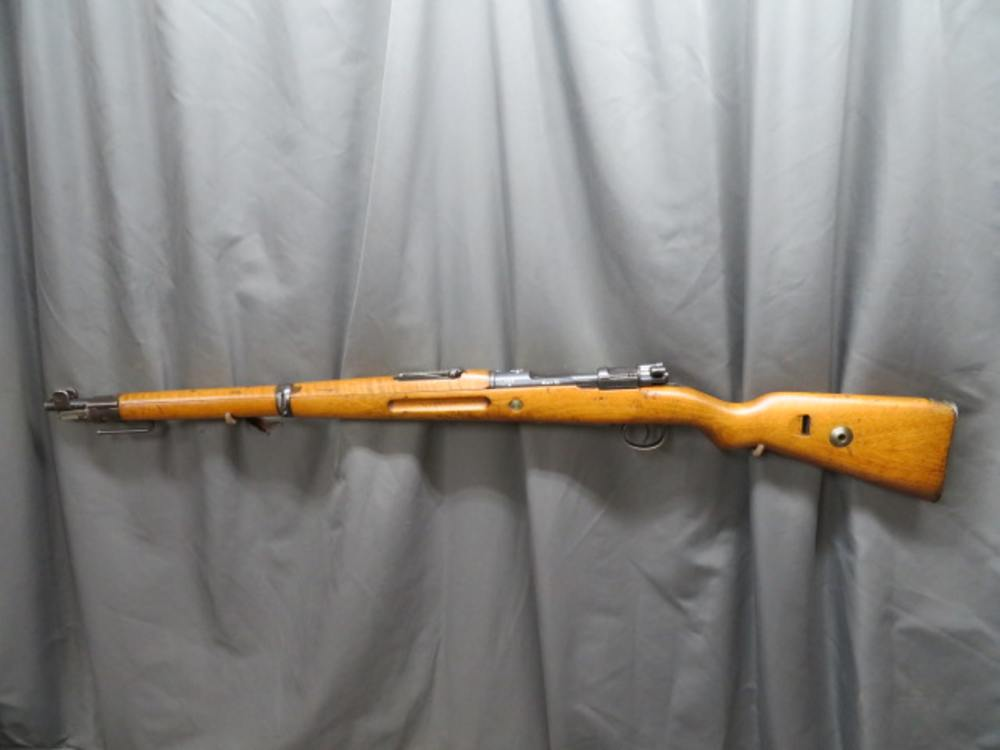
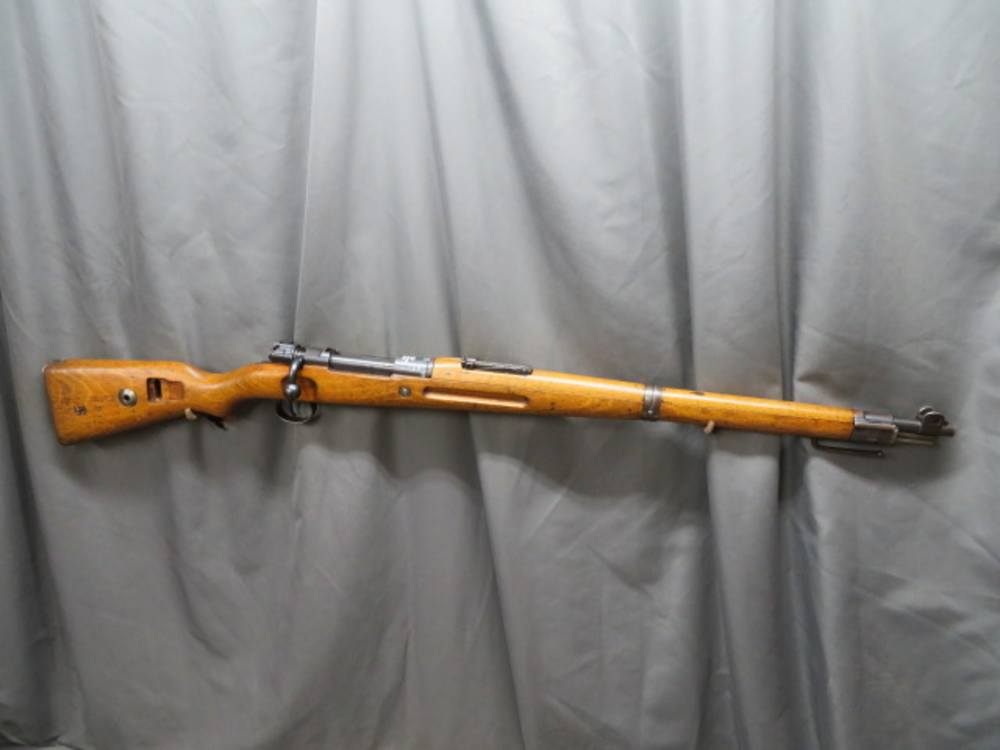
German Kar98AZ Mauser carbine, right side full view
Full right-side view of a German Kar98AZ Mauser carbine. Photo property of Eisel Armory.

Adopted by the German Empire in 1908, the Karabiner 98AZ — better known as the Kar98AZ — was a shortened carbine derivative of the Gewehr 98 rifle, chambered in the same 7.92x57mm Mauser cartridge. Built for cavalry, artillery crews, engineers, and other mounted or support troops who needed a handier weapon than the full-length infantry rifle, it became Imperial Germany’s standard short carbine heading into World War I, where it also saw wide use in trench and assault roles.

"AZ" does not stand for a folding bayonet stud. It’s short for Aufpflanz- und Zusammensetzvorrichtung — a bayonet-mounting point paired with an L-shaped stacking rod/hook near the muzzle, the signature hardware that sets this carbine apart. In 1923 the type was renamed Kar98a to distinguish it from the later Kar98b, and eventually the Kar98k; it was itself a fix for an earlier, failed short-carbine attempt, the 1902 Kar98A, which was pulled from production around 1905 after excessive recoil and muzzle blast with the S-Patrone round.
Who Built It

Kar98AZ / Kar98a production is documented at the government arsenal system only — Erfurt, Danzig, Spandau, and Amberg. Private contractors like Mauser’s Oberndorf works and Deutsche Waffen- und Munitionsfabriken (DWM) were major Gewehr 98 makers, but specialist references don’t list them as Kar98AZ producers — a different type with a different maker list. Exact wartime totals are hard to pin down given disrupted WWI-era recordkeeping, but specialist estimates commonly put Kar.98a-class production at roughly 1.5 million through 1918 — a useful sense of scale, not a serial census.

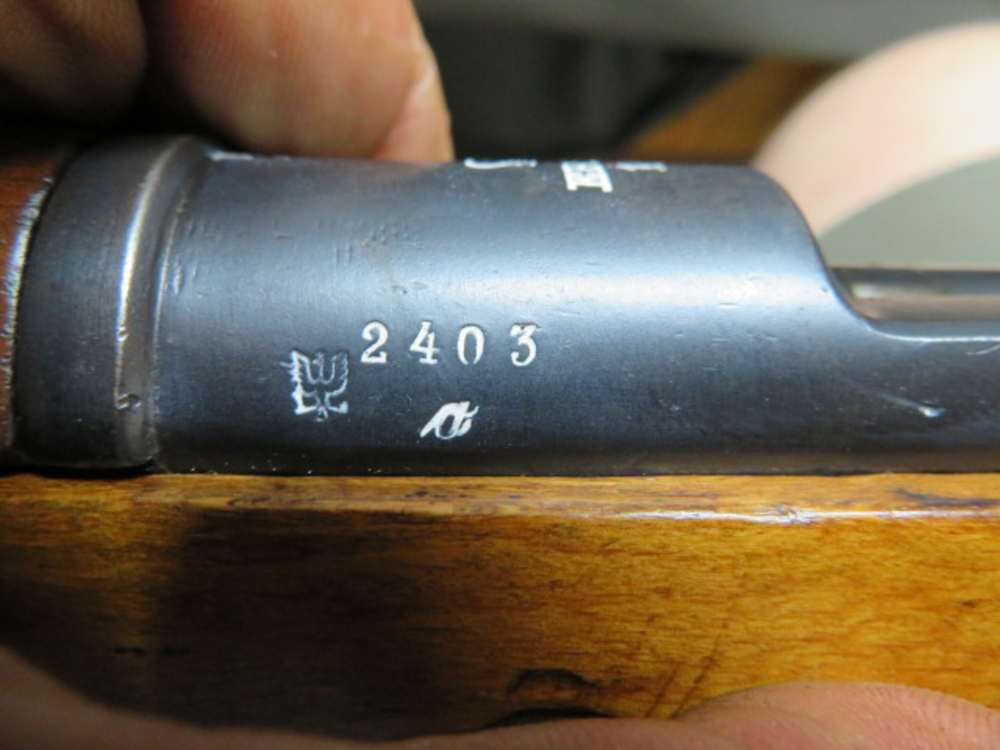
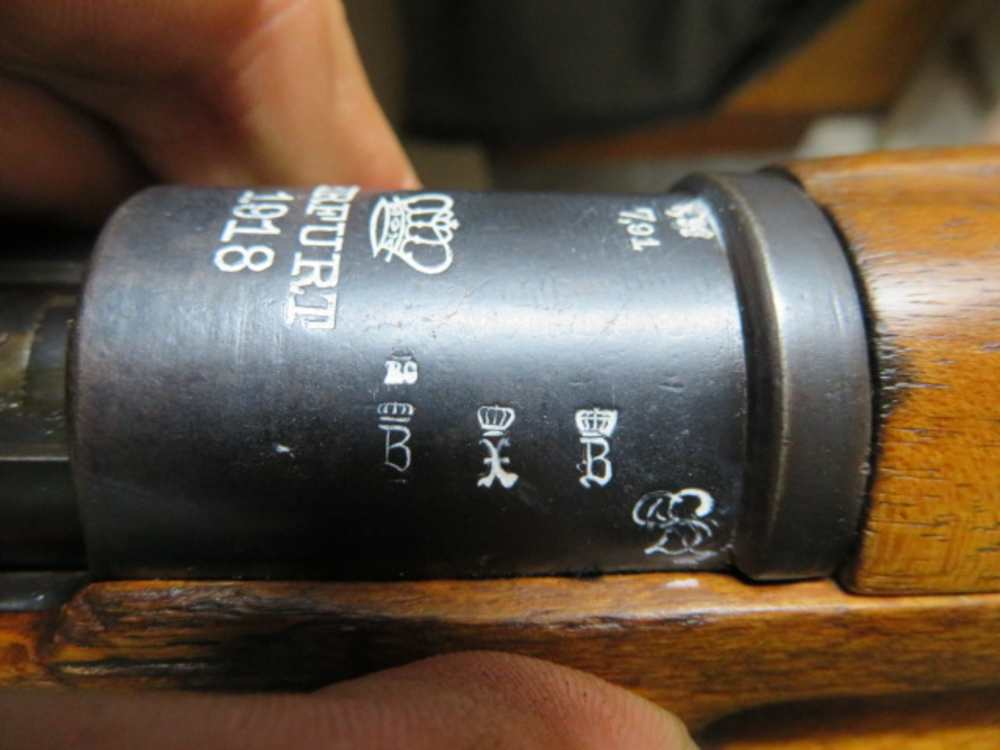
Kar98AZ receiver ring markings, Erfurt 1918 with German proof stamps
Receiver ring markings showing an Erfurt arsenal stamp dated 1918. Photo property of Eisel Armory.

Countries and Sides

German Kar98AZ Mauser carbine, left side full view
Full left-side view of the same Kar98AZ carbine. Photo property of Eisel Armory.

The Kar98AZ was fielded almost exclusively by German Empire forces, seeing service on the Western and Eastern fronts wherever cavalry, artillery, and support units needed something more compact than the Gewehr 98. Some surviving examples carry unit-specific stamps; a "BS" mark is often read by collectors as Bahnschutz (railway protection), though that’s best treated as a reading for that specific gun rather than type-wide proof unless a marking guide confirms the same stamp across a documented series. After the war, Weimar Germany retained a limited carbine allowance under the Treaty of Versailles — often discussed around the ~100,000-gun class, with some survivors carrying a "1920" overstamp — and related 98-pattern short rifles and copies also turned up with Poland and other postwar users.

Coming to the US

Unlike the later K98k, which arrived in the US mainly through Cold War-era surplus and postwar import programs, the Kar98AZ’s American presence traces mostly to war-trophy bring-backs — rifles carried home by returning US servicemen after World War I. These early bring-backs predate the more organized commercial surplus waves of later decades, so surviving examples in the US tend to be scattered rather than concentrated through a single import channel.

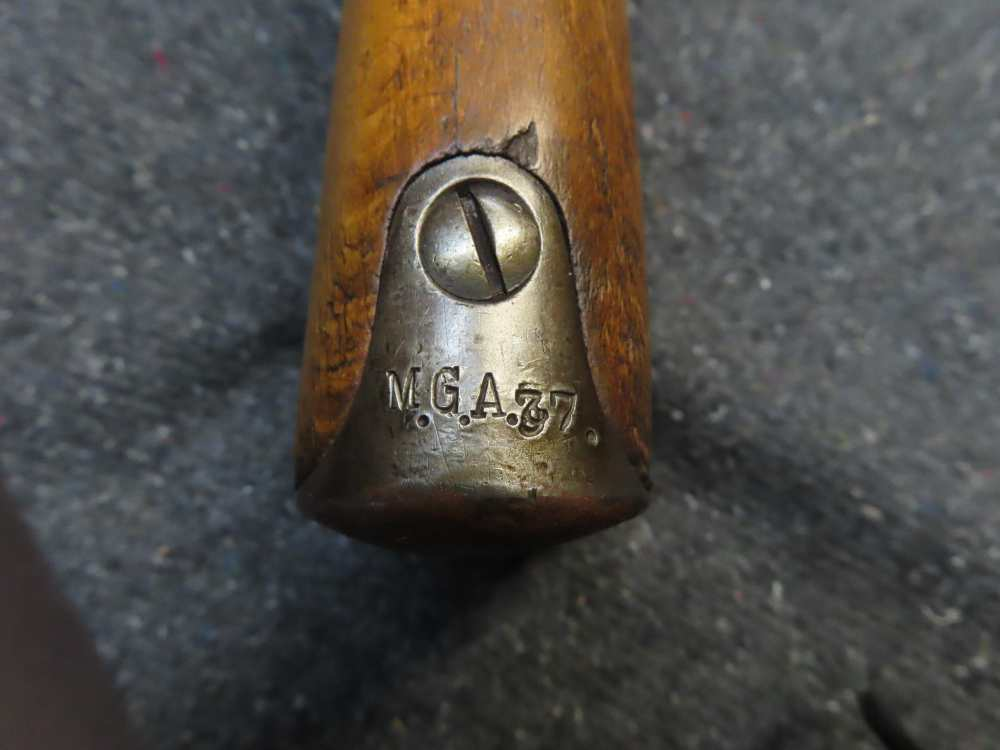
Kar98AZ buttstock cartouche marking
Buttstock cartouche stamped with unit and inspector markings. Photo property of Eisel Armory.

Lookalikes and Cousins

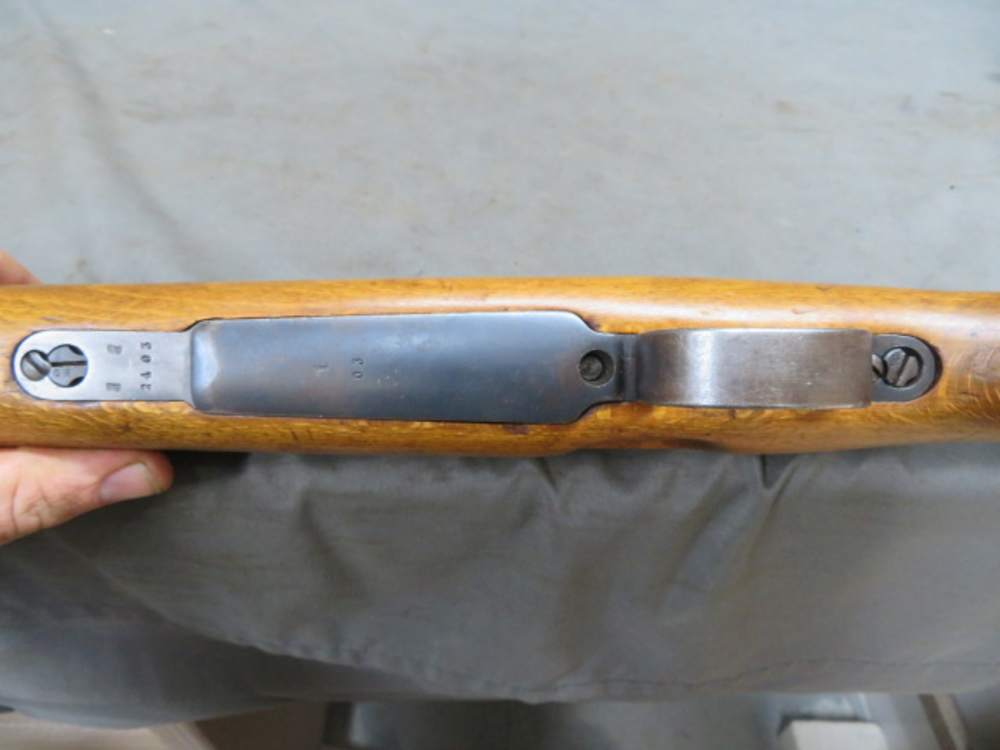
Kar98AZ bolt and receiver top view showing the action
Top view of the bolt and receiver showing the Kar98AZ’s turned-down bolt handle. Photo property of Eisel Armory.

The Kar98AZ is easy to confuse with its Mauser relatives. The full-length Gewehr 98 it was derived from is longer and was issued to standard infantry rather than mounted troops. The Kar98b, despite its "carbine" designation, actually kept a full-length barrel and was essentially a Gewehr 98 with a turned-down bolt handle and sling fittings borrowed from the Kar98AZ — a wartime compromise, not a true short rifle. The Karabiner 98k that followed in the 1930s revived the shortened-carbine concept on a redesigned, more standardized action and became the definitive German service rifle of World War II.

Why It Still Matters to Collectors

The Kar98AZ sits at the root of a rifle lineage that runs directly to the K98k, one of the most widely collected military bolt-actions in the world — collectors interested in that later rifle’s design roots, and the markings conventions that carried forward into it, may find our K98k Identification Guide useful, even though it covers the WWII-era descendant rather than this WWI carbine directly. As one of the earliest widely-issued Mauser short rifles, a well-marked, matching Kar98AZ offers a tangible link to Imperial Germany’s pre-WWI small arms development, a chapter often overshadowed by its more famous WWII successor.

Kar98AZ barrel proof marks near the receiver
Close-up of barrel proof marks near the receiver. Photo property of Eisel Armory.
×