Germany's First Repeating Service Rifle

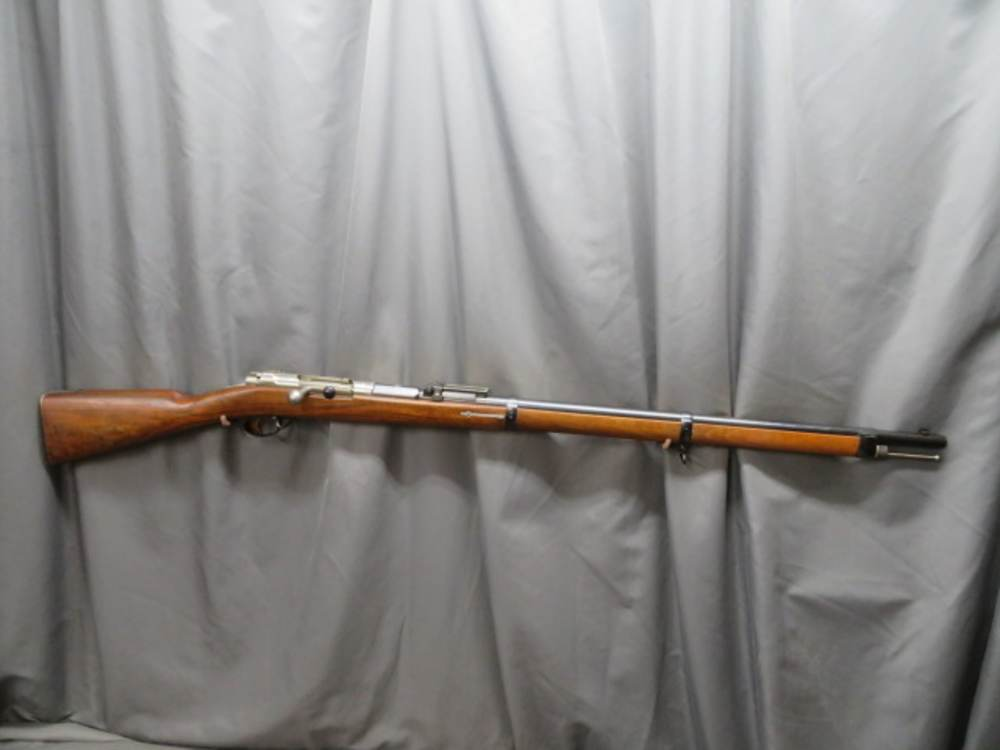
German Gewehr 71/84 Mauser rifle, full-length right side profile
Right side profile of a German Gewehr 71/84 Mauser rifle. Photo property of Eisel Armory.

The Gewehr 71/84 was the German Empire’s first bolt-action repeating rifle, adopted in 1884 as an upgrade to the earlier single-shot Model 1871 Mauser. By adding an eight-round tubular magazine beneath the barrel, German ordnance officials turned an aging single-shot design into a repeater without waiting for a wholly new rifle, giving the Imperial German Army a repeating arm chambered for the same 11x60mmR black-powder cartridge as its predecessor.

Origins: An Upgrade, Not a New Design

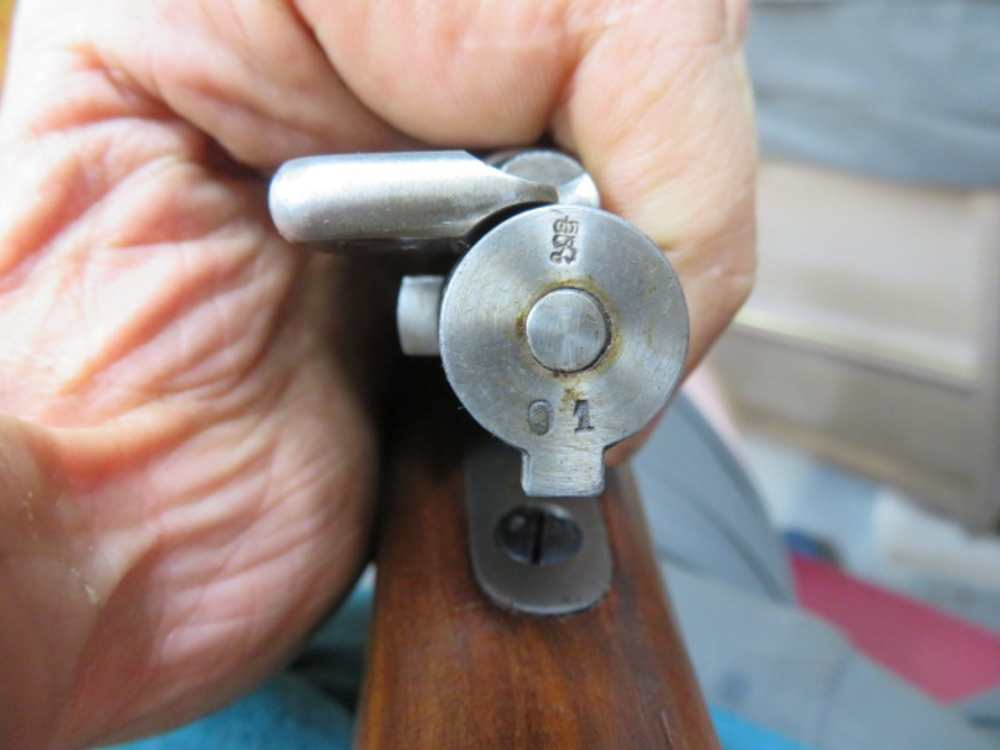
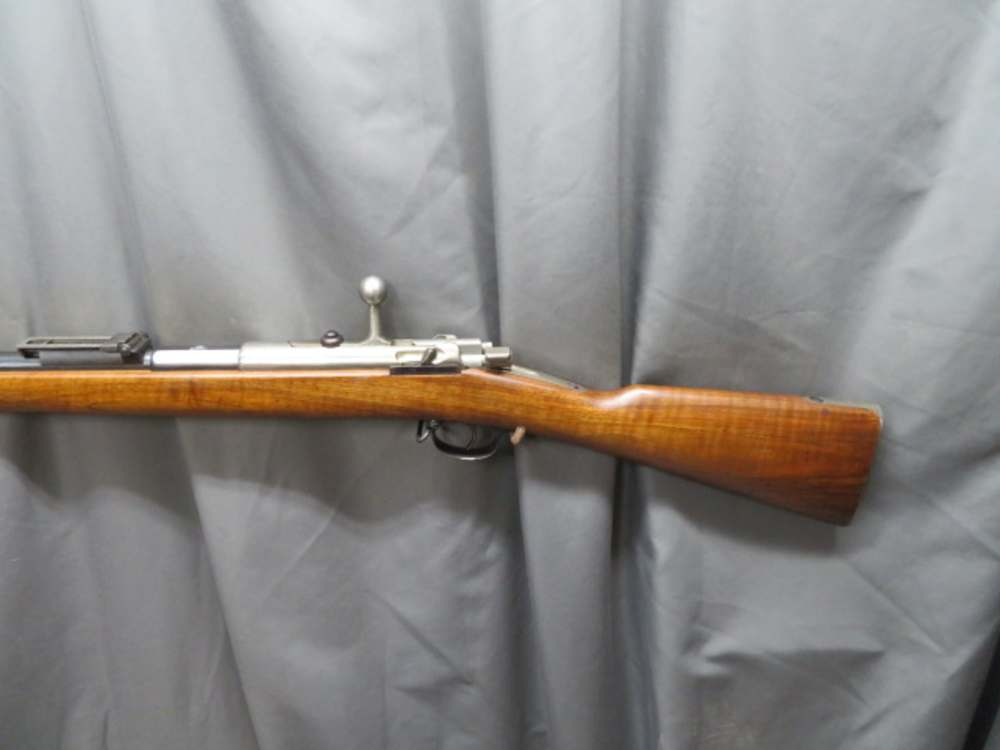
Rather than starting from scratch, German arsenals modified the existing Model 1871 Mauser action — already in widespread service — by adding a tube magazine, carrier/lifter, and related feeding mechanism, along with a magazine cut-off that let a soldier hold the magazine in reserve and fire single-loaded rounds. The familiar wing-safety lineage of the 1871 was retained; the headline change was repeating firepower, not a wholly new safety system. The result kept the 71’s basic bolt and receiver while transforming its firepower — a common approach armies of the era used to modernize existing rifle stocks quickly and cheaply rather than re-equip entirely from zero.

Close-up of the bolt and receiver of the German 71/84 Mauser rifle
Close-up of the bolt and receiver. Photo property of Eisel Armory.

Built at Germany's State Arsenals

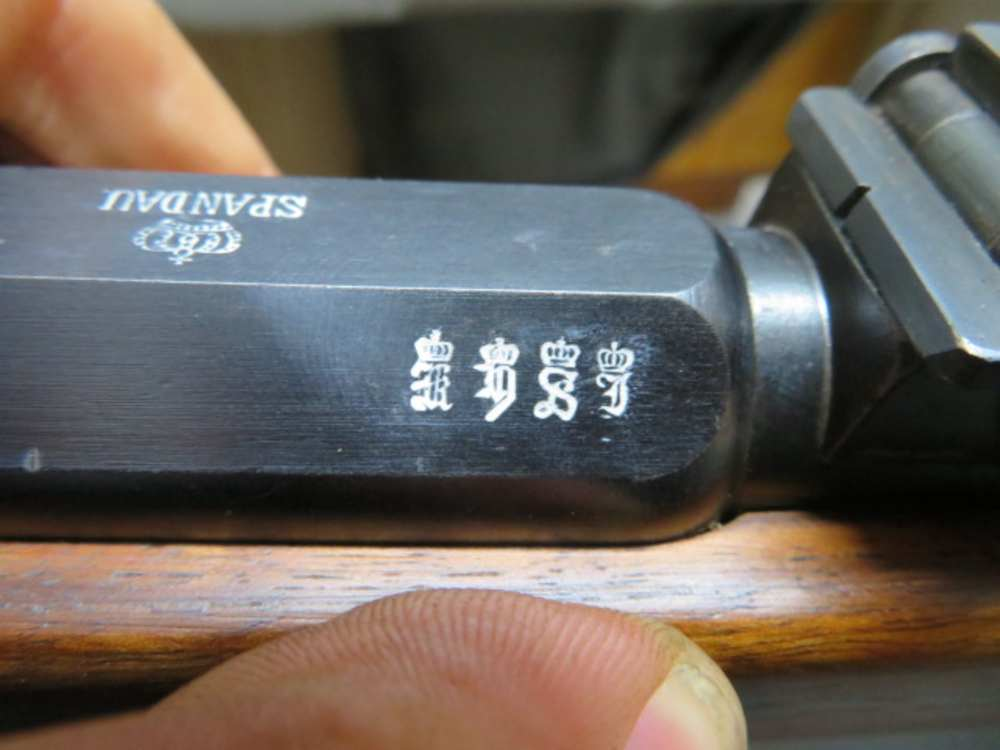
Close-up of the SPANDAU arsenal marking and imperial proof stamps on the receiver
Close-up of the SPANDAU arsenal marking and imperial proof stamps. Photo property of Eisel Armory.

Unlike rifles built by a single private contractor, the 71/84 was produced across several German state arsenals, including Spandau, Danzig, Erfurt, and Amberg, each stamping its own name and inspection marks onto the rifles it completed. This example carries Spandau arsenal markings, tying it to one of Imperial Germany’s principal small-arms production centers near Berlin. Total production across all arsenals is commonly put at about 1.0 to 1.16 million rifles by the late 1880s — a far larger run than a casual "hundreds of thousands" reading would suggest.
A Short but Pivotal Service Life

The 71/84 served as Germany’s standard infantry rifle for less than a decade before it was largely superseded by the smokeless-powder Gewehr 88, part of the rapid worldwide shift away from black-powder cartridges in the late 1880s and early 1890s. Despite its short front-line tenure with the regular army, the rifle remained in reserve, militia, and colonial inventories well after it was no longer first-line issue, representing an important transitional step between single-shot black-powder rifles and the smokeless bolt-action repeaters that would dominate the next half-century.

Close-up of the bolt face of the German 71/84 Mauser rifle
Close-up of the bolt face. Photo property of Eisel Armory.

Surplus and Collector Life After Germany

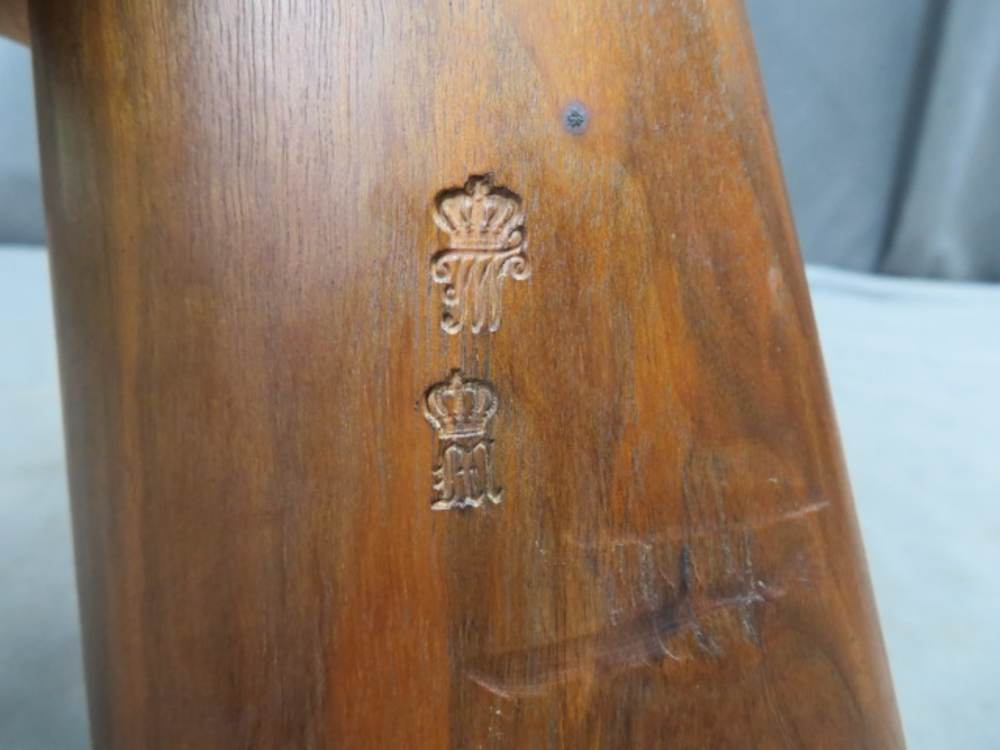
Close-up of imperial crown proof stamps on the stock of the German 71/84 Mauser rifle
Close-up of imperial crown proof stamps on the stock. Photo property of Eisel Armory.

As Germany re-armed with newer rifles, older 71/84s were sold off as military surplus, a common pattern for obsolete but still-functional 19th-century service rifles. Exact records of where every batch ended up aren’t well documented, but surplus black-powder Mausers like this one circulated through European and colonial markets in the decades after their German service ended, and today they’re most often found in the hands of collectors rather than shooters, since period-correct 11x60mmR ammunition is scarce.

Cousin to the Single-Shot Model 1871, Not the Later Mauser 98

Collectors sometimes conflate the 71/84 with either its single-shot parent, the Model 1871, or with the far more famous Mauser 98 that eventually replaced Germany’s black-powder-era rifles altogether. The 71/84 sits squarely between the two: it keeps the older rifle’s basic action and black-powder cartridge while adding the repeating capability that pointed toward the future. For collectors, a matching, correctly marked 71/84 like this Spandau-made example offers a tangible piece of that transitional moment in German small-arms history.

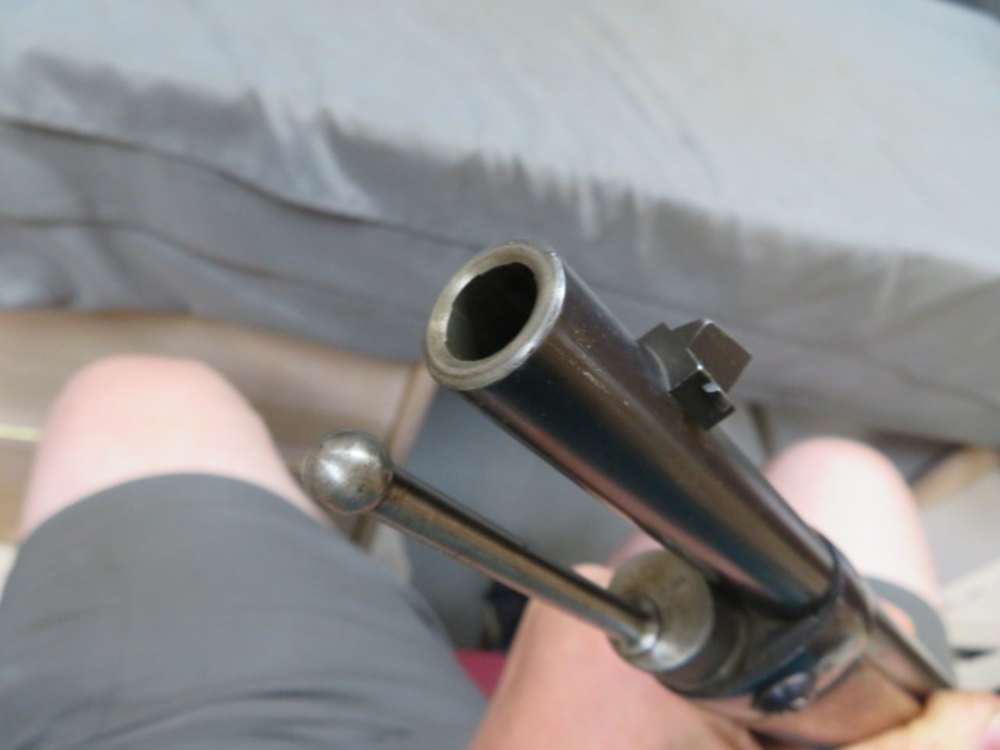
Close-up of the muzzle and cleaning rod of the German 71/84 Mauser rifle
Close-up of the muzzle and cleaning rod. Photo property of Eisel Armory.
×