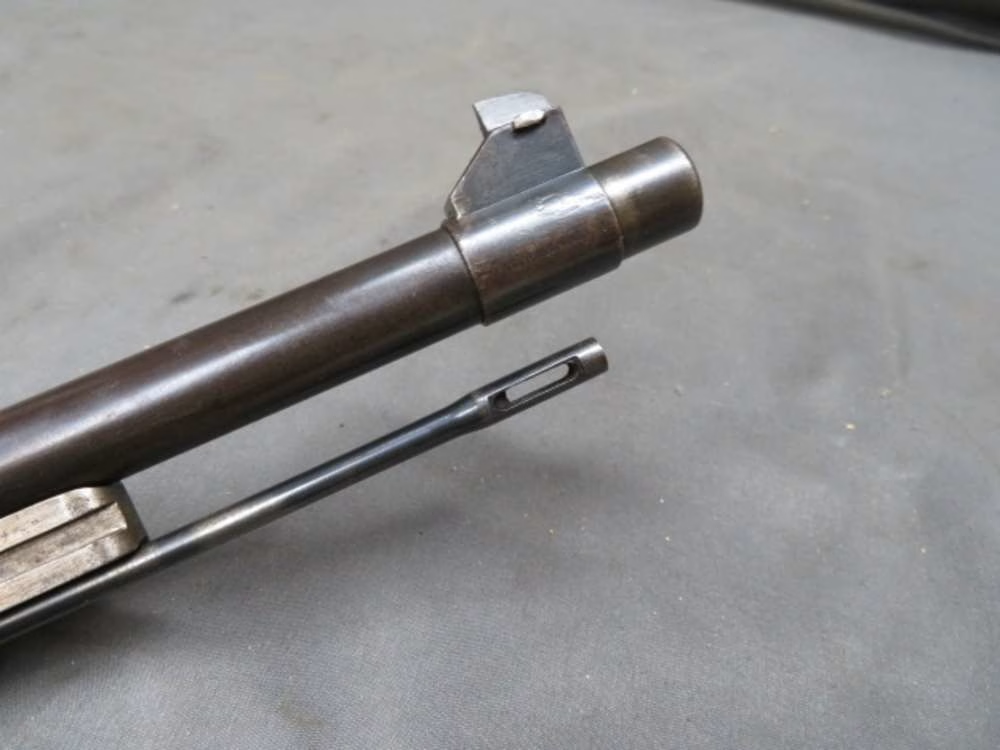
In the final years before World War II, Austria’s Steyr arms works supplied Germany’s Luftwaffe with a stopgap rifle known today as the G.29(ö) — chambered in 7.92×57mm Mauser and built between roughly 1938 and 1939, just before Steyr’s own production shifted to the newly standardized Karabiner 98k. Also referred to by collectors as the Gewehr 12/34, it armed Luftwaffe ground and airfield-security personnel during a brief window when the Wehrmacht’s own rifle demand was consuming most new German production.
A Rare Luftwaffe Contract: Steyr's Secret ‘660’ Code
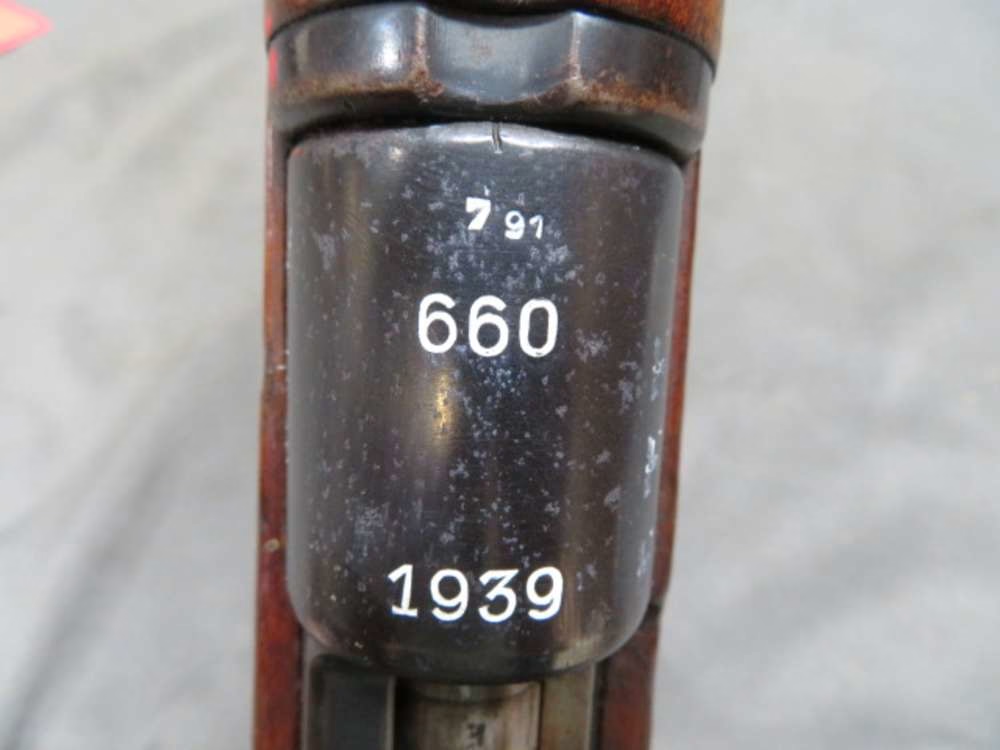
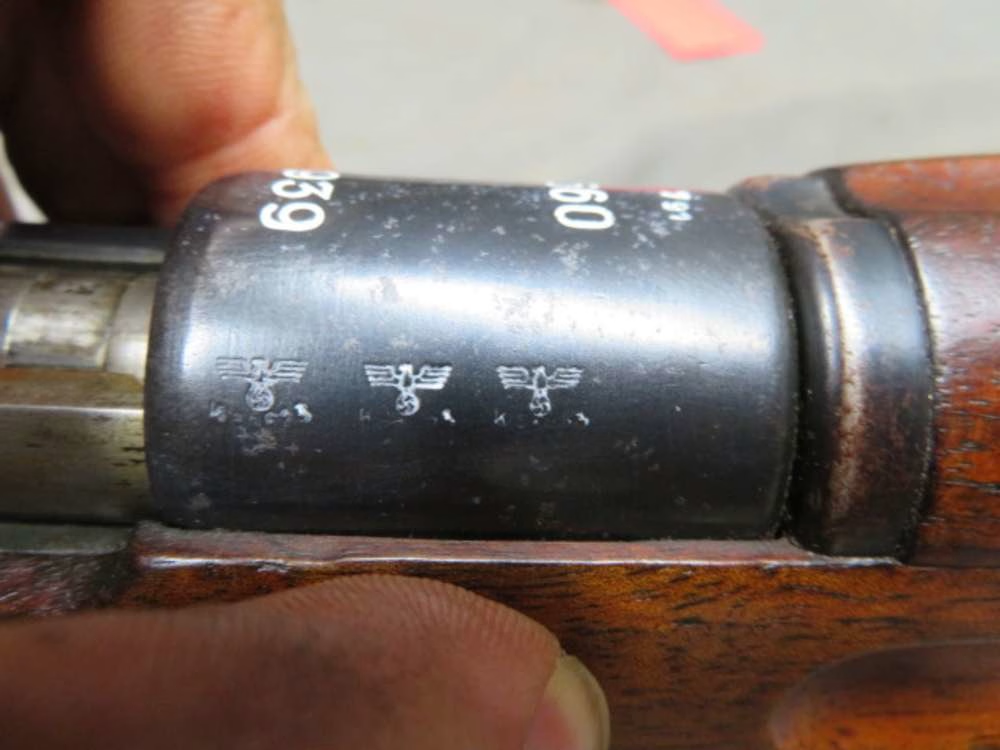
Steyr manufactured the G.29(ö) at its Austrian works, stamping rifles with the concealed wartime code “660” rather than the company’s name — standard practice across German-contract arms production meant to keep factory identities out of Allied intelligence hands. Records from this narrow production run are incomplete, and commonly cited totals for the G.29(ö) vary; most estimates put overall output in the tens of thousands, concentrated almost entirely within the 1938–1939 window before Steyr transitioned fully to K98k production.
Service and Acceptance: Marked for the German Luftwaffe
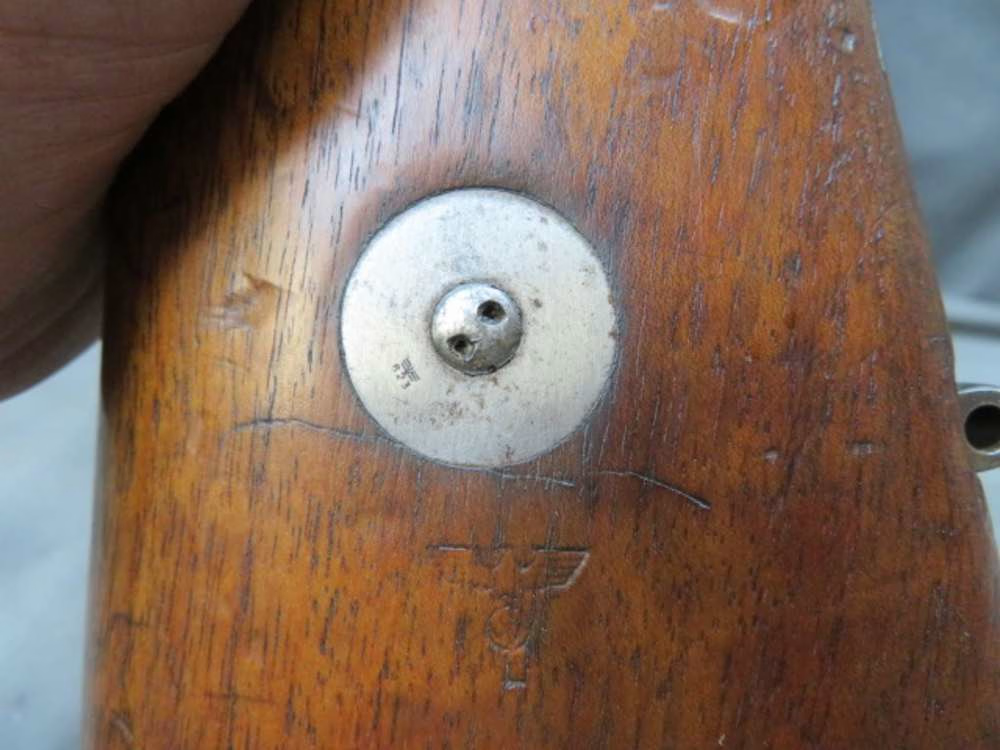
Issue of the G.29(ö) was narrow by design. It served German Luftwaffe ground and security troops in the early war years, arming a branch whose small-arms needs sat outside the Wehrmacht’s main supply chain. Surviving rifles typically carry Waffenamt inspection stamps — an eagle above an inspector’s code, commonly “623” on Steyr-made examples — along with a Luftwaffe Eagle/L acceptance mark in the stock. Documentation of the rifle’s service life much beyond this initial issue is thin, so claims of extensive frontline combat use should be treated as general rather than well-established.
From Export Short-Mauser to Wartime Rifle: The G.29(ö)'s Design Roots
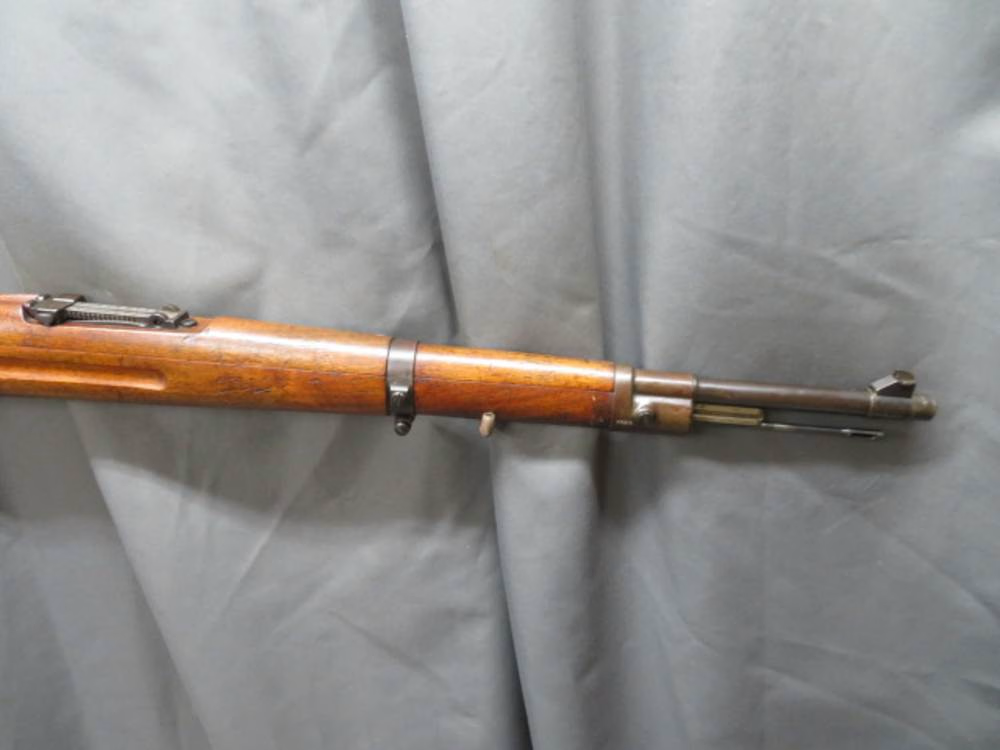
The G.29(ö)’s design root is Steyr’s interwar M12/34 short-Mauser export carbine — the pattern Steyr had most recently built for Chilean and other South American contracts — put back into production for the Luftwaffe and rechambered from the export 7mm class to German 7.92×57mm. Collectors and period documentation also know the type as the Gewehr 12/34; "G.29(ö)" is largely a later collector designation rather than a marking found on every rifle. Rather than tool up a full K98k line overnight, Steyr reused this existing short-Mauser configuration, which explains features — like its full-length wooden handguard, barrel bands, and exposed cleaning rod — that were already being phased out of the K98k pattern taking shape at the same Steyr factory.
The G.29(ö) Among Its Mauser Cousins
At a glance the G.29(ö) is easy to mistake for the K98k that followed it, and the resemblance is no accident — both share the same Mauser 98 lineage and 7.92×57mm chambering. It should not be confused with Czechoslovakia’s standard interwar Mauser, the Brno VZ-24, which is a separate Czech service design rather than a Steyr "Standard Modell" cousin of this Luftwaffe contract rifle. Because silhouette alone can be deceiving, collectors lean on smaller details — stock furniture, cleaning-rod placement, and especially manufacturer and acceptance markings like the ones stamped into this rifle’s wood and receiver — to tell the variants apart with confidence.
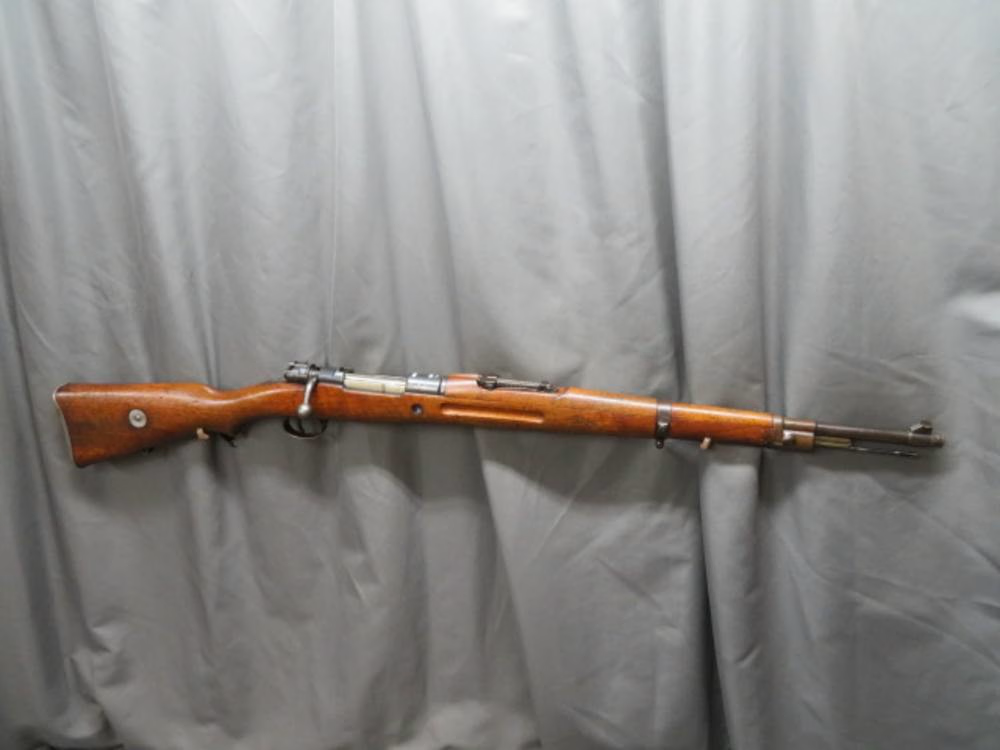
A Scarce Piece of Mauser History
No dedicated identification guide exists yet for the G.29(ö) specifically, but its scarcity is exactly why Mauser collectors seek it out: a narrow production window, a specific and lesser-documented branch of German service, and a design bridge between Steyr’s prewar export rifles and the K98k that would go on to define German infantry small arms for the rest of the war. A verified, 660-coded example from 1939 with intact Luftwaffe stock markings remains a genuinely uncommon find.
🛒 eBay Store
🔥 GunBroker Store
📘 Facebook
𝕏 @EiselArmory
🎵 @EiselArmory
Follow @EiselArmory for more rare finds, military history and relics from the past.