France’s 8 mm tube-magazine infantry rifle, from its 1887 adoption through two world wars
Origin and Adoption
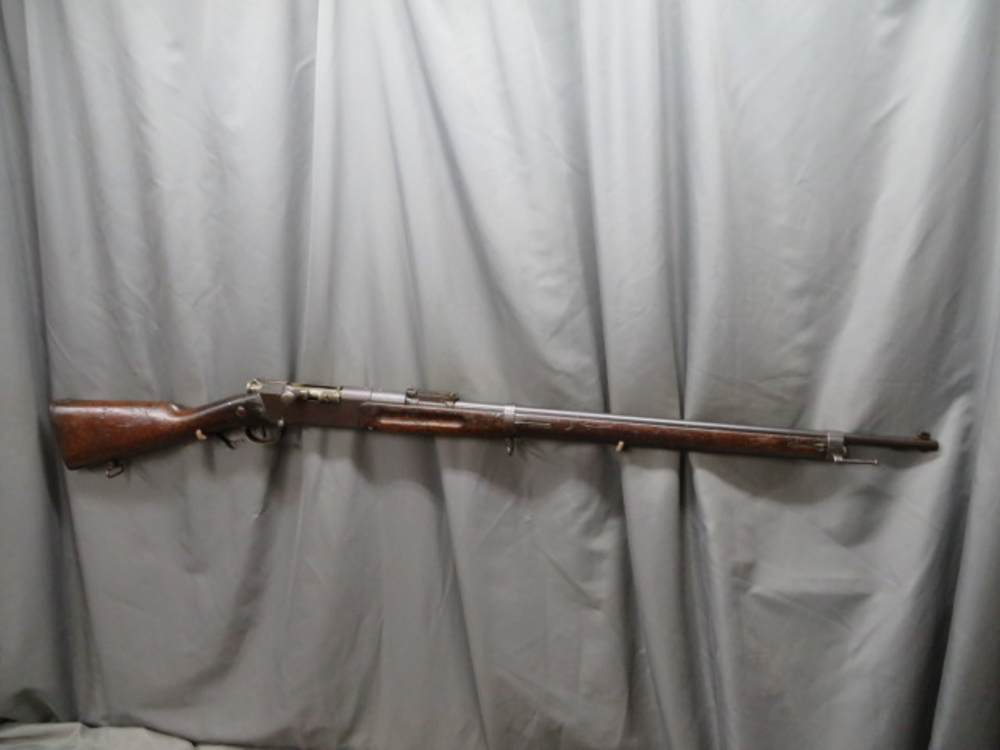
The Fusil Modèle 1886, better known as the Lebel, is a French 8 mm bolt-action repeating rifle with a tube magazine. Designated Model 1886, it was officially adopted on 22 April 1887. According to the Musées de Reims, the decision to introduce this type of repeating arm came under the impetus of General Boulanger, then Minister of War, and then of the commission studying repeating arms.
The name “Lebel” was never the official designation. The Musées de Reims notes that it came from journalists, in whose writing the French Army’s new Model 1886 rifle became “the Lebel rifle.”
A Team Design
Although the rifle carries one officer’s name, the Châtellerault museum describes it as a collective effort. Col. Basile Gras, designer of France’s Fusil Mle 1874 and then Inspector of the Châtellerault arms manufactory, sat on the commission. According to the museum, Col. Gras and, above all, the arms controllers Albert Close and Louis Verdin at Châtellerault were responsible for the rifle’s detailed architecture and its machining, while Col. Bonnet designed the bolt.
Lt-Col. Nicolas Lebel’s own direct contribution was the full-metal-jacket bullet. The museum records that Lebel always insisted, during his lifetime, that the rifle was a collective creation that owed most to Col. Gras. Other parts were adapted from earlier rifles. American Rifleman notes that the magazine was adapted from the Fusil Mle 1878, nicknamed “Kropatschek” because it was a variant of the Austro-Hungarian Model 1874 Kropatschek rifle. The same article says the bolt, while looking similar to the earlier Chassepot/Gras arrangement, was considerably modified to handle the increased pressures.
Smokeless Powder and the 8 mm Cartridge
The Châtellerault museum calls Paul Vieille’s invention of “Poudre B” in 1884 the decisive factor behind the new rifle. Shooting Illustrated describes Poudre B as “a smokeless, nitrocellulose-based propellant powder,” and American Rifleman’s Garry James calls it “three times as powerful as blackpowder.” The Lebel is widely described, including by American Rifleman, as the first military rifle designed for smokeless-powder ammunition. The NRA National Firearms Museum’s display text is more cautious, calling the Lebel “one of the first rifles to utilize both jacketed projectiles and smokeless ammunition.”
The rifle’s cartridge, the 8x50mmR Lebel, was formed by necking down the 11x59mmR Gras black-powder cartridge. The original service load, the Balle M, used a 232-grain jacketed flat-nose bullet.
How It Works
The tube magazine holds eight rounds. With one more cartridge on the carrier and one in the chamber, American Rifleman counts a 10-shot capability. Shooting Illustrated describes a cock-on-open bolt with two symmetrically opposed locking lugs. Overall length is about 130 cm (51 in).
Built at Three State Arsenals
Manufacture was entrusted to the three state arms manufactories at Châtellerault, Saint-Étienne and Tulle. According to the Châtellerault museum, accelerated production allowed them to deliver more than two million Lebel rifles in six years, and the rifle continued to be made, in decreasing numbers, until May 1920. For the overall total, American Rifleman gives some 3,450,000.
The 1893 Modification
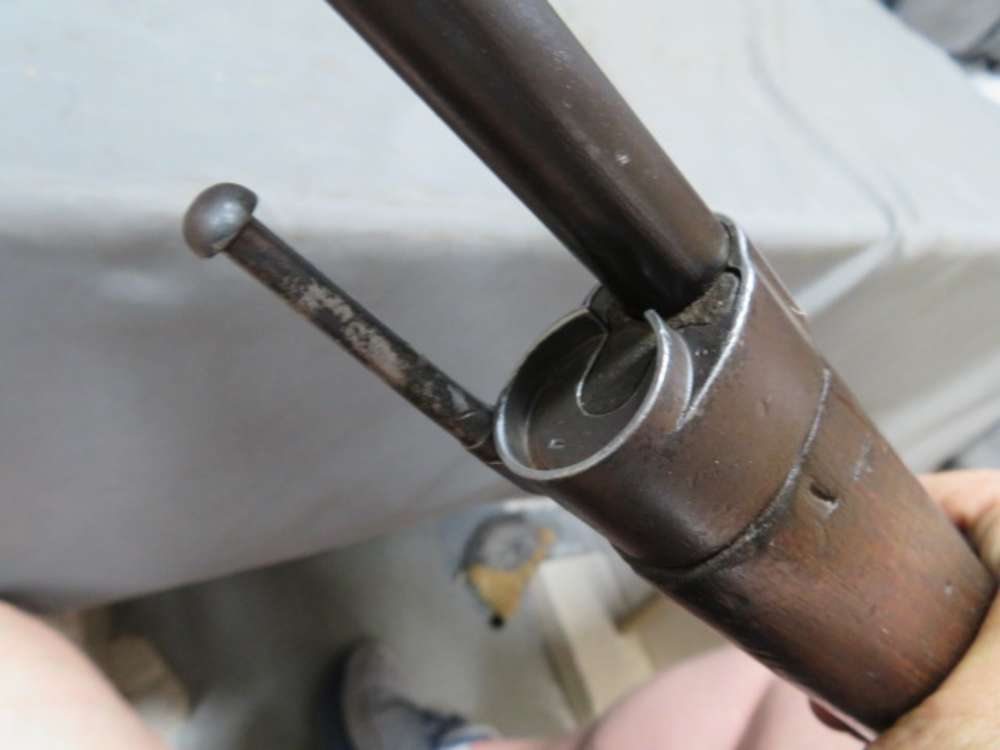
The Châtellerault museum records that the bolt was slightly modified in 1893, which produced the rifle’s official designation, “Fusil Mle 1886 M93.” The 1893 modification centered on a new bolt head that deflected escaping gas from a ruptured case away from the shooter’s face. The mounting of the rear sight on the barrel was also improved at that time. Sources differ on whether the stacking rod and firing-pin knob changes belong to 1893 or to earlier revisions. The M93 also carries a stacking pin on the end cap near the muzzle, as described on the Australian War Memorial’s example.
Balle D and the New Rear Sight
In 1898 France adopted a new bullet for the Lebel, the Balle D, a solid pointed (spitzer) boat-tail bullet of about 198 grains that was placed in general service after 1901. American Rifleman describes it as the first boat-tail spitzer bullet adopted by any military, and says it “dramatically increased” the rifle’s effective range. The rear-sight leaf was adapted to the change from the Modèle 1886 M cartridge to the Modèle 1886 D. Because the rifle feeds from a tube magazine, French military Balle D ammunition had a circular groove around each primer pocket, a safety feature against a pointed bullet setting off the primer of the round in front of it.
The “Rosalie” Bayonet
The rifle took the Épée-Baïonnette Modèle 1886, whose thin cruciform blade measures about 52 cm (roughly 20½ in). French soldiers nicknamed it “Rosalie.” In wartime the design was simplified.
In Service
According to the Buffalo Bill Center of the West, French soldiers carried their Lebel rifles into Peking in 1900. An American Rifleman article on the 1900 China Relief Expedition shows French Zouaves outside Tientsin armed with the Lebel Model 1886. For the First World War, the Australian War Memorial calls the Lebel “the standard infantry weapon used by the French army,” and Shooting Illustrated notes that it served through all ten months of the fighting at Verdun. The Memorial adds that it “continued in service during the Second World War.”
The Berthier and the R35
During the First World War, clip-fed Berthier rifles were issued to supplement the Lebel. The Mle 1907/15 was built in large numbers and modified to take the same bayonet as the Lebel, and the Mle 1916 introduced a five-round clip. Even so, American Rifleman notes that this “new” arm “never overtook the Lebel during the conflict.”
In the mid-to-late 1930s a shortened version, the Mle 1886 M93 R35, was made. Published figures for the conversion range from about 25,000 to about 50,000. American Rifleman says most of these R35s were sent to units serving in North Africa.
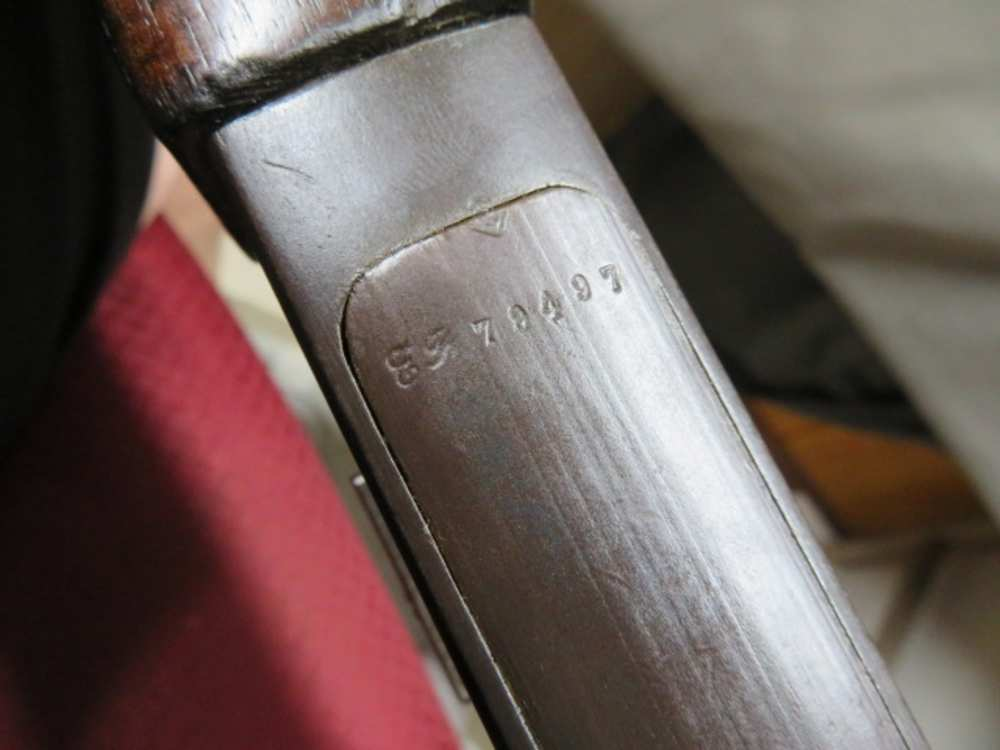
Reading the Markings
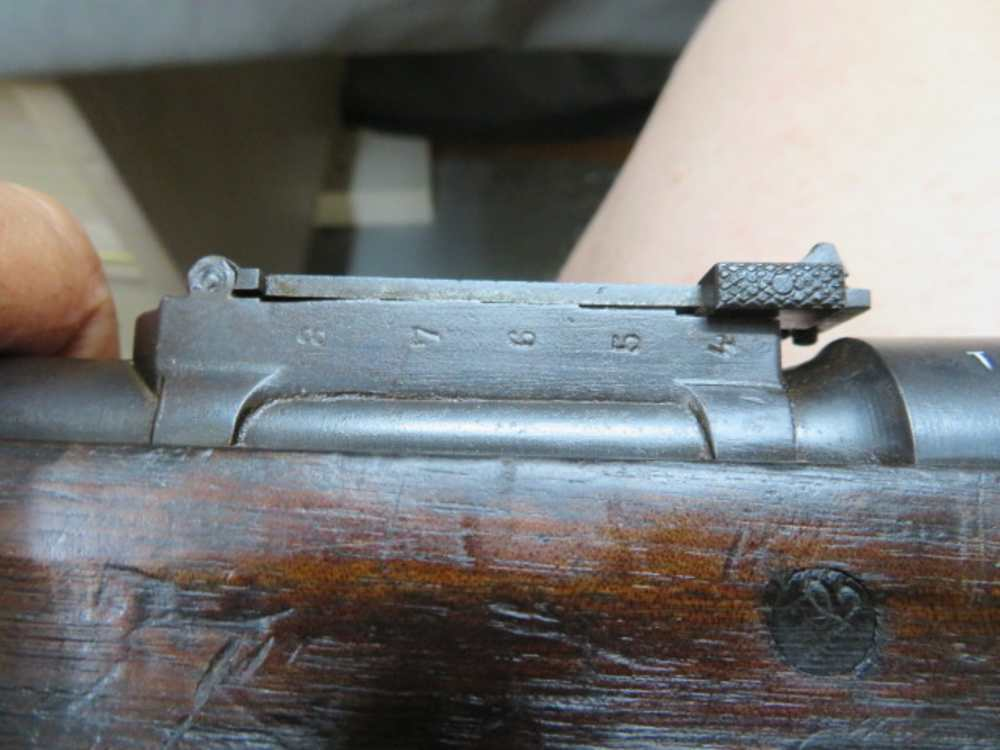
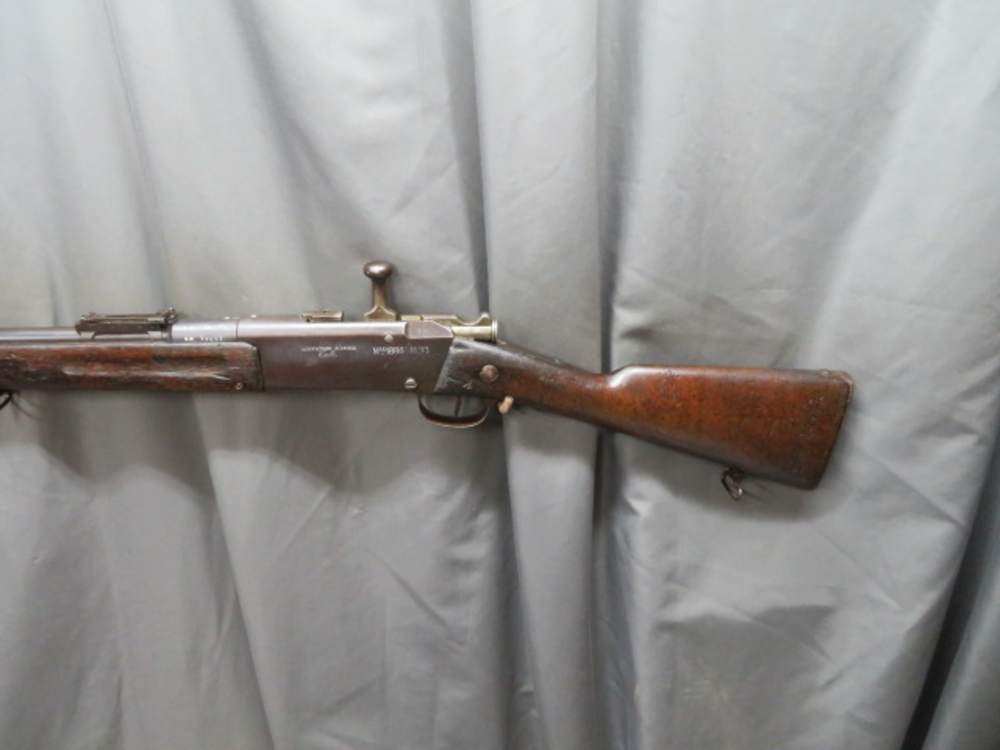
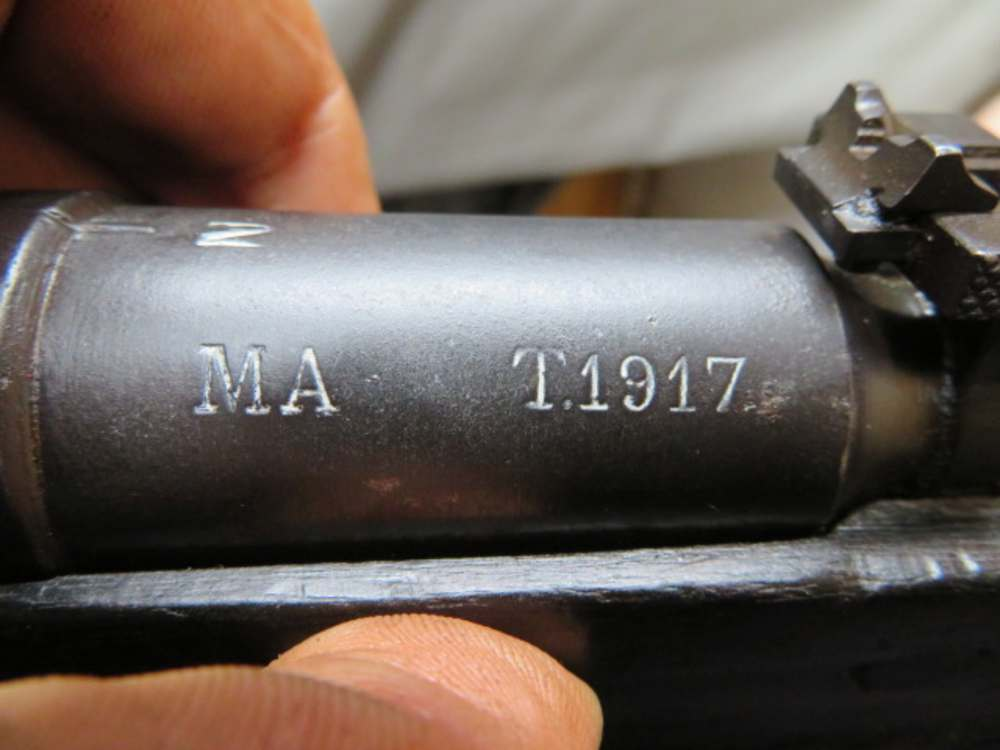
On museum examples, the receiver marking names the arsenal and the model, and a date appears with an arsenal abbreviation elsewhere on the action or barrel. A Saint-Étienne rifle at the Australian War Memorial, for example, reads “Manufacture D’Armes St Etienne Mle 1886 M93” on the left side of the receiver, with “MA S 1915” stamped on the barrel. A Tulle-made rifle at the Musées de Reims follows the same pattern, with “MANUFACTURE D’ARMES / TULLE” and the model on the left side of the receiver and “MA T.1915” on the right.
In the United States
American Rifleman reports that a cache of firearms discovered in Ethiopia and imported by Royal Tiger Imports brought a number of surplus 1886/93 Lebel rifles into the United States.
Why It Still Matters
The Lebel connects several threads of French military history: Vieille’s Poudre B, the team design credited by the Châtellerault museum, the 1893 bolt-head change, the Balle D and the Berthier rifles that served alongside it. For anyone examining one today, the arsenal name on the receiver, the “Mle 1886 M93” designation and the arsenal-and-year stamp are the places to start.
Further Reading
- The 1886/93 Lebel: France’s Great War Masterpiece, Garry James, American Rifleman (NRA), 2021
- I Have This Old Gun: Model 1886 Lebel, American Rifleman Staff, American Rifleman (NRA), 2024
- Classic Guns: The Model 1886 Lebel, Martin K.A. Morgan, Shooting Illustrated (NRA), 2018
- Fusil Lebel modèle 1886 modifié 1893, avec baïonnette, BnF Essentiels (Bibliothèque nationale de France), object in the Paris musée de l’Armée
- Tulle Model 1886 93 Lebel Bolt Action Rifle, NRA National Firearms Museum
- fusil (arme), inv. 1995.62, Fusil modèle 1886 dit “Lebel” modifié 1893, Alienor.org / Grand Atelier, musée d’art et d’industrie de Châtellerault
- Fusil à répétition Lebel, Manufacture d’armes de Tulle, Musées de Reims
- The Rifles of the Eight Nation Alliance, Danny Michael, Buffalo Bill Center of the West, 2016
- Lebel Model 1886 rifle, Wikipedia (English)
- Lebel modèle 1886, Wikipédia (French)
- 8×50mmR Lebel, Wikipedia (English)
- Nicolas Lebel, Wikipedia (English)
- Poudre B, Wikipedia (English)
- Manufacture Nationale d’Armes de Tulle, Wikipedia (English)
- Rosalie (baïonnette), Wikipédia (French)
- Men And Guns Of The 1900 China Relief Expedition, Tom Laemlein, American Rifleman (NRA), 2019
- Lebel Model 1886/93 Rifle (C2088513), Australian War Memorial
- Berthier rifle, Wikipedia (English)