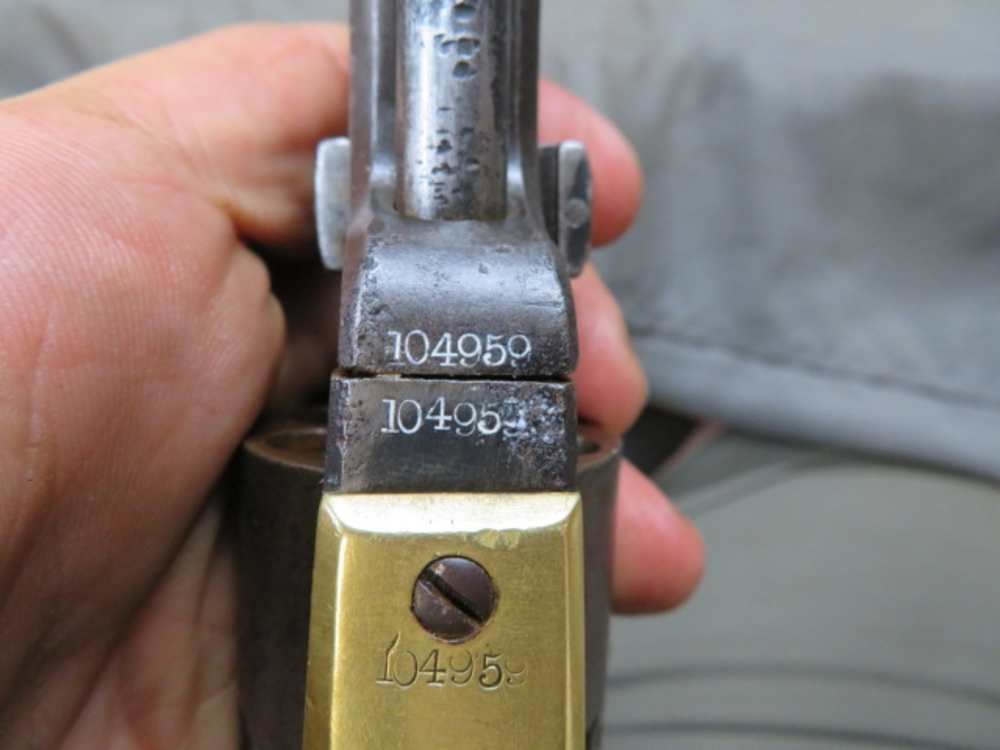
A Lighter, Faster Sidearm for the 1850s
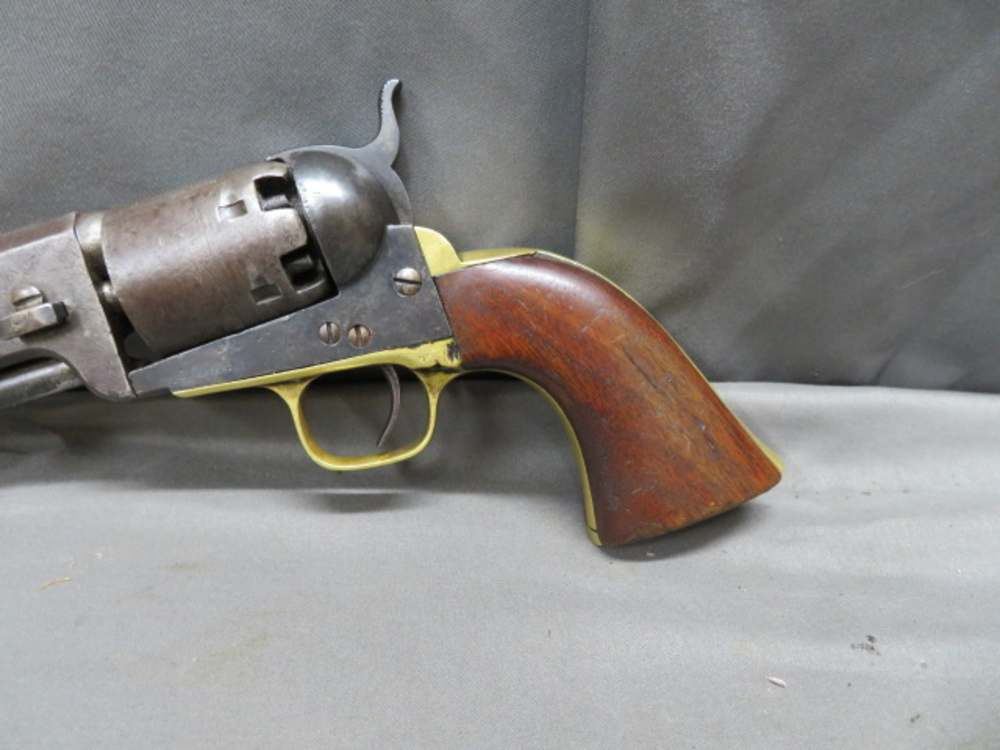
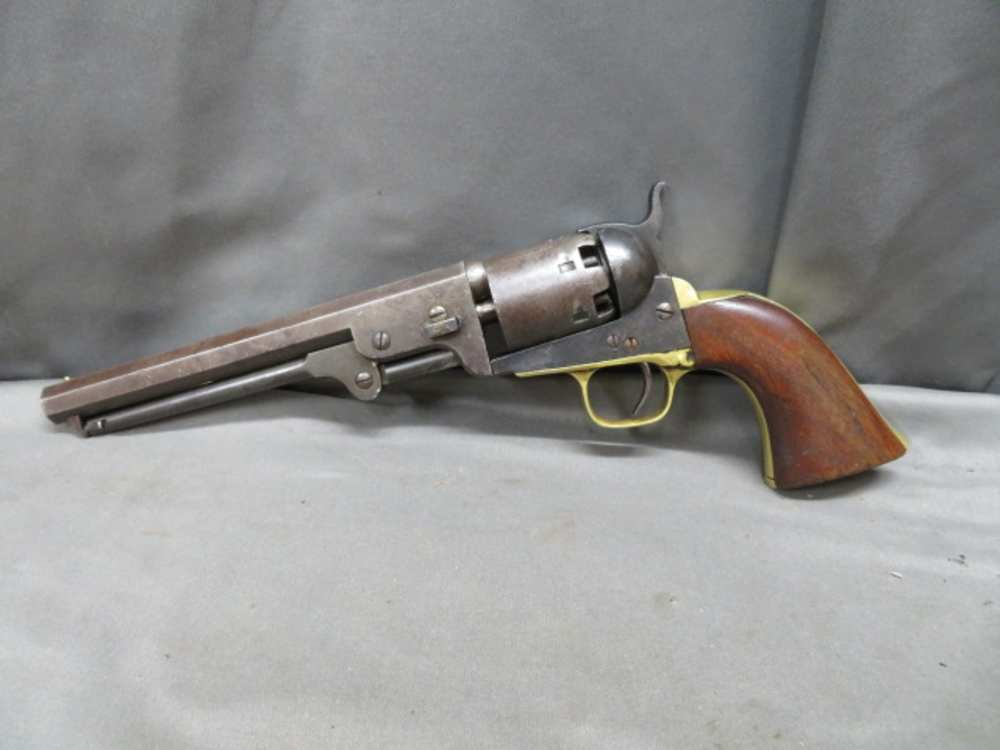
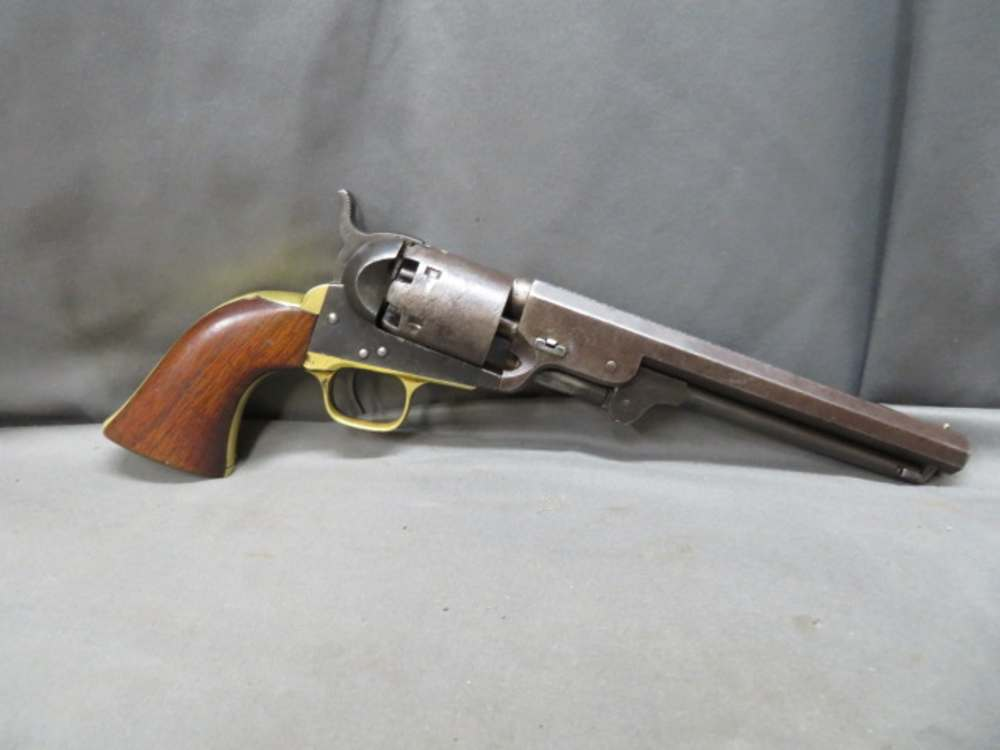
Adopted in the early 1850s as Colt’s lighter .36 “belt” revolver, the Model 1851 Navy was a single-action, open-top, six-shot percussion revolver with a roughly 7½-inch octagon barrel. Collectors call it the 1851 Navy; Hartford production actually began in 1850, and period factory language often said “Navy” or “Belt” rather than the date.
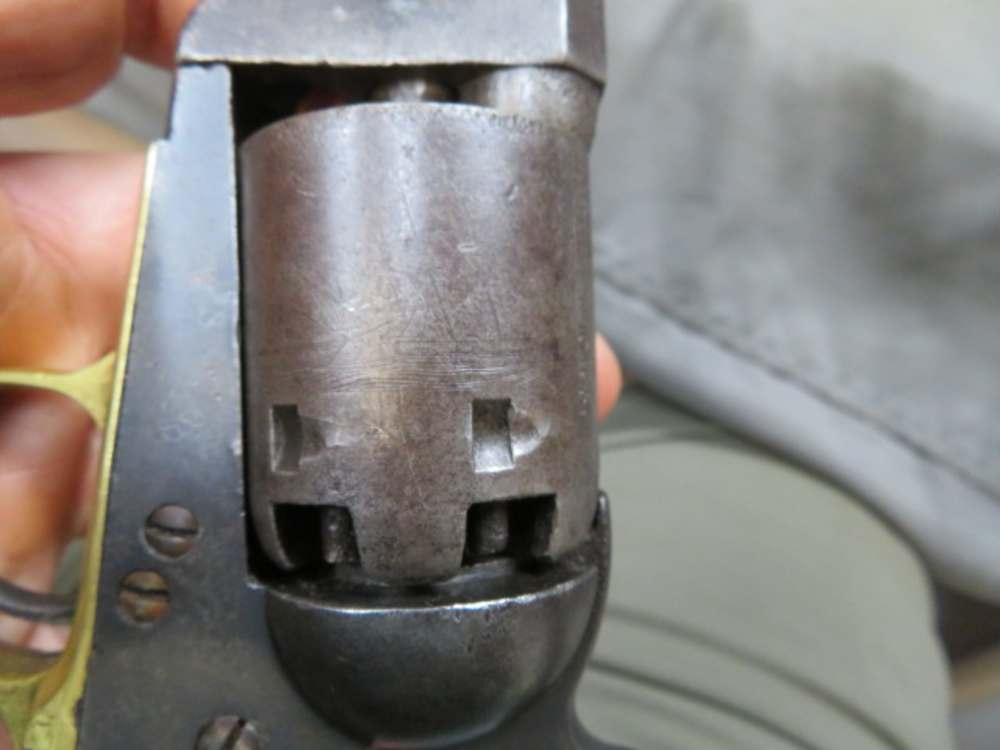
The name points to .36 (“Navy”) caliber — not a Navy-only issue. The rolled cylinder scene, by W. L. Ormsby, shows Texas and Mexican ships fighting at Campeche in May 1843, which is why the art looks naval even on civilian and Army guns.
What It Is
Compared with the heavy Walker and Dragoon .44s, the 1851 was meant to hang on a belt and still hit hard enough for cavalry, sailors, and civilians. Typical features include a non-fluted round cylinder with safety pins between the nipples, a hinged loading lever under the barrel, and a one-piece walnut grip. Early squareback trigger guards give way to small, then large, rounded guards on later Hartford guns.
Fluted cylinders are not a standard 1851 feature; they belong mainly to early Model 1860 Army guns (and a tiny early 1861 Navy subset), so an “1851 fluted” claim usually means a mislabel or the wrong model.
Who Built Them
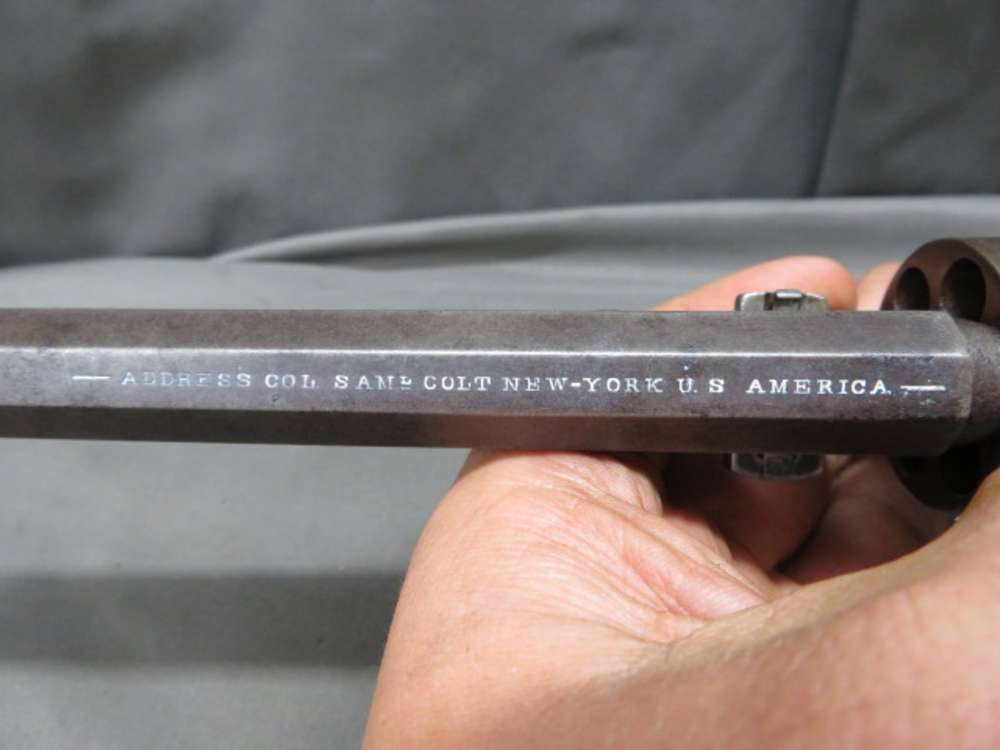
Colt’s Patent Fire Arms Manufacturing Company built the vast majority at Hartford, Connecticut. A separate London Armory (roughly 1853–1856/57) ran its own serial range with British proofs and a London barrel address. European copies and Confederate shops later patterned .36 open-tops after the same idea.
Published production totals are not fully reconciled. Hartford output is usually cited near 215,000 serials; London near 40,000–42,000; museum and NRA summaries often round the family to more than 250,000 from about 1850 to 1873. Treat any single exact company total as contested.
Who Used Them
The U.S. Navy took early deliveries from 1852. The Army followed with large mid-1850s contracts, and both services — along with states and private buyers — kept 1851s in the field long after newer Colts appeared. During the Civil War, new Ordnance contracts leaned toward the Model 1860 Army and some 1861 Navy revolvers, but thousands of 1851s still arrived through open-market and state purchases.
Union and Confederate troopers used them heavily; Southern makers also copied the pattern. London production fed Crimean-era British and other European demand. Cap-and-ball Navies stayed useful on the frontier into the 1870s; factory Thuer and later Richards-Mason cartridge conversions stretched a portion of the type into the metallic-cartridge era. This was a domestic Colt product, not a later foreign surplus import.
Related Revolvers
Close cousins include the smaller 1849 Pocket, the larger .44 1860 Army, and the same-caliber 1861 Navy (round barrel and creeping lever, not the 1851’s octagon barrel and hinged lever). Remington’s solid-frame 1858/New Model revolvers compete in the same era with a different architecture. Confederate copies — Griswold & Gunnison, Leech & Rigdon, Dance Brothers, and others — follow the 1851 idea without being Colts.
Why Collectors Still Care
The 1851 Navy is the classic Civil War and Western belt revolver: lighter than a Dragoon, instantly readable from the Ormsby cylinder scene and octagon silhouette, and deep enough in variants — Hartford guard styles, London guns, martial marks, conversions — to reward careful study without needing a famous serial biography.
Condition and originality usually matter more than lore; popular associations with figures like Wild Bill Hickok attach to the type, not to every attributed gun. Until a Collector’s Library identification guide exists for this family, those markings and model cues are the practical path into the stack.