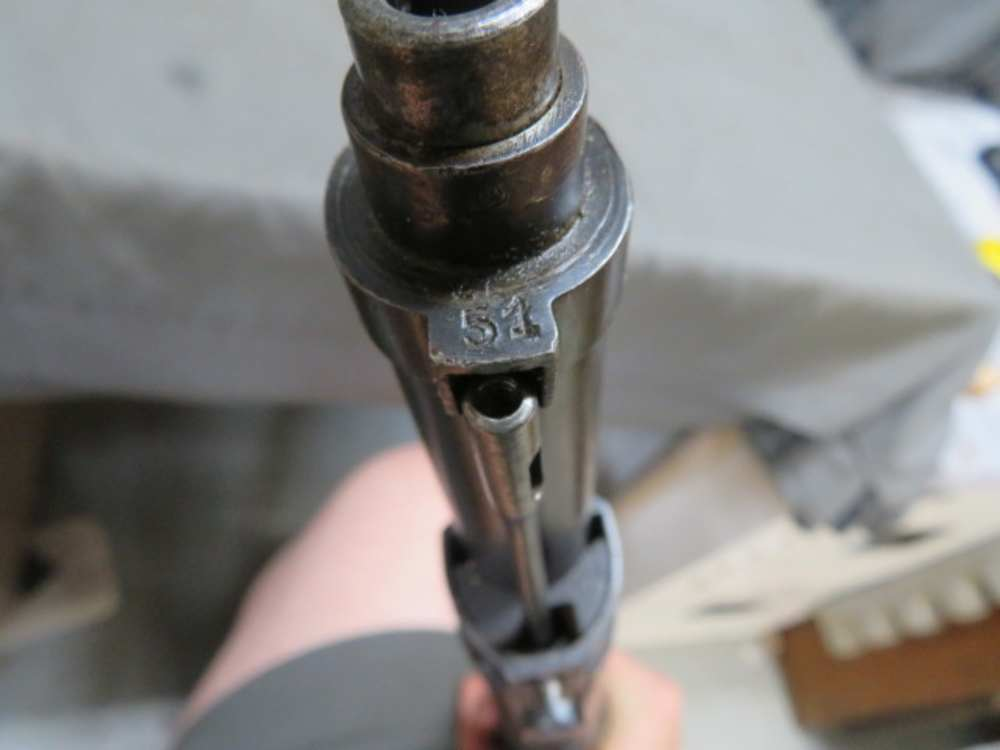
Belgium's First Smokeless Mauser, Reworked for WWI
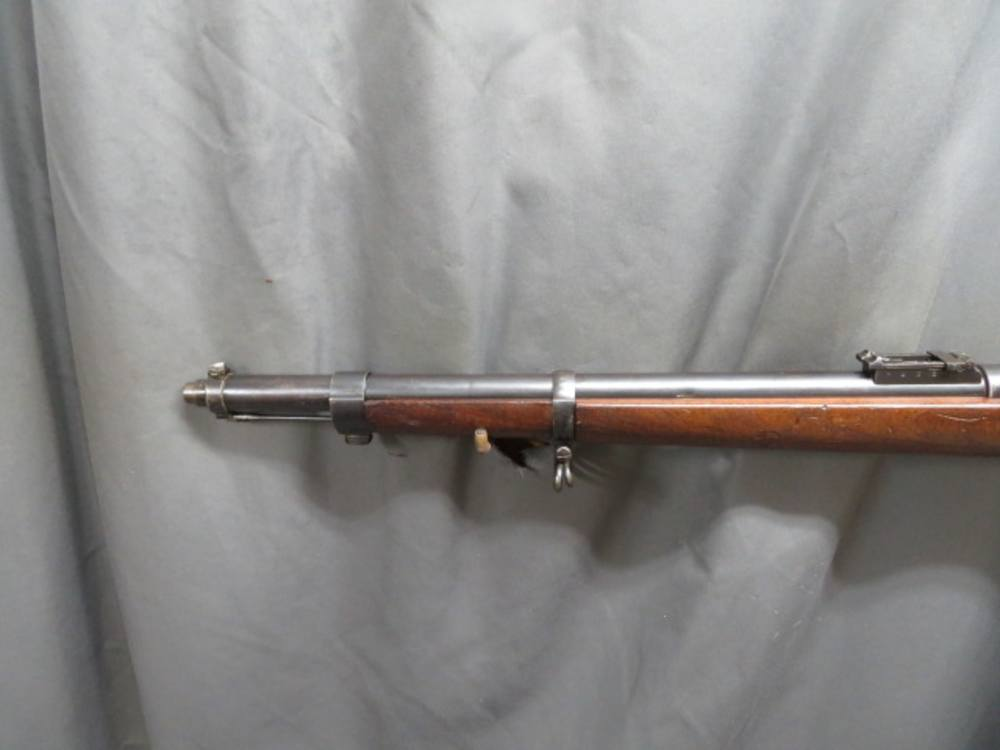
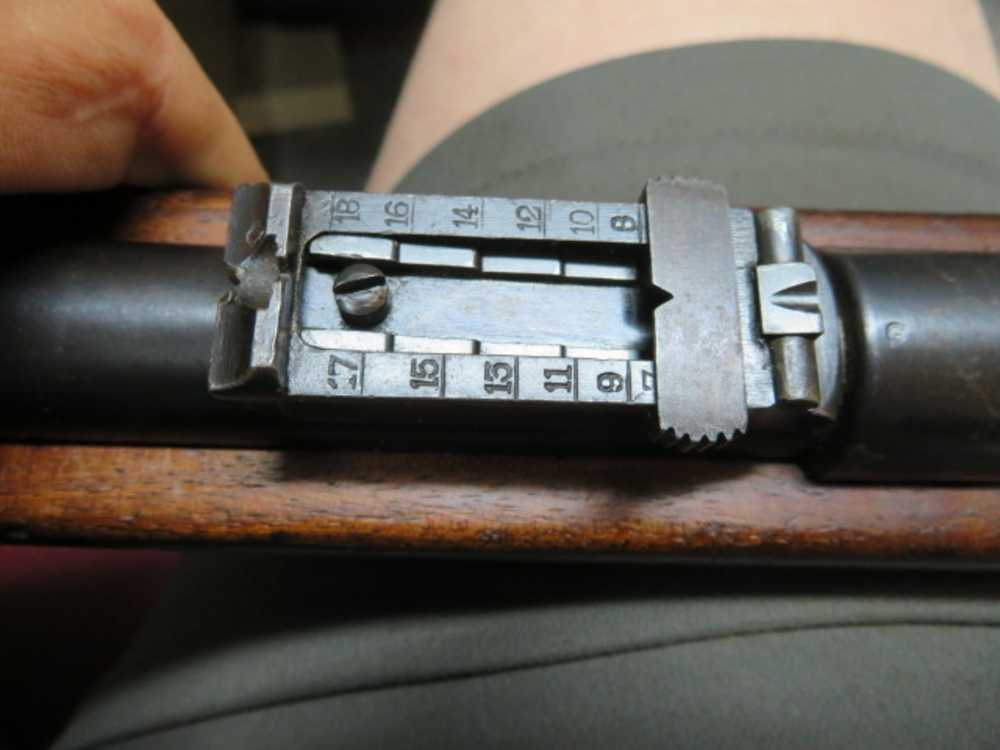
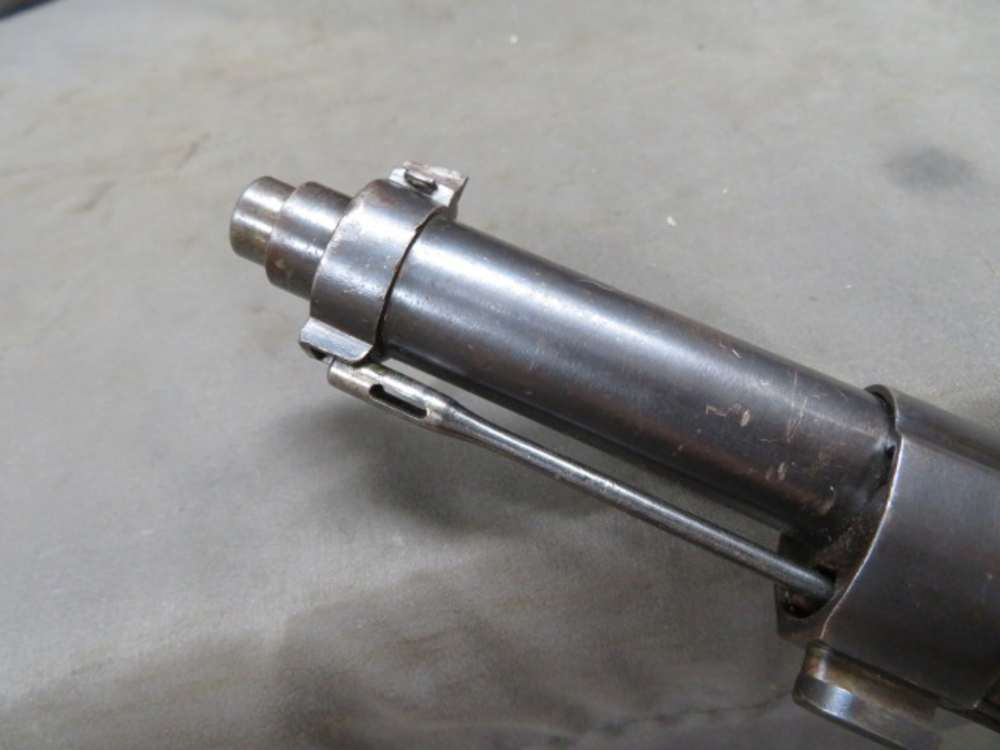
The Model 1889 was Belgium’s first smokeless-powder, Mauser-pattern service rifle, adopted in 1889 and chambered for the 7.65x53mm Mauser cartridge — a round that went on to arm several other nations’ militaries as well. Alongside the full-length rifle, Belgium fielded shorter carbine variants for cavalry, artillery, and other mounted or specialized troops. The Model 1889/16 (often written 89/16) is the 1916 standardized carbine pattern: existing 1889-family carbines were converted and new ones built to a common wartime specification. This example carries markings tying it to Belgium’s WWI-era arms production rather than the original 1889 rollout alone.
Origins: An Early, Distinctive Mauser Design
The 1889 action predates the more famous Mauser 98 pattern and shows it: rather than a fixed integral box magazine of later Mauser style, the Belgian rifle uses a distinctive sheet-steel magazine housing that holds a five-round single-column box of cartridges. Rounds are stripped down from a charger (stripper clip) inserted at the top of the action; once the rounds are seated, the empty clip is discarded from the top — it does not drop through the magazine floor. The magazine’s hinged floorplate is there for cleaning and unloading access, not as an en-bloc drop path (that Mannlicher-style arrangement belongs to a different family of designs). The basic design was developed with involvement from Mauser but was manufactured in Belgium under arrangements distinct from the German factories producing Mauser’s own service rifles.
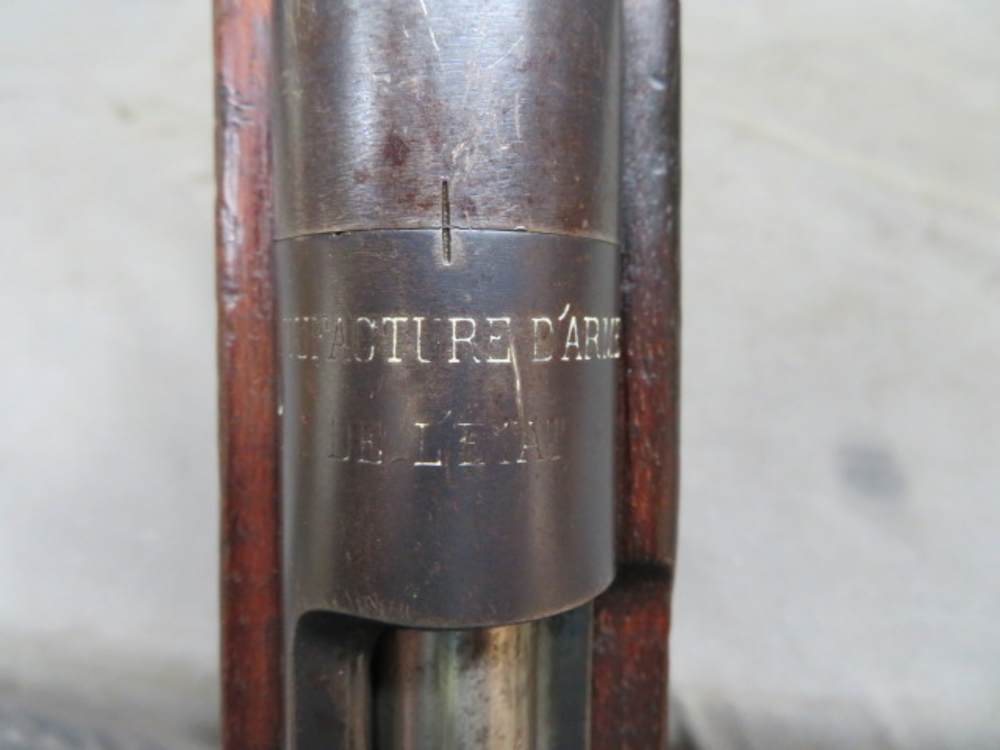
Built at Herstal, Marked ‘Manufacture d'Armes de l'État’
Belgian military Mausers were produced both by the private consortium that became Fabrique Nationale (FN) and by Belgium’s own state arsenal, the Manufacture d’Armes de l’État, both based in Herstal near Liège. This carbine carries the state arsenal’s markings rather than FN’s, reflecting production through Belgium’s government arms-making apparatus. Precise production figures for later carbine variants aren’t well documented in open sources, but Belgian Mauser production overall ran into the hundreds of thousands across rifle and carbine patterns combined.
Service Through Two World Wars — and Exile Production
Belgian troops carried 1889-pattern rifles and carbines into both World War I and, in updated forms, World War II, making the design a mainstay of Belgian service for decades. When German forces occupied Belgium in 1914, Liège and the home factories fell under occupation; Belgian government production, conversion, and repair of 1889 and 1889/16 arms continued in exile rather than as occupation-run work inside Belgium. Wartime standardization of the carbine (the /16 program) is associated especially with conversion and assembly work centered on Calais; Belgian refugee workmen also operated an État Belge arsenal effort in Birmingham, and the United States firm Hopkins & Allen built 1889-pattern rifles under Belgian contract. Carbine variants dated to the war years — like this one — reflect that exile-era need to arm cavalry, machine-gun crews, and other troops who couldn’t carry a full-length rifle. Exact wartime production circumstances for individual batches aren’t always fully documented.
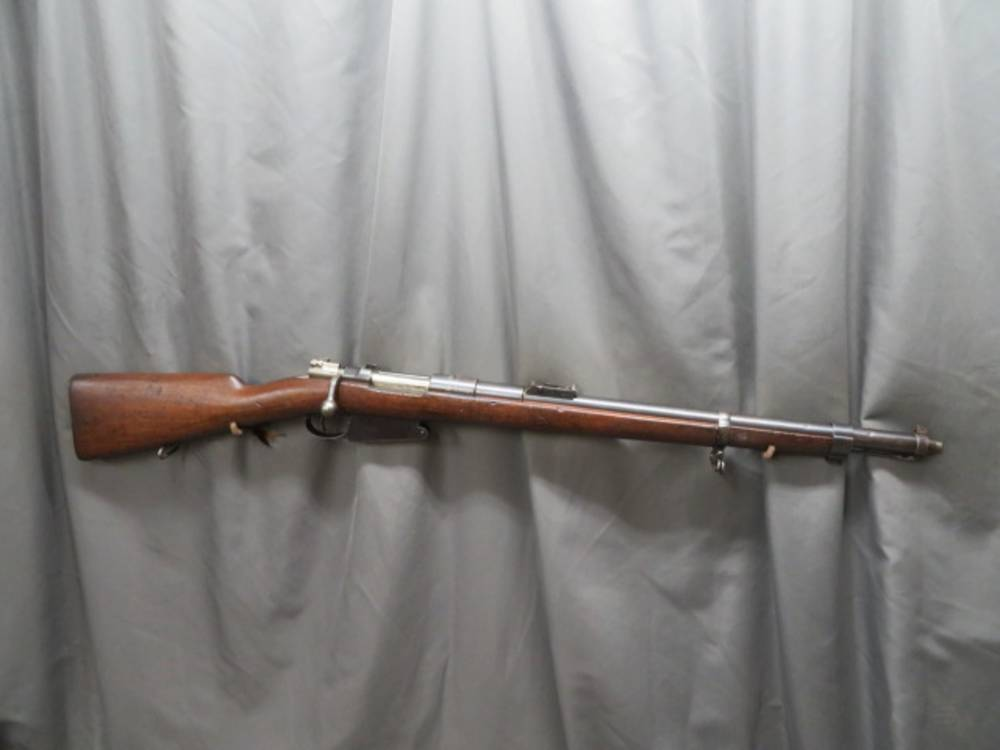
A Less Common Import to the US
Belgian Mausers reached American shores in smaller numbers than their German or other European counterparts, arriving primarily through the surplus and collector arms trade rather than any major postwar import program. Because Belgium’s 7.65x53mm chambering never became a common commercial cartridge in the United States, surviving examples are more often kept as collector pieces than as shooters, which has helped preserve original military markings and finish on rifles and carbines that do turn up.
Cousin to Other Early Smokeless Mausers
The Belgian 1889 pattern shares its era and general concept with other early smokeless Mauser-derived rifles adopted around the same period, such as the Turkish and Argentine Mausers, though each nation’s contract rifles carry their own distinct markings, calibers, and magazine details. For collectors, a state-arsenal-marked, matching Belgian carbine like this one offers a tangible link to a design that armed Belgian soldiers through the upheaval of two world wars, from the trenches of WWI to the German invasion of 1940.