Origins and Background
How Argentina replaced its German-made Model 1891 with a Gewehr 98-pattern Mauser, and the carbines, sniper rifles and home-built versions that followed
Argentina Before 1909
During the 19th century, Argentina imported rifle designs such as the Remington Rolling Block and the Model 1891 Mauser in 7.65x53mm. The Model 1891 was made in Germany. Martin K. A. Morgan, writing in American Rifleman, calls it "an innovative and successful rifle."
The Duclos Commission and the DWM Contract
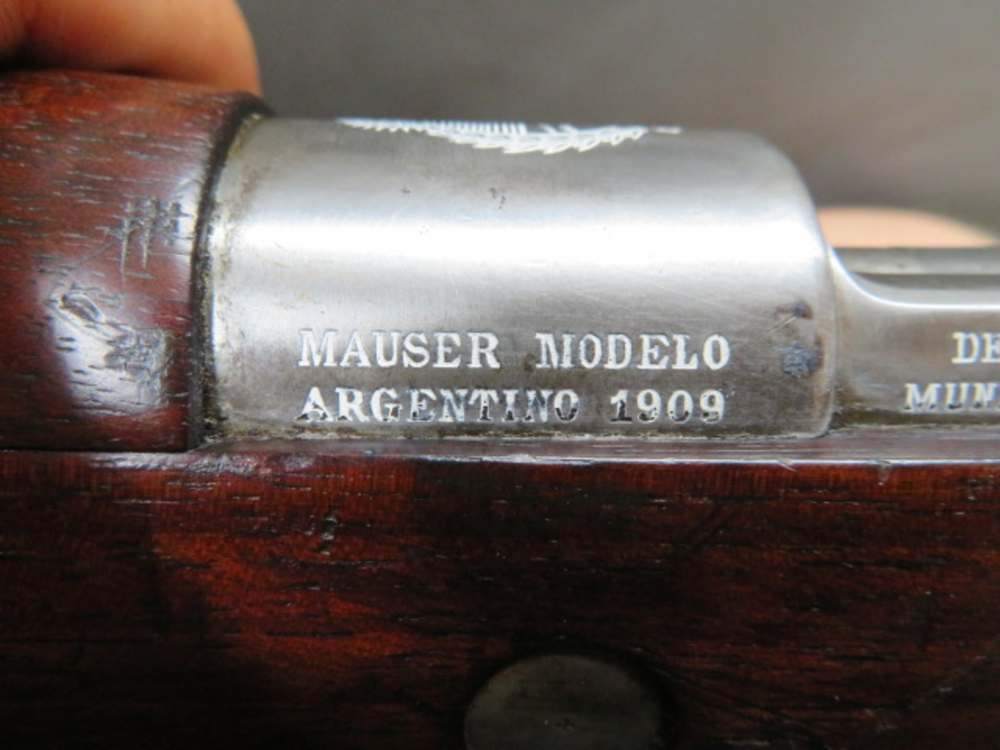
On Jan. 5, 1909, according to American Rifleman, the government in Buenos Aires established a second Technical Arms Commission to Europe and appointed Gen. Juan Felipe Duclos its president. Morgan writes that Duclos "basically ordered a slightly modified 7.65×53 mm Gewehr 1898 incorporating the various functional and safety improvements introduced after 1893." Hugo Corradini, writing for Armas.es, dates the first contract to Jan. 20, 1909. Argentina adopted the rifle in 1909.
The first rifles were ordered from the German firm Deutsche Waffen- und Munitionsfabriken, known as DWM. American Rifleman puts DWM's deliveries between November 1909 and May 1912 at 210,000, most of them full-length rifles with a 29-inch barrel; other references give lower totals.
A Gewehr 98 With Argentine Changes
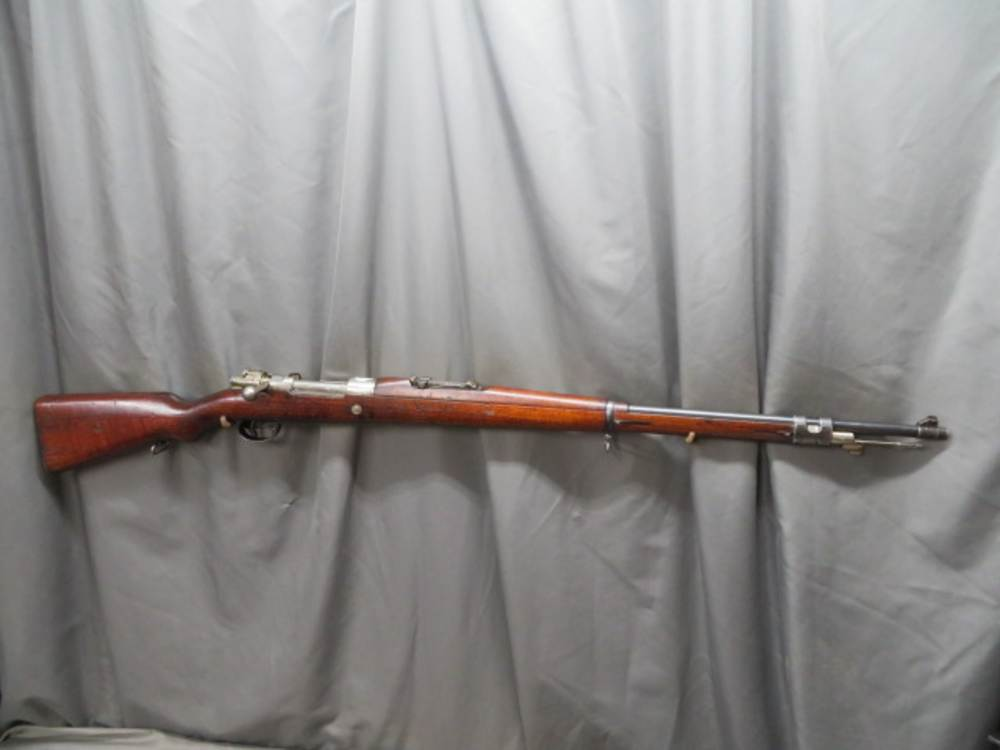
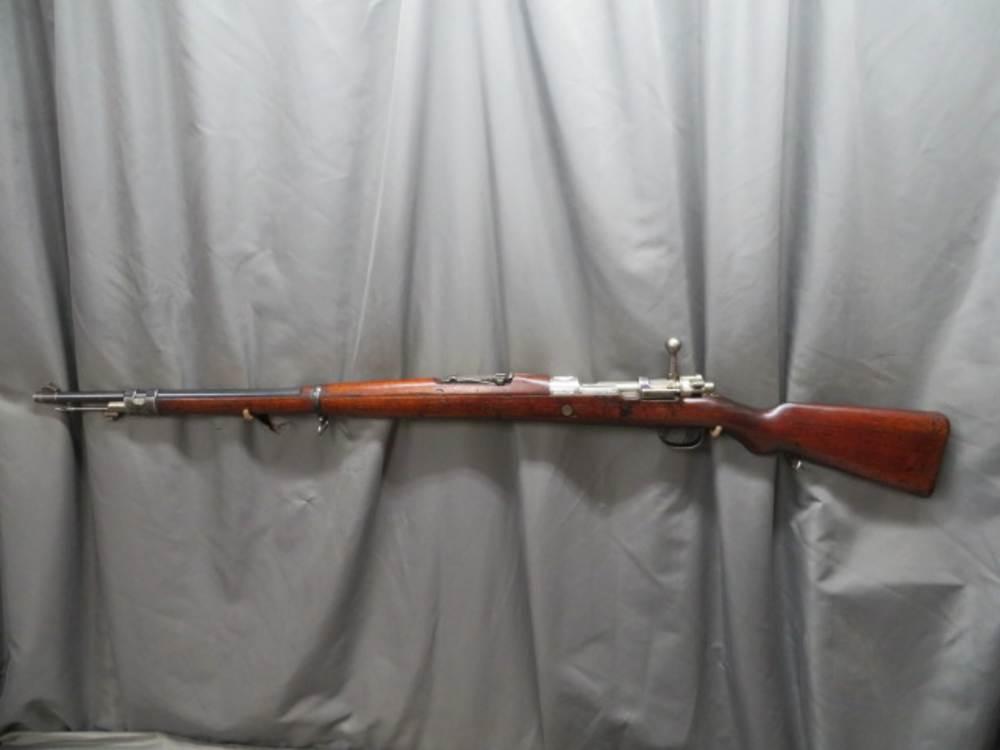
The Model 1909 is a Gewehr 98-pattern bolt-action rifle designed for the Argentine Army, and it was produced in both Germany and Argentina. American Rifleman lists the Gewehr 1898 features Argentina wanted, among them the "cock-on-open bolt, non-rotating extractor, gas-relief holes and safety lug." The rifle holds five rounds in an internal magazine loaded from stripper clips.
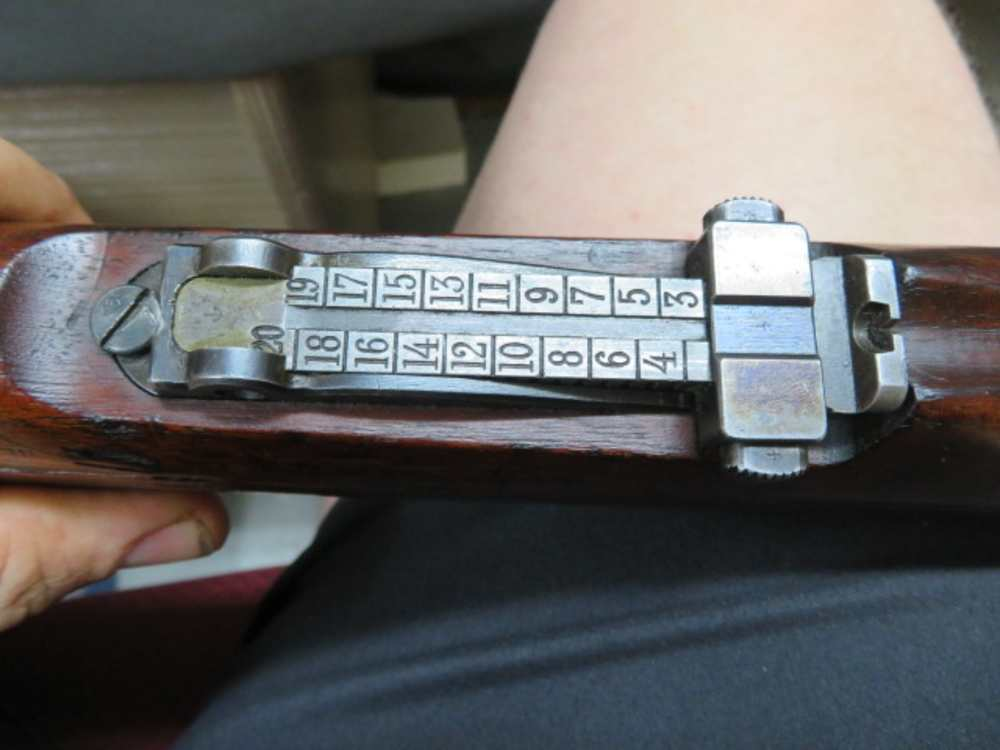
One change from the German rifle was the rear sight. The Gewehr 98's Lange Visier sight was replaced by a tangent-leaf sight, which on the rifle is graduated to 2,000 meters. The Model 1909 could use Argentina's existing Model 1891 bayonets.
The Model 1909 kept the 7.65x53mm chambering of the Model 1891 before it. Rolando Mendez, writing for Full Aventura, says that along with the new rifle Argentina adopted a 7.65 cartridge similar to the earlier one but with a pointed, 154-grain bullet.
Carbines and Sniper Rifles
The Model 1909 family included an infantry rifle, a sniper rifle, a cavalry carbine and a mountain carbine, also called the engineers carbine.
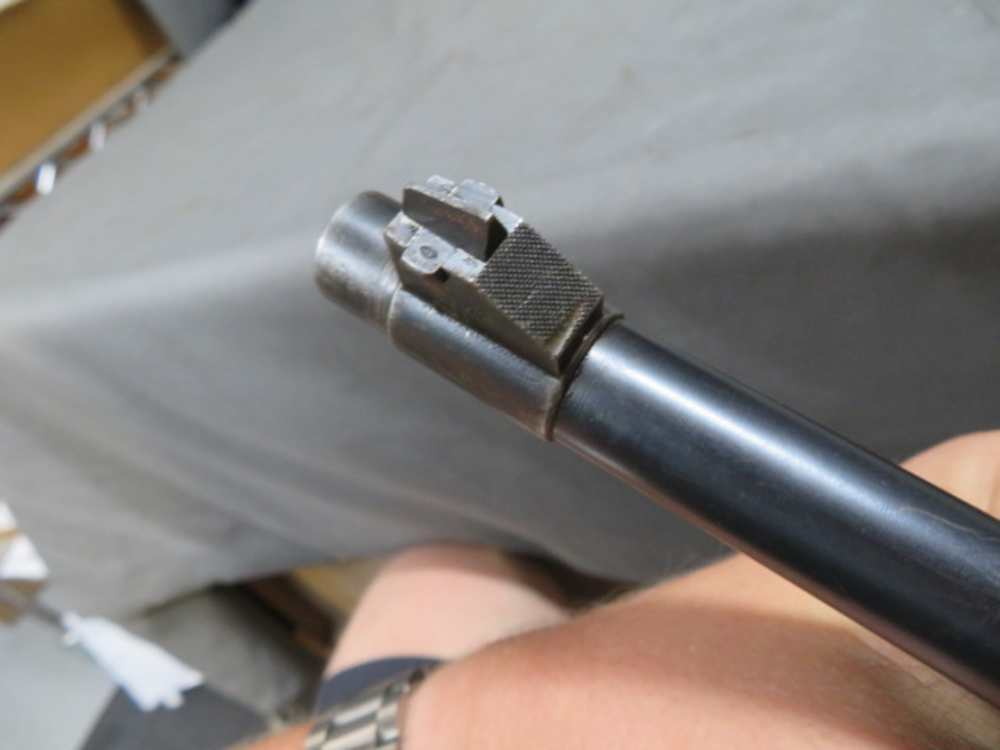
The cavalry carbine is a shortened version with a straight-grip stock and a forecap that covers the whole barrel, and its bayonet attaches under that forecap. American Rifleman describes it with a 21.9-inch barrel, a rear sight graduated to 1,400 meters and a turned-down bolt handle, and reports that Argentina ordered 30,000 of them.
Ian McCollum of Forgotten Weapons writes that in 1913 Argentina bought 500 telescopic sights to make sniper rifles. He identifies the scopes as 3x fixed-power types made by SOM in France, and he notes that their mount is very similar to the late World War I pattern the French Army used on the Lebel. Another reference describes a sniper version with a German-made scope and a bent-down bolt handle.
World War I and Production at Home
World War I cut Argentina off from its German supplier. According to American Rifleman, between the mobilizations of August 1914 and the armistice of November 1918, Argentina could not order guns or ammunition from DWM. Morgan writes that this made the Argentine government choose "a path that eventually led to the establishment of domestic production."
In 1941 a law created the Dirección General de Fabricaciones Militares (DGFM), an autonomous entity under Argentina's Ministry of War. American Rifleman says domestic production of the Model 1909 was eventually established by the DGFM at its small-arms factory, the Fábrica Militar de Armas Portátiles (FMAP), in Rosario. American Rifleman also states that the FMAP in Rosario "ultimately manufactured the Fusil Mauser Argentino Modelo 1909."
The version that went into production at the FMAP in 1947 was, in Morgan's words, "much like the old Model 1909 cavalry carbine." He reports that the DGFM produced 19,072 of these Model 1909/47 carbines. Writing in Shooting Illustrated, Morgan adds that the German-made Model 1891s were ultimately phased out of active service when Argentina began licensed domestic production of the Model 1909.
Further Reading
- Argentine Mauser Model 1909 (Wikipedia)
- I Have This Old Gun: Argentine Model 1909/47 Carbine (American Rifleman, Martin K. A. Morgan)
- When Argentina Had To Choose a New Service Rifle (American Rifleman, Martin K. A. Morgan)
- Classic Guns: The 1891 Argentine Mauser (Shooting Illustrated, Martin K. A. Morgan)
- Argentine Model 1909 Infantry Rifle (Mfg by DWM) (Milsurps.com)
- Argentina's Slightly French Model 1909 SOM Sniper (Forgotten Weapons, Ian McCollum)
- Fusil Mauser Modelo Argentino M1909: un rifle de calidad y con grandes acabados (Armas.es, Hugo Corradini)
- 7,65 mm Mauser (Full Aventura, Rolando Mendez)
- Argentine Mauser Rifle 1909 Modelo Argentino (Militariarg.com)
- Fábrica Militar de Armas Portátiles Domingo Matheu (Wikipedia, Spanish)
- Ley 12709 (Argentina.gob.ar)
A Peruvian Cousin
Peru had its own Mauser Model 1909. Between 1910 and 1914, Peru received Mauser Model 1909 rifles chambered in 7.65 Mauser. They were closer copies of the Gewehr 98 and kept its Lange Visier sight, where the Argentine rifle used a tangent-leaf sight.
Half a Century in Service
Argentina used the Model 1909 in 7.65mm during the first half of the 20th century. In American Rifleman's account, when Argentina gave up the Model 1909 in favor of the FN FAL, the Mauser "had served for half a century."
Morgan also describes how "the Argentine military began the process of finding a replacement for the obsolete bolt-action Mauser rifles." In September 1955, an assessment of the Johnson, the StG44 and the Garand was placed on hold so that the FN FAL could be evaluated, and Argentina went on to adopt the FAL. In 1960 the DGFM began domestic production of the FAL at FMAP Domingo Matheu, the name given to the Rosario small-arms factory.