A Repeater for Larger Cartridges
A Browning design that brought large rifle cartridges to Winchester’s repeating-rifle line
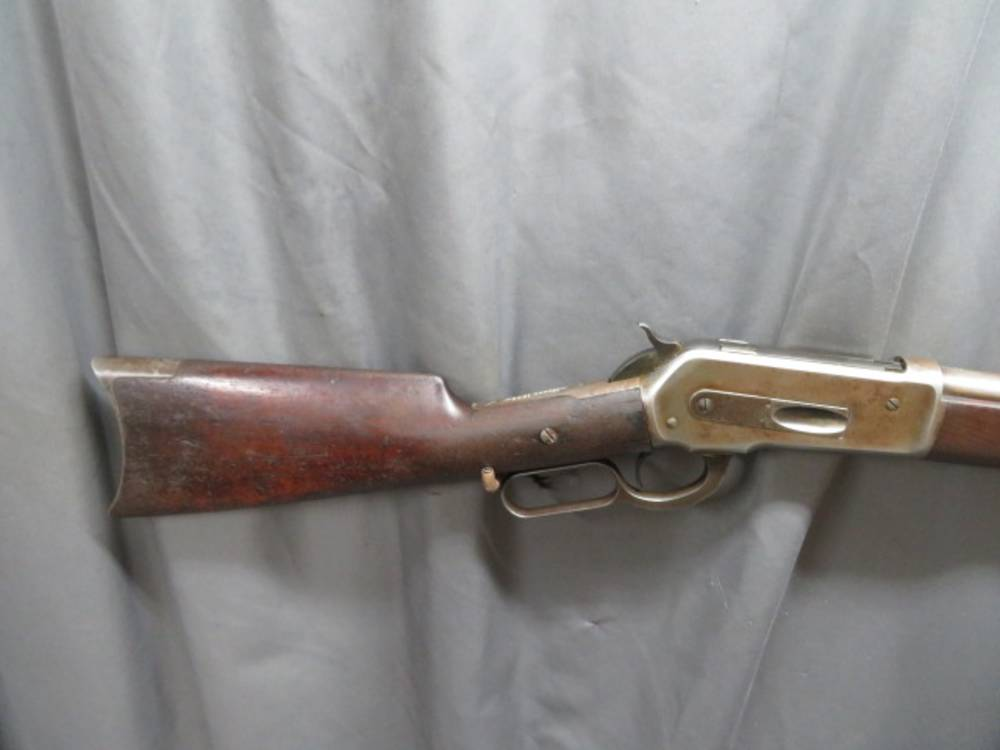
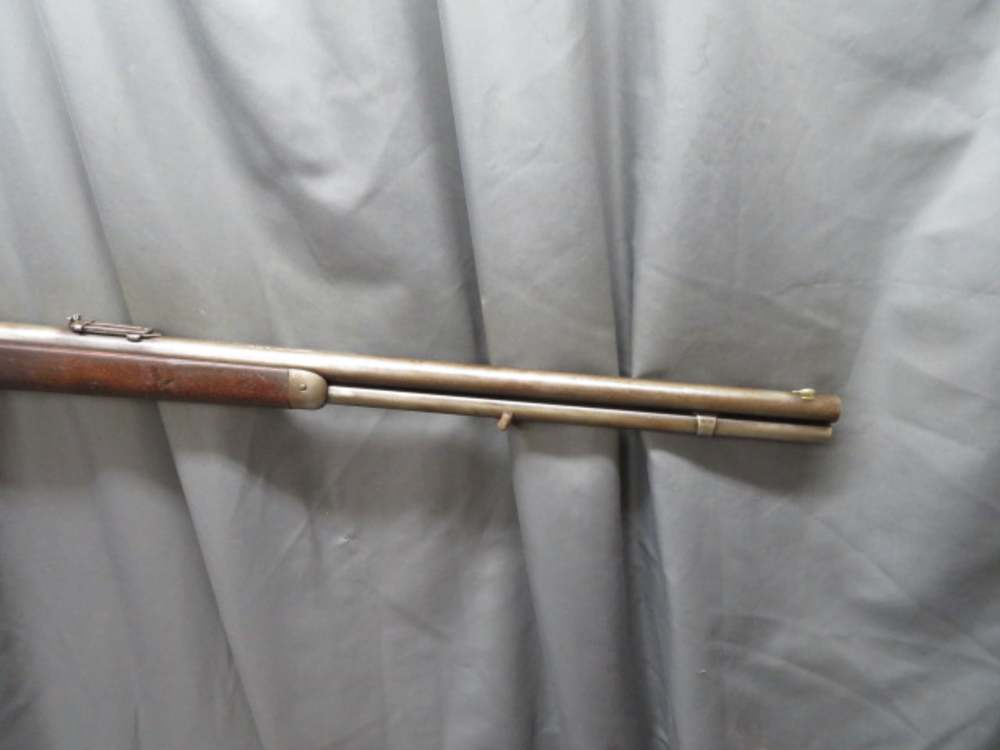
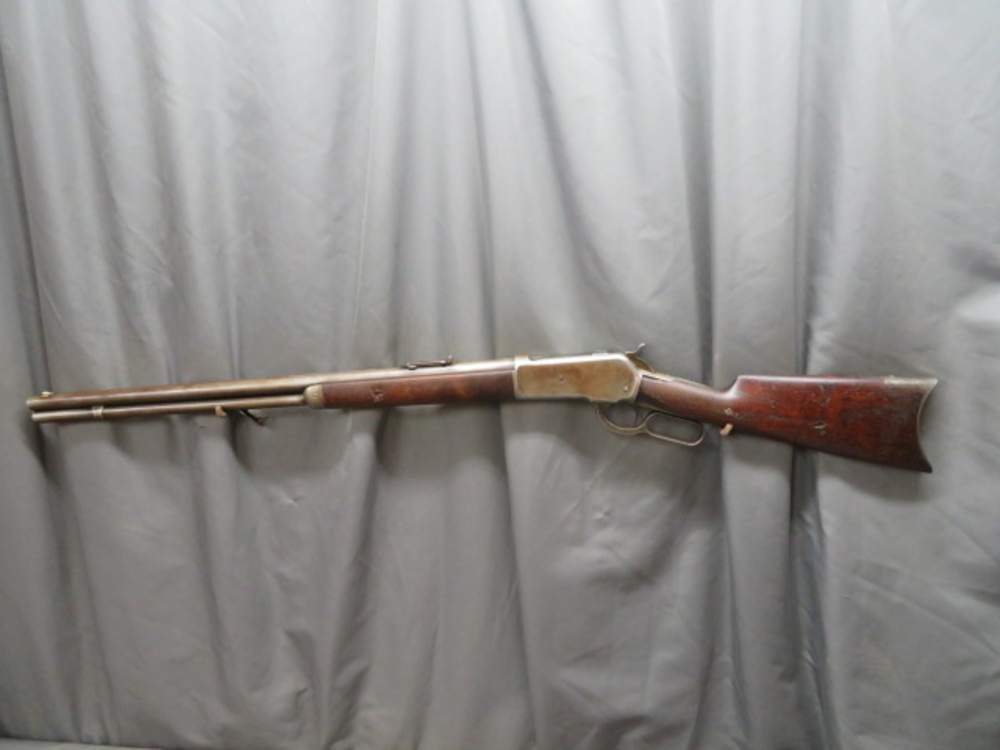
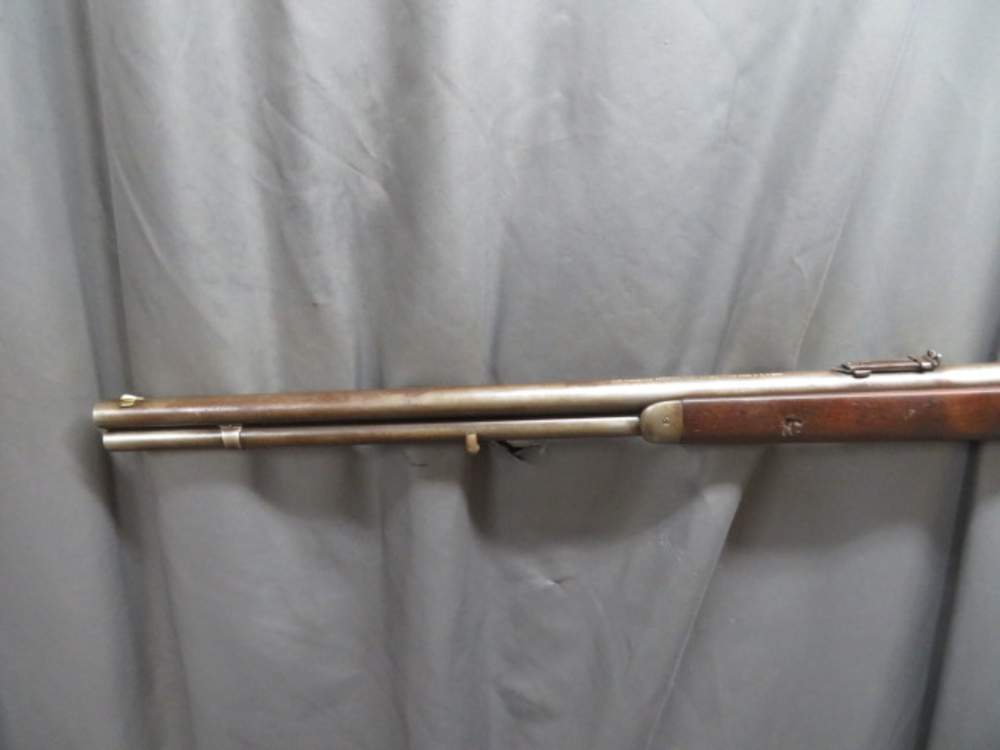
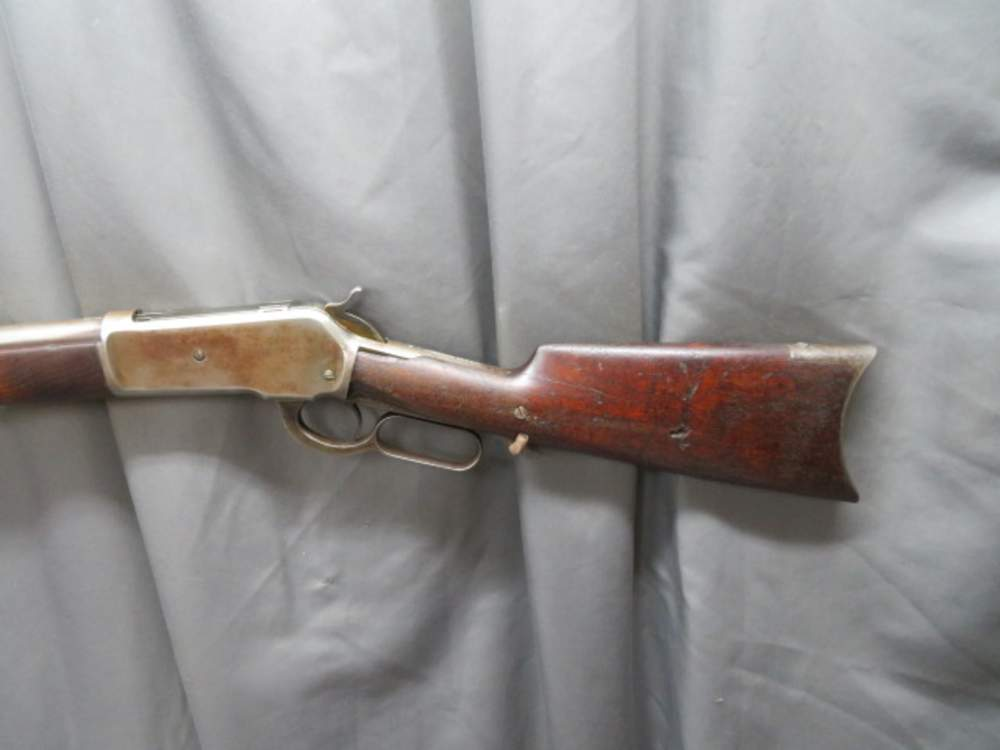
Winchester introduced the Model 1886 commercially in 1886 to accommodate large rifle cartridges, including .45-70 Government. It answered a limitation of the earlier Model 1876: according to American Rifleman’s historical account, that rifle’s receiver could not accommodate the length of .45-70 Government. The new model addressed demand for a repeating rifle capable of handling longer, powerful cartridges. Its introduction belongs to the story of Winchester’s commercial development; the supported history here concerns its manufacture and civilian use.
Browning’s Locking Design
John Moses Browning designed the rifle and delivered his patented repeater to Winchester in New Haven in October 1884. His “Magazine fire-arm” patent, granted on October 14 that year, described two locking bolts moving vertically within the receiver. The Model 1886 replaced Winchester’s earlier toggle-link arrangement with two vertically sliding locking members alongside the bolt that closes the rear of the barrel. Operating the lever also worked a carrier that fed cartridges from the tubular magazine into position for loading.
New Haven Manufacture and American Users
The original manufacturer was Winchester Repeating Arms Company of New Haven, Connecticut. Original production ran from 1886 to 1935, with nearly 160,000 rifles produced, according to NRA Museums. Winchester’s historical account describes American hunters, ranchers and lawmen using the Model 1886. It also identifies Theodore Roosevelt as a user during his Dakota cattle-ranching years. These accounts place the rifle in American sporting and frontier life, giving its large-cartridge design a context beyond the mechanical changes inside its action.
A Family of Configurations
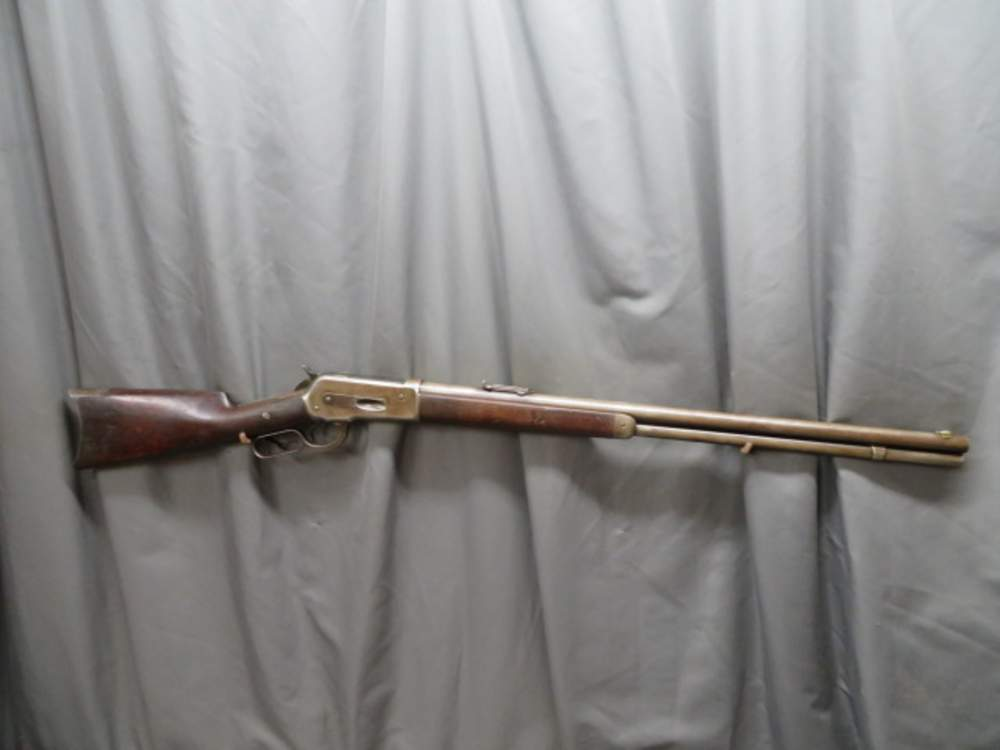
The Model 1886 family accommodated a range of cartridges. The Winchester Arms Collectors Association lists .45-70 Government, .45-90 WCF, .40-82 WCF, .40-65 WCF, .38-56 WCF, .50-110 Express, .38-70 WCF, .40-70 WCF, .50-100-450 Express and .33 WCF. That list does not mean every configuration was offered in every chambering. Original examples included takedown and extra-light configurations, while documented options included shortened magazines, pistol-grip stocks, specialized sights, engraving and stock carving. Such features describe the family’s variety rather than a single standard appearance.
Smaller Cousins and Modern Versions
The Winchester Model 1892 is a scaled-down relative, retaining two vertical locking members while accommodating smaller cartridges. Its resemblance to the Model 1886 therefore reflects a related design serving a different cartridge role. American Rifleman describes the Model 71, chambered in .348 Winchester, as a modified successor. Winchester describes the modern Model 1886 as substantially retaining the original action design, with changes. That qualified description connects the modern version to Browning’s design without treating its specifications as those of nineteenth-century examples.
Reading the Rifle Through Its Records
For collectors, the Model 1886 offers a combination of configuration variety, craftsmanship and documentary research. The Winchester Arms Collectors Association highlights special-order features and surviving factory records as reasons to study the family. Cody’s Firearms Records Office explains that early Winchester records can document caliber, barrel type, trigger type and special-order features. Customer identities are rarely present, so a factory record can help establish original configuration without identifying every later owner. That distinction makes the surviving rifle and its documentation complementary parts of understanding its history.