A Swedish Wartime Project

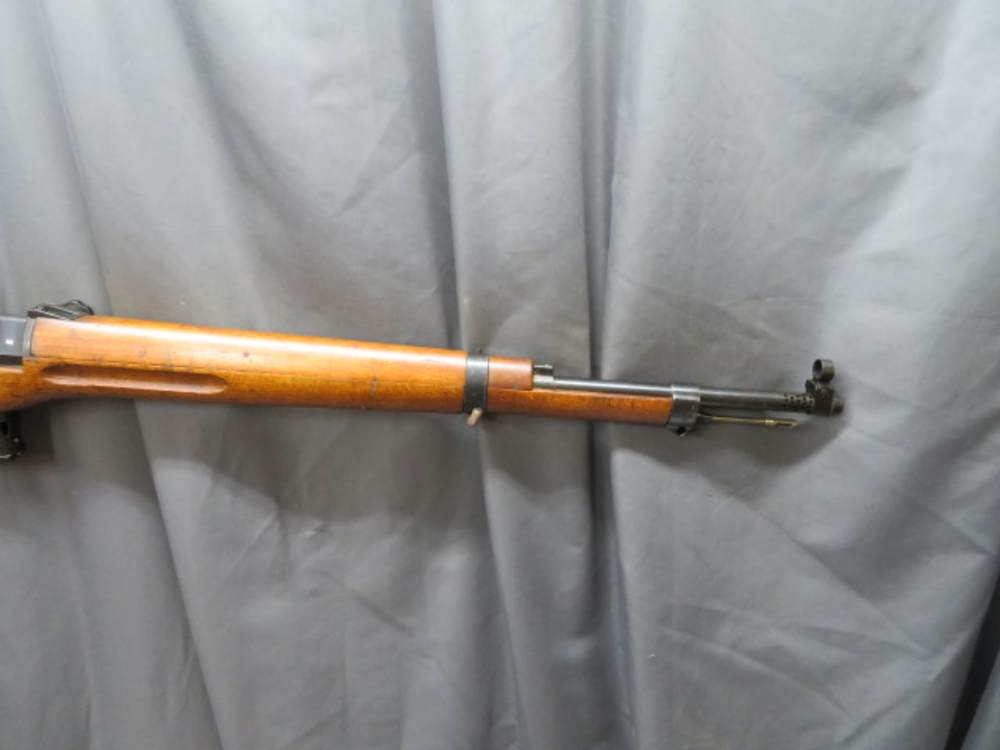
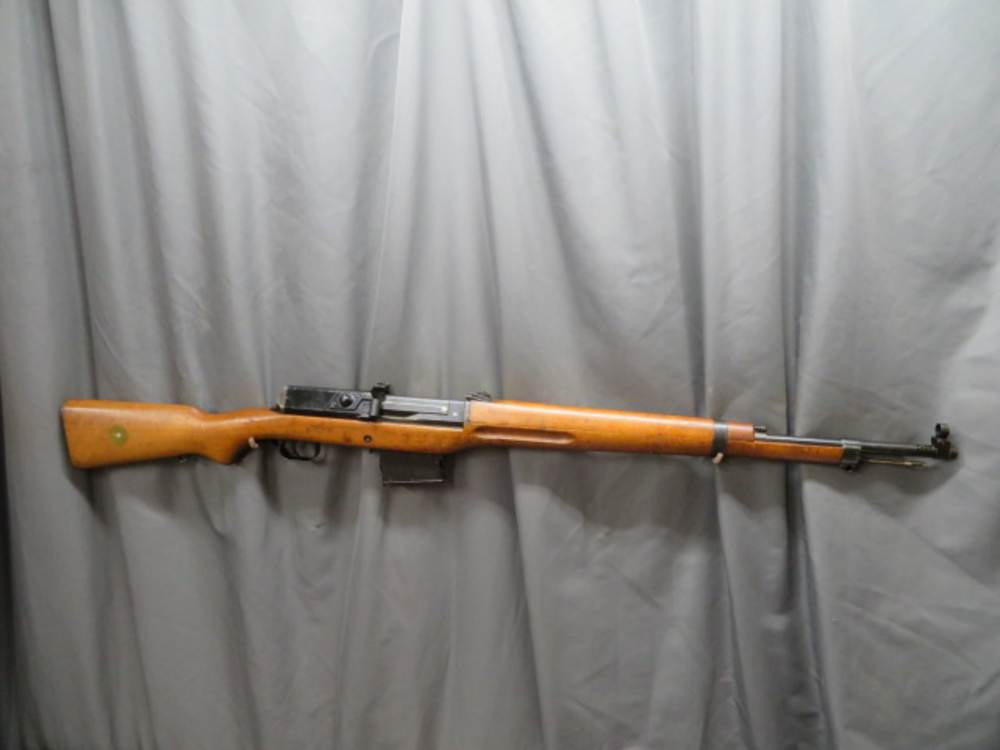
Swedish AG 42/B Ljungman Semi-Auto Rifle, photograph 1
Swedish AG 42/B Ljungman Semi-Auto Rifle, view 1. Photo property of Eisel Armory.

A wartime self-loading project shaped by modernization and international relatives

Sweden’s search for a self-loading infantry rifle included attempts in the late 1930s to convert existing bolt-action rifles. Trials later considered the Finnish Pelo design and a purpose-built rifle developed by Erik Eklund. The resulting Swedish rifle was introduced during wartime under the m/42 designation, although accounts differ on its precise acceptance, production and delivery chronology.

Eklund developed his rifle at Ljungmans verkstäder in Malmö, a company principally associated with petrol pumps. That development connection explains the Ljungman name. Production took place at Carl Gustafs Stads Gevärsfaktori in Eskilstuna, giving the rifle distinct development and manufacturing origins.
What Self-Loading Meant

Despite its Swedish designation, Automatgevär, the AG 42 is semiautomatic: each shot requires a separate trigger pull. It fires the 6.5×55 mm cartridge and uses a ten-round detachable magazine, normally replenished with stripper clips.

Its mechanism combines a tilting bolt with a tube that directs propellant gas against the bolt carrier. This arrangement is commonly described as direct gas impingement. The gas arrangement and bolt mechanism are central features for understanding the Swedish design and comparing it with its later relatives.

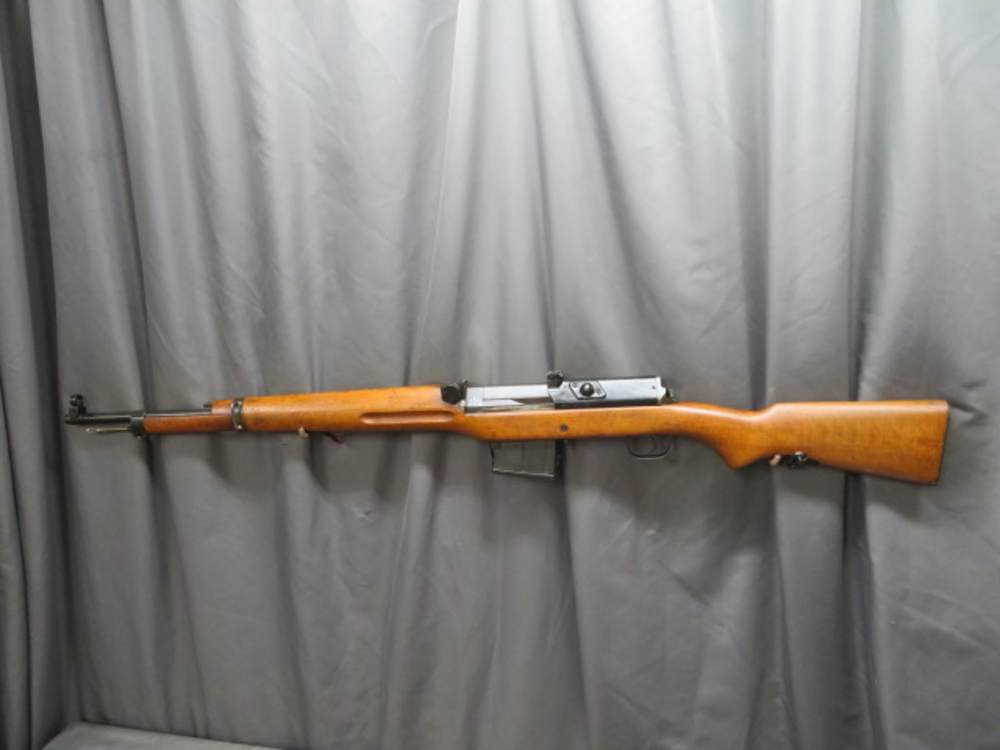
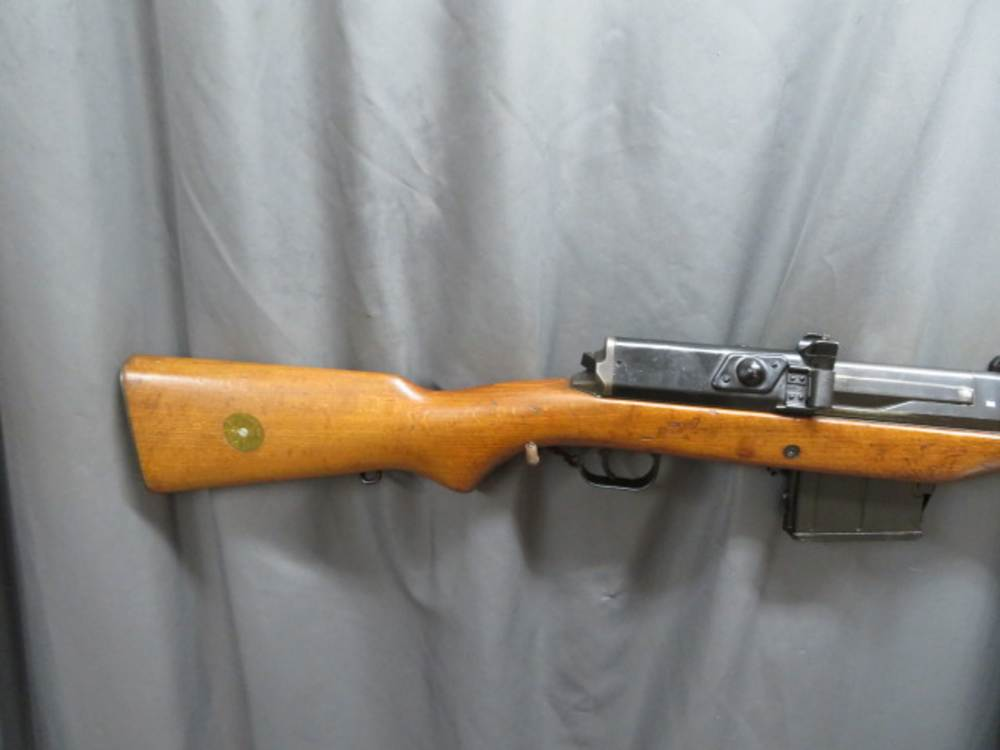
Swedish AG 42/B Ljungman Semi-Auto Rifle, photograph 2
Swedish AG 42/B Ljungman Semi-Auto Rifle, view 2. Photo property of Eisel Armory.

Alongside the Swedish Mauser

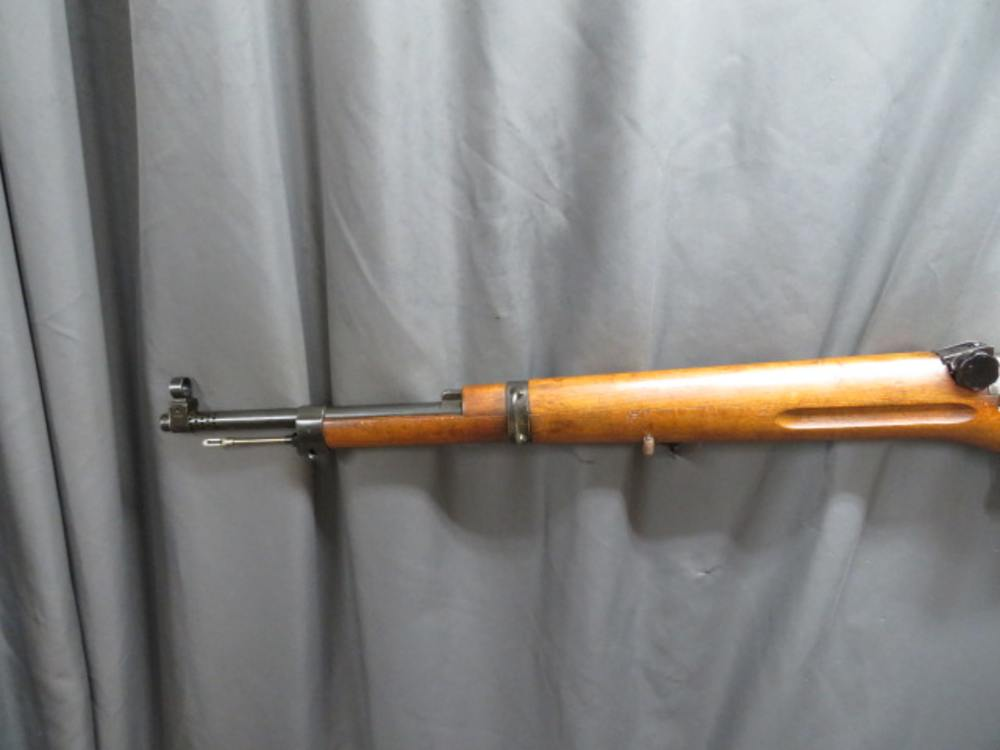
Swedish AG 42/B Ljungman Semi-Auto Rifle, photograph 3
Swedish AG 42/B Ljungman Semi-Auto Rifle, view 3. Photo property of Eisel Armory.

In Swedish military service, the Ljungman supplemented existing Swedish Mauser rifles rather than replacing them completely. Self-loading and bolt-action rifles therefore served alongside one another, placing the AG 42 within a broader change in Swedish infantry equipment.

The family was eventually superseded by the AK4, Sweden’s rifle based on the G3 design. Its service history spans the wartime introduction of a Swedish self-loading rifle, subsequent modernization and eventual replacement by another rifle family.

The AG 42B Modernization

Corrosion and magazine retention were among the weaknesses addressed by modernization. Forgotten Weapons dates the refurbishment program’s launch to 1953. Göta’s history identifies a corrosion-resistant replacement gas tube among the B improvements, connecting the update directly to one of the rifle’s reported problems.

Other changes included an additional front magazine catch, prominent gripping knobs on the bolt cover, a rubber case deflector and a replacement one-piece cleaning rod. The rear sight and its range dial were revised, and a dual-wire recoil spring was fitted. Forgotten Weapons reports that virtually all existing rifles received the updates, making surviving original-pattern examples unusual.

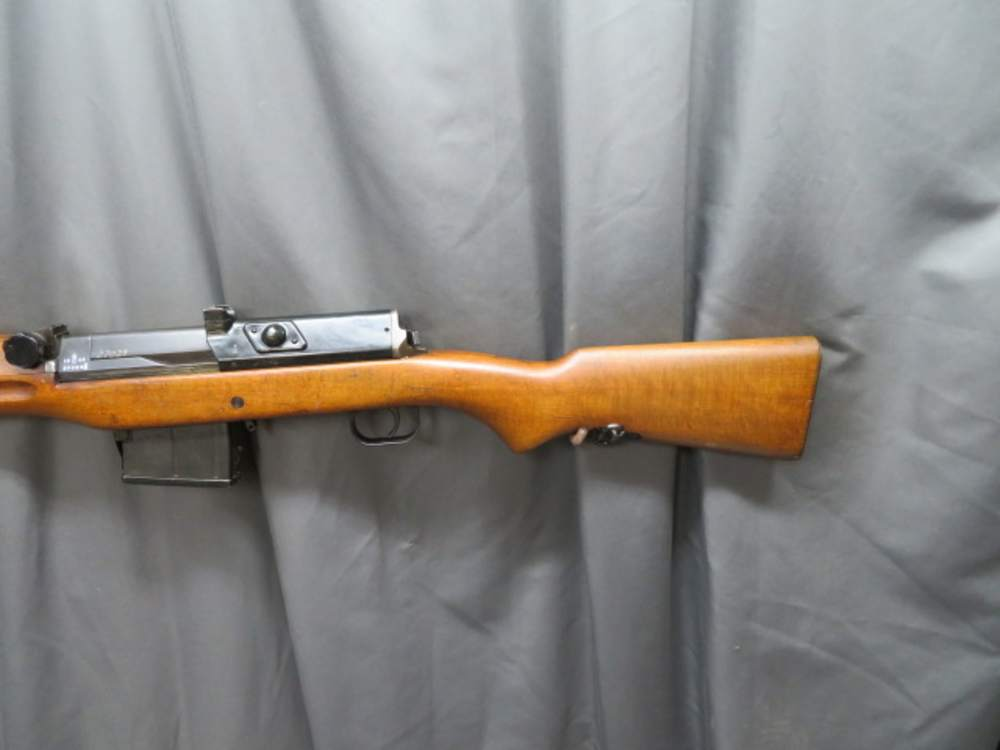
Swedish AG 42/B Ljungman Semi-Auto Rifle, photograph 4
Swedish AG 42/B Ljungman Semi-Auto Rifle, view 4. Photo property of Eisel Armory.

Egyptian and Danish Relatives

Swedish AG 42/B Ljungman Semi-Auto Rifle, photograph 5
Swedish AG 42/B Ljungman Semi-Auto Rifle, view 5. Photo property of Eisel Armory.

The design also developed beyond Sweden. With Swedish technical assistance, Egyptian production at Maadi Industries, or Factory 54, developed from the Swedish rifle. The Hakim and the shorter Rashid belong to this Egyptian branch. These relatives should be distinguished from Swedish AG 42B rifles when tracing the design’s history.

Denmark’s Madsen-Ljungman shared the Swedish action but differed in its sights, bayonet mounting, magazine, handguard and charging knobs. Forgotten Weapons describes roughly fifty rifles made for military trials; Armémuseum describes slightly more than fifty examples. The Danish trial program should be distinguished from military adoption.

Reading the Family’s History

Forgotten Weapons also documents an experimental Swedish conversion to 7.62×51 mm NATO, discussed in the context of replacement-rifle investigations beginning around 1954. It replaced the original gas arrangement with a short-stroke piston, although the reason for that change remains uncertain.

For collectors, the family connects Swedish wartime development, visible modernization changes and Egyptian and Danish derivatives. Recognizing original versus B features and distinguishing the related branches helps place a rifle within the broader history of the design.

Swedish AG 42/B Ljungman Semi-Auto Rifle, photograph 6
Swedish AG 42/B Ljungman Semi-Auto Rifle, view 6. Photo property of Eisel Armory.
×