Origins and Background
How a 1930 Soviet update of the tsar's Model 1891 became a wartime infantry rifle and the base for Soviet sniper rifles
The Model 1891 Parent Rifle
The 91/30 is a modernized Model 1891, so its story begins with the parent rifle. In 1889, three rifles were submitted for evaluation: Captain Sergei Mosin's "3-line" design, a "3.5-line" design from the Belgian designer Léon Nagant, and another 3-line design from a Captain Zinoviev. Three lines works out to 7.62 mm, or .30 caliber, and 3.5 lines to about 9 mm. According to the NRA National Firearms Museum, Mosin was an army officer and an employee of the Imperial Armory at Tula. After further study and testing, the committee combined Mosin's receiver and bolt, with its two large front locking lugs, with Nagant's clip-loaded magazine. The rifle was adopted in 1891, together with the 7.62mm Russian rimmed cartridge. It was ordered into production as the "3-line rifle M1891," and the family is primarily chambered for the 7.62x54mmR cartridge.
The Model 1891 was made at three Russian arsenals, Izhevsk, Sestroretsk and Tula, and Russia added an 1892 contract with the Châtellerault Arsenal in France. The NRA National Firearms Museum reports that during the First World War an additional 1.5 million Model 1891 rifles were produced in the United States by Remington Arms Company and New England Westinghouse. The parent rifle served in the Russo-Japanese War of 1904-05. The NRA National Firearms Museum also notes that American soldiers used the Model 1891 in the Siberian Expedition of 1918-20.
The 1930 Modernization
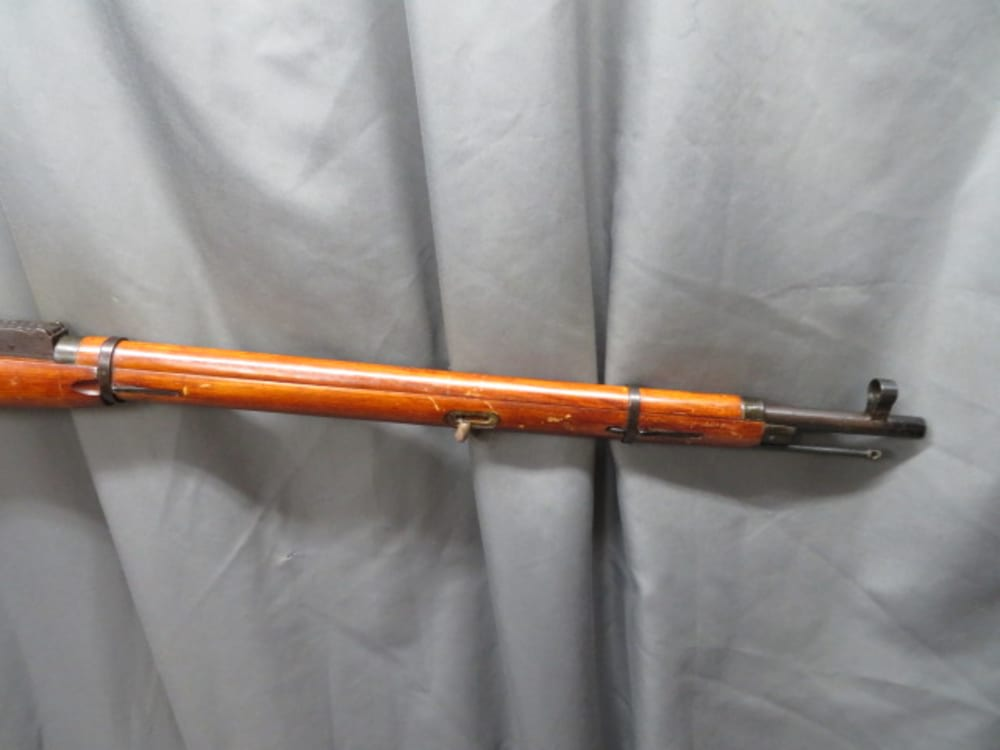
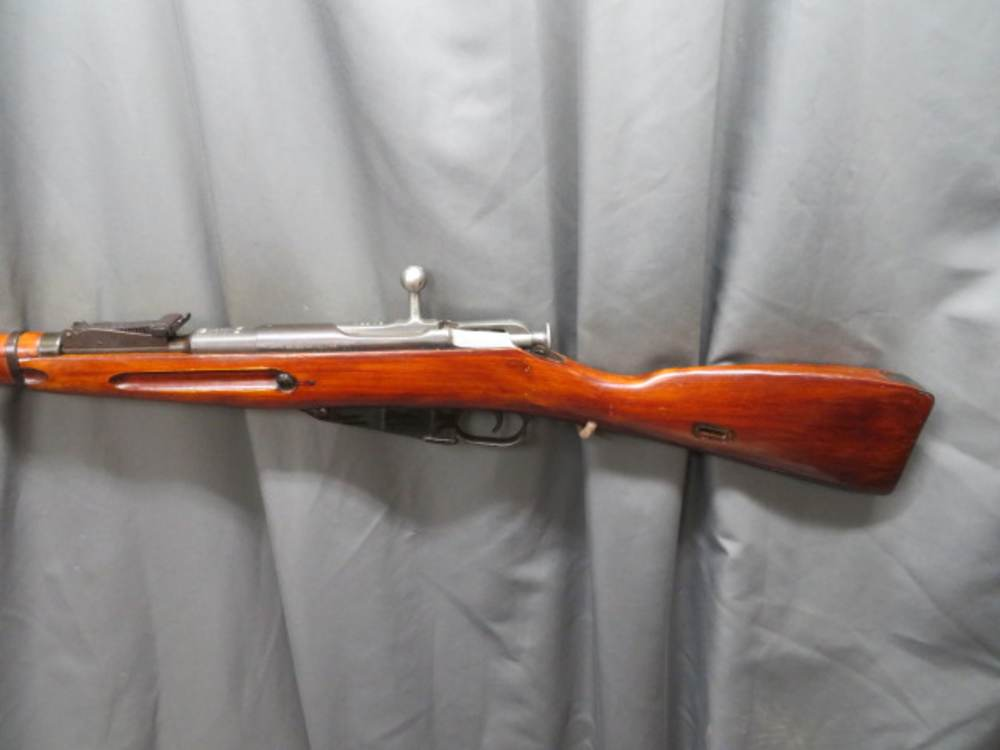
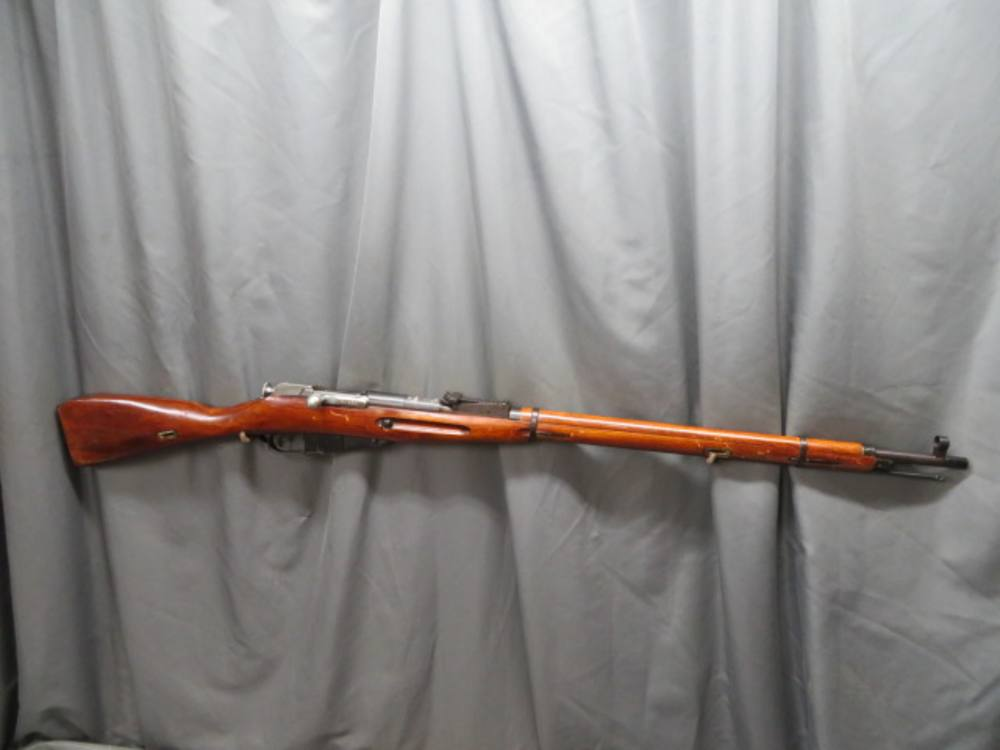
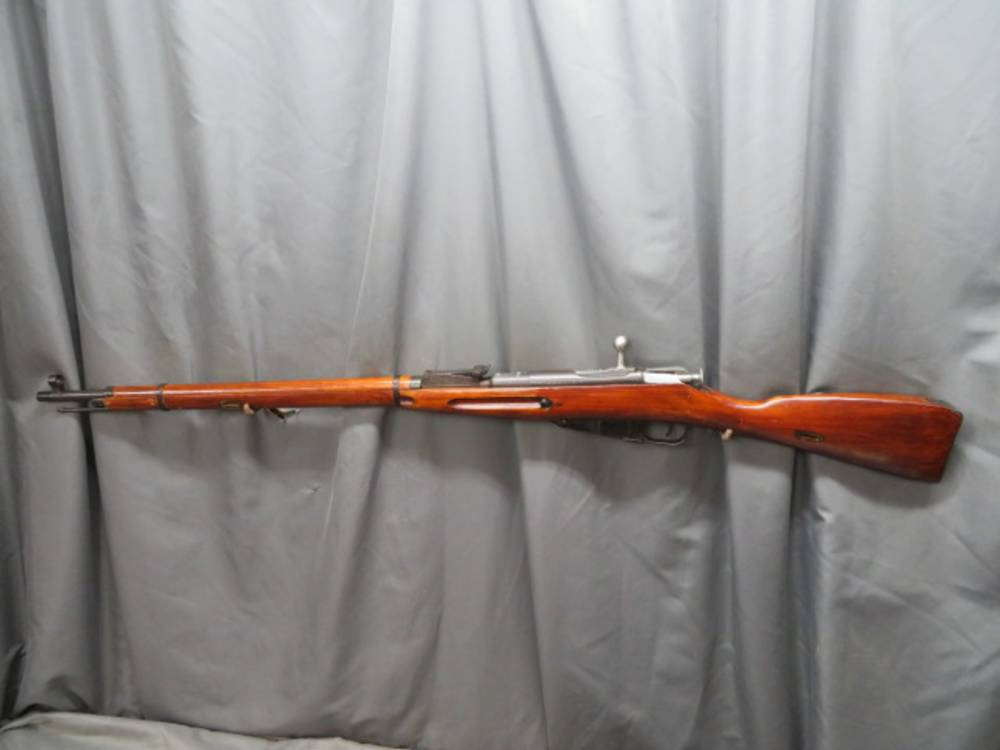
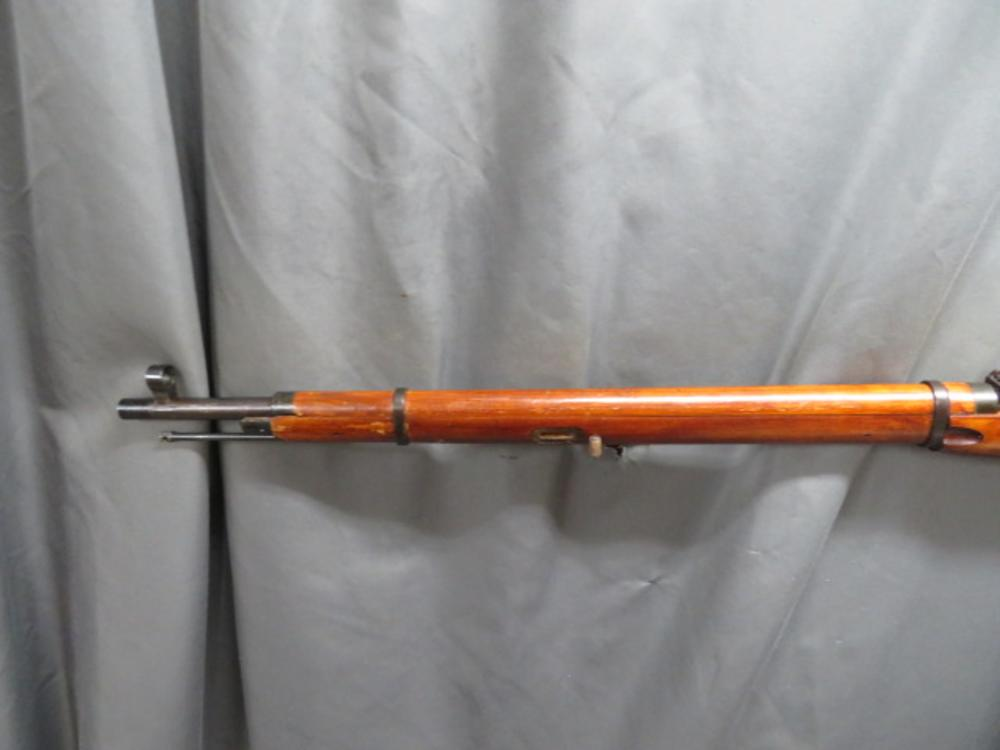
In 1924, following the victory of the Red Army, a committee was set up to modernize the rifle. That work led to the Model 91/30, based on the design of the original dragoon version of the rifle. One reference gives its official name as the "7,62 mm Rifle, Model of the Year 1891-30," and the new rifle was introduced in 1930. The sight markings were converted from arshins to meters, and one reference describes the rear sight leaf as graduated from 1 to 20, representing hundreds of meters. The front sight blade was replaced by a hooded post that was less likely to be knocked out of alignment. The barrel is about 73 cm (28.7 in) long.
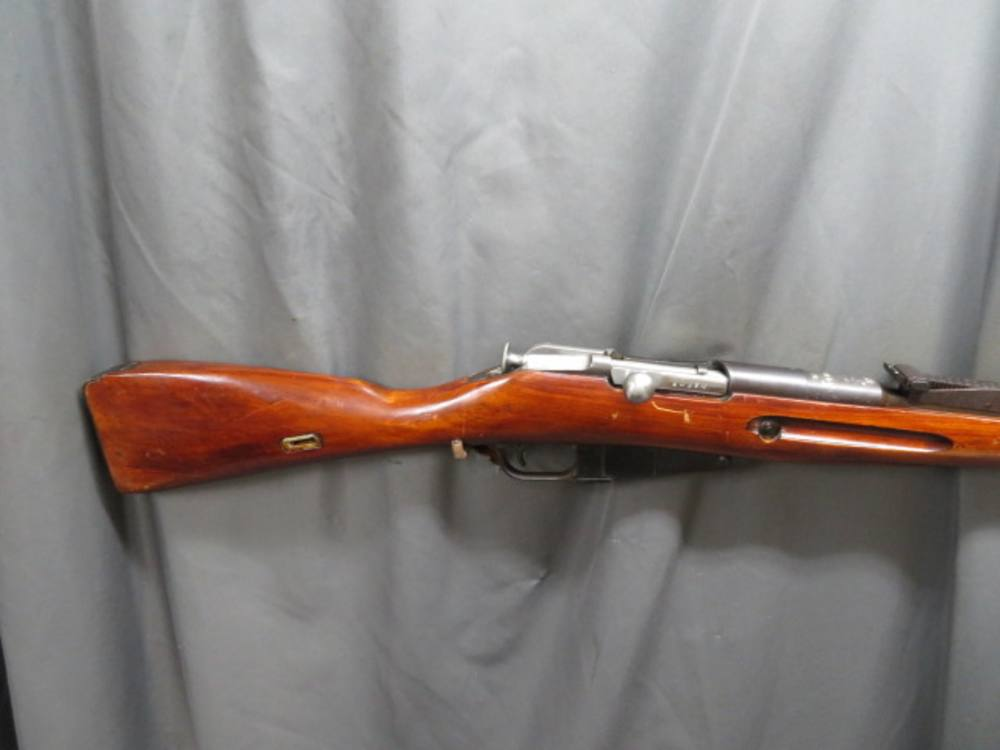
The barrel bands became split bands retained by springs. Early 91/30s kept the hexagonal receiver; the round receiver replaced it in 1935-1936, at Izhevsk in 1935 and at Tula in 1936. One reference gives the rifle's weight as about 8 3/4 lb and its overall length as 48 1/2 in.
Factories and Wartime Production
The 91/30 was made at the Tula and Izhevsk arsenals. According to one reference, Tula ended 91/30 production in July 1940 and switched to making the SVT-40 rifle. The same reference says the factory was evacuated to Mednogorsk in October 1941, and that from 1942 to 1944 a newly created factory in Tula, Factory No. 536, made the 91/30. Main production ended in 1944-45. Another reference calls the 91/30 the most prolific version of the Mosin-Nagant and says it was produced for standard issue to all Soviet infantry from 1930 to 1945. That reference credits the whole Mosin-Nagant family, not the 91/30 alone, with over 37 million rifles produced since 1891.
When war with Germany broke out, the need to produce rifles in vast quantities led to simpler machining and a rougher finish. Wartime rifles show tool marks and rough finishing. One reference adds that during the war the stock's rear sling-slot fitting was eliminated and the front one was reduced to a sheet-metal liner, to save material and labor. In the words of Shooting Times, 91/30s "served in huge numbers" during the Second World War.
Sniper Rifles
The 91/30 also became the basis for Soviet sniper rifles. PE-scoped sniper rifles appeared in 1931-32. Guns & Ammo reports that the 4x PE scope entered service in November 1931 and that the modernized PEM was made from 1937 to 1940 and again from 1942 to 1943. Forgotten Weapons reports that experience in the Spanish Civil War exposed a weakness in the PE's adjustable focus ring, and that the PE was replaced by the PEM, which dropped that feature. Early sniper optics drew on German assistance before Soviet factories took over production.
The PU scope was introduced for the SVT, and it went onto the 91/30 from 1942. Guns & Ammo dates PU production from 1941. American Rifleman describes the 3.5x PU as shorter-bodied and of slightly less power than the earlier scopes, but lighter, with simple, easily adjusted elevation and windage drums. Forgotten Weapons reports that an Izhevsk engineer named Kochetov designed a mounting system that was adopted in August 1942. PU sniper production began at both Tula and Izhevsk in late 1942.
Guns & Ammo writes that rifles selected for sniper use were chosen based on their accuracy when tested at the factory. Sniper rifles had a longer bolt handle, turned down to clear the scope when the bolt is opened. Wartime PU production ended at Tula in May 1944 and at Izhevsk in December 1944. Published totals disagree sharply. American Rifleman puts PU-equipped rifles at between 185,000 and 200,000 over the type's service life, Forgotten Weapons says close to 400,000 had been built by the end of 1944, and other accounts give lower figures.
According to one reference, many Soviet sniper rifles were converted to standard infantry rifles after the war by removing the scopes and mounts, welding plugs into the mount holes, patching or replacing the stocks, and replacing the bent bolt handle. Forgotten Weapons says the 91/30 PU remained the Soviet standard sniper rifle until the SVD Dragunov replaced it in the 1960s.
Relatives: The M38 and M44 Carbines
Two carbines belong to the same Mosin-Nagant family but are separate types, not versions of the 91/30. The M38 carbine was adopted in 1938. The M44, adopted in 1944 and issued to Red Army infantry troops from February of that year, is an M38 with a slightly modified forearm and a permanently mounted cruciform bayonet that folds to the right.
Further Reading
- Mosin–Nagant, Wikipedia
- Винтовка Мосина, Russian Wikipedia
- Mosin Nagant Model 1891 Bolt Action Rifle, NRA National Firearms Museum
- Mosin 91/30 PU: Soviet Standard WW2 Sniper's Rifle, Forgotten Weapons
- Mosin-Nagant 91/30 PU Sniper (Video), Forgotten Weapons
- The Genesis Of Sniping, Part 6: Soviet Sniping, 1939-1945, American Rifleman
- Searching for the Best World War II Sniper Rifle: Part 3, Guns & Ammo, Dave Emary
- Mosin-Nagant 91/30, Shooting Times, Richard Venola
- Mosin Nagant PU 7.62x54R—Soviet Sniper, Athlon Outdoors
- Soviet M91/30, 7.62x54r.net
- A Brief Overview of the Mosin-Nagant Rifle, 7.62x54r.net
- Mosin Nagant Rifle Years of Production, 7.62x54r.net
- PU mod.1942 sniper rifle | m9130.info
- Manufacturers and production numbers | m9130.info
- Repair depot modifications | m9130.info
- Hungarian 48M Sniper Mosin (aka M52), Forgotten Weapons
Postwar Service and Use Abroad
One reference says the Soviet army kept M91/30 rifles and M38 and M44 carbines in service until the end of the 1950s, and that district repair depots repaired rifles in service, some of which were refinished several times. Another reference says the Soviet Union supplied arms, including M91/30s, to the Republican forces in the Spanish Civil War, and that a number of Soviet M91/30s were given to Romania after the Second World War, where they were relegated to training. Finland used a number of captured M91 and M91/30 rifles with minimal modifications, the M91 being the Model 1891 parent.
Forgotten Weapons reports that the Hungarian military adopted the M91/30 as the 48M rifle, that production began at FEG in 1950, and that 213,990 rifles of the 91/30 type were made by 1954. The 48M is a Hungarian-made relative, not a Soviet 91/30. For the Mosin-Nagant family as a whole, the NRA National Firearms Museum notes that Mosin-Nagant long arms were used by North Korean and Chinese People's Liberation Army troops during the Korean Conflict, and that the sniper version continued in service with North Vietnamese and Viet Cong forces through the French and US wars in Vietnam.