Origins and Background
How Arthur Savage's hammerless lever action went from rejected military trial muskets to a sporting rifle made for most of the twentieth century
Arthur Savage and His Company
The rifle family traces back to Arthur W. Savage, who was born in Kingston, Jamaica, in 1857. According to American Rifleman, he was "schooled in England, ran cattle in Australia, and ended up in Utica, N.Y." American Rifleman also reports that on April 5, 1894, the Savage Repeating Arms Co. was formed in Utica to market a rifle he designed. According to Gun Tests, the Savage Arms Company was formed in 1897 and began producing the rifle itself in 1899.
The Trial Muskets
According to James R. Johnson in the American Society of Arms Collectors Bulletin, Arthur Savage introduced his Model 1892 lever-action musket more than two years before his company was formed. The musket was submitted to the US Army's magazine-rifle trials of the early 1890s, which ended in adoption of the Krag. Johnson writes that "the Savage musket was rejected, along with 47 other entrants, in favor of the Krag rifle." By his description, the 1892 muskets have 30-inch barrels and eight-shot rotary magazines, weigh a little over 10 pounds and are chambered for the .30-40 Krag. He adds, "There may have been only a dozen of these muskets made."
Johnson also describes an improved Model 1895 musket, with a 28-inch barrel and a more streamlined receiver, that was submitted to the New York State trials. Relaying an article by Gilbert E. Newton, he writes that the Savage musket was declared the winner unanimously. Johnson adds that the Winchester Repeating Arms Corporation claimed the trials had been unfairly conducted. Under political pressure, Johnson writes, New York "caved in and agreed to reject the Savage magazine gun and to accept surplus U.S. single-shot muskets." Citing research by Savage Arms historian John Callahan, he reports that 96 muskets and four carbines were made to Model 1895 specifications. Johnson also states that all Model 1895 muskets were built by Marlin.
The Model 1895
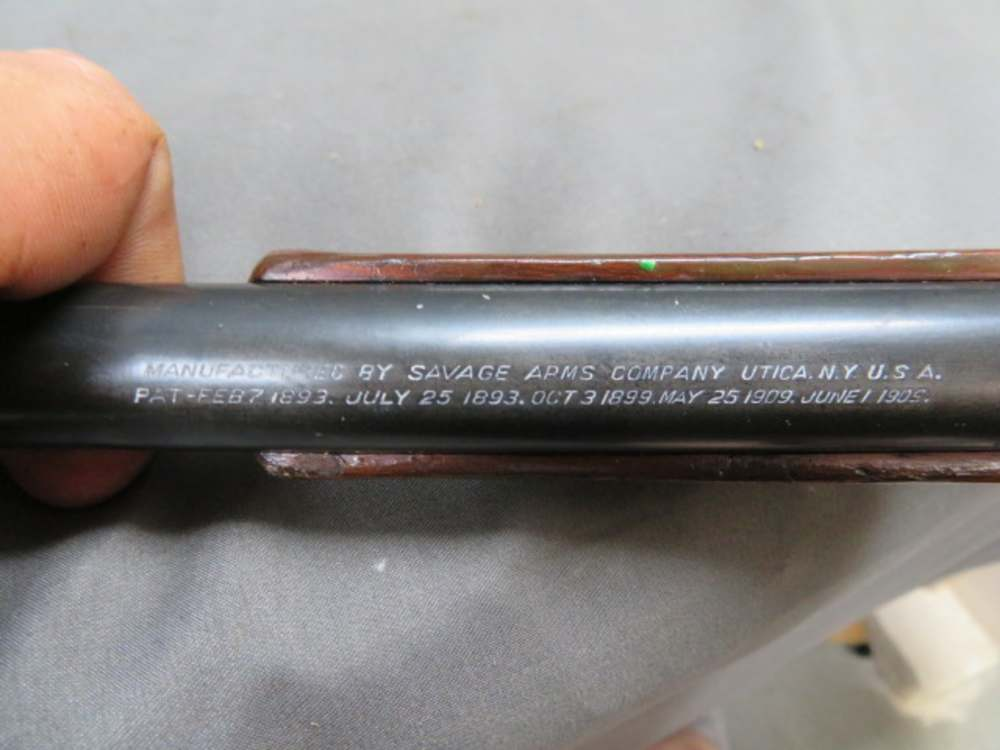
Savage took the design to the commercial sporting market as the Model 1895, which was manufactured under contract in New Haven, Connecticut, by Marlin. Gun Digest's Rick Hacker notes that this arrangement explains the "JM" stamp on the rifles' barrels. HistoryNet reports that Marlin "rolled out 5,650 of them," and other accounts give different figures. American Rifleman calls the Model 1895 "the first hammerless lever-action," and Hacker calls it "the world's first hammerless lever-action." According to one reference, it used a five-shot rotary magazine, as did the later Model 1899 and early Model 99.
The .303 Savage cartridge was introduced with the Model 1895, and one reference says the rifle was at first available only in that chambering. HistoryNet's George Layman describes the .303 Savage as "wholly different from the .303 British military cartridge" but similar to the Winchester .30-30, though the two were not interchangeable.
The Model 1899
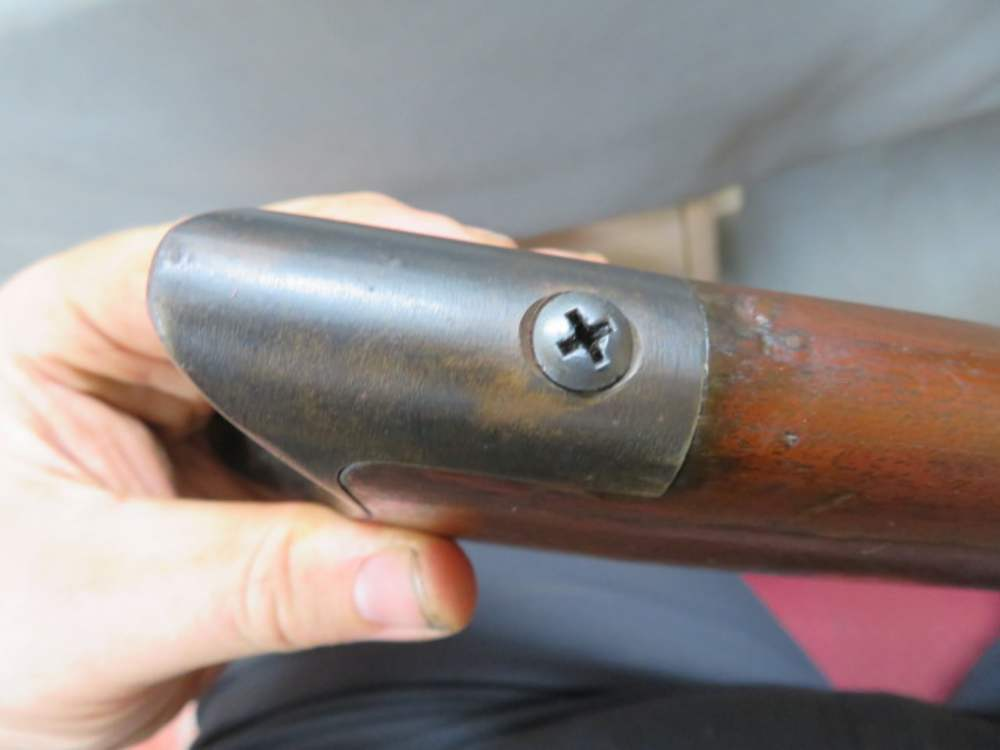
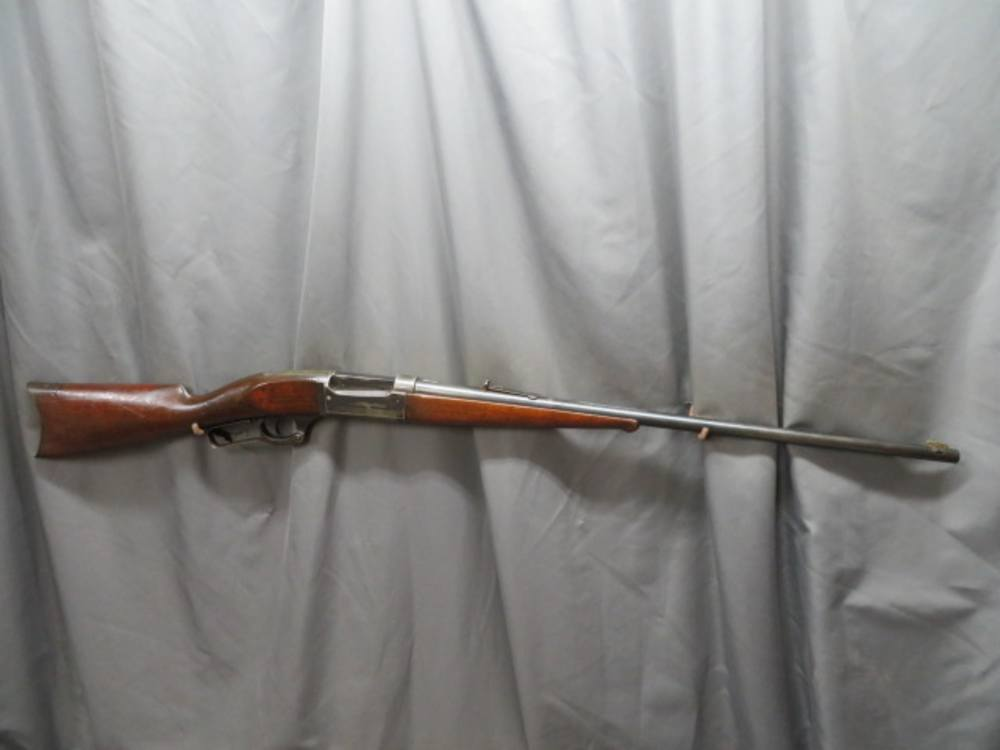
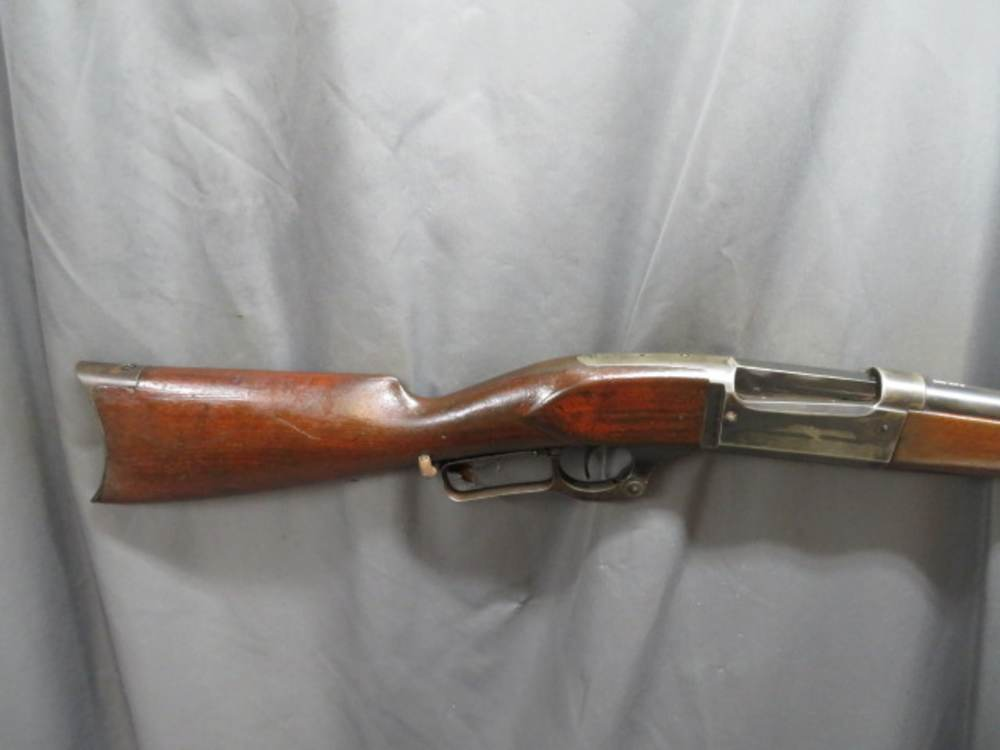
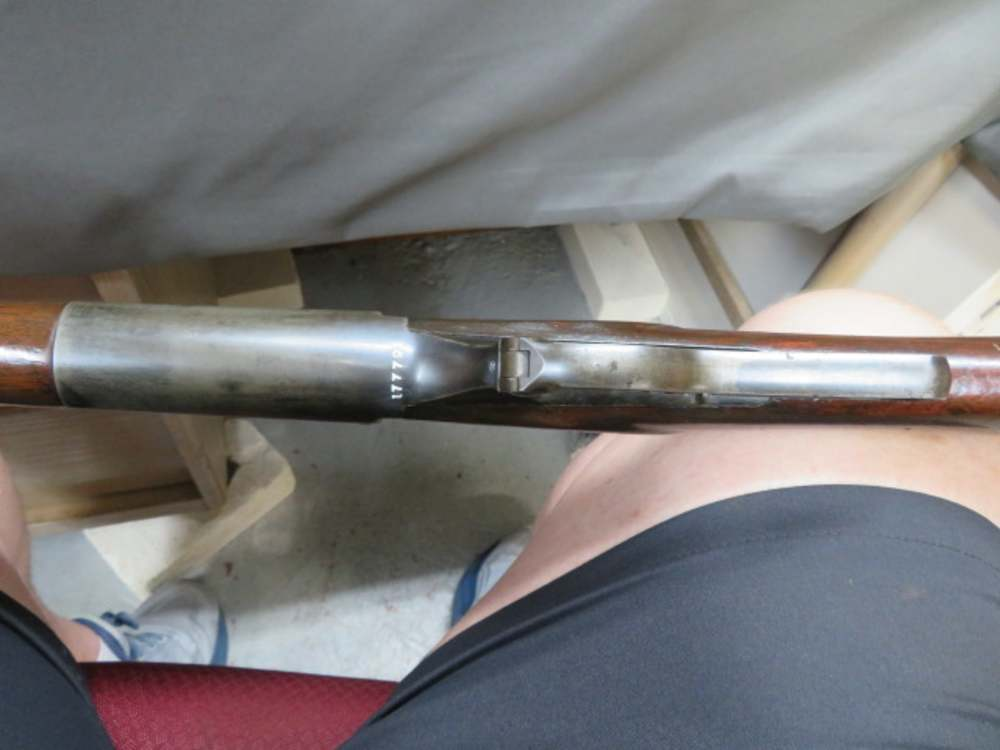
Introduced in 1899, the Model 1899 was an updated design that Savage produced in his own factory. Johnson calls the Model 1899 an improvement over the 1895 "primarily in changing from the round bolt lockup to the square bolt lockup." The rifle is a hammerless lever action, and the NRA National Firearms Museum describes Savage's hammerless lever-action design as having a downward-tilting breechblock and rotary-spool magazine. Outdoor Life's Bryce M. Towsley notes that the breechblock locks into the action as the lever is closed. The Model 1899 also gained a coil mainspring, which Hacker writes "provided an extremely fast lock time."
The five-shot magazine was a spring-loaded spool with grooves to hold the cartridges. A small oval window on the left side of the receiver showed a brass counter indicating the number of rounds left in the magazine. According to Outdoor Life, the rotary magazine meant the Model 1899 could use pointed bullets for a ballistic advantage. The cocking indicator, which shows whether the rifle is cocked, changed as well: the Model 1895 had a viewing hole on top of the bolt, while on early Model 1899s a tab rose from the top of the bolt when the rifle was cocked. Around 1908 the indicator was redesigned as a small pin.
Cartridges
Over the years the .303 Savage was joined by other chamberings, including the .30-30, .25-35, .32-40 and .38-55 Winchester. HistoryNet's Layman writes that Savage added three cartridges by arms inventor Charles Newton: the .22 Savage Hi-Power in 1912, the .250 Savage in 1915 and the .300 Savage in 1920. Dates vary: Hacker places the .250 in 1914, and one reference dates the .300 Savage to 1921. The .250 Savage is also known as the .250-3000, and Hacker explains that the name came from the original 87-grain bullet's velocity of 3,000 feet per second. Later chamberings included the .243, .308 and .358 Winchester. Johnson writes that, as a sporting rifle, the Model 99 "was made in nearly 30 different calibers and over a dozen barrel lengths."
Further Reading
- Savage Model 99, American Rifleman
- Why Texas Rangers AND Chinese Tiger Hunters Loved the Savage Model 1899, HistoryNet, George Layman
- Savage Model 99, Wikipedia
- The Savage Musket, James R. Johnson, American Society of Arms Collectors Bulletin
- Savage 99, Unique as the Man Who Made It, Gun Digest, Rick Hacker
- Biography: Arthur W. Savage, Forgotten Weapons, Ian McCollum
- Working the Savage Model 1899 Rifle, Gun Tests
- Savage Model 99 Lever Action Rifle, NRA National Firearms Museum
- The Life and Times of the Savage Model 99, One of America's Greatest Lever-Action Rifles, Outdoor Life, Bryce M. Towsley
- Arthur William Savage, Wikipedia
- .303 Savage, Wikipedia
- .250-3000 Savage, Wikipedia
Production and Later Years
One reference says the company built the rifle in Utica, New York, and later in Chicopee Falls and Westfield, Massachusetts. Production ran "off and on," in American Rifleman's words, and ended in the late 1990s: American Rifleman and Gun Digest give 1997 as the last year, while HistoryNet says 1998. The NRA National Firearms Museum puts total production at more than one million.
In Johnson's assessment, "The Model '99 was Savage's most popular gun throughout the 1900s." Outdoor Life's Towsley writes, "It took courage to open a gun company in a field that was dominated by Winchester, Remington, and Colt." The family's story runs from rejected trial muskets to a sporting rifle made for nearly a century.
The Montreal Home Guard Muskets
According to Johnson, "The only order that Savage received for its musket was not from a national or state government but from the Montreal Home Guard in Canada." He writes that as war clouds gathered over Europe in 1914, "the gentlemen of Montreal felt the need to defend themselves from a possible German attack," and that Canada's war materials, particularly its small arms, were in short supply. The guard's applicants were well-to-do men aged 40 to 70 "who were too old for regular service," primarily from Montreal's Westmount section. One reference says the guard was issued Model 1899 rifles in musket form, with a bayonet lug and military-style stock, chambered in .303 Savage.
Johnson writes that the Canadian muskets seen today were made with a 26-inch sporting rifle barrel rather than the 28-inch barrel of earlier models, and that they have sling swivels and are equipped to take the Savage knife bayonet. By his account, Savage's records show 803 muskets shipped, while the Montreal Gazette reported more than 1,000. Interest in the guard faded in late 1915, and Johnson writes that it "disappeared as quickly as it had been formed." He adds, "Many if not most of these guns were sportorized and their bayonets made unrecognizably into knives."
From Model 1899 to Model 99
The rifle later became the Model 99. Outdoor Life's Towsley writes that Savage changed the name in 1920, when it introduced the .300 Savage, while one reference ties the change to the cartridge's introduction in 1921. Hacker lists versions including a takedown model introduced in 1909 and a 22-inch-barreled short rifle made from 1899 until 1922. He adds that an octagon-barreled rifle was made over the same years. Later variants included the 99C, which one reference describes as having a detachable box magazine instead of the internal rotary magazine, and the 99E, which it says eliminated features like the round counter.