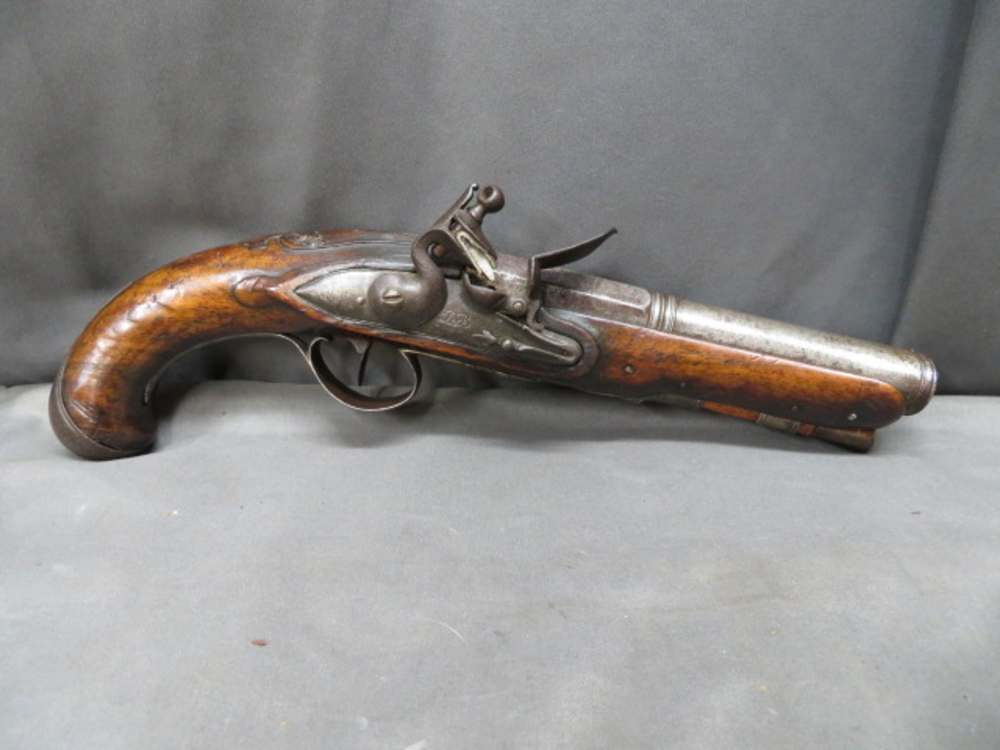
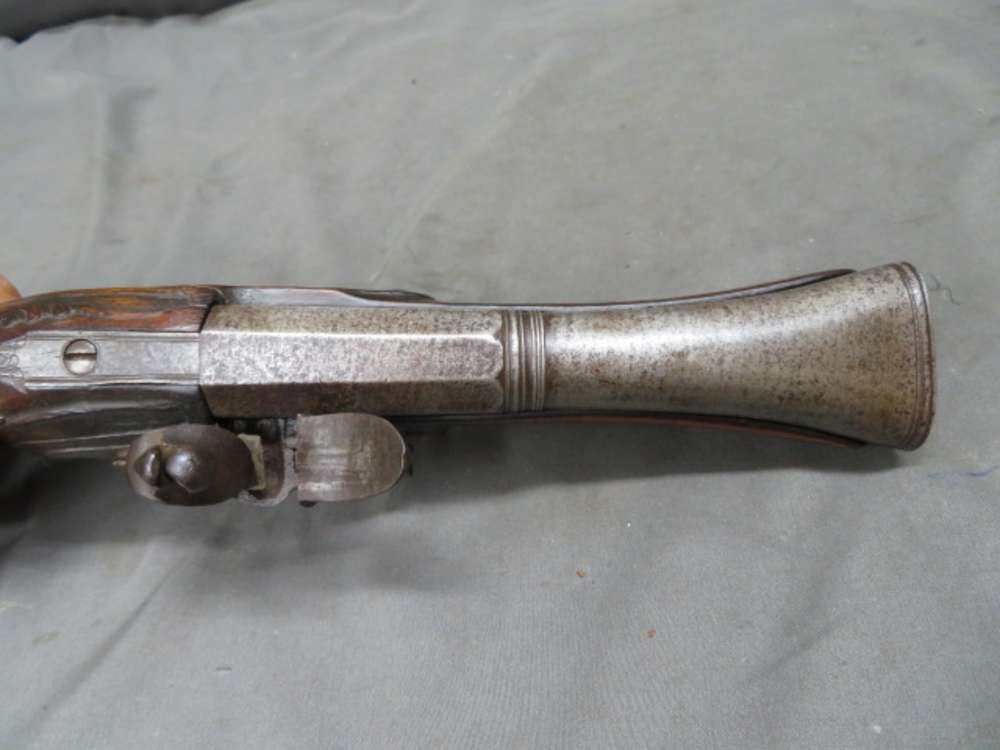
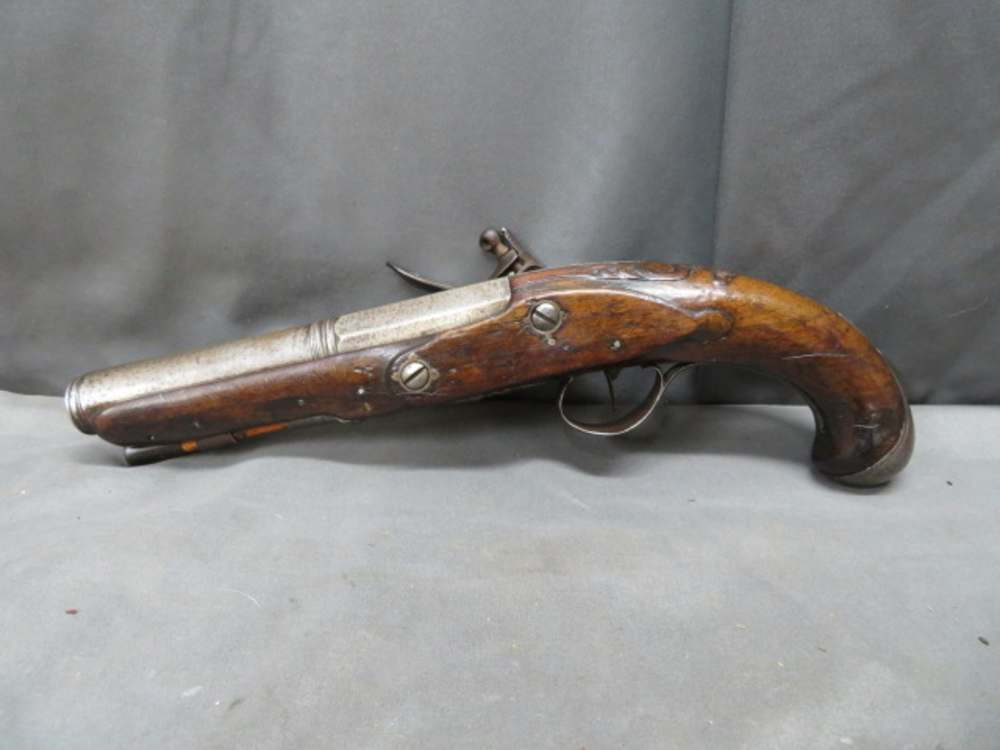
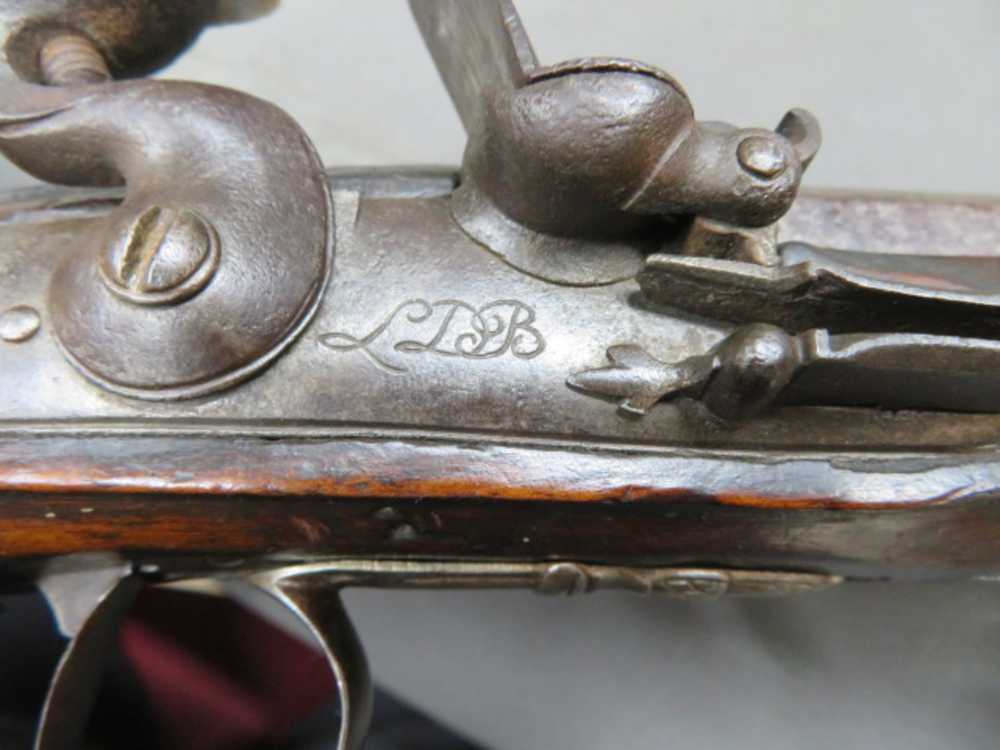
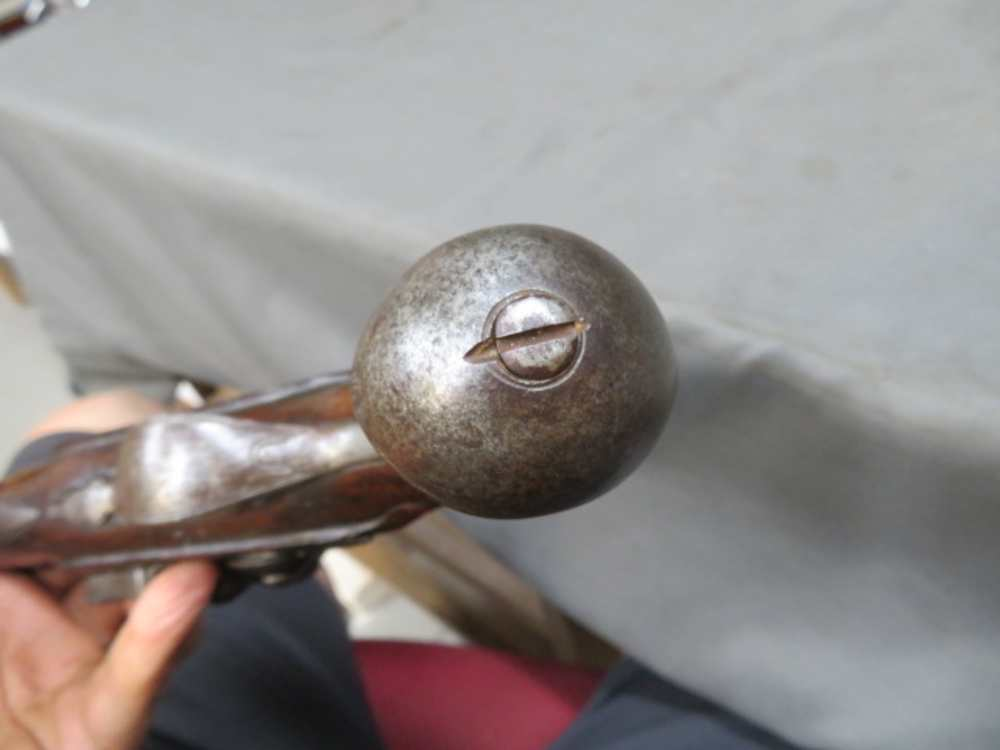
Why blunderbuss muzzles flare at all is still argued over. The USS Constitution Museum writes that the design's intent "was to spread out shot to cover a wide area, akin to a modern shotgun". The American Revolution Institute of the Society of the Cincinnati says "the blunderbuss was best for use at short range, to scatter shot or other damaging projectiles." The Pitt Rivers Museum takes a different view: "This is traditionally said to increase the spread of the shot but, in reality, it simply made loading easier and the weapon more intimidating." Writing in Arms & Armour in 2020, David S. Weaver observed that "it appears that virtually no properly controlled scientific studies have been carried out to address blunderbuss ballistics."
The oval version carries a further claim: that the flattened mouth threw shot in a sideways spread. The Firearm Blog, writing in 2024 about a long gun (not a pistol) with a "duck bill" muzzle, stated: "This type of muzzle design spreads the shot pellets horizontally resulting in an oval-shaped pattern." It described no test behind the statement. In 2019, The Firearm Blog reported that in a shotgun patterning test (not a test of an antique pistol), "the oval-shaped muzzle (or rather stadium shaped) indeed spreads the birdshot in a similar shape resulting in a wider horizontal dispersion of the pellets." The sources consulted for this article include no test of an antique duckbill pistol, so the idea remains unproven for these guns.
Further Reading
- Blunderbuss (1911.29.11) (Pitt Rivers Museum, University of Oxford)
- Swivel Blunderbuss (USS Constitution Museum)
- Pistol with flintlock (Landesmuseum Mecklenburg-Vorpommern)
- Wilson Flintlock Blunderbuss Pistol (NRA National Firearms Museum)
- Blunderbuss, the "Thunder Box" of the Battlefield (American Revolution Institute of the Society of the Cincinnati)
- DUCK FOOT PISTOL (Frank Brownell Museum of the Southwest, NRA Whittington Center)
- How the bizarre duck's foot pistol came into being (ShootingUK)
- Patterning with Oval and Angled Shotgun Muzzles (The Firearm Blog)
- POTD: Percussion Rifle and Duck Bill Blunderbuss Combination Gun (The Firearm Blog)
- The English blunderbuss and its ballistics (David S. Weaver, Arms & Armour)
Not to Be Confused With the Duck's Foot Pistol
Despite the similar name, the duck's foot pistol is a different gun. A duckbill pistol has one barrel with a flattened mouth; a duck's foot pistol has several barrels splayed out in a fan and fired at once. ShootingUK calls it "The pistol equivalent of the volley gun", which "had four barrels mounted on a single breech plate." The Frank Brownell Museum of the Southwest describes many of them as "flintlock firearms with just a single cock and flint", and explains that the "priming pan had several touch holes, so when the flint sparked, all the barrels discharged together."
The type dates from roughly the mid-18th to the early 19th century, but its purpose is less certain. The Brownell museum writes: "There is little history about the design, but it is believed it was created for personnel such as sea captains and prison wardens who may be faced with mutinous ship crews or prisoner riots." ShootingUK calls it "a close range anti-personnel weapon that was at its most effective when used against a crowd in a confined space", adding that it "would have been attractive to anyone routinely faced with an unruly and potentially violent crowd."
The Flintlock Behind It
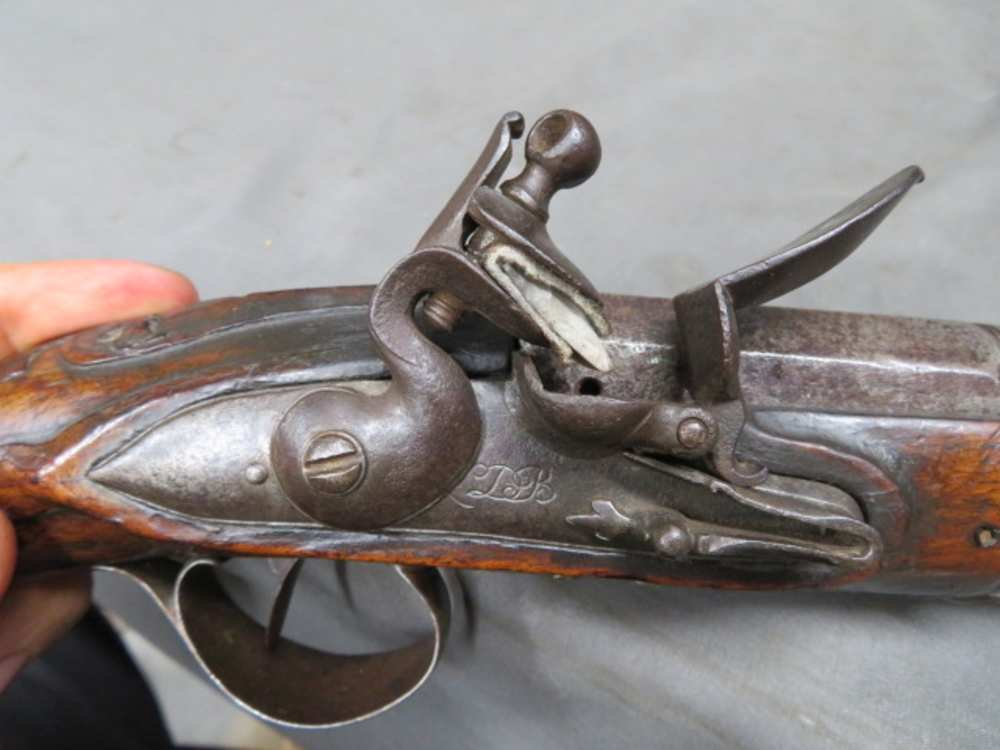
The true flintlock was developed in France in the early 17th century. Flintlock weapons were used for over two centuries, until caplock mechanisms gradually superseded them in the early 19th century. Blunderbuss pistols with other ignition systems also exist.
Who Carried Blunderbuss-Type Guns
The sources on use speak of blunderbuss-type guns in general, not of duckbill pistols in particular. They also disagree on who mainly carried them. The Pitt Rivers Museum states that "Blunderbusses were primarily privately commissioned for civilian self-defence rather than military-issue weapons". The American Revolution Institute notes that "the flintlock blunderbuss was often issued to cavalry or naval troops for use in close-quarter combat."