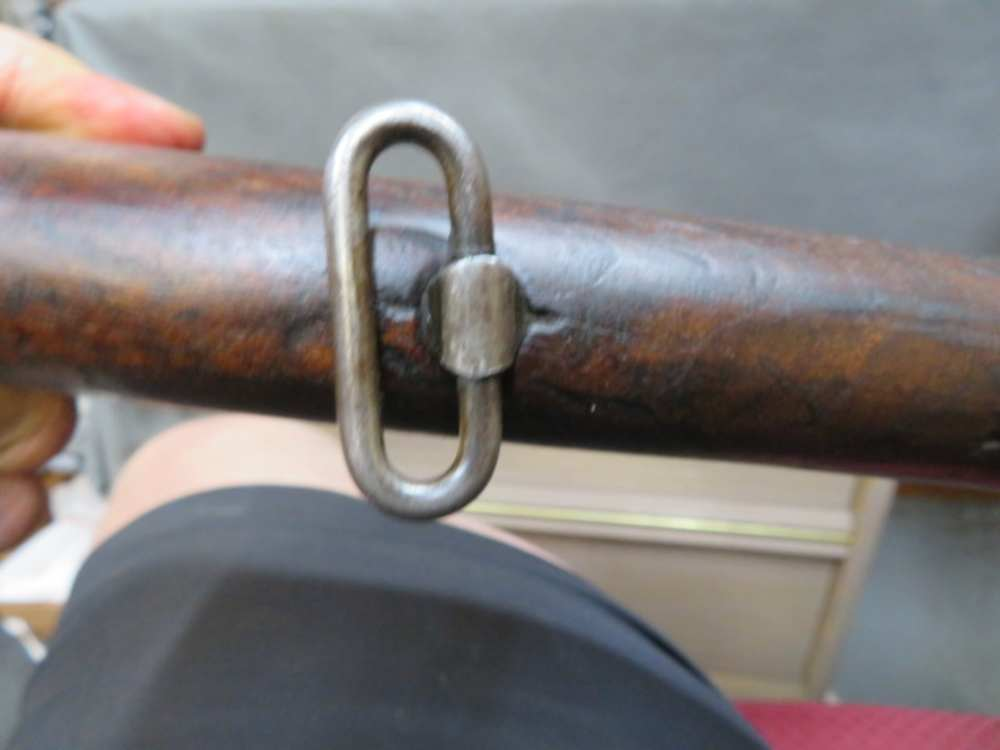
Built in Quebec City, carried into the First World War, pulled from the front lines, and kept on by snipers, sailors and home-front guards
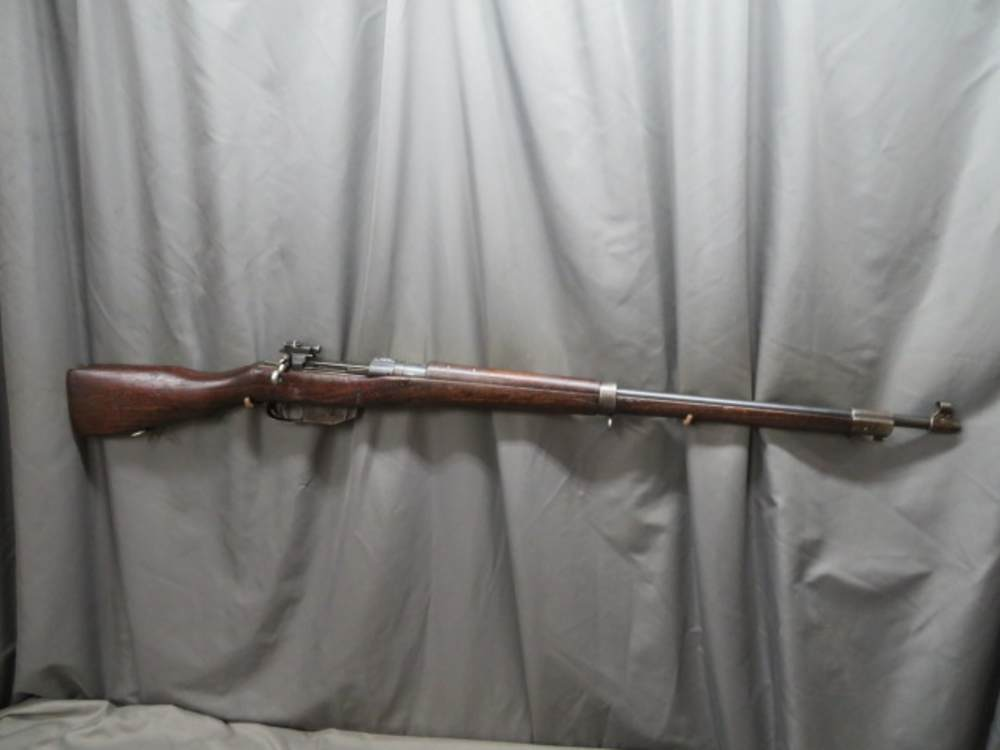
A Rifle Made in Canada
The Ross rifle was designed and made in Canada. In 1902 the Scottish industrialist Charles Ross built a factory on the Plains of Abraham in Quebec City, close to Martello Tower 1.
The Dictionary of Canadian Biography records that the Laurier government’s minister of militia, not Hughes, adopted the Ross for Canada’s forces “late in the South African War.” Sam Hughes, later the rifle’s best-known defender, sat on a bipartisan committee of MPs that promoted the Ross against British opposition to Canada adopting anything other than the Lee-Enfield.
According to Legion Magazine, the initial order was for 12,000 rifles for delivery in 1903, and five design versions were produced between 1903 and 1914. Legion Magazine puts total production at about 420,000 rifles.
How the Straight Pull Works
The Ross is a straight-pull bolt action. On the Lee-Enfield, the shooter turns the bolt handle as part of working the action. On the Ross, the shooter simply pulls the handle straight back and pushes it straight forward. Skipping that manual quarter-turn promised faster fire. Shooting Illustrated compares the action to the Austrian Mannlicher straight-pull rifles.
The rotation still happens, just inside the bolt. As one secondary account describes it, the hollow bolt sleeve has spiral grooves cut on its inner surface, and matching projections on the bolt head ride in those grooves. The straight pull and push therefore turn the bolt head about 90 degrees to unlock and lock it.
The Mark III, or Model 1910
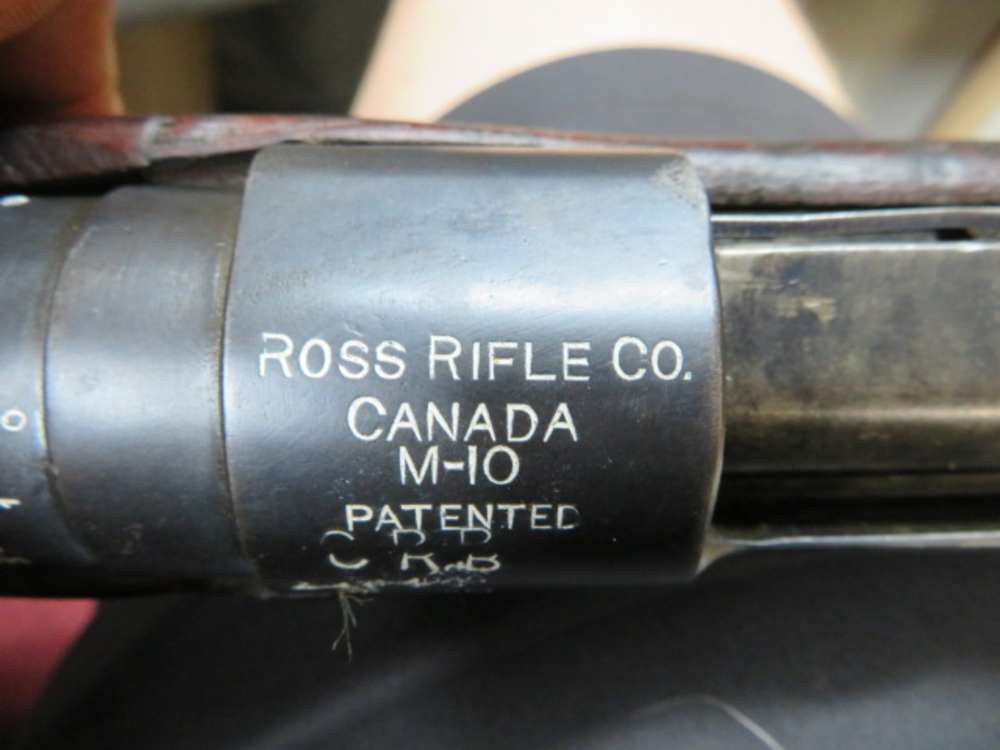
The Mark III, marked M10 on the receiver and also known as the Model 1910, reworked the earlier marks in several ways. It fires the .303 British cartridge.
Locking. The Mark I and Mark II used two large locking lugs. The Mark III replaced them with multiple interrupted-thread lugs, which Forgotten Weapons describes as six locking lugs in two rows of three.
Magazine. The Mark II’s internal double-stack magazine, with its “dump loading” lever, gave way on the Mark III to an exposed single-stack box magazine holding five rounds, loaded through a charger (stripper clip) guide on the receiver.
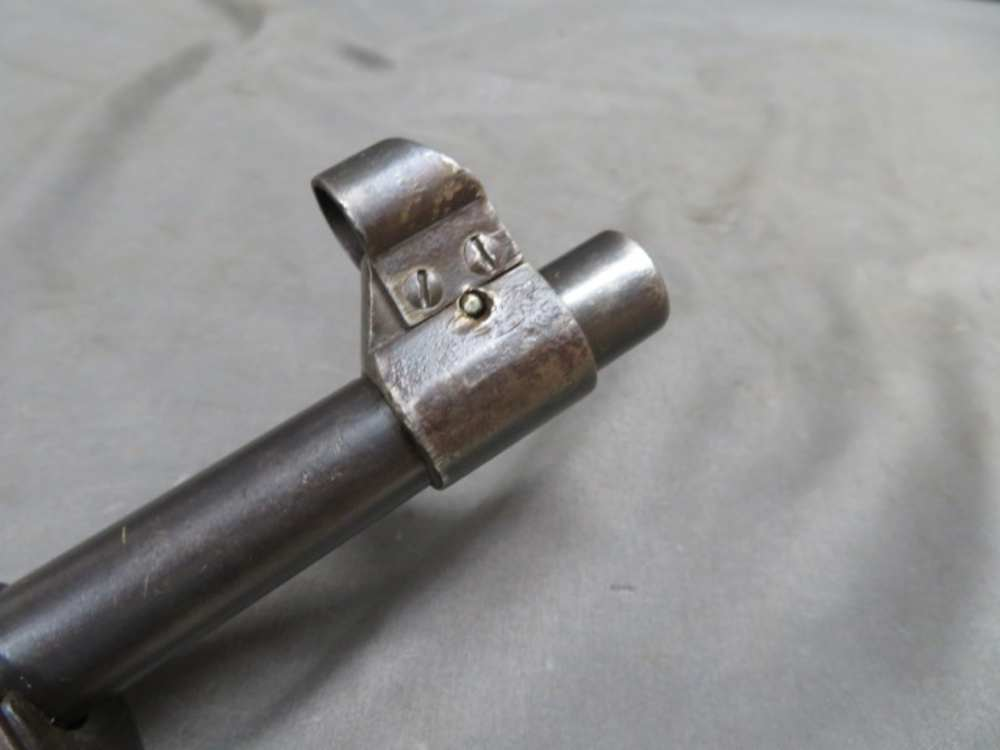
Sights. The rear sight moved off the barrel and onto the receiver bridge. It is an adjustable aperture that some sources call the “Ross Battle Aperture.”
Size. According to Calibre Magazine and other published references, the Mark III carries a 30.5-inch barrel, against 28 inches on the Mark I and most Mark IIs. Global News notes that the Ross was longer and heavier than the Lee-Enfield.
Receiver marking. An Australian War Memorial example’s receiver is marked “ROSS RIFLE CO. CANADA M10 PATENTED.”
Into the Trenches
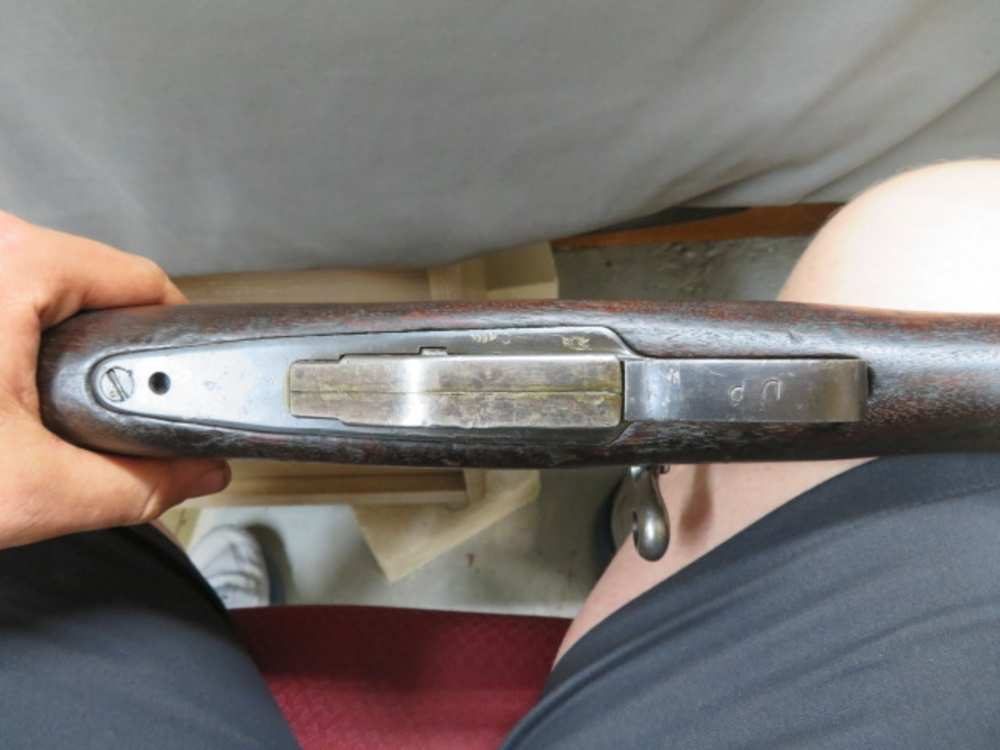
The Canadian War Museum says the Ross equipped most Canadian forces from the start of the First World War until mid-1916. According to Legion Magazine, some rifles jammed at Neuve Chapelle in March 1915, when soft brass in British cartridge cases expanded and stuck in the chamber and mud fouled the action.
At Second Ypres in April 1915, many Canadians threw away jammed Rosses and armed themselves, against orders, with Lee-Enfields taken from British dead. Global News puts the number who discarded the Ross that spring at more than 3,000, and quotes an official history: “Boot heels and entrenching tool handles opened some of them.” One officer’s statement, as quoted in the Dictionary of Canadian Biography, was blunter: “It is nothing short of murder to send our men against the enemy with such a weapon.”
Several sources point to ammunition. The Mark III was made with a tight chamber suited to high-quality Canadian .303 ammunition. Wartime British ammunition, made to wider tolerances, could be hard to chamber or extract. The Canadian War Museum’s verdict is that the Ross was “a fine shooting rifle but not robust enough for the trenches and the technical deficiencies of mass-produced British ammunition,” and that it “often jammed, rendering it useless.” Forgotten Weapons adds that soldiers beating stuck bolts open damaged the locking lugs, which made the problem worse.
Secondary accounts also describe a bolt that could be taken apart for cleaning and put back together in a way that would not lock yet still allowed a round to be fired, risking serious injury or death, a hazard Shooting Illustrated also describes. Rawling’s Surviving Trench Warfare, as relayed by secondary sources, reports that the bayonet could come loose and fall off during firing.
One fix was to ream rifles to a larger chamber. Royal Museums Greenwich describes its example as “the intermediate pattern adapted for British-made ammunition,” marked “LC” for “large chamber.”
Replaced by the Lee-Enfield
Lieutenant-General Alderson re-equipped the 1st Canadian Division with Lee-Enfields within weeks of Second Ypres, by June 1915, over the objections of Sam Hughes. In June 1916 Douglas Haig ordered Canadian troops to exchange their Ross rifles for Lee-Enfields.
Hughes served as Minister of Militia and Defence from October 1911 to November 1916. The Canadian War Museum notes that he championed the Ross and was criticized for defending it against growing evidence of its combat deficiencies. His resignation was accepted in November 1916.
The federal government expropriated the Ross company in 1917, and it ceased its activities. The factory buildings were demolished in 1931 to make way for the Quebec City water reservoir.
Snipers and Sailors
The Canadian War Museum says expert snipers often preferred the Ross, finding it well balanced and very effective when firing only a few shots, and the Loyal Edmonton Regiment Military Museum likewise notes that many snipers preferred the Ross.
Canada fitted Mark IIIs with Warner & Swasey Model 1913 prismatic telescopes of about 5x magnification. Forgotten Weapons and collector sources put the number at 500 rifles, in two batches of 250, in 1915 and 1917, though one collector source queries the second date and Shooting Illustrated gives approximately 100, so the count is disputed. According to Forgotten Weapons, the Canadian scopes have elevation dials marked to 2,400 yards and no data plate on top. According to Forgotten Weapons, many of the scoped rifles stayed in Canada for training and were used until at least 1942.
At sea, the Canadian War Museum records that sailors of the Royal Canadian Navy and some Royal Marines on Royal Navy ships used the Ross throughout the war, including the detachment aboard HMS Canada.
Home Front and Home Guard
The Ross also had a narrow American service connection. According to the 48th Highlanders Museum, 20,000 were sold to the United States in November 1917, and Canfield records them as training rifles. These were earlier Mark II-series rifles, not the Mark III.
Canada still held serviceable Mark II and Mark III stocks in 1939. They were issued to the Veterans Guard of Canada and other home-front and training units, and, according to the POWs in Canada history project, stayed with the Veterans Guard for most of the Second World War until the No. 4 Mk I Enfield replaced them. According to the firearms writer Paul Scarlata, Canada also supplied 75,000 Mark III rifles to Britain’s Home Guard during the Second World War.
Why the Ross Still Matters
The Ross was designed and built in Canada and carried by Canadian soldiers into the First World War. Its story is bound up with the career of Sam Hughes, and after its withdrawal from the front it had a long second life with snipers, sailors and home-front units. For the rifle that took its place, see the Lee-Enfield Identification Guide in the Eisel Armory Collector’s Library.
Cousins and Lookalikes
- Ross Mark I and Mark II series. The earlier Canadian service marks, with a 28-inch barrel on the Mark I and most Mark IIs, a two-lug bolt and an internal magazine.
- Ross sporting rifles. A separate commercial line assembled at the Quebec plant, associated with the .280 Ross cartridge, which Shooting Illustrated calls “one of the fastest and flattest-shooting rounds of the era.”
- Lee-Enfield. The rifle that replaced the Ross, firing the same .303 cartridge from a conventional rotating bolt.
Further Reading
- The Ross Rifle Story, Phillips
- Surviving Trench Warfare, Rawling