The WWII German K43 semi-automatic rifle—also known as the Karabiner 43—emerged during a critical period of the World War II when Germany sought to modernize its infantry weapons. Earlier designs like the G41 had proven unreliable in harsh combat conditions, prompting German engineers to refine the concept into a more dependable system. Introduced in 1943, the K43 incorporated a gas-operated mechanism inspired in part by the Soviet SVT-40 rifle, allowing for improved reliability and ease of maintenance on the battlefield.
An interesting aspect of the K43 is its dual-purpose design for both standard infantry and marksmen. Many rifles were fitted with ZF4 scopes, turning them into effective designated marksman rifles capable of engaging targets at extended ranges—something German forces increasingly needed as the war progressed. Despite being designed with a detachable magazine, soldiers commonly loaded the rifle using stripper clips, maintaining familiarity with the older Karabiner 98k rifle system. This blend of innovation and practicality made the K43 one of the most advanced service rifles fielded by Germany during the war’s final years.
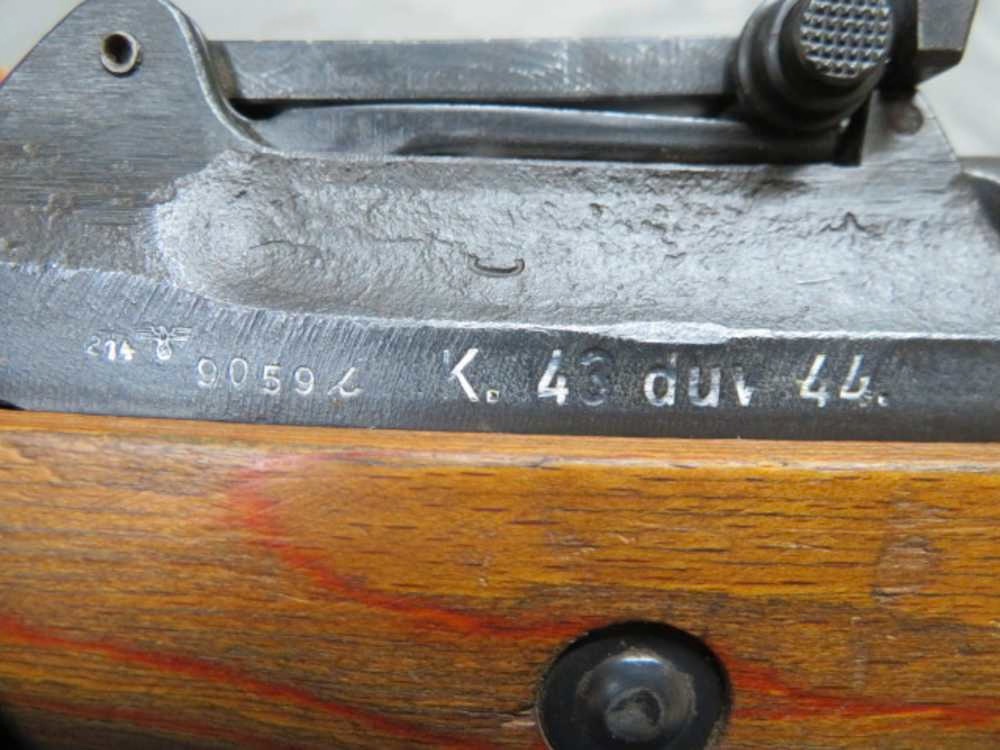
The “duv 44” marking identifies production by Berlin-Lübecker Maschinenfabrik in 1944, a time when German arms factories were operating under constant pressure from Allied bombing campaigns and severe material shortages. To keep production moving, manufacturers often relocated machinery, simplified machining steps, and used whatever materials were available—leading to subtle variations in finish and construction from rifle to rifle. Even so, K43 production remained relatively consistent compared to many other late-war German firearms, and examples from this period often show a mix of earlier craftsmanship with late-war expedients such as rougher machining or thinner finishes.
Matching serial numbers on key components—like the receiver, bolt, and stock—are particularly significant to collectors because they indicate the rifle has remained intact since its wartime service, rather than being rebuilt from mixed parts. An interesting detail is that many K43 rifles also feature small Waffenamt inspection stamps, marking acceptance by military inspectors during production. Additionally, some late-war K43s were factory-prepared for scope mounts even if they never received optics, reflecting Germany’s growing emphasis on designated marksmen. These details not only add to the rifle’s historical value but also provide insight into the logistical realities and battlefield priorities of Germany in the final years of World War II.
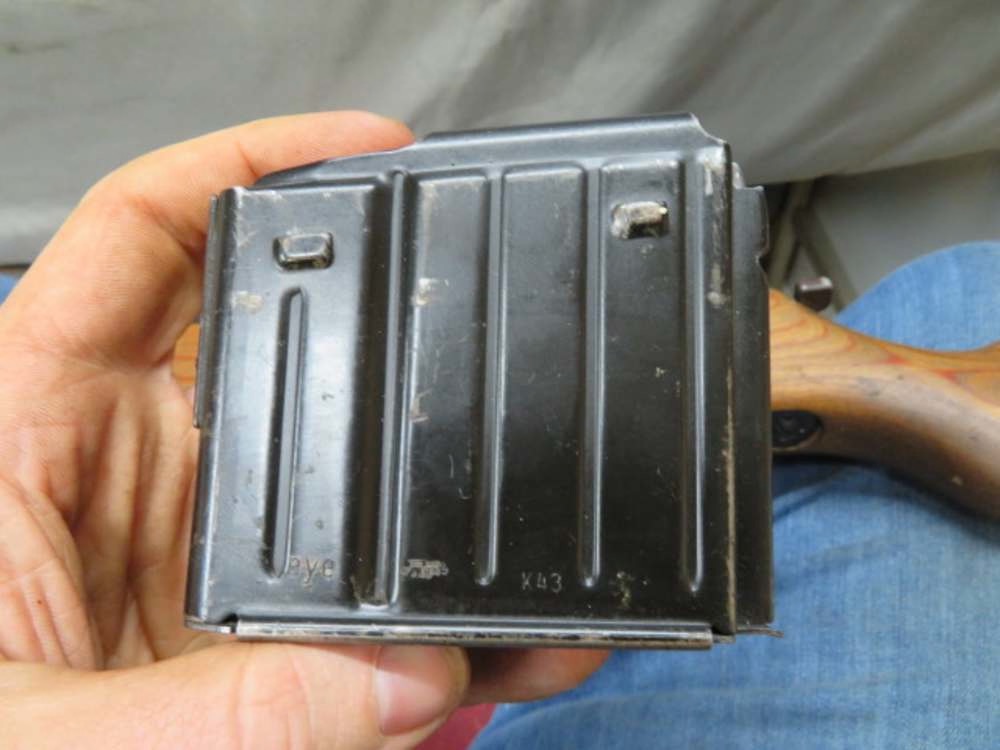
Mechanically, the K43 featured a short-stroke gas piston system and was chambered in the standard 7.92×57mm Mauser cartridge, giving it both power and improved reliability over earlier designs. Its detachable 10-round magazine was ahead of its time for German service rifles, yet many soldiers still relied on stripper clips—much like the Karabiner 98k rifle—to quickly reload without removing the magazine. This hybrid approach allowed troops to adapt in the field, especially when spare magazines were scarce, highlighting the practical realities of wartime logistics during World War II.
An interesting detail is that the K43’s gas system, while innovative, could be over-gassed, leading to increased wear on internal parts—something modern collectors often address with upgraded components. Additionally, unlike the American M1 Garand, which used an en-bloc clip system, the K43’s magazine could be topped off at any time, giving soldiers more flexibility in combat. This combination of firepower, adaptability, and evolving design makes the K43 a fascinating step in the transition from traditional bolt-action rifles to modern semi-automatic infantry weapons.
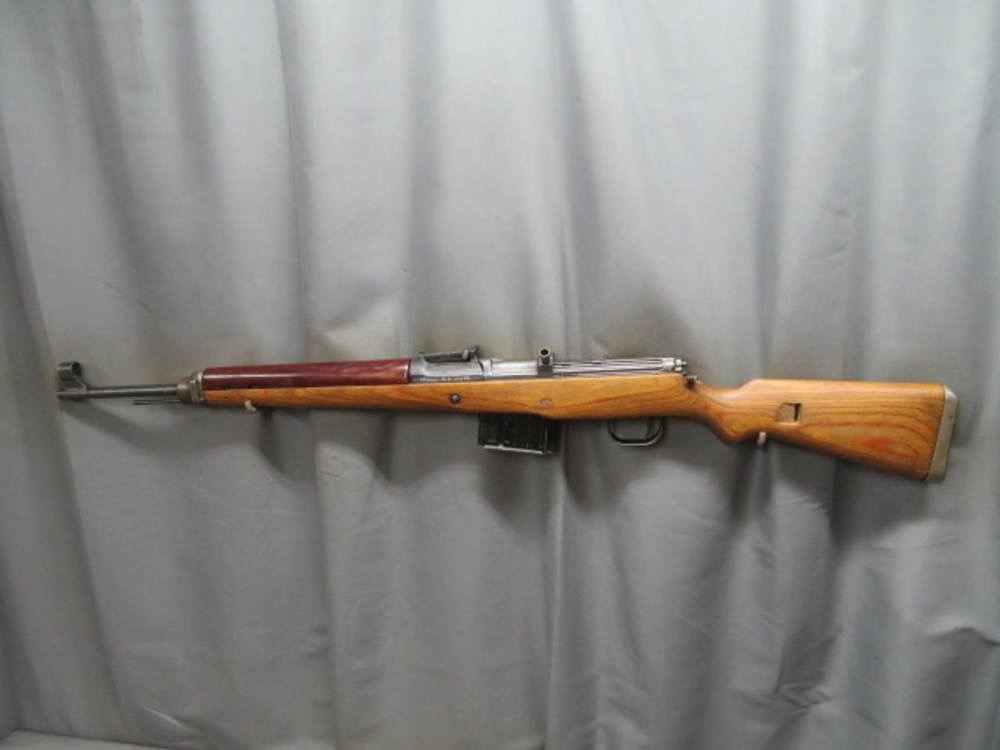
The rifle also played a specialized role in designated marksman applications. Many K43s were equipped with optical sights such as the ZF4 scope, enhancing their effectiveness at longer ranges. This adaptability made the rifle particularly useful on both the Eastern and Western Fronts, where engagements could vary from close-quarters combat to extended-distance firefights. However, late-war production pressures sometimes resulted in simplified finishes and reduced quality control.
A fun detail is that some K43 rifles were factory-prepared with scope rails even if they never actually received optics, showing how much emphasis Germany placed on marksmen late in World War II. Another interesting fact is that soldiers often preferred to keep their magazines with the rifle rather than swap them out, since extras were limited—making the ability to reload with stripper clips a key advantage over other semi-automatic designs. These small details highlight how the K43 balanced innovation with the practical challenges faced by troops in the field.
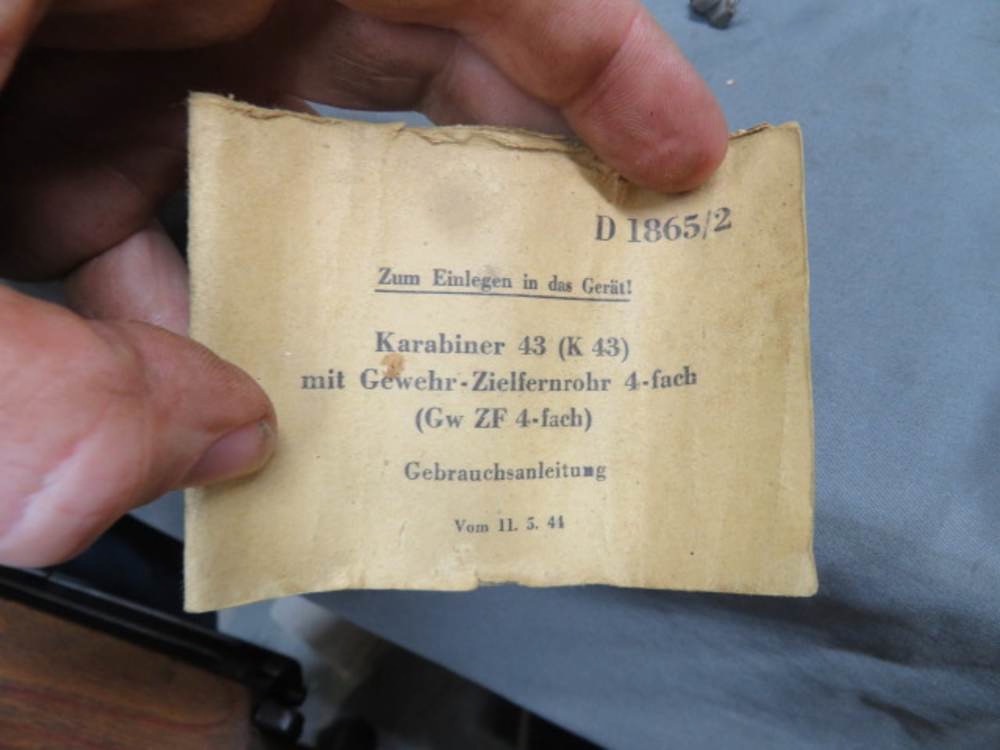
Including an original manual adds a deeper layer of historical context to the Karabiner 43 rifle, offering insight into how German soldiers were trained to operate and maintain the weapon during World War II. These manuals typically covered loading procedures, gas system function, and field maintenance—critical knowledge for keeping the rifle reliable under combat conditions. Surviving examples are scarce today, as paper items were often lost or worn out in service.
An interesting fact is that many K43 manuals were printed in compact, field-friendly formats so they could be easily carried in a soldier’s gear, often featuring simple diagrams for quick reference in the field. Late-war manuals were sometimes produced on lower-quality paper due to shortages, making well-preserved originals especially desirable to collectors as they provide a direct connection to how the rifle was actually used and understood at the time.
Today, the K43—especially examples like the “duv 44” with matching numbers and original accessories such as the manual—stands as a powerful artifact of wartime innovation and adaptation. It reflects both the technological ambition and the logistical strain faced by Germany in the later years of World War II, where necessity drove rapid evolution in infantry weapons design.
Collectors and historians alike regard the Karabiner 43 rifle as one of the most important semi-automatic service rifles of its era—bridging the gap between traditional bolt-action rifles and the modern firearms that followed. More than just a weapon, it represents a moment in history where engineering, urgency, and battlefield experience came together to shape the future of military small arms.