How the Army's Frontier .45 Was Cut Down, Reissued and Sent to Cuba and the Philippines

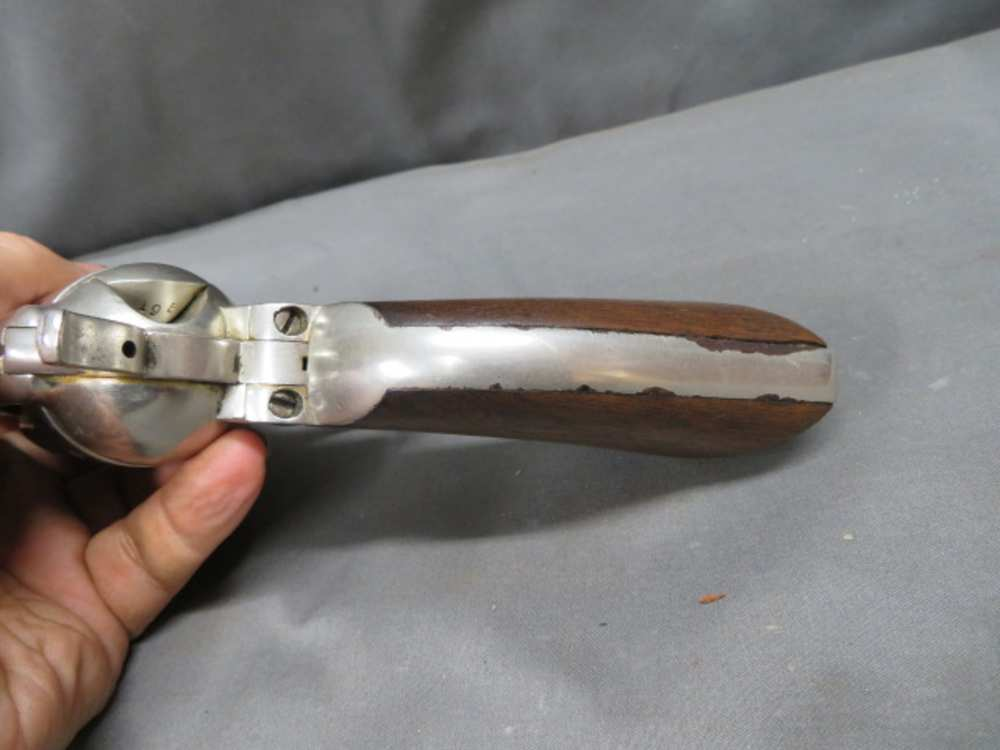
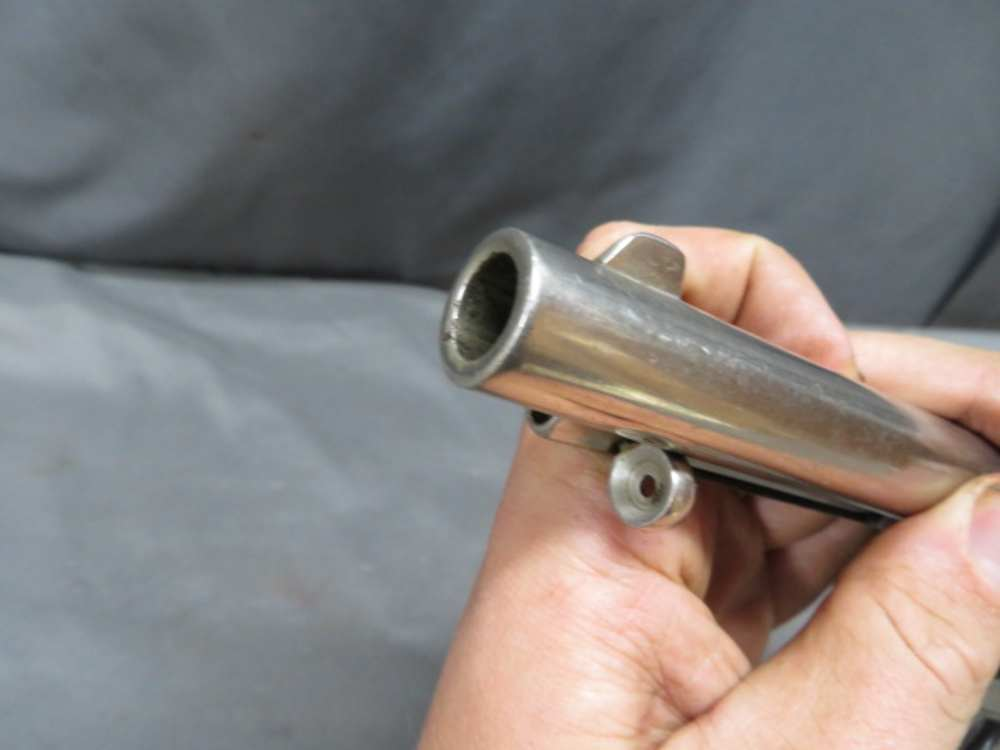
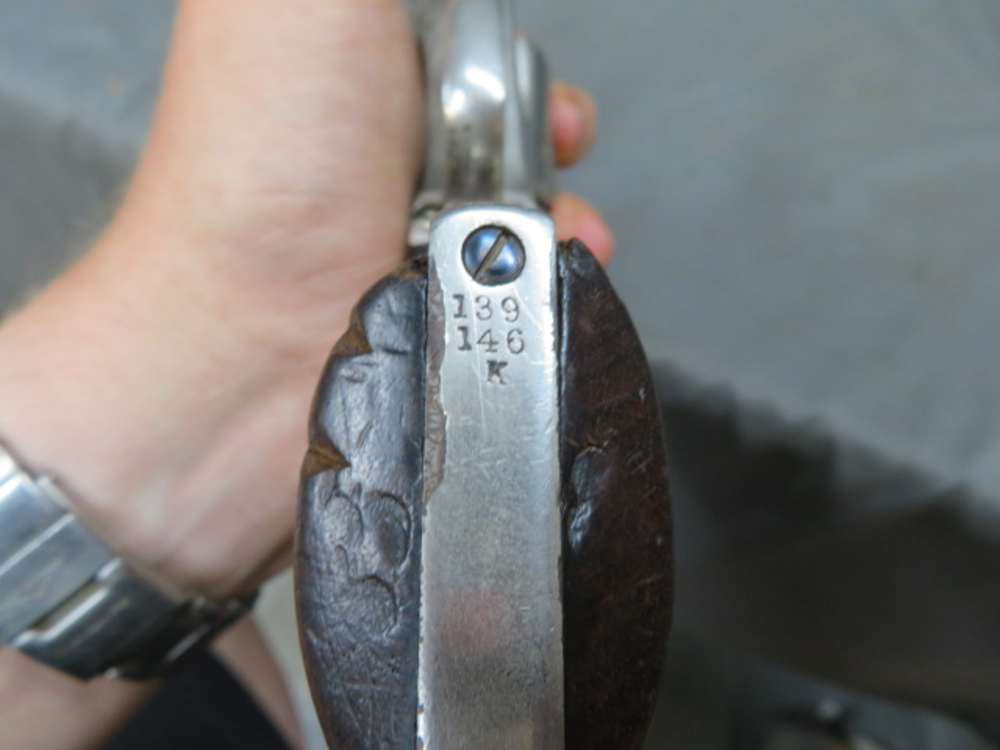
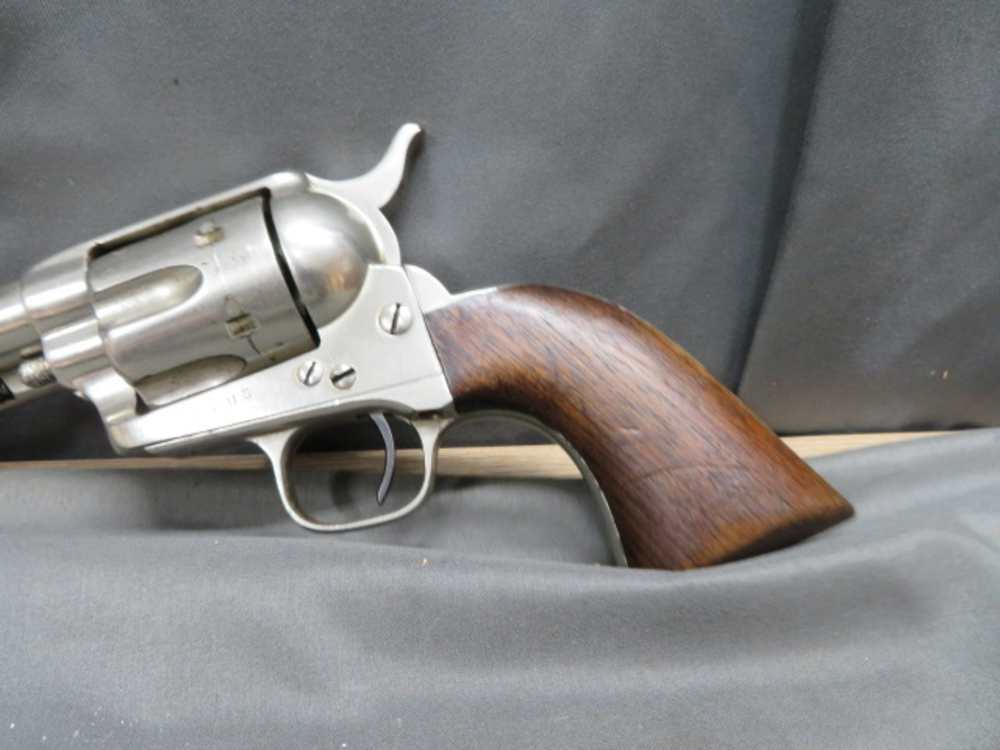
Colt Single Action Army Revolver (US Artillery Model), Eisel Armory inventory photo.
Colt Single Action Army Revolver (US Artillery Model), inventory photo. Photo property of Eisel Armory.

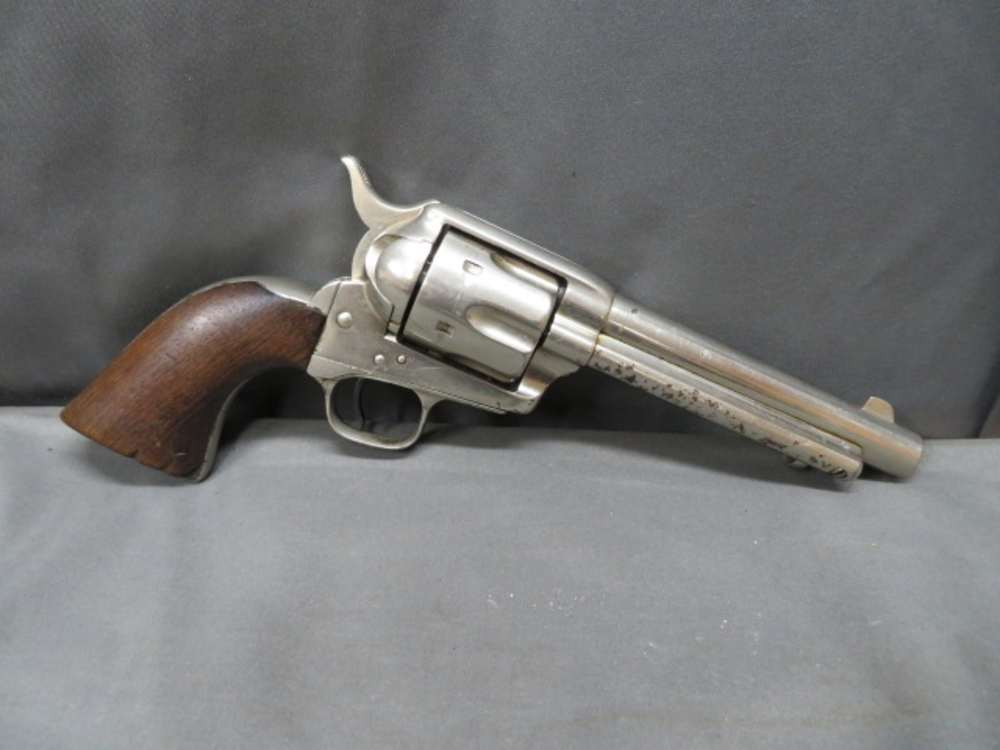
The revolver collectors call the “Artillery Model” was not a new design. It was the US Army’s Colt Single Action Army, the .45 that served as the Army’s standard revolver from 1873, reworked in the 1890s and early 1900s. Colt and Springfield Armory reconditioned thousands of these guns and shortened most of their barrels from 7 1/2 inches to 5 1/2 inches. The altered revolvers then went to troops in the Spanish-American War and the Philippine-American War.

The Revolver It Started As

Colt’s Patent Fire Arms Manufacturing Company designed the Single Action Army for the US government’s 1872 service revolver trials, and it was the standard US Army revolver from 1873 to 1892. The Army’s first order was for 8,000 revolvers. As issued, the gun was chambered in .45 Colt with a 7 1/2-inch barrel, the configuration collectors call the “Cavalry Model.” One reference describes it as the Army’s first service revolver to use metallic cartridges, replacing the percussion Colt Army Model 1860.

The Army also bought Smith & Wesson Schofield revolvers in the same era, but the Colt remained its principal service revolver. Estimates of how many the government bought or issued through 1891 run from roughly 37,000 to 39,000, depending on the source. The same writer, Rick Hacker, has given different totals in two different NRA publications.

Colt Single Action Army Revolver (US Artillery Model), Eisel Armory inventory photo.
Colt Single Action Army Revolver (US Artillery Model), inventory photo. Photo property of Eisel Armory.

Retired, Then Reworked

Colt Single Action Army Revolver (US Artillery Model), Eisel Armory inventory photo.
Colt Single Action Army Revolver (US Artillery Model), inventory photo. Photo property of Eisel Armory.

In 1892 the Army adopted a .38 Colt double-action revolver, the Model 1892, and began retiring the .45 single actions. That left a large number of Cavalry Model revolvers in armory and arsenal storage.

The rework began within a few years. In 1894, barrel-shortening tests were run at Springfield. On May 25, 1895, Springfield was ordered to alter 250 Colt .45 revolvers to 5 1/2-inch barrels. Those first 250 went to 10 light artillery batteries for field trials, 25 guns to each battery. Collector accounts that quote Ordnance correspondence give the motive: the light, or “horse,” artillery had long complained that the 7 1/2-inch barrel and its holster were uncomfortable for men riding on the caissons and limbers while the guns were being drawn.

Colt took on its own batch in 1895-96. Sources agree that about 2,000 guns went through Colt’s hands in that period, but differ on the details. Figures credited to Rick Sapp’s Standard Catalog of Colt Firearms put about 1,200 shortened, with another 800 refinished at full length and issued to the New York Militia. A collector account puts the number shortened by Colt at 1,177, plus about 800 repaired and refinished without being cut down.

The pace picked up in 1898. After the battleship Maine was sunk in Havana harbor on February 15, 1898, Springfield turned to its stored .45s. According to Springfield records quoted by one collector account, the armory listed about 16,000 .45 revolvers on hand in March 1898 and could clean and repair up to 500 in an eight-hour day, with the repairs including cutting off the barrels. Estimates of how many Springfield altered that year run from about 14,900 (a figure credited to Sapp) to about 16,300 (a collector account).

Across the whole program, sources put the number of altered revolvers at roughly 15,000 (the NRA National Firearms Museum) to nearly 17,000 (Jim Supica in American Rifleman), with at least one estimate higher. Because some guns passed through the shops more than once, yearly figures cannot simply be added together. Between 1900 and 1903, guns still in service went back to Colt for refinishing again, a phase one collector account puts at 5,294 revolvers. Springfield did small numbers of repairs between 1900 and 1904 without refinishing. The same collector sources say some guns were reworked as many as three or four times.
A Collectors' Name and Service in Cuba and the Philippines

“Artillery Model” is a collectors’ name. The War Department’s own records call these guns the “Altered Revolver.” One reference calls “Artillery” a misnomer and, citing Sapp, suggests the name may have come from the light artillery being the first units armed with the altered gun. Jim Supica writes that collectors gave them the nickname because a few were issued to artillery units. The guns also went to infantry, volunteer cavalry and other troops.

The 1st US Volunteer Cavalry, Roosevelt’s “Rough Riders,” is the unit most often tied to these revolvers. A collector account says altered revolvers were issued to the regiment, and the NRA National Firearms Museum holds one. That revolver was carried by Trooper Louis G. Bishop of Troop G, and the museum describes it as a 7 1/2-inch gun later shortened to 5 1/2 inches. That does not mean every trooper carried one. Roosevelt’s own book, The Rough Riders, says only that the regiment got its “revolvers” in time for the Santiago expedition, without naming a maker.

Two popular details need correcting. The regiment’s famous charge was up Kettle Hill, part of the San Juan Heights, rather than San Juan Hill itself. And at San Juan, Roosevelt himself did not carry a Single Action Army. His revolver was a .38 Colt Model 1892, recovered from the sunken battleship Maine.

In the Philippines, reports beginning in 1899 said the .38 Model 1892 was failing to stop attackers. The Army hurriedly reissued stocks of the old .45 single actions to troops there, and reports from the field confirmed that the .45 round was more effective. Rick Hacker, writing in American Rifleman, links the barrel cut-down itself to the Philippines. The dated steps above, from the 1894 tests to Colt’s 1895-96 work, all come before the first Philippine reports in 1899, and other sources tie the Philippine experience to the reissue of the .45s.

That experience fed into the Army’s move to the .45 Colt M1909 New Service revolver in 1909, and then to the Colt M1911 automatic pistol in 1911. No source gives a formal withdrawal date for the altered Colts. One collector account places the end of their service around 1911.

Colt Single Action Army Revolver (US Artillery Model), Eisel Armory inventory photo.
Colt Single Action Army Revolver (US Artillery Model), inventory photo. Photo property of Eisel Armory.

Markings and Lookalikes

Colt Single Action Army Revolver (US Artillery Model), Eisel Armory inventory photo.
Colt Single Action Army Revolver (US Artillery Model), inventory photo. Photo property of Eisel Armory.

US revolvers carry “U.S.” stamped on the frame, along with inspector initials on various parts. According to collector references, the sub-inspector’s cartouche went on the right side of the grip and the accepting officer’s on the left, with the year of acceptance above it. Collector accounts also say Colt’s 1900-1903 reconditioning fitted new grips bearing the inspection cartouche of Rinaldo A. Carr and the year of inspection. Mismatched part numbers are normal for the type, because most altered guns were reassembled without concern for matching numbers. John Kopec classifies the alterations into types by barrel length and number matching, and also classifies the styles of barrel address.

Barrel length alone does not identify a US alteration. Colt also sold commercial Single Action Armies with 5 1/2-inch barrels, so the US markings are what set the altered guns apart. The reverse case exists too. When altered guns were sold off as surplus, some had full-length barrels refitted, or such barrels were supplied to dealers such as Francis Bannerman & Company. The result is a full-length gun with mixed numbers that resembles an original Cavalry Model.

The Single Action Army itself outlived its Army career by decades. First Generation production reached 357,859 by the early 1940s, and Colt later resumed the model as the Second Generation from 1956 and the Third Generation from 1976.

Why It Still Matters to Collectors

The altered revolver links two eras of American service. Each one began as a US Cavalry revolver and was reworked by Colt or Springfield, and many went on to serve in Cuba or the Philippines. Some were reworked as many as three or four times. Its markings, grips and mixed part numbers carry that history, which is why collectors study them closely.
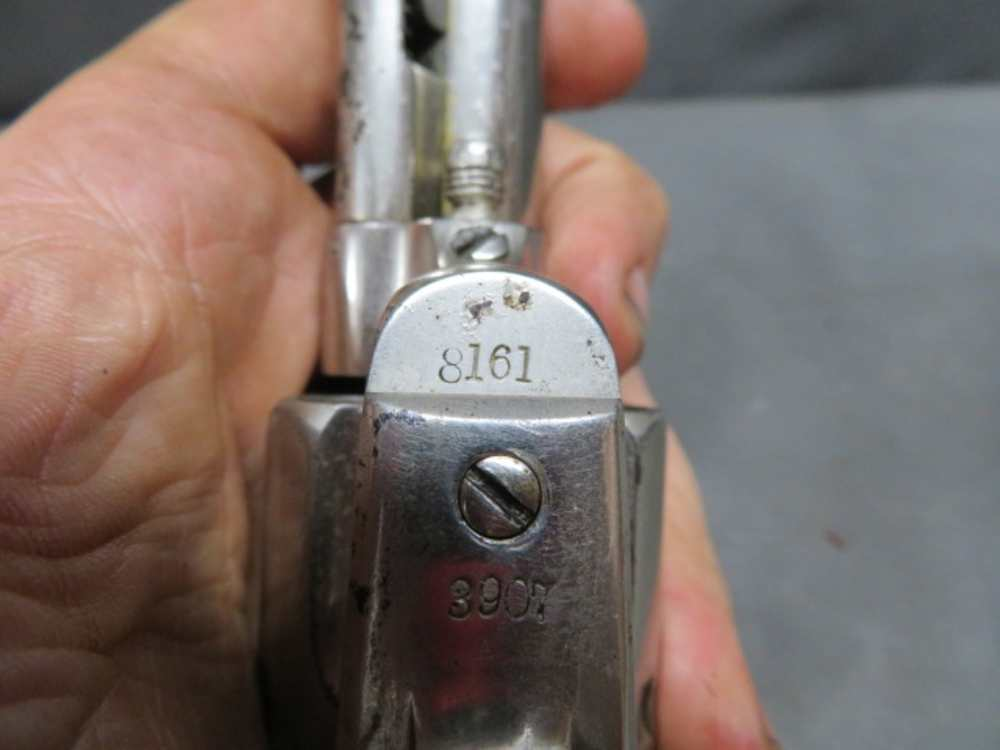
Colt Single Action Army Revolver (US Artillery Model), Eisel Armory inventory photo.
Colt Single Action Army Revolver (US Artillery Model), inventory photo. Photo property of Eisel Armory.
×