A Big-Bore Sidearm for the Hunting Field

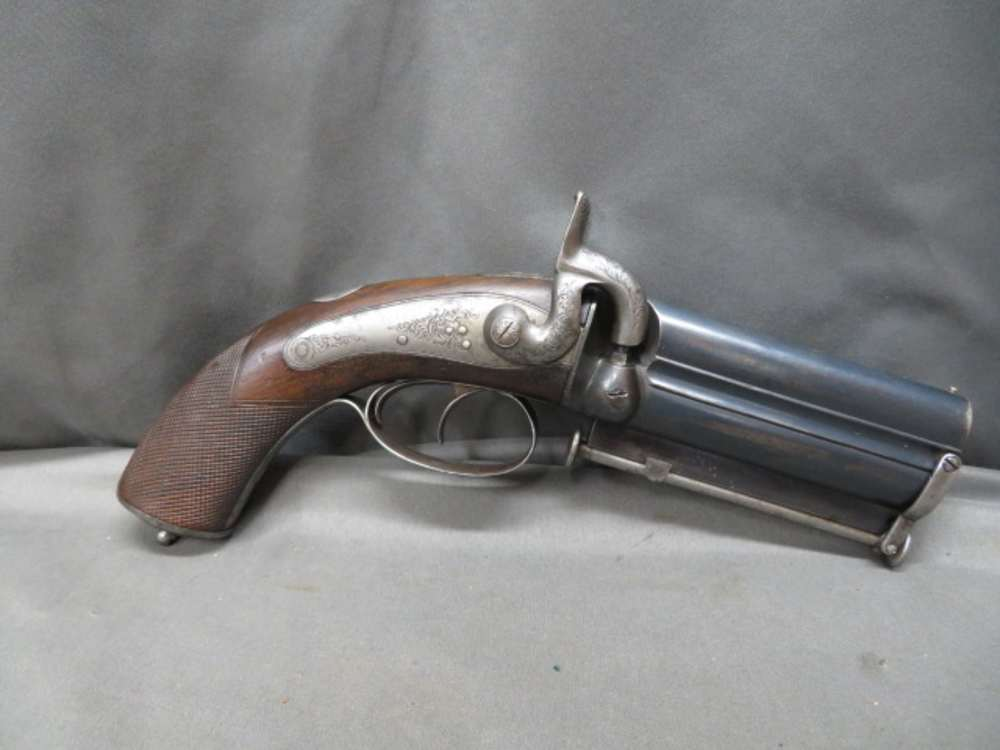
English R.B. Rodda & Co. double-barrel percussion howdah pistol, full profile
Full profile of an English R.B. Rodda & Co. double-barrel percussion howdah pistol. Photo property of Eisel Armory.

The howdah pistol takes its name from the “howdah,” the raised seat mounted on an elephant’s back from which British and colonial hunters pursued tiger and other dangerous game across 19th-century India. Carried as a last-resort backup to a hunting rifle, howdah pistols were built in large calibers and often as double-barreled percussion arms, meant to deliver a stopping blow at point-blank range if a charging animal closed the distance before a rifle could be reloaded. This example, bearing the mark of R.B. Rodda & Co. — a prominent Anglo-Indian gunmaker with roots in London and Calcutta — represents one of the best-known makers of the type.

Origins: A Practical Answer to a Real Danger

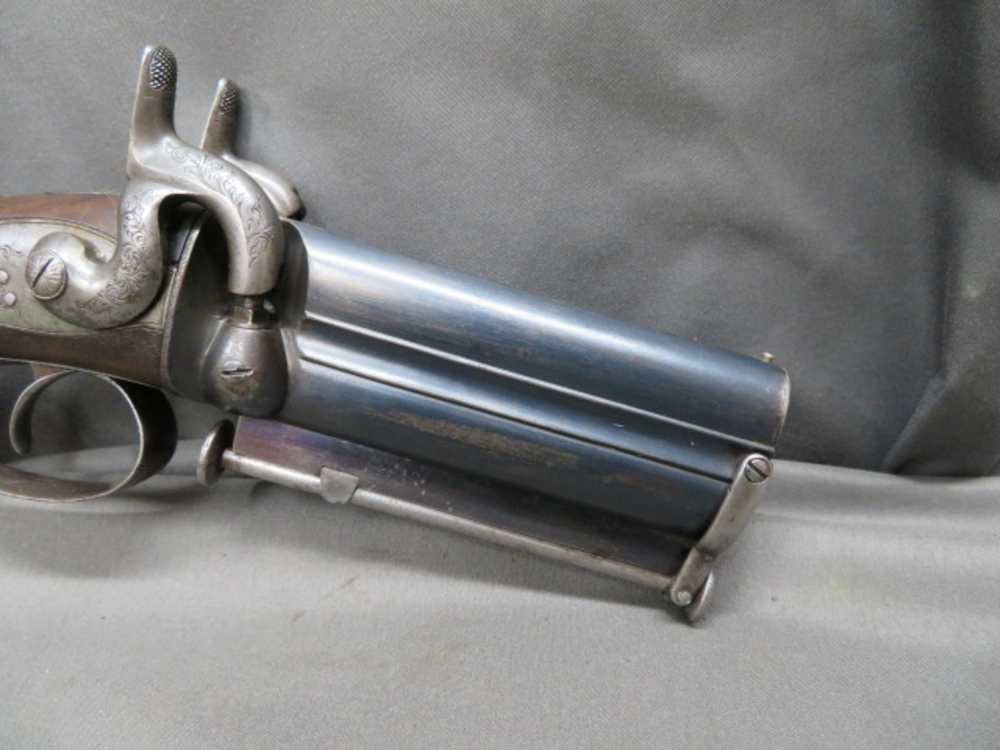
Unlike a conventional dueling or pocket pistol, the howdah pistol emerged directly from the practical demands of big-game hunting in colonial India, where a wounded tiger or leopard charging from cover left little time to reload or bring a second rifle to bear. Gunmakers responded with heavy, large-bore pistols — frequently double-barreled percussion arms, built side-by-side or over-under depending on the maker and customer — not unlike a scaled-down shotgun, meant to be carried holstered within easy reach of a hunter seated in the howdah. Documented Rodda howdahs include both layouts; the side-by-side configuration shown on this example is common but not universal.

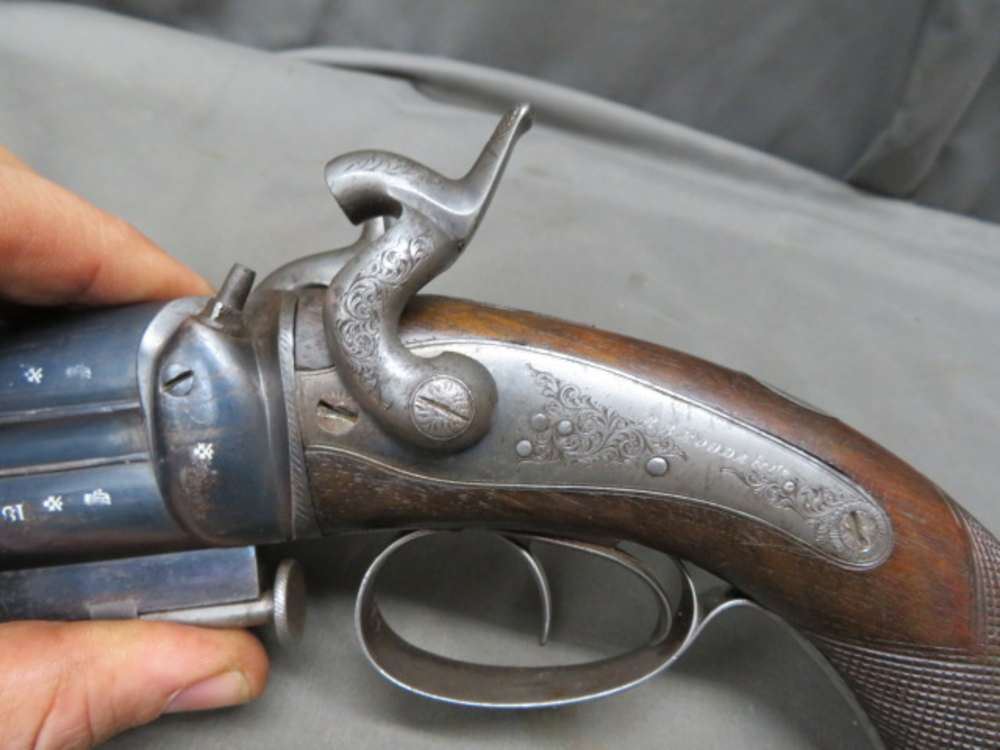
Close-up of the Rodda howdah pistol's cocked hammers and side-by-side barrels
Close-up of the cocked hammers and side-by-side barrels. Photo property of Eisel Armory.

Built by R.B. Rodda & Co. of London & Calcutta

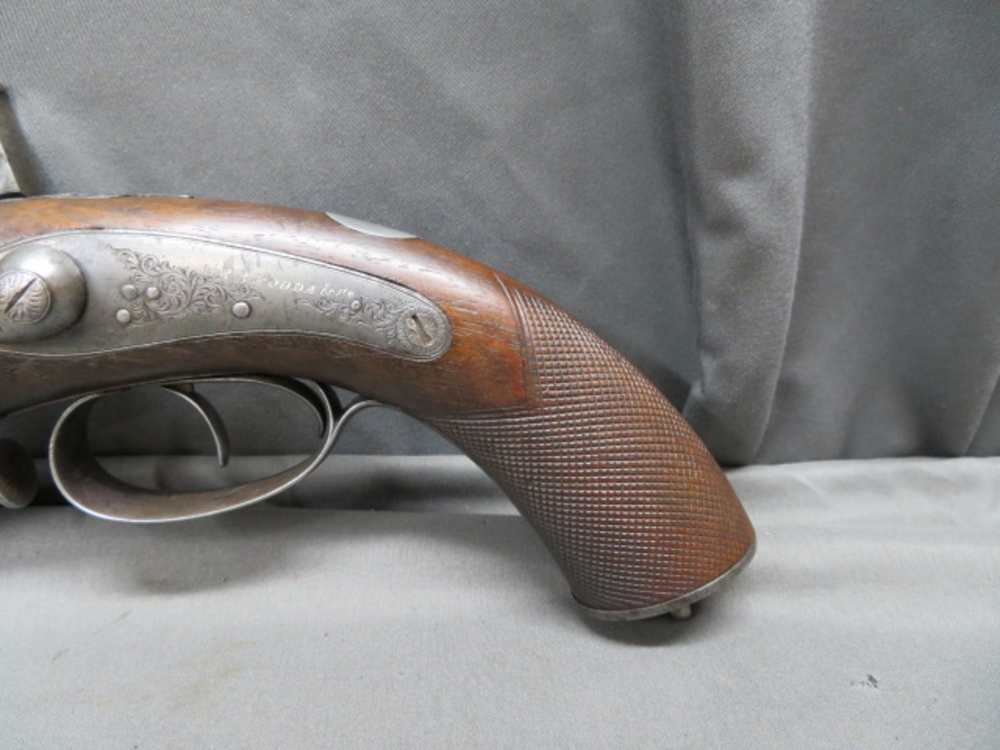
Close-up of the engraved lock plate and checkered grip on the Rodda howdah pistol
Close-up of the engraved lock plate and checkered grip. Photo property of Eisel Armory.

R.B. Rodda & Co. was among the prominent British gunmaking firms of the 19th century with a dual London and Calcutta identity, supplying sporting guns, rifles, and pistols to British officers, civil servants, and hunters stationed across India. Like other Anglo-Indian gunmakers of the period, the firm built and retailed arms to a colonial clientele, often finishing English-made actions and barrels with engraving and fitting done to order. Precise production figures for Rodda’s howdah pistols aren’t well documented in open sources, but surviving examples turn up regularly enough to suggest steady demand through the mid-to-late 19th century.
A Tool of the British Raj

Howdah pistols like this one were carried almost exclusively within the context of British colonial India, used by hunters, military officers, and civil administrators rather than issued as a standard military sidearm. Their use is tied closely to the era of organized tiger and big-game shikar (hunting expeditions) that flourished under the Raj, and to a lesser extent among travelers and officials who wanted a compact, powerful backup arm for personal defense in remote areas.

Close-up of the hammer and maker's engraving on the Rodda howdah pistol
Close-up of the hammer and maker's engraving. Photo property of Eisel Armory.

From India to American Collections

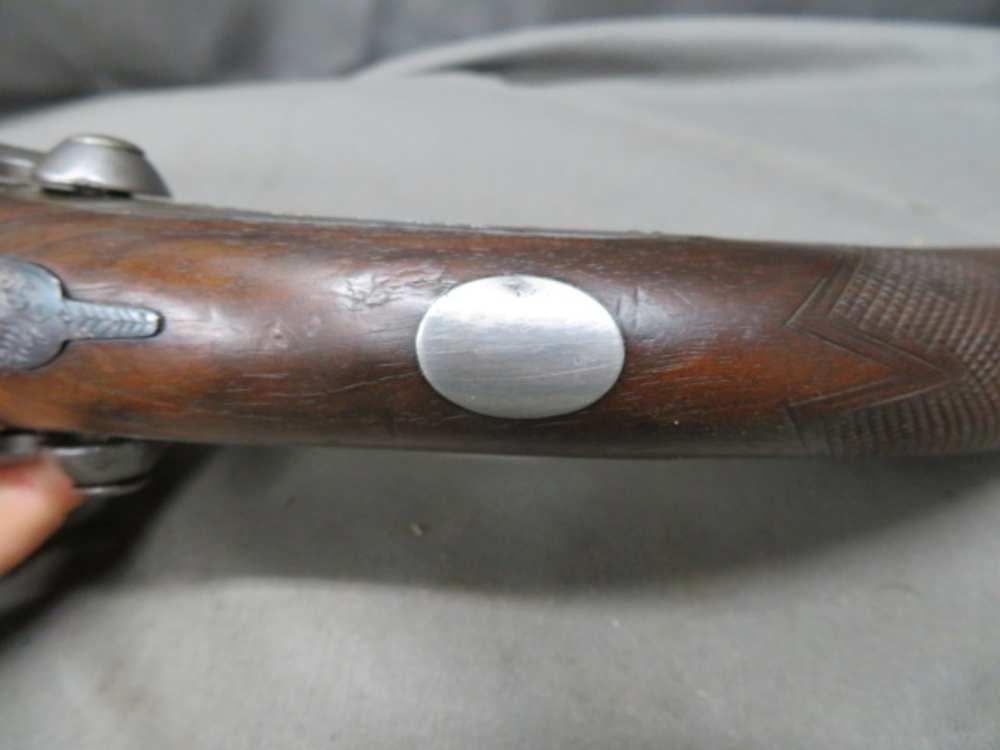
Close-up of an oval inlay on the grip strap of the Rodda howdah pistol
Close-up of an oval inlay on the grip strap. Photo property of Eisel Armory.

Howdah pistols reached the United States primarily through the antique arms trade rather than any wartime import program, arriving as British colonial-era firearms and hunting relics were dispersed through estate sales, auctions, and the broader 20th-century collector market. Today they’re valued by collectors of British and colonial arms as much for their unusual history and hand engraving as for their mechanical rarity.

Cousin to the Coach Gun, Not a True Pistol Twin

Howdah pistols are often compared to contemporary double-barreled coach guns and to later large-bore cartridge revolvers built for similar dangerous-game defense, but the double-barreled percussion howdah pistol occupies its own niche — essentially a hand-carried, scaled-down shotgun built for one purpose: close-range stopping power against an animal a rifle bullet hadn’t already put down. For collectors, a documented, maker-marked example like this one — bearing Rodda’s name and clearly a purpose-built colonial hunting arm — represents a tangible link to a specific and colorful chapter of 19th-century British India.

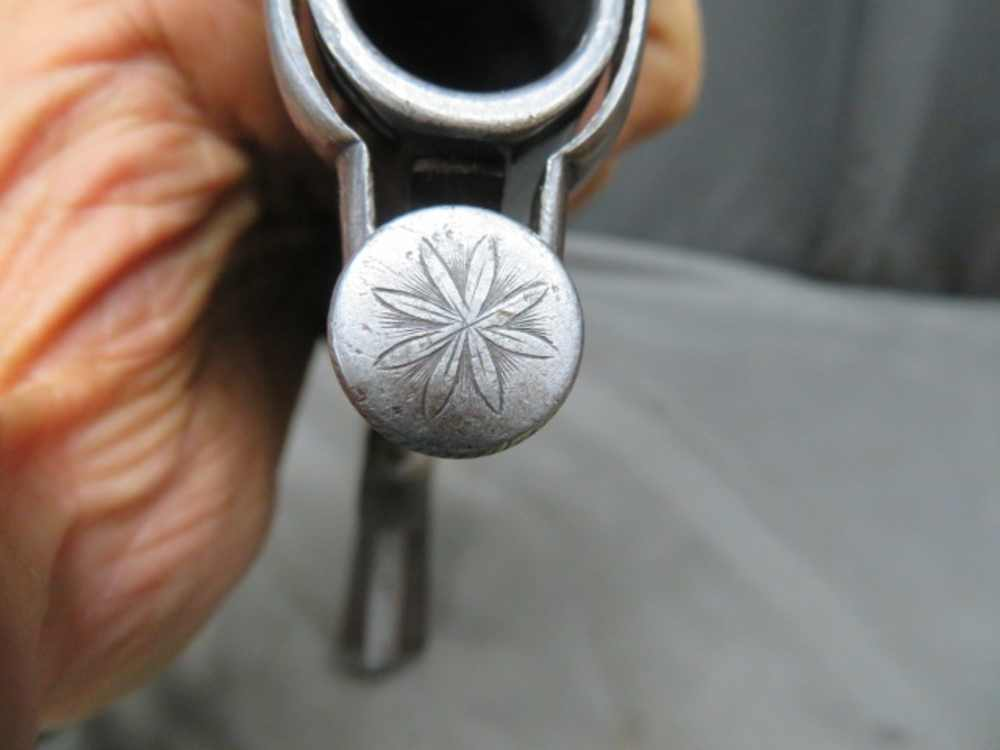
Close-up of the engraved rosette on the muzzle end of the Rodda howdah pistol
Close-up of the engraved rosette on the muzzle end. Photo property of Eisel Armory.
×