1
The Colt SP1 was one of the earliest commercially available AR-15 rifles—and its triangular handguards and fixed carry handle make its vintage silhouette instantly recognizable today.

Introduced commercially during the 1960s, Colt’s SP1 brought the recognizable AR-15 design to the civilian market. Its lightweight construction, fixed carry handle, triangular handguards, fixed stock and slender barrel gave it the unmistakable profile associated with America’s early “black rifle” era.

Manufactured in 1971, this example comes from the SP1’s desirable early-production period. Colt serial-number records should be consulted to confirm the exact manufacturing date. Colt Serial Number Lookup

This vintage Colt SP1 AR-15 semi-automatic rifle displays the classic early configuration collectors recognize immediately: triangular handguards, fixed carry-handle upper, fixed stock, 20-round-style magazine and lightweight barrel profile. Its visible age and handling wear give it an honest, time-capsule appearance.

At more than 50 years old, a firearm manufactured in 1971 may qualify federally as a Curio & Relic when maintained in its original configuration. Applicable federal, state and local requirements still apply. ATF Curios & Relics guidance

A Close Look at an American Classic: 1971 Colt SP1 AR-15

2
Unlike detachable sights found on many modern AR-15s, the SP1’s rear sight is built directly into its fixed carry handle—one of the most recognizable features of the original design.

The Colt SP1 entered the civilian market during the 1960s and became one of the earliest commercially available AR-15 rifles. Manufactured in 1971, this example comes from the model’s early production era, when its simple lines and lightweight design closely reflected the appearance of America’s early military rifles

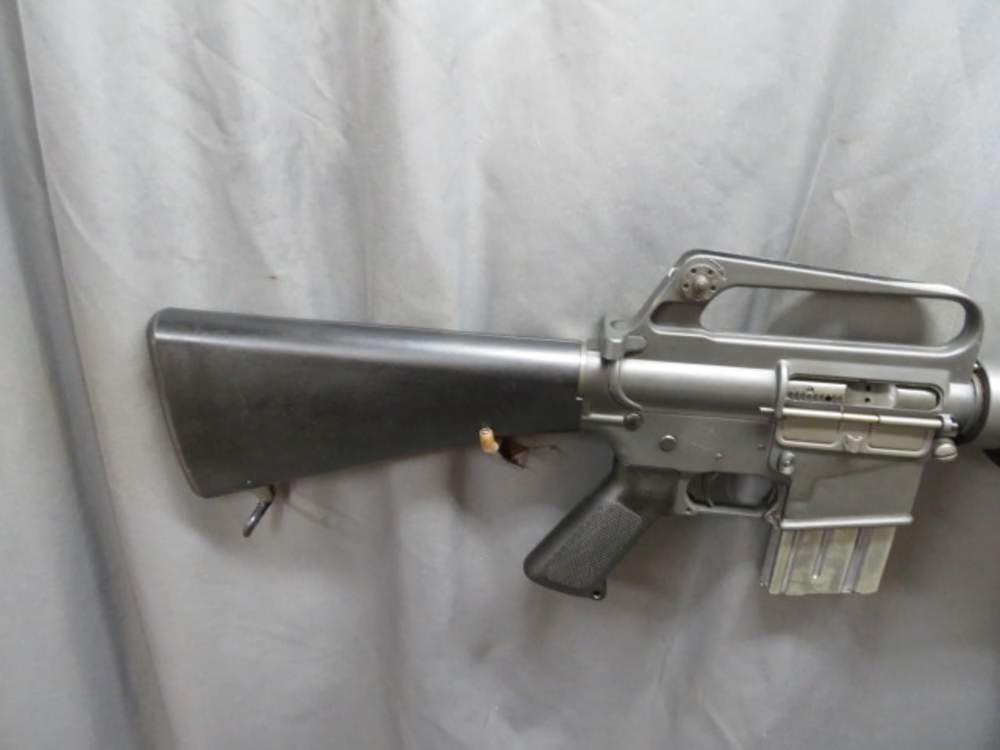
This close-up highlights the rear portion of the vintage Colt SP1. Visible features include its smooth fixed stock, narrow pistol grip, fixed carry-handle upper, forward assist, early-style receiver and short metal magazine.

The gray metal finish contrasts with the black furniture, while visible surface and handling wear reflect the rifle’s age. Together, these details give the SP1 its unmistakable early-1970s appearance.

The Front End That Defined the Early AR-15

The Colt SP1 brought the AR-15 design to the American civilian market during the 1960s. This 1971 example comes from an early production period and retains the slim, lightweight appearance that made the original rifle so distinctive.


This photograph highlights the SP1’s front assembly, including its rifle-length triangular handguard, ventilation openings, slender barrel, fixed triangular front-sight base and early-style flash suppressor.

The gray handguard and metal finish show visible age and handling wear, giving the rifle an authentic vintage appearance consistent with its more than 50-year history.


3

The Markings Tell the Story: 1971 Colt SP1 AR-15

4
5
6

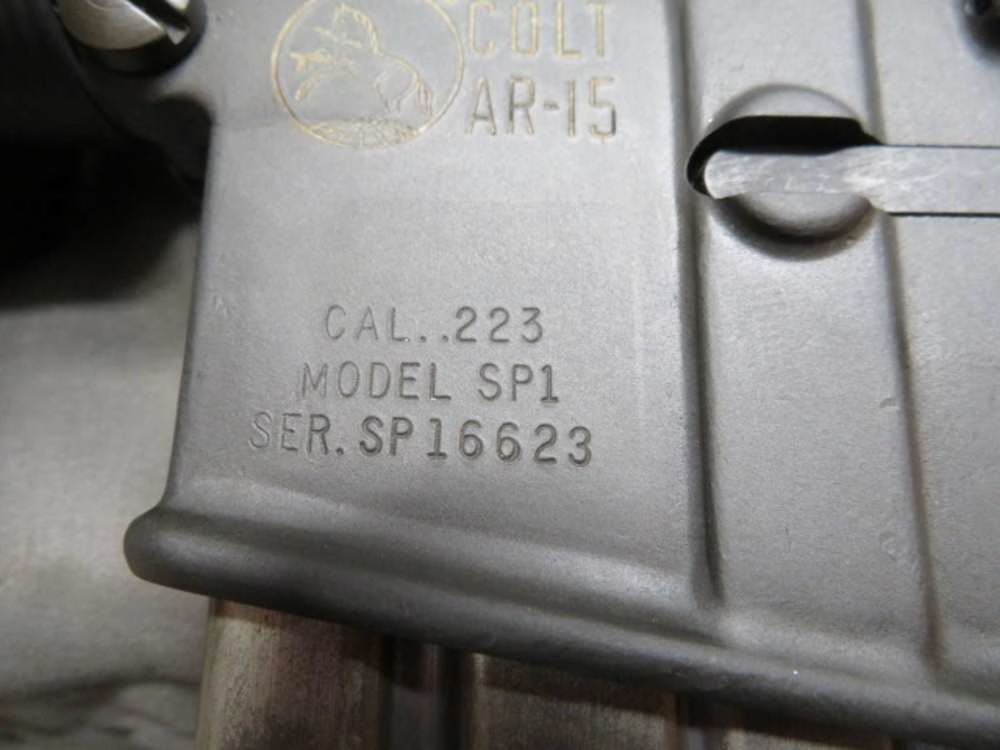
The serial number SP16623 dates this Colt SP1 to 1971. Its early “SP” prefix, prancing-horse logo and Hartford markings make the receiver a fascinating time capsule from Colt’s original civilian AR-15 era.

Small Detail, Big History: The Classic SP1 Magazine

10
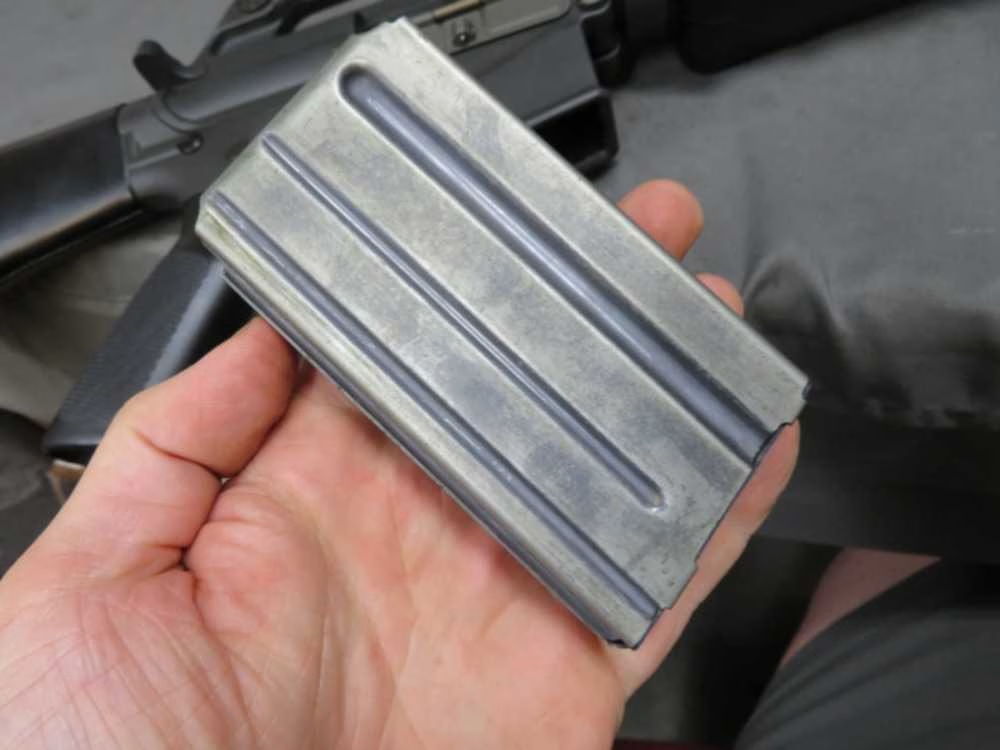
Early 20-round-style AR-15 magazines had a straight profile, while the familiar curved design became more common with larger-capacity magazines.

Early Colt SP1 rifles were commonly paired with compact, straight-bodied aluminum magazines. Their lightweight construction complemented the SP1’s original design and contributed to the unmistakable appearance of early civilian AR-15 rifles.

This photograph highlights the rifle’s vintage-style, straight-bodied metal magazine. It displays the characteristic pressed reinforcing ribs, folded metal construction and natural gray finish associated with early-pattern AR-15 magazines.

Visible surface discoloration and handling marks give it an honest period appearance that complements the 1971 Colt SP1 pictured in the background.

Built for the Field: The Colt SP1’s Classic Fixed Stock

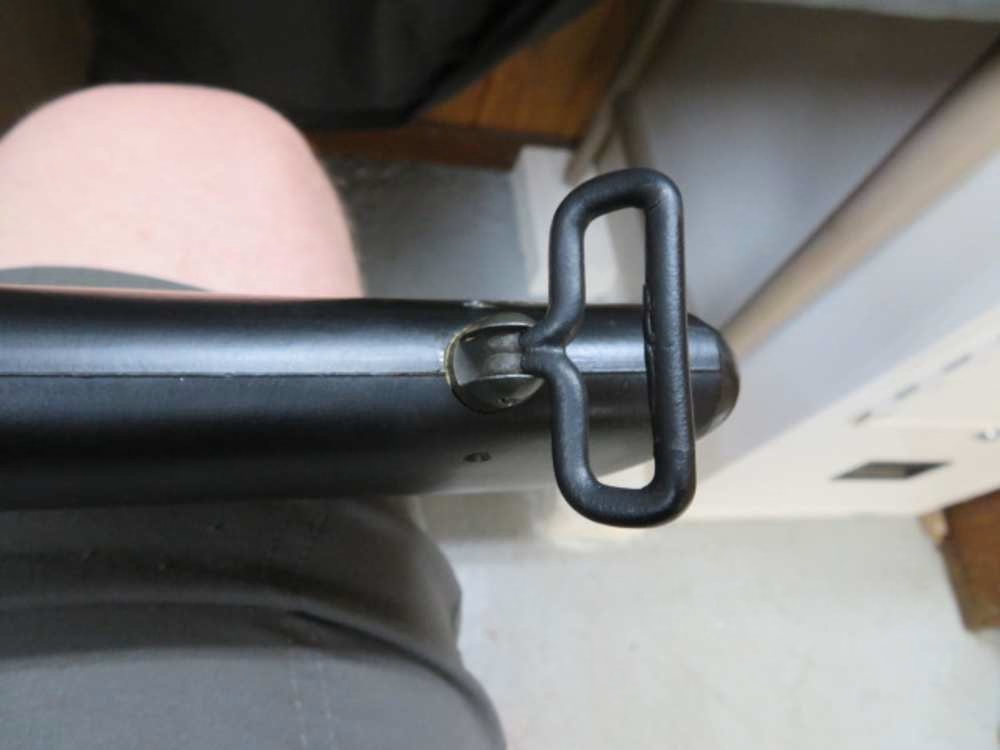
The early Colt SP1 retained the simple fixed-stock design associated with the original generation of AR-15 rifles. Unlike later adjustable stocks, this solid configuration helped give the SP1 its long, streamlined and instantly recognizable profile.
Description
This close-up shows the underside of the rifle’s black fixed stock and its metal rear sling swivel. The loop is secured near the stock’s rear edge and displays a dark finish that complements the original-style furniture.
Minor handling marks are visible around the mounting point, adding authentic character to this 1971 Colt SP1.

11
The early Colt SP1 retained the simple fixed-stock design associated with the original generation of AR-15 rifles. Unlike later adjustable stocks, this solid configuration helped give the SP1 its long, streamlined and instantly recognizable profile.

An Iconic Silhouette: The Colt SP1 Front Sight

12
The SP1’s front-sight base served multiple purposes—it protected the adjustable sight post while also supporting the barrel’s gas system and forward sling swivel.

The Colt SP1 carried forward the tall, fixed front-sight design associated with the earliest AR-15 rifles. This sturdy assembly became a defining visual feature of the platform and helped give the SP1 its unmistakable early military-inspired profile.

This close-up highlights the 1971 Colt SP1’s triangular front-sight base, slender barrel and forward sling swivel. The sight assembly is positioned directly ahead of the rifle-length handguard and displays a dark finish with light age-related wear.

The protected sight post and open-frame construction reflect the simple, functional styling of early AR-15 production.

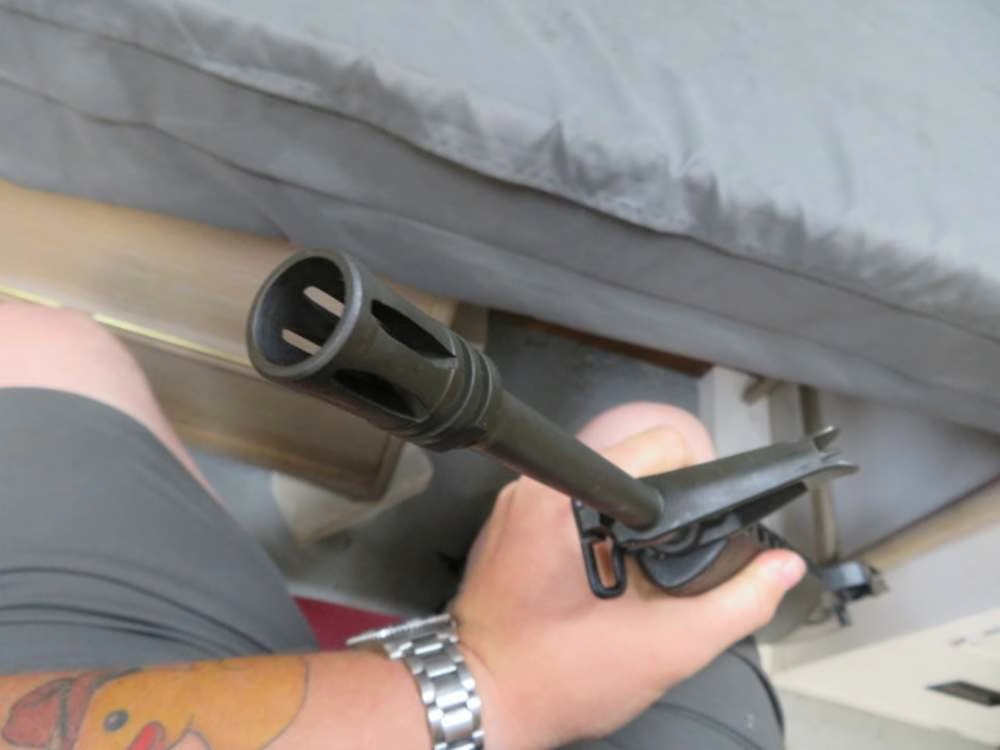
At the Muzzle of History: The 1971 Colt SP1

By 1971, Colt’s SP1 had become one of the most recognizable early civilian AR-15 rifles. Its slim barrel and period muzzle device preserved the lightweight appearance associated with the original generation of the design.

This dramatic muzzle-level photograph highlights the SP1’s slender barrel, fixed front-sight assembly, forward sling swivel and slotted flash suppressor. The dark finish displays light wear consistent with the rifle’s age.

The combination of its narrow barrel and compact muzzle device creates the lean, uncluttered profile that separates early SP1 rifles from many heavier modern variations.

15
Early AR-15 muzzle devices went through several design changes. This 1971 SP1 displays the recognizable slotted “birdcage” style that became a signature feature of the era.