3773cbd7 985d 436a be44 e6e0c927d1a0

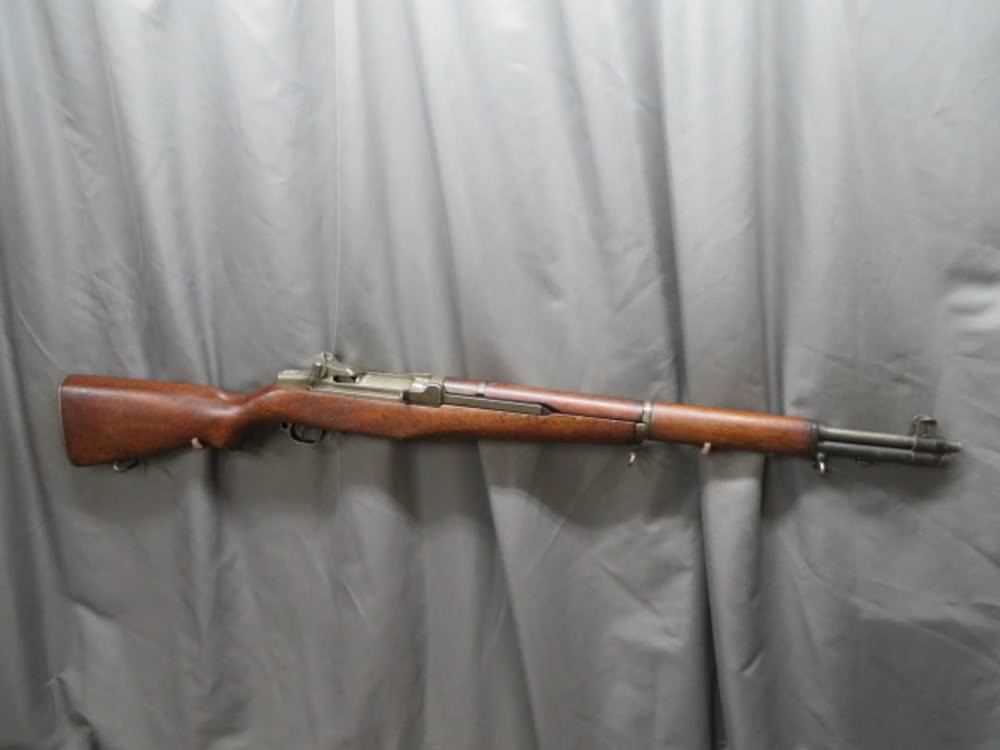
Rare Winchester “WIN-13” M1 Garand

1
🇺🇸 Fun Fact: Fewer than 40,000 “WIN-13” Garands are believed to have been produced, making them especially desirable among military collectors.

Very good condition WWII US military M1 Garand semi auto rifle in .30-06 caliber that was manufactured by Winchester, as marked on the receiver, and is serial number “1616xxx”, which dates it to manufacture in April 1945. Rifle has the desirable “WIN 13” marking on the receiver leg and is part of the last 40,000 Winchester M1 Garands produced at the end of the war. Rifle is NOT import marked and has all Winchester parts. Has the lock bar rear sight and an uncut op rod. Metal finish is nice original gray parkerized showing a little normal wear. Bore is bright and excellent with strong rifling. Stock has original finish and shows some normal handling marks. Left side of stock has “W.R.A. G.H.D.” and “ordnance wheel” cartouches below the receiver. Underside of wrist has a “circle P” cartouche. A nice late Winchester M1 Garand that will make a fine addition to a collection. 


Produced near the end of World War II, the Winchester “WIN-13” represents one of the final and most collectible variations of Winchester’s M1 Garand production. Its distinctive D28290WIN-13 drawing number appears on the receiver leg, identifying it as a late-war Winchester receiver. Learn more about Winchester Garands.

👉 Own a remarkable piece of American military history!


Visit Eisel Armory on eBay for even more unique relics!


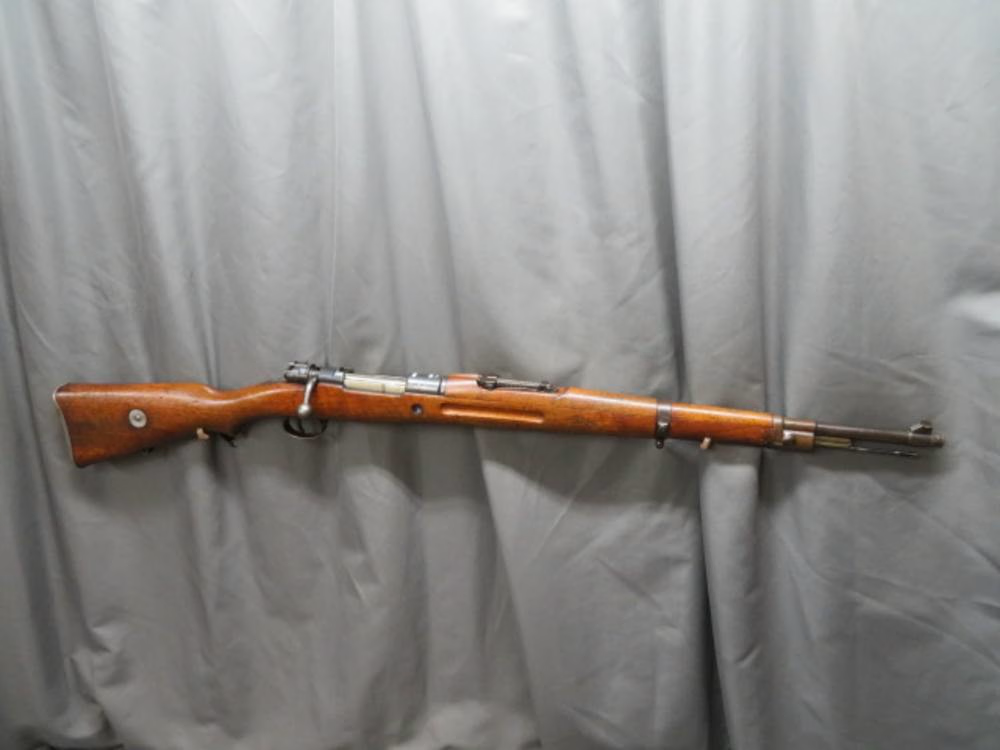
Rare Luftwaffe “660” Mauser

Very good condition WWII German G.29(o) Mauser Rifle in 8mm Mauser (7.92 x 57) caliber that has the Steyr “660” code on the receiver ring and dated 1939. Rifle is NOT import marked and has all matching serial numbers. Metal finish is original blue showing some normal wear. Bore is very good and bright with strong rifling. Stock has original finish and shows some normal handling marks. Right side buttstock has Luftwaffe “eagle L” property stamp and two Waffenamts. Undersides of wrist and forend have Waffenamts. Underside of buttstock also has a matching serial number. Complete with correct original cleaning rod. A rare Luftwaffe G.29(o) Mauser Rifle with matching numbers that will make an excellent addition to a collection! 


Manufactured at Austria’s Steyr factory in 1939, this scarce G.29(ö)—also known as the G.12/34—was produced for German Luftwaffe service following the 1938 Anschluss. Production ended in late 1939 when Steyr transitioned to the standard K98k pattern. Its matching components and “660” maker code make this an especially desirable WWII collectible.

👉 Check out the history of this exceptionally rare piece!

2
✈️ Fun Fact: The secret wartime code “660” identified Steyr as the manufacturer. Only about 50,000 G.29(ö) rifles were produced during 1938–1939. Forgotten Weapons

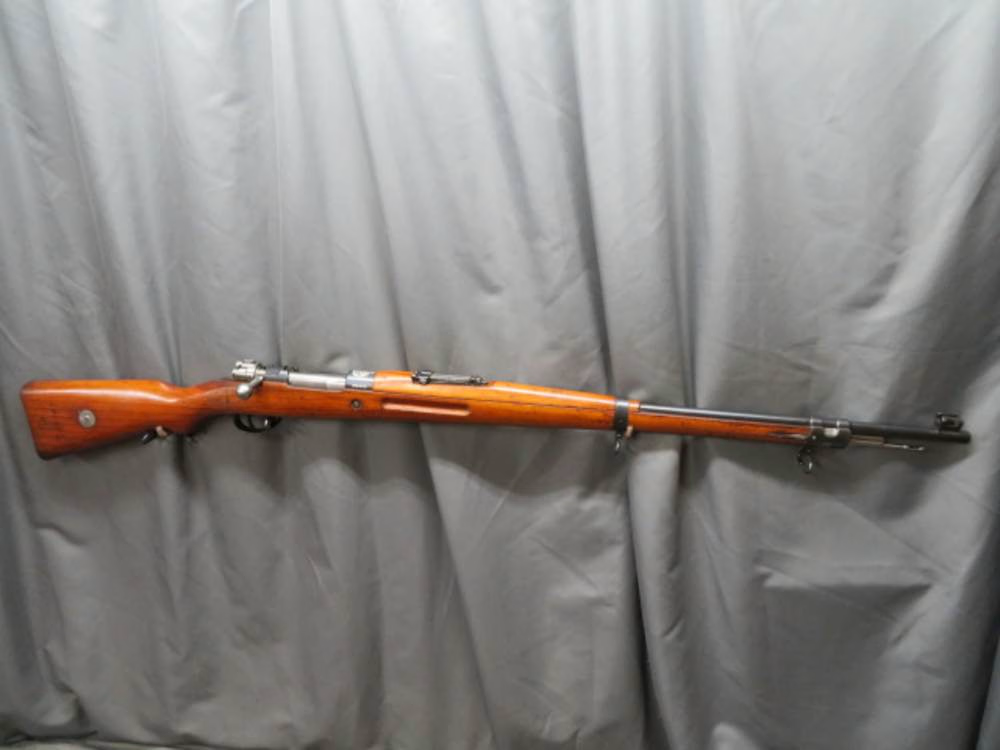
The Shah’s Mauser: Persian 98/29

3
🦁 Fun Fact: The receiver crest depicts Persia’s famous Lion and Sun, with the lion holding a curved sword. Matching Persian-numbered components make surviving examples especially collectible. National Firearms Museum

Fine condition Persian Model 98/29 Mosin Nagant Rifle in 8mm Mauser (7.92 x 57) caliber that has a nice Persian lion crest on the receiver ring and BRNO factory markings in Farsi on the receiver side rail. Rifle is import marked on the barrel and has all matching serial numbers including receiver, bolt, and stock. Metal finish is nice original blue showing very little wear. Bore is bright and excellent with strong rifling. Stock has original finish and shows some normal handling marks. Right side buttstock has a sharp clear matching Farsi serial number. Complete with correct original cleaning rod. A very nice Persian 98/29 Mauser with matching numbers!
Manufactured by Československá Zbrojovka Brno in Czechoslovakia during the 1930s, the Model 98/29 was produced under contract for the Persian Army. These elegant 8mm long rifles are celebrated for their excellent craftsmanship, Persian-script markings, and strong Mauser 98 action.

👉 Discover this beautifully marked piece of Persian military history!
Visit Eisel Armory on Gunbroker for more!

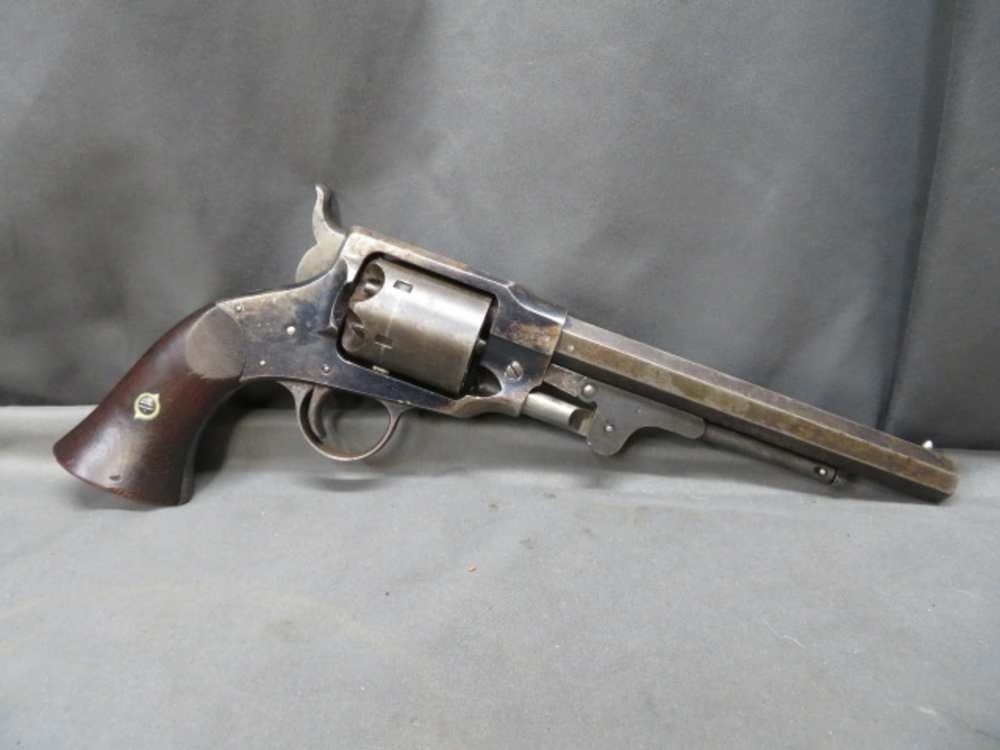
The Civil War Revolver That Arrived Too Late

Very good condition original antique Civil War Rogers & Spencer Army Model Revolver in .44 percussion caliber. Mechanically functions fine and tight. One of only 5,000 produced and delivered in 1865. Gun has all matching serial numbers except the barrel, including frame, cylinder, loading lever, and grips. Metal finish is original blue showing some normal wear. 7 ½” octagonal barrel has a bright excellent bore with strong rifling. Wood grips have original finish and a good tight fit with some normal handling marks. Left side grip has an inspector cartouche. A nice Rogers & Spencer Army Model Revolver that will make a fine addition to a collection. 


Rogers & Spencer received a U.S. Army contract in November 1864 to manufacture 5,000 of these powerful .44-caliber, six-shot percussion revolvers. Deliveries began in January 1865, but the Civil War ended before the full order was completed. Despite their excellent construction, the revolvers were never issued for field service. Smithsonian National Museum of American History


👉 Would you add this scarce Civil War revolver to your collection? Follow @EiselArmory!
4
⚔️ Fun Fact: All 5,000 Army-contract revolvers reportedly remained in government storage for decades—making surviving examples remarkable pieces of untouched Civil War history.

America’s Secret 1919 Springfield

5
⚙️ Fun Fact: Look for the distinctive ejection port cut into the receiver’s left side—the easiest way to recognize a genuine Mark I Springfield made for the Pedersen Device.

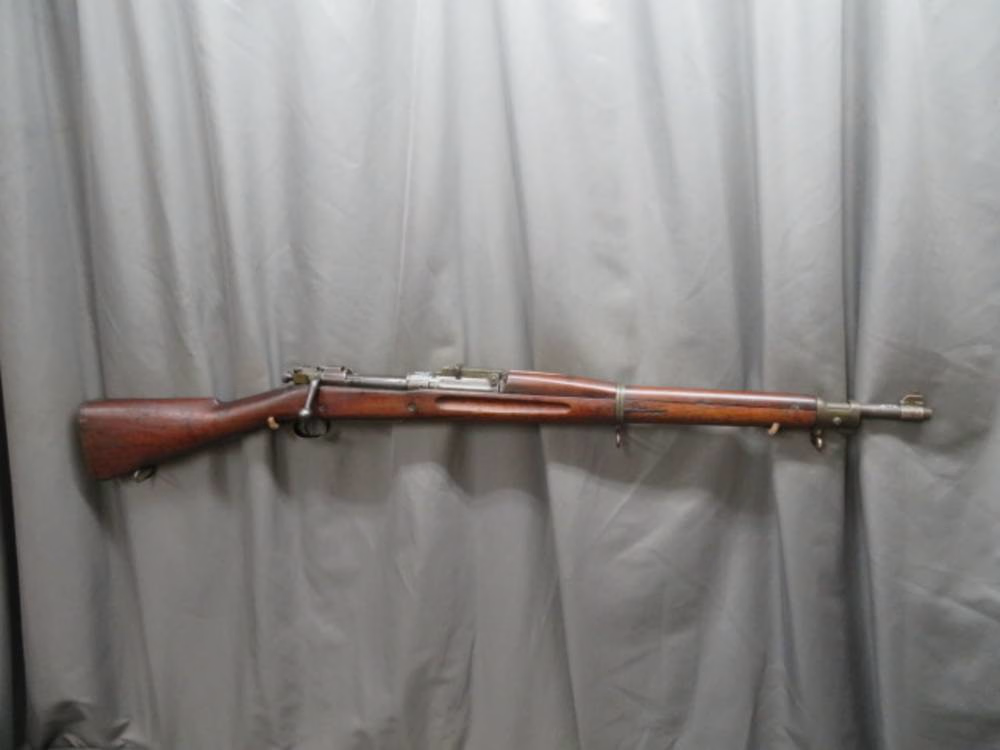
Good condition US Model 1903 Mark I Springfield Rifle in .30-06 caliber that has Springfield Armory and model designation markings on the receiver. Rifle was designed for use with the Pedersen semi-auto conversion device and has the ejection port milled in the receiver side rail. Receiver is serial number 1084xxx, which dates it to manufacture in 1919. Barrel is marked “SA” for Springfield Armory and dated “5-19” for May 1919. Rifle is NOT import marked. Rifle has Remington “R” marked bolt and 03A3 rear sling swivel. Stock is correct Mark I with cutout for ejection port. Metal finish is original blued and parkerized showing some wear. Bore is fair, gray and pitted with good average rifling. Stock has original finish and shows some normal handling marks. Top of wrist has a small hairline behind the receiver tang. Rear of handguard has a small chip on the left side, in front of the rear sight. Left side of stock has correct “W.J.S.” inspector cartouche below the receiver, along with Raritan Arsenal “RA-P” rebuild cartouche. This area also has scratched initials. Underside of wrist has “circle P” cartouche and underside of buttstock has a small “P” stamp. A good example of a Model 1903 Mark I Springfield Rifle for your collection.
The U.S. Model 1903 Mark I Springfield was specially modified to accept the top-secret Pedersen Device. By replacing the standard bolt, a soldier could convert the rifle from a conventional .30-06 bolt action into a semi-automatic firearm using a 40-round magazine and a smaller .30-caliber cartridge. The war ended before the system could enter combat. Springfield Armory National Historic Site

👉 Check out this rare 1919 Springfield Mark I—built for the secret Pedersen Device! 


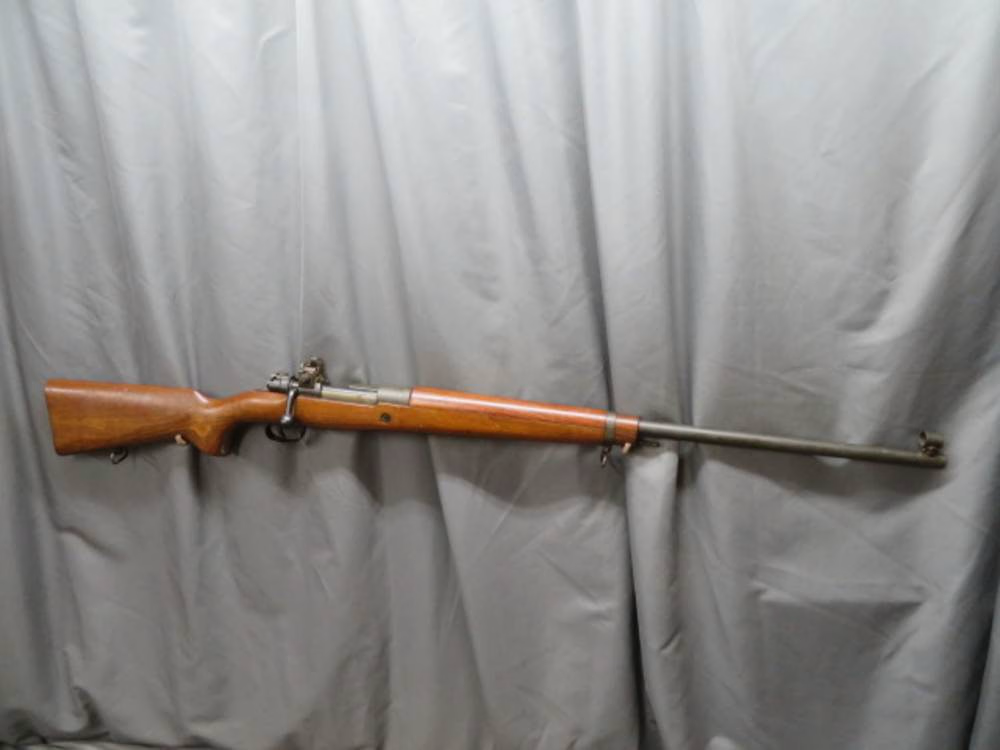
Norway’s Rare M59 F1 Sniper

Very good condition Norwegian Kongsberg M59 F1 Mauser sniper rifle in 7.62 NATO caliber that has the Kongsberg Arsenal “crown K” and model designation markings on the receiver ring. This rare and interesting rifle was produced using actions from leftover WWII German 98k Mauser Rifles. Rifle is serial number “USA0001” and is in correct original configuration including sights and scope rail. No optics. Rifle is NOT import marked and has matching serial numbers on the receiver and buttplate. Bolt is unnumbered. Metal finish is nice original gray parkerized showing a little normal wear. Bore is bright and excellent with strong rifling. Stock has original finish and shows some normal handling marks. Underside of buttstock is stamped “MADE IN NORWAY”. Complete with correct original cleaning rod. A very rare Mauser variation that will make a fine advanced addition to a collection! 

Introduced by Kongsberg Våpenfabrikk after World War II, the M59 was built around German Mauser 98 actions left in Norway following the occupation. The later M59 F1 was chambered in 7.62×51mm NATO and served as a precision rifle with Norway’s armed forces and Home Guard.

👉 Check out this rare Norwegian Kongsberg M59 F1 sniper rifle in 7.62 NATO!
6
🎯 Fun Fact: Beneath its Norwegian target stock and heavy barrel is a WWII-era German Mauser action—giving this rifle a fascinating link between two generations of military history. Norwegian Arms and Armour Society

Imperial Russia’s 1897 Dragoon Mosin

7
🐎 Fun Fact: The later Soviet M91/30 was based largely on the Dragoon’s dimensions. Because many original Dragoons were converted to M91/30 configuration, surviving early examples are especially scarce.

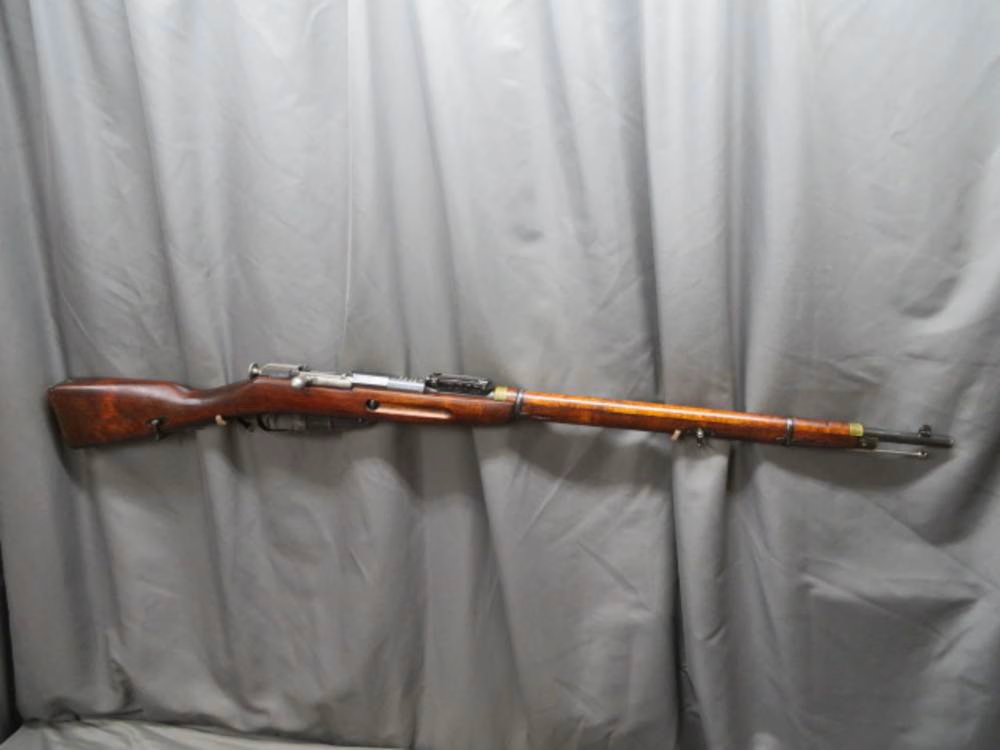
Very good condition antique Imperial Russian Model 1891 Mosin Nagant Rifle in 7.62 x 54r caliber that has Izhevsk Arsenal markings on the barrel and dated 1897. Rifle was captured and reissued by the Finns and has the Finnish army “boxed SA” property stamp on the left side of the barrel shank. Rifle is NOT import marked. Bolt was Finn renumbered to match the barrel. Floorplate does not match and buttplate is unnumbered. This is common and correct for Finnish Mosin Nagant rifles. Metal finish is Finn arsenal reblue showing some normal wear. Bore is good, bright with good rifling and some pitting. Has been counter bored at the muzzle. Finnish two-piece stock has original finish and shows some normal handling marks. Complete with correct original cleaning rod and Finnish sling hangers. A hard to find antique dated M91 Dragoon Rifle that will make a fine addition to a collection! 

Manufactured at Russia’s Izhevsk Arsenal in 1897, this Model 1891 Dragoon was designed for mounted troops. It was shorter and lighter than the standard M1891 infantry rifle, making it easier to carry on horseback while retaining the powerful 7.62×54mmR cartridge.

👉 Check out eBay for more rare military history!
Finland’s Precision Mosin: M28/76

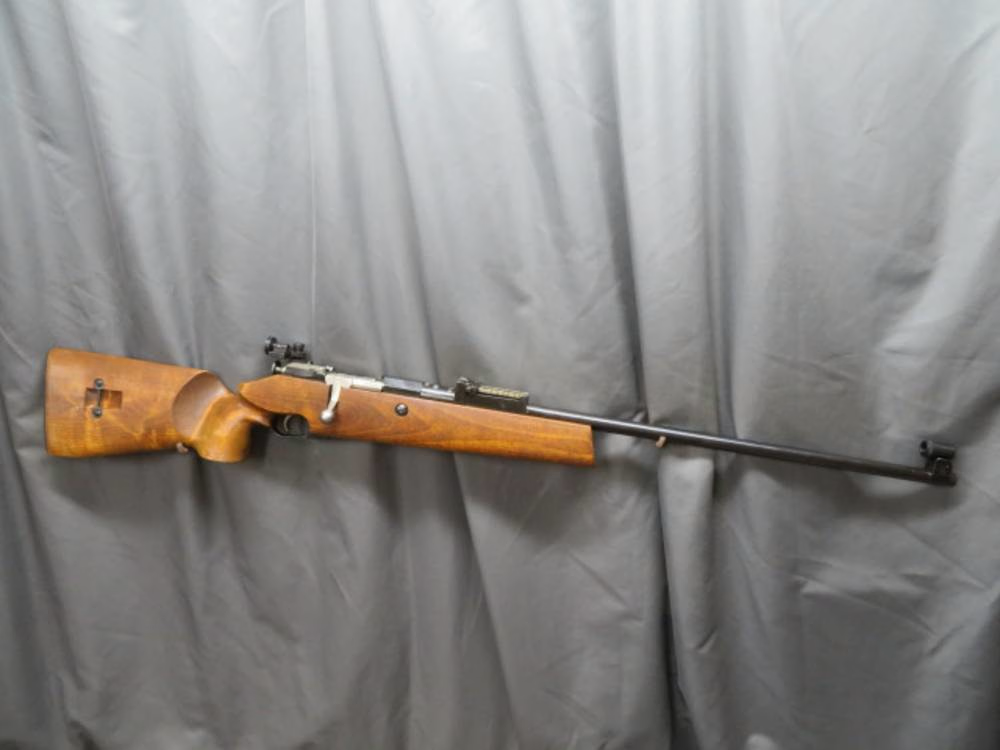
Very good condition Finnish Model 28/76 Mosin Nagant Rifle in 7.62 x 54r caliber that is marked “PSV” on the barrel and dated 1966. Converted from a late production Model 28-30 rifle. Rifle is import marked on the barrel and has matching serial numbers on the barrel and bolt. Floorplate does not match, as is common. Rifle has original sights. The receiver aperture sight screw is missing. Metal finish is nice original blue showing a little normal wear. Bore is bright and excellent with strong rifling. Stock has nice original finish and shows some normal handling marks. A scarce and desirable Finn M28/76 Mosin Nagant Rifle that will make an excellent addition to a collection and a great shooter! 


The Finnish M28/76 was developed as a precision target and marksman rifle for 300-meter competition. Finnish armorers rebuilt earlier M28/30 and M28/57 rifles with specialized stocks, refined sights, and carefully fitted Mosin-Nagant actions.

👉 Check out this rare Finnish M28/76 target rifle—and discover more on GunBroker! 

8
🎯 Fun Fact: The M28/76 combined a decades-old Mosin-Nagant action with modern competition features, creating one of Finland’s most distinctive military target rifles.

A Gew. 98 With Two German Histories

9
⭐ Fun Fact: The star marking, Saxon Crown/FA cypher, and Bavarian EWB stamp give this rifle an unusual service trail spanning Imperial Germany, Saxony, and postwar Bavaria.

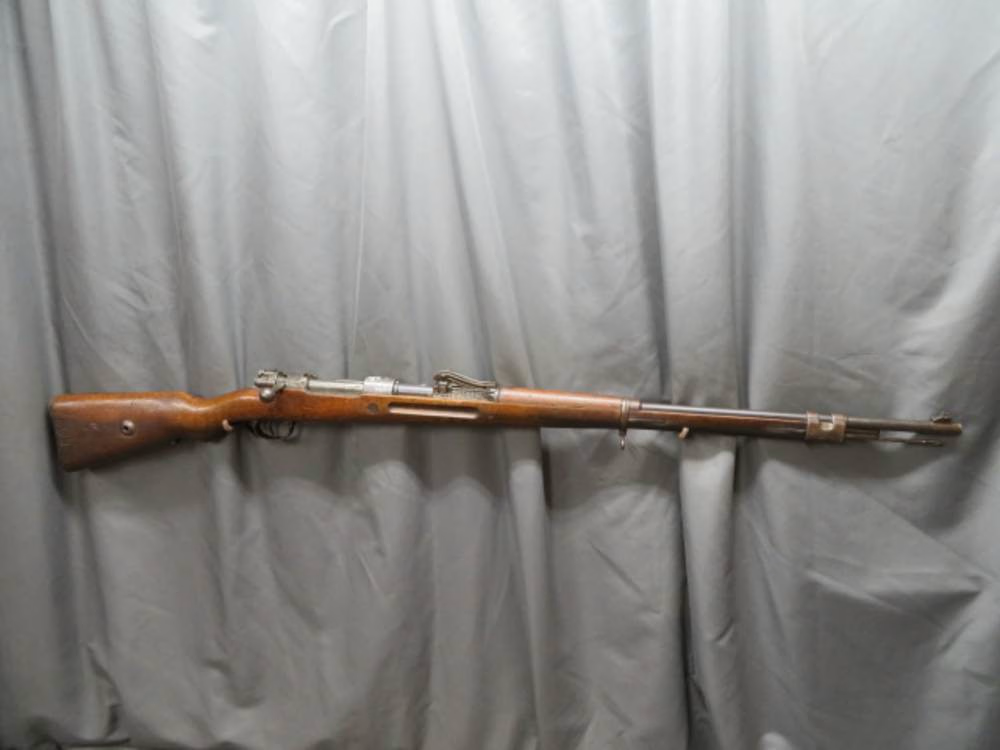
Very good condition WWI Imperial German GEW 98 Mauser Rifle in 8mm Mauser (7.92 x 57) caliber that has Spandau Arsenal markings on the receiver and dated “1916/17” indicating the receiver was produced in 1916 and the rifle assembled or reworked in 1917. Rifle has the “Sterngewehr” star marking on the receiver indicating it was produced with subcontracted parts. Rifle is NOT import marked and has all matching serial numbers except the handguard and ejector box/bolt stop. The handguard is an incorrect WWII German 98k laminated replacement. Rifle shows rare and desirable Saxon use with “crown FA” markings in the right side buttstock and on the buttplate. Also shows postwar Bavarian Freikorps use with an “EWB” brand in the right side buttstock. Receiver, bolt, and buttplate are original “in the white” with some gray and brown patina. Remaining metal finish is original blue showing some normal wear. Bore is dark with average worn rifling and some pitting. Stock has original finish and shows some normal handling marks. Right side buttstock and undersides of wrist and forend have Imperial German proof mark cartouches. Underside of buttstock also has a matching serial number. An interesting GEW 98 that will make a fine addition to a collection!
Originally produced at the Imperial Arsenal at Spandau in 1916–1917, this Gewehr 98 represents Germany’s standard infantry rifle of World War I. Its rare markings connect it to both Saxon military service and Germany’s turbulent postwar era. The Crown/FA cypher is associated with King Frederick Augustus III of Saxony, while EWB identifies later use by the Einwohnerwehr Bayern, a Bavarian citizen-defense organization formed amid the Freikorps era.

👉 Check out this exceptionally marked WWI Gewehr 98—GunBroker has much more to see!
Explore Eisel Armory on GunBroker
The Army’s Experimental Krag Bowie

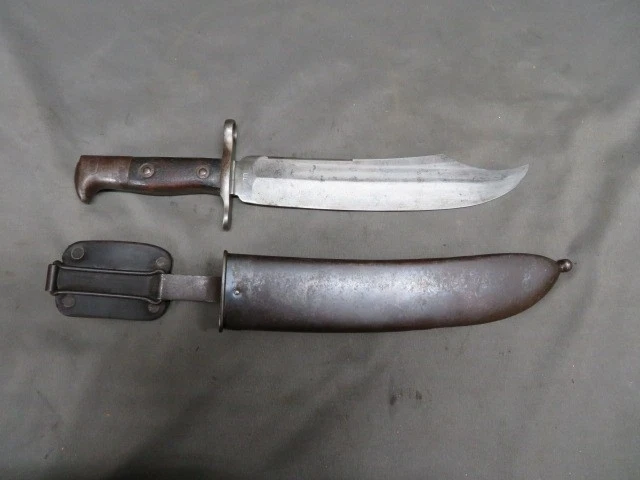
Very good condition original pre WWI US Army experimental Krag bowie blade bayonet that is marked “US” on the right ricasso and dated 1900 on the left ricasso. Blade has original bright finish with some graying. Hilt has mostly brown patina with a little pitting. Wood grips have original finish and a good tight fit with some normal handling marks. Lock button functions fine. Fitted in correct original steel scabbard that has original blue finish with some turned brown, no dents. The swiveling belt loop works fine and is complete with original leather sleeve. A rare Krag bowie bayonet, with only about 2,000 produced, that will make a fine advanced addition to a collection!
In 1900, the U.S. Army developed this experimental Bowie-blade bayonet for the Krag-Jørgensen rifle. Its broad nine-inch clip-point blade allowed it to serve as both a fighting knife and a mounted bayonet. Approximately 2,000 were produced for field testing, with examples reportedly sent to troops in the Philippines and Cuba.


🔥 Extra-hot piece—28 bids and climbing! Don’t miss this rare 1900 Krag Bowie bayonet on eBay!

10
🗡️ Fun Fact: The original metal scabbard is considered even scarcer than the experimental bayonet itself, making a complete set highly desirable among U.S. military collectors. The Springfield Edge