pix310787930
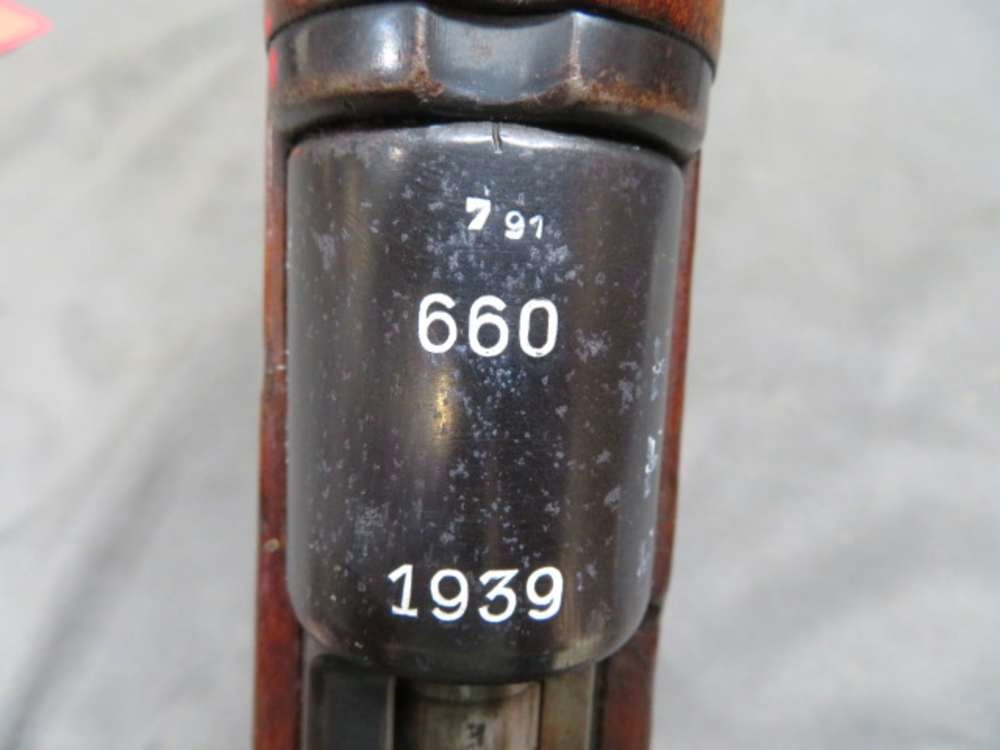
The G.29(ö) is nicknamed the “Luftwaffe Karabiner” because known 1938–1939 examples were produced for German Air Force service. Its 660 receiver code reveals Steyr as the manufacturer—without spelling out the factory’s name.

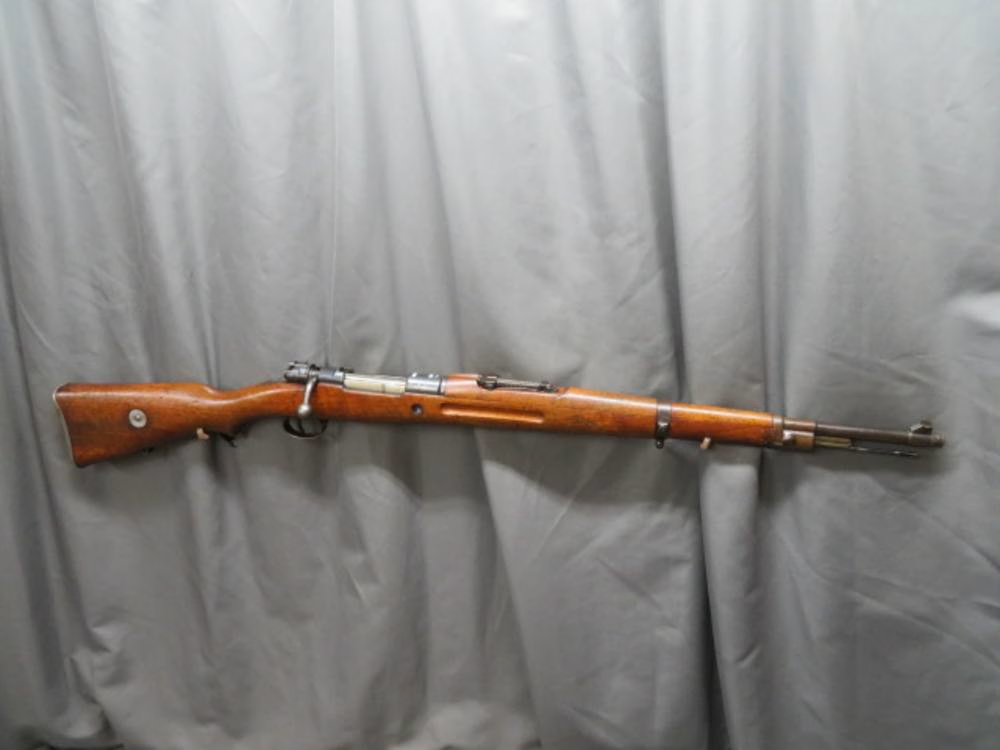
A scarce WWII German Luftwaffe-contract G.29(ö) Mauser manufactured by Steyr in 1939. Bearing the secret wartime factory code “660,” this matching rifle represents an uncommon early-war variation produced before Steyr transitioned to the standard K98k pattern.


The rifle commonly called the G.29(ö)—also known as the Gewehr 12/34—was manufactured in Austria by Steyr for German Luftwaffe use. Approximately 50,000 were produced between 1938 and 1939, chambered in 7.92×57mm Mauser. The “ö” signifies Österreich, the German name for Austria, while “660” was Steyr’s concealed manufacturer code. Surviving matching examples are especially desirable to military-history collectors. Forgotten Weapons Military Rifle Journal

The Secret “660” Code: A Rare 1939 Luftwaffe Mauser

pix636982935
: “660” was Steyr’s concealed manufacturer code, while “1939” identifies the production year. These coded markings allowed Germany to hide the identities of factories producing military arms.

This receiver belongs to a scarce WWII-era G.29(ö) Mauser, manufactured under German contract for the Luftwaffe. Its bold “660” code, 1939 date, and matching serial markings make it a fascinating piece of early-war military history.


The G.29(ö), also known as the Gewehr 12/34, was manufactured by Steyr in Austria during 1938 and 1939. Chambered in 7.92×57mm Mauser, it was primarily produced for German Luftwaffe service before Steyr shifted to the standard K98k design.

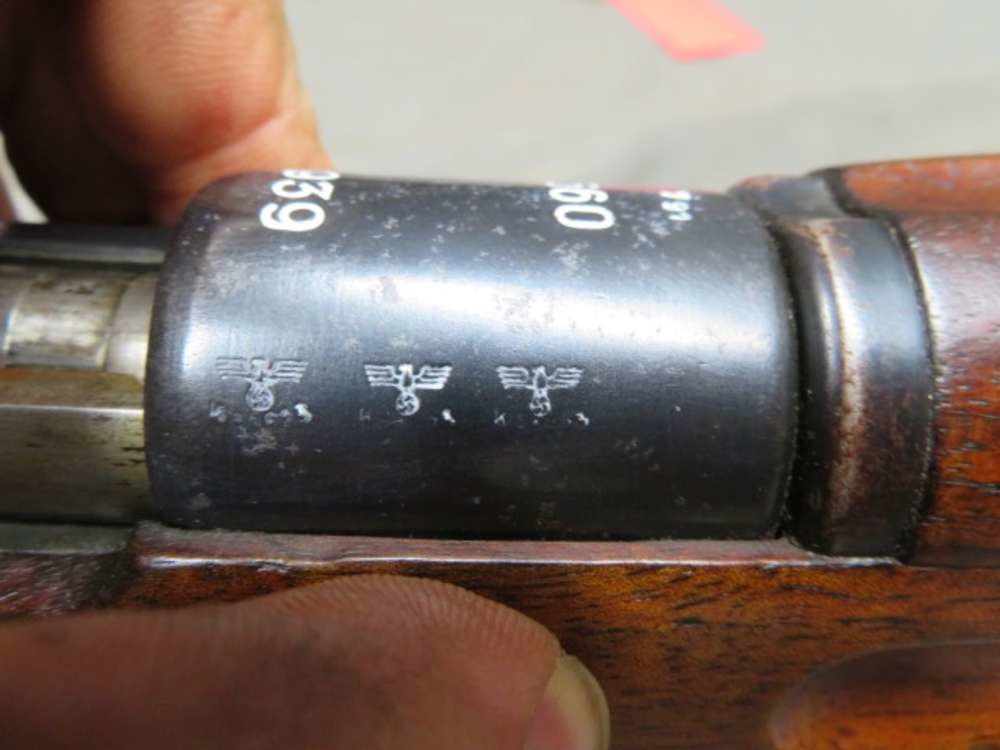
Three Eagles, One Remarkable Story: German Proof Marks Revealed

This close-up reveals the rifle’s original German military inspection and acceptance stamps. The three eagle markings provide important evidence of its Steyr manufacture and wartime Luftwaffe contract.

German military firearms were inspected throughout production. Once a component passed inspection, it received a Waffenamt acceptance mark consisting of an eagle above an inspector or facility number. Steyr rifles from this period commonly bear the WaA623 code.

pix626462894
These three eagles are more than decorations—they are German military proof and acceptance marks. Multiple stamps indicate that the rifle passed different inspection stages before entering service.

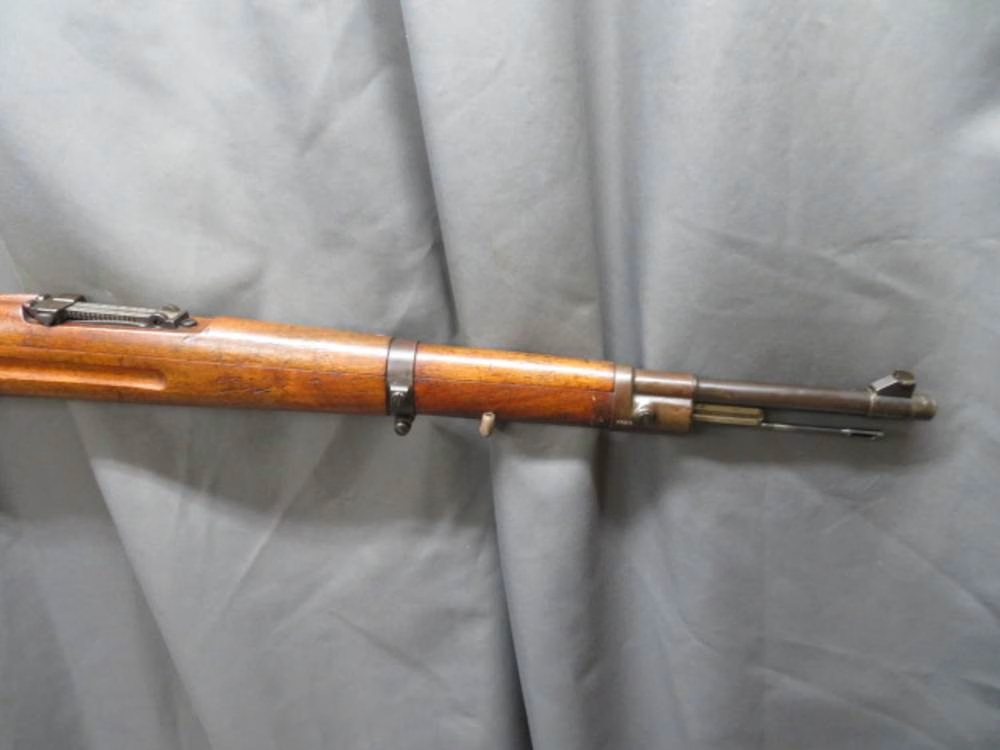
Built for the Luftwaffe: The Distinctive G.29(ö) Front End

pix192166564
Although it resembles the famous K98k, the G.29(ö)’s front hardware, stock shape and other small construction details help knowledgeable collectors distinguish this scarce Luftwaffe rifle from its more common cousin.

This detailed view highlights the 1939 G.29(ö)’s distinctive front assembly, including its full-length wooden handguard, barrel bands, protected front sight, bayonet mount and cleaning rod.

Manufactured by Steyr for German Luftwaffe service, the G.29(ö)—officially associated with the Gewehr 12/34 designation—combined a proven Mauser bolt action with features inherited from earlier Steyr export rifles. Production lasted only from 1938 through 1939 before Steyr adopted the standard K98k pattern.

The Eagle in the Wood: A Rare Luftwaffe Stock Mark

pix493734746
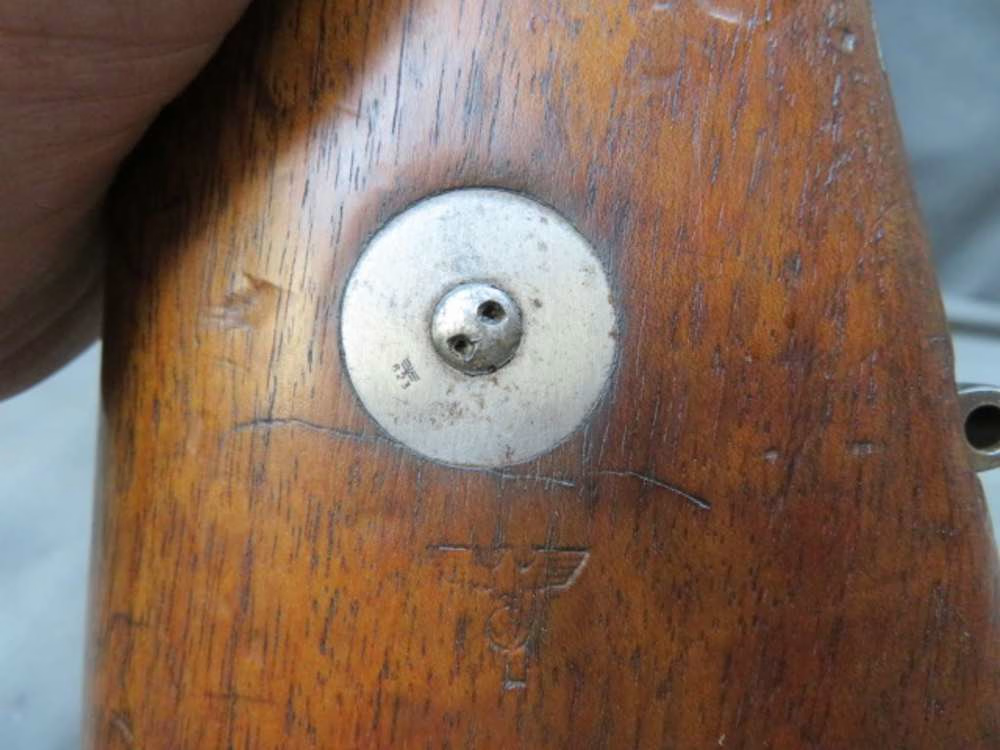
The circular metal fitting above the stamp is a practical field tool—not decoration. Soldiers used it to help disassemble the Mauser bolt, while the faded cartouche below helps document the rifle’s Luftwaffe connection.

This close-up reveals a faint but historically important Luftwaffe acceptance cartouche stamped into the rifle’s original wooden stock, just beneath the metal bolt-disassembly disk.

G.29(ö) rifles manufactured by Steyr in 1938 and 1939 were produced primarily for German Luftwaffe service. Many authentic examples display an Eagle/L stock marking, indicating acceptance by the German Air Force. Decades of handling and service often left these wooden cartouches faint or partially worn.

Proof of Luftwaffe Service: The Eagle/L Mark Revealed

This close-up captures two important original features: the rifle’s metal bolt-disassembly disk and a deeply stamped Eagle/L Luftwaffe acceptance mark in the wooden stock.

Steyr manufactured the G.29(ö), also associated with the Gewehr 12/34 designation, for German Luftwaffe service during 1938–1939. The distinctive Eagle over “L” cartouche was applied to accepted Luftwaffe rifles and helps distinguish them from other Mauser variants.

pix531782066
The “L” beneath the eagle represents the Luftwaffe, while the circular stock disk served as a field tool for taking apart the rifle’s bolt—combining military identification and practical design in one small area.

At the Muzzle: A Rare G.29(ö) Detail Up Close

pix810472178
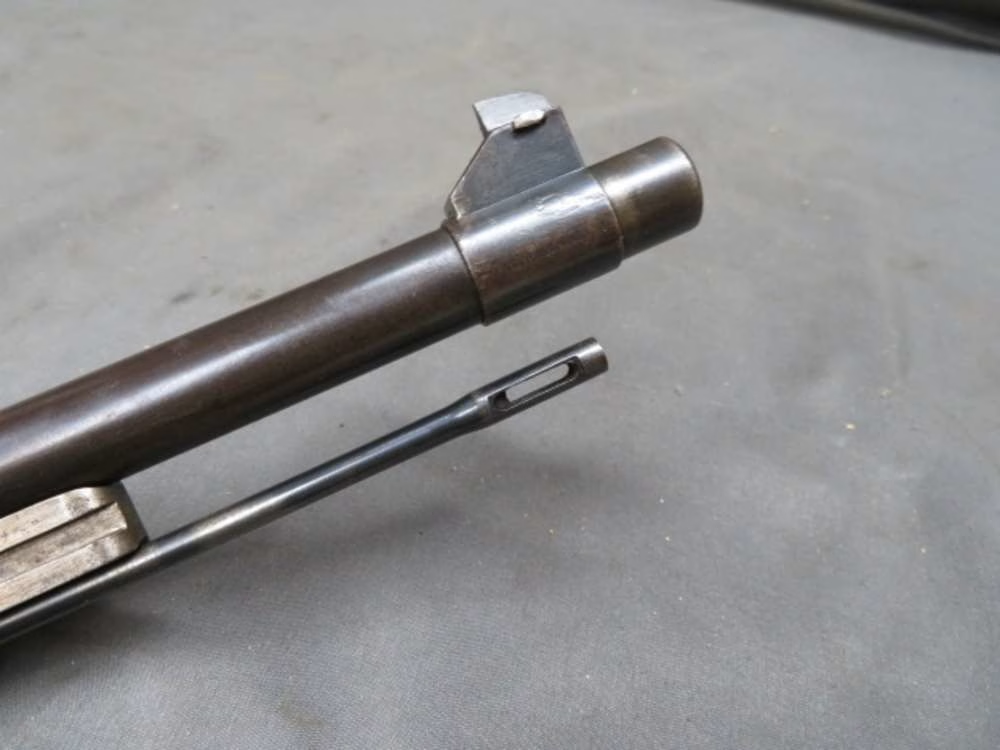
The rod beneath the barrel was carried directly on the rifle for field cleaning. Its slotted end could hold cleaning material, allowing soldiers to maintain the bore without carrying a separate full-length cleaning rod.

This close-up highlights the G.29(ö)’s distinctive muzzle assembly, exposed front-sight blade and full-length cleaning rod—small details that help separate this rare Luftwaffe rifle from the standard K98k.

Steyr manufactured the G.29(ö), also known as the Gewehr 12/34, primarily for German Luftwaffe service in 1938 and 1939. Its design evolved from earlier Steyr export rifles and retained several features that disappeared when production shifted to the standardized K98k.

A Soldier’s View: Down the Muzzle of a 1939 Luftwaffe Mauser

This dramatic close-up captures the muzzle, crown, front-sight blade and cleaning rod of the scarce 1939 Steyr G.29(ö)—a rifle produced under contract for Germany’s Luftwaffe.


Manufactured in Austria during 1938–1939, the G.29(ö), or Gewehr 12/34, was an early German-service Mauser variation built before Steyr transitioned to standard K98k production. Its distinctive muzzle and front-sight arrangement reflect the rifle’s earlier Steyr export-pattern ancestry.

pix021326540
A rifle’s recessed crown helps protect the critical end of the bore from damage. Even a small dent near the muzzle can disturb the exiting projectile and reduce accuracy.

🛒 eBay Store
🔥 GunBroker Store
📘 Facebook
𝕏  @EiselArmory
🎵  @EiselArmory

Follow @EiselArmory for more rare finds, military history and relics from the past.