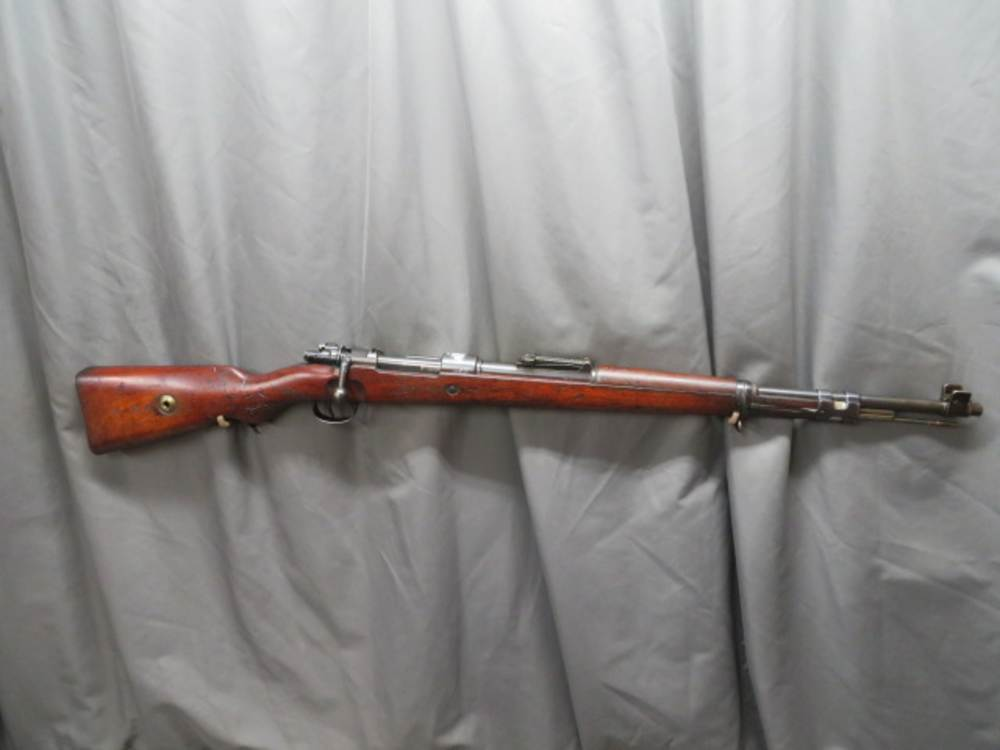
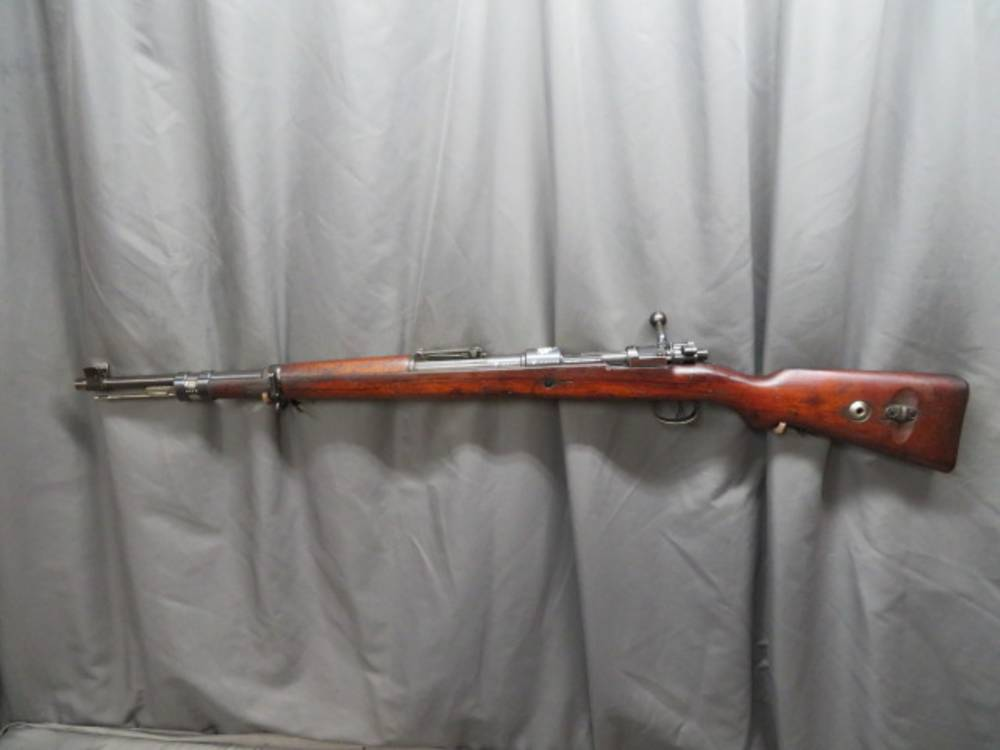
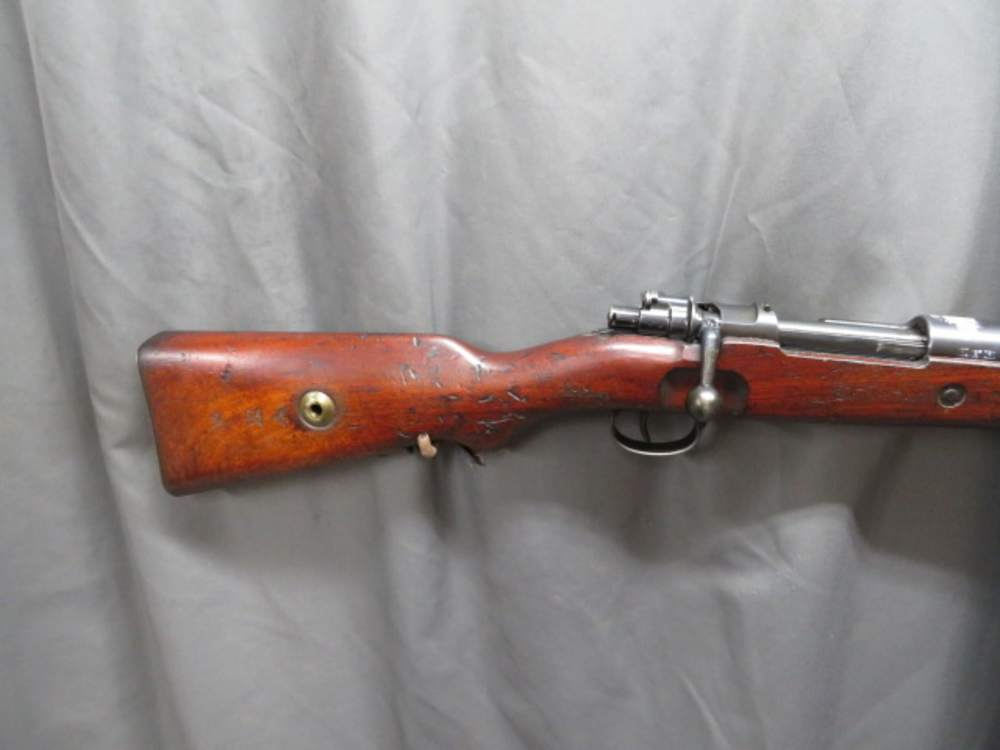
The Portuguese Model 1937 M/937 is a classic pre-WWII military Mauser, built around the rugged and proven Mauser bolt-action system. Its full-length wood stock and traditional military profile give it the unmistakable look of a European service rifle from the era.
Portugal adopted the M/937 during the tense years leading up to World War II. These rifles were produced in Germany for Portuguese service and are closely related to the German Mauser 98-pattern rifles of the period. Today, surviving examples offer collectors an interesting connection between Portuguese military history and Germany’s renowned Mauser manufacturing tradition.
1937 Portuguese Mauser — A Crest That Tells the Story
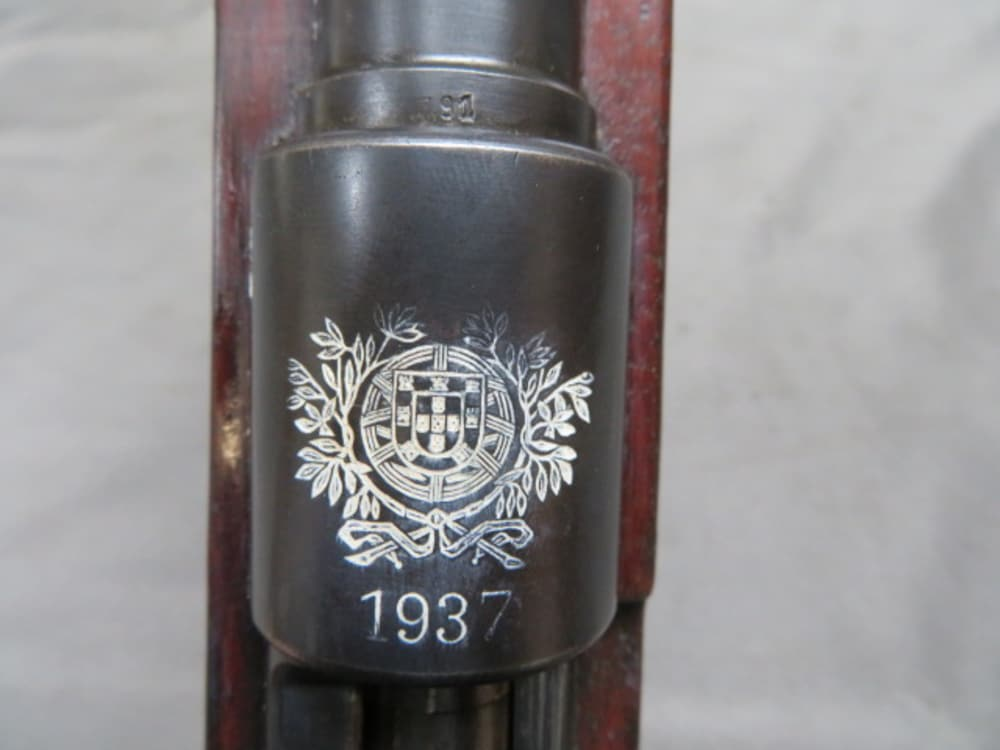
This close-up highlights the beautifully marked receiver of a Portuguese Model 1937 M/937 Mauser, featuring the distinctive Portuguese national crest and prominent 1937 date.
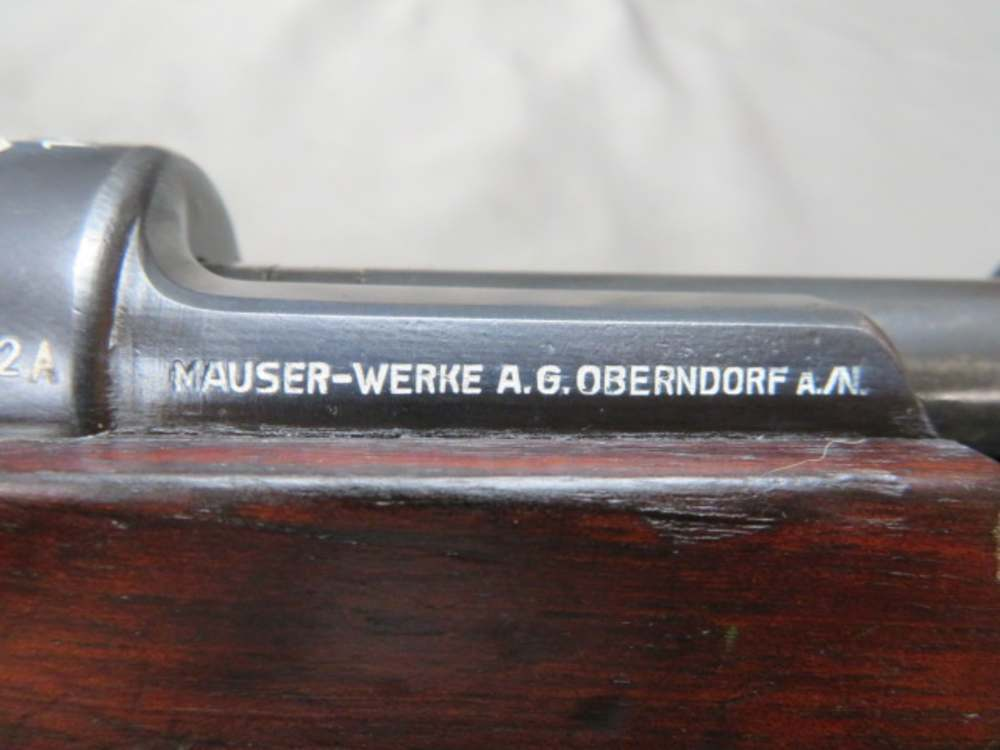
The M/937 was manufactured in Germany for Portugal during the years just before World War II. Based on the proven Mauser 98 system, these rifles combined German arms manufacturing with distinctive Portuguese military markings—making them immediately recognizable to collectors today.
🔎 Hidden History: The German Proof Marks on Portugal’s M/937
This close-up reveals several small but historically significant German inspection/proof markings on the receiver of the Portuguese Model 1937 M/937 Mauser.
Portugal’s M/937 rifles were manufactured in Germany under contract, and surviving examples can retain German factory and inspection markings alongside their Portuguese identity. Details like these help document the rifle’s manufacturing history and are especially interesting on pre-WWII contract Mausers.
🔍 More Than Wood: The Marks Beneath the M/937
This close-up shows additional inspection and acceptance markings stamped directly into the stock of the Portuguese Model 1937 M/937 Mauser.
Military rifles were inspected at multiple stages before entering service, and markings can appear on both their metal components and wooden stocks. On surviving M/937 rifles, these small stamps add another layer to the story of their German manufacture and Portuguese military service.
🎯 Precision by the Numbers: The M/937 Rear Sight
This close-up highlights the distinctive tangent rear sight of the Portuguese Model 1937 M/937 Mauser, with its clearly numbered range graduations and sliding sight adjustment.
The M/937 followed the military Mauser tradition of providing soldiers with an adjustable rear sight for firing at different distances. Its design reflects the long-range military doctrine common to European service rifles during the years leading into World War II.
🎯 Built for the Field: The M/937 Front Sight
This close-up highlights the hooded front sight assembly of the Portuguese Model 1937 M/937 Mauser, showing the rugged military construction designed to protect the sight during service.
The M/937 was built by Mauser-Werke in Germany for Portugal and incorporated features associated with contemporary Mauser military rifles. The protected front sight was practical for a service rifle expected to endure rough handling and field conditions.
🔎 A Closer Look at the M/937’s Muzzle Hardware
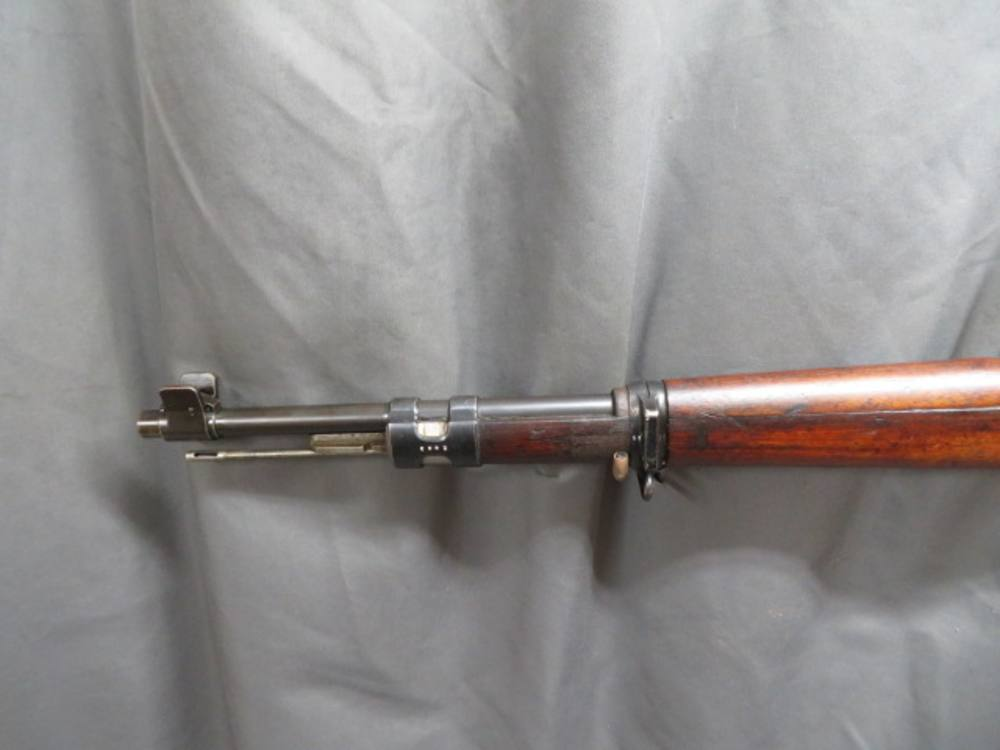
This close-up shows the front sight protector, muzzle area, and cleaning rod of the Portuguese Model 1937 M/937 Mauser—small details that complete the rifle’s distinctive military configuration.
Manufactured by Mauser-Werke at Oberndorf for Portugal, the M/937 incorporated rugged features intended for military service. Surviving hardware such as the sight assembly and cleaning rod adds to the historical completeness and character of an original example.
🔥 At the Muzzle: A Close Look at the Portuguese M/937
This detailed view highlights the muzzle, protected front sight, and cleaning rod of the Portuguese Model 1937 M/937 Mauser. The visible wear gives the rifle the unmistakable character of a vintage military arm.
Built by Mauser-Werke at Oberndorf for Portugal, the M/937 combined the proven Mauser 98 action with features specified for Portuguese military service. Details at the muzzle help distinguish its original military configuration and illustrate the rugged construction expected of a 1930s service rifle.