The 'Potato Masher' of the Trenches
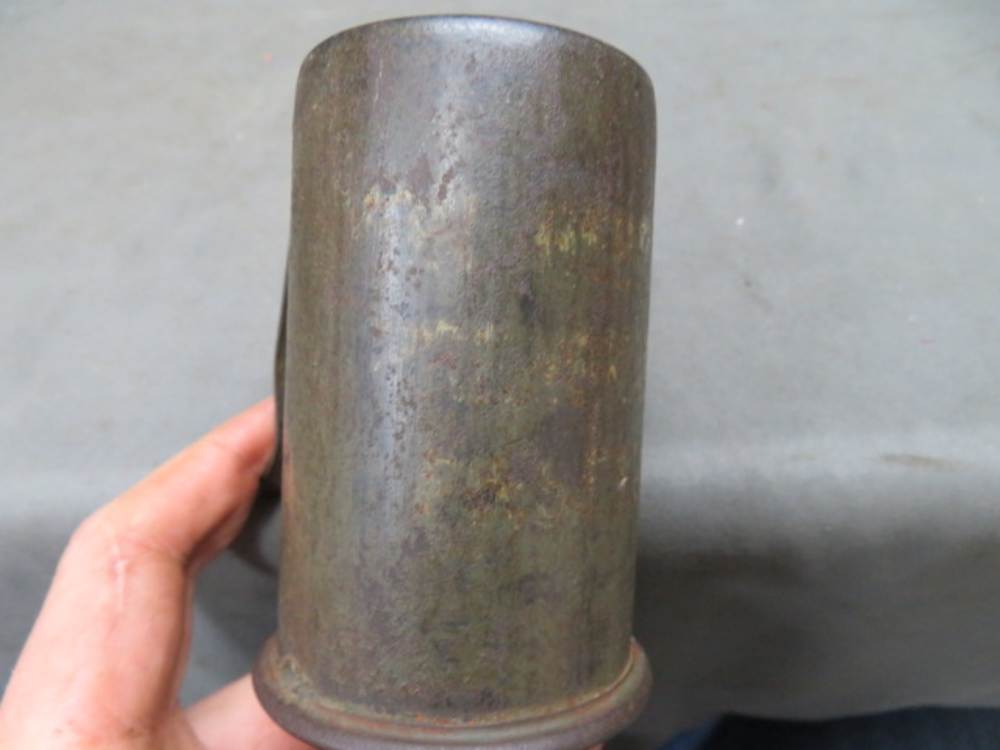
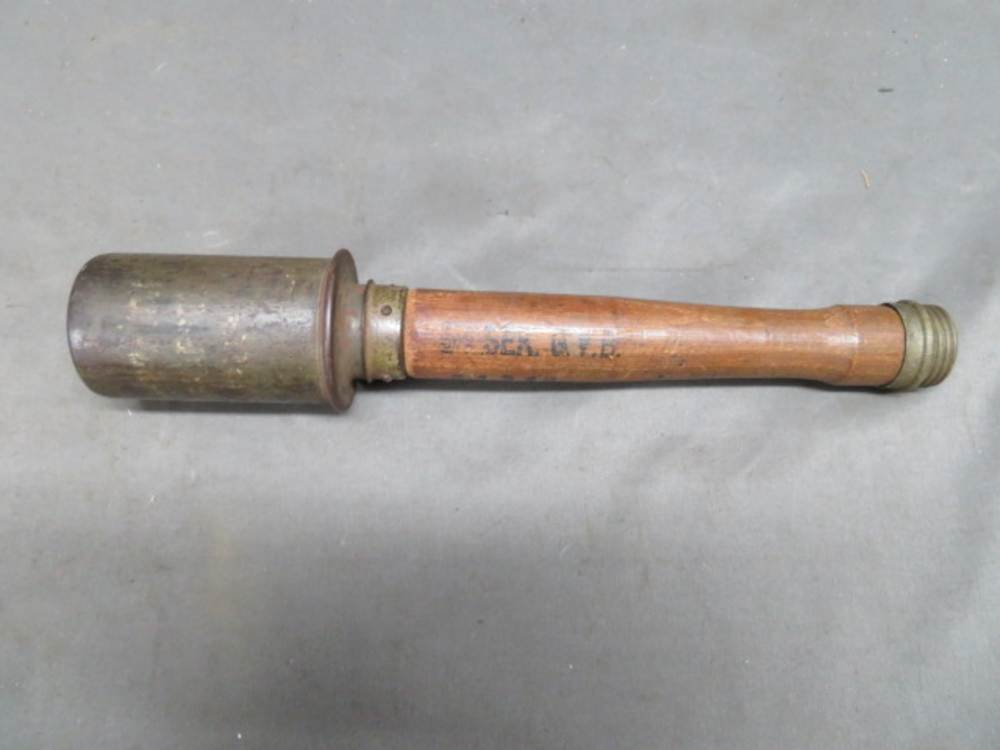
Introduced during the First World War, the German Model 1917 stick grenade — officially the Stielhandgranate, or “stick hand grenade” — became one of the war’s most recognizable infantry weapons. Its long wooden handle gave soldiers extra throwing leverage, while the steel head carried the explosive charge. Allied troops nicknamed it the “potato masher.”
The design saw heavy use on both the Western and Eastern Fronts, serving German infantry and stormtroop units in trench raids and close-quarters fighting through the 1918 armistice.
From Improvised Charge to Standardized Weapon
Stick grenades grew out of earlier, improvised trench weapons — explosive charges lashed to sticks or packed into tin cans. The German army standardized the idea around 1915, refining the fuze and ignition system over the next two years into the Model 1917’s hollow handle, friction igniter, and threaded steel head.
Demand was enormous, so production spread across numerous German arsenals and contractors rather than one factory. Exact wartime output figures aren’t reliably documented, but the range of maker’s and inspector’s marks on surviving examples reflects how widely manufacturing was distributed.
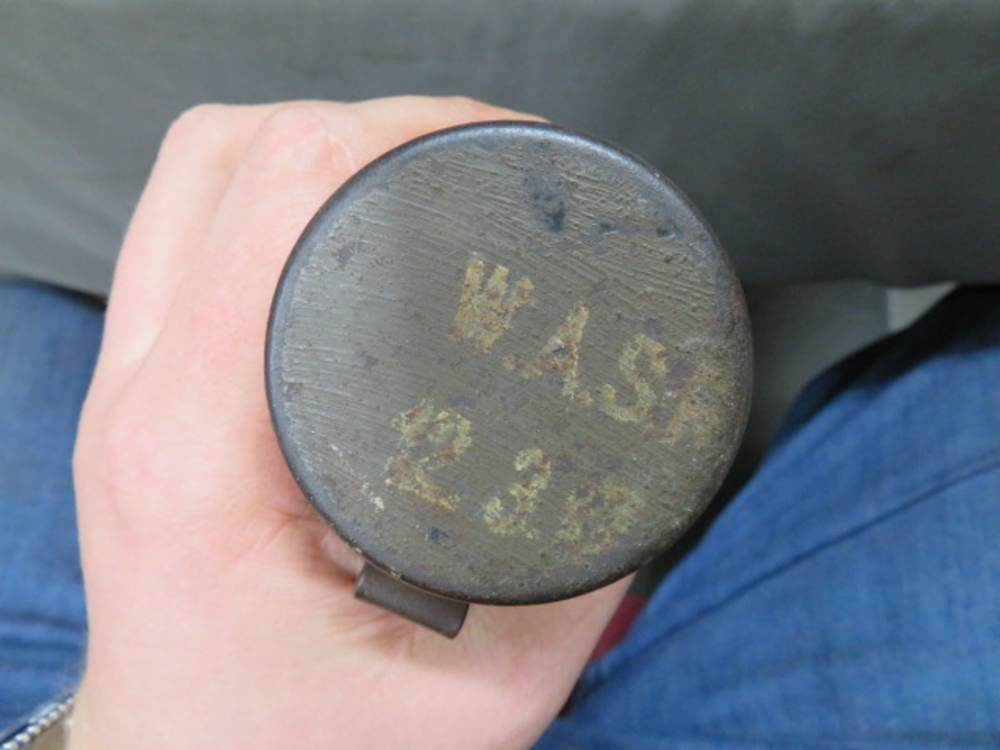
Markings That Tell a Story
Stenciled and stamped markings like these were typically applied to record manufacturing, filling, or inspection information, helping track lots of grenades back to their source. Surviving markings are often faint or partly worn, so a legible example is a nice detail for collectors.
The Stielhandgranate was fielded almost exclusively by German and, to a lesser extent, Austro-Hungarian forces. Captured examples were occasionally turned around and used by whichever side seized them — a common but generally undocumented occurrence in trench warfare.
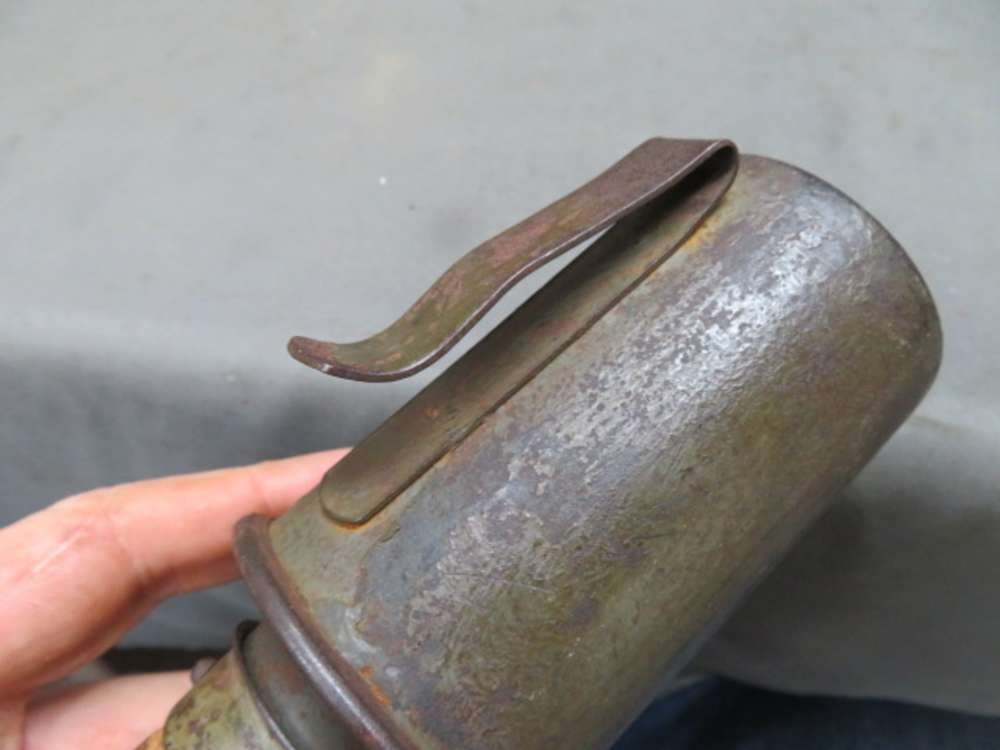
A Belt Clip Built for the Trenches
The metal clip fitted to the head let a soldier hook the grenade onto a belt, boot, or grenade bag, keeping several within easy reach during a raid. It’s a small detail that shows how much thought went into making the design practical for trench use.
Unlike period firearms, stick grenades were never imported to the U.S. commercially. Most examples in American collections trace back to war-trophy bring-backs — grenades rendered inert and carried home by returning soldiers as personal souvenirs after the armistice.
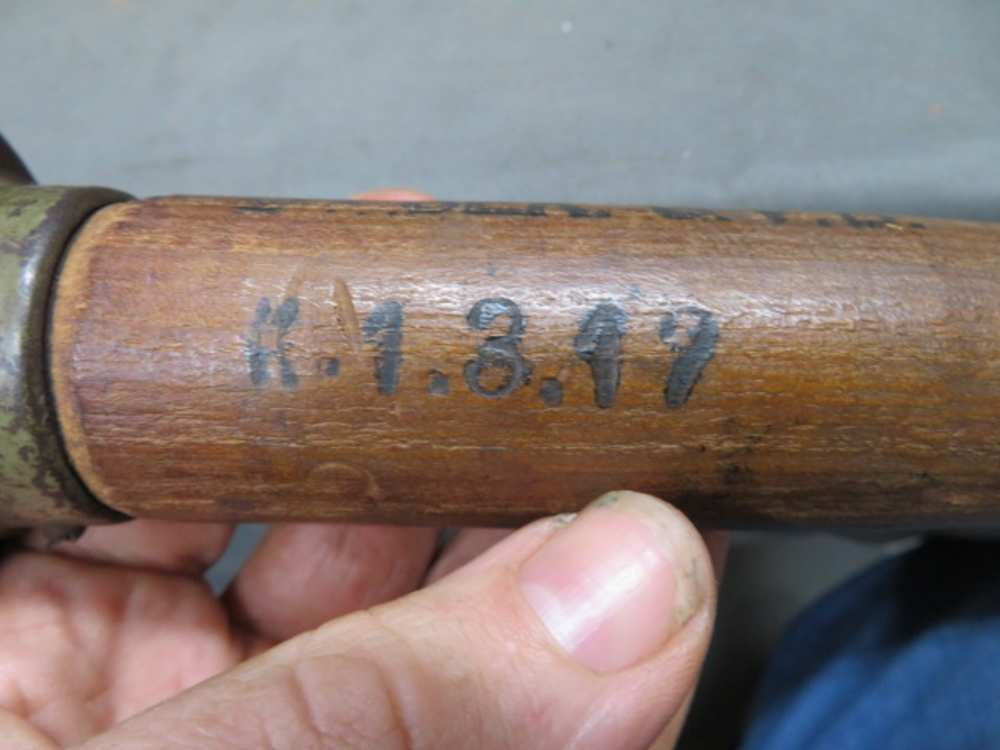
A Handle Dated to the Great War
The stamped date on this handle offers a direct, physical link back to the year the grenade was made, part of what makes dated examples appealing to collectors. Because the marking was hand-applied rather than printed, its exact format can vary between makers.
The stick grenade shouldn’t be confused with the German Eierhandgranate, or “egg grenade” — a smaller, smooth oval fragmentation grenade issued alongside it. The stick-grenade concept also outlived the war: a visually similar but updated version, generally called the Model 24, became the standard German stick grenade of World War II.
Inside the Ignition System
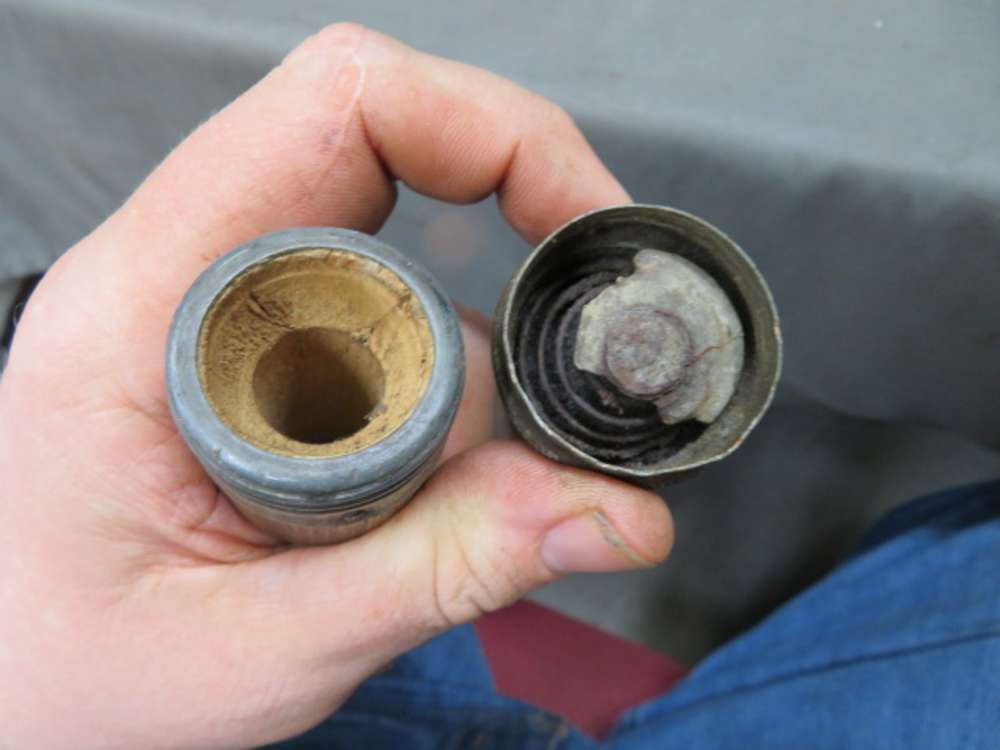
Removing the threaded cap at the base of the handle reveals the hollow wooden shaft that housed the grenade’s friction igniter and pull cord — the mechanism a soldier activated just before throwing. Keeping these parts sealed inside protected them from mud, moisture, and rough handling until needed.
This concealed, friction-based ignition system was one of the design’s simplest but most important features, keeping the grenade safe to carry for long stretches between the moments it actually needed to be thrown.
A Small Detail With a Century of History
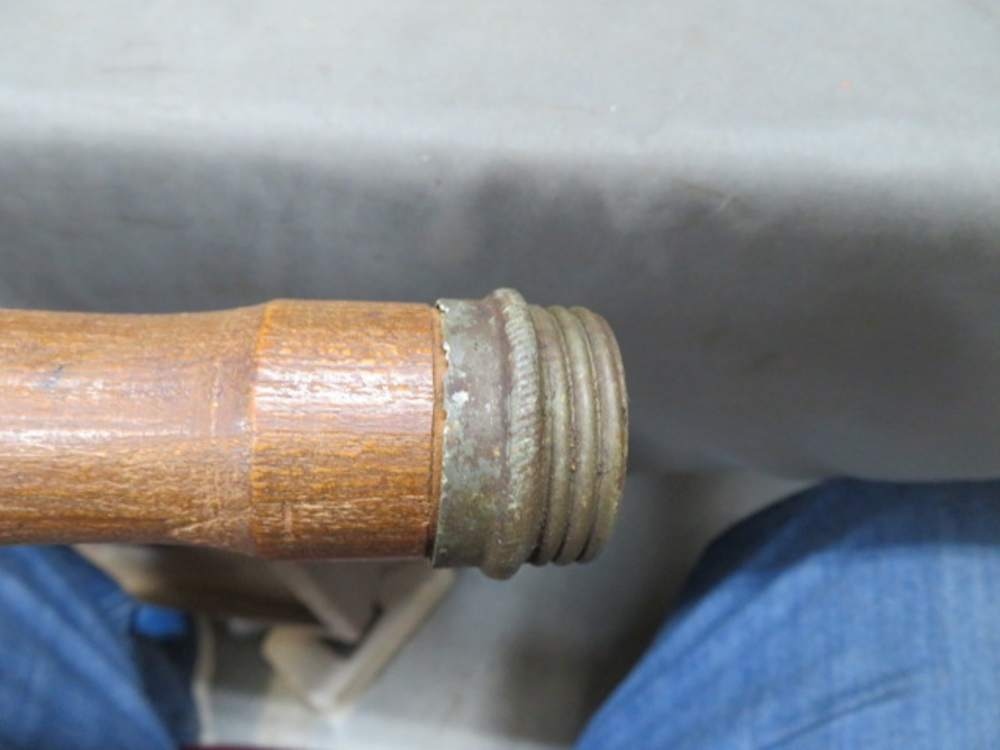
The threaded cap on the handle’s exterior mated with the steel head, holding the grenade together and letting soldiers service the ignition components inside. Its worn threads and finish reflect more than a century of handling.
More than a century after the armistice, surviving examples of the Model 1917 stick grenade remain a tangible link to the trench warfare of World War I. Their simple, purpose-built engineering and unmistakable silhouette make them one of the most sought-after categories of inert ordnance among militaria collectors.